


AI Product Data Optimization
AI Product Data Optimization improves the product information that storefronts, feeds, search, marketplaces, integrations, and AI experiences depend on. Always Open Commerce helps structure verified product facts so they can be maintained at the source and reused more consistently across channels.
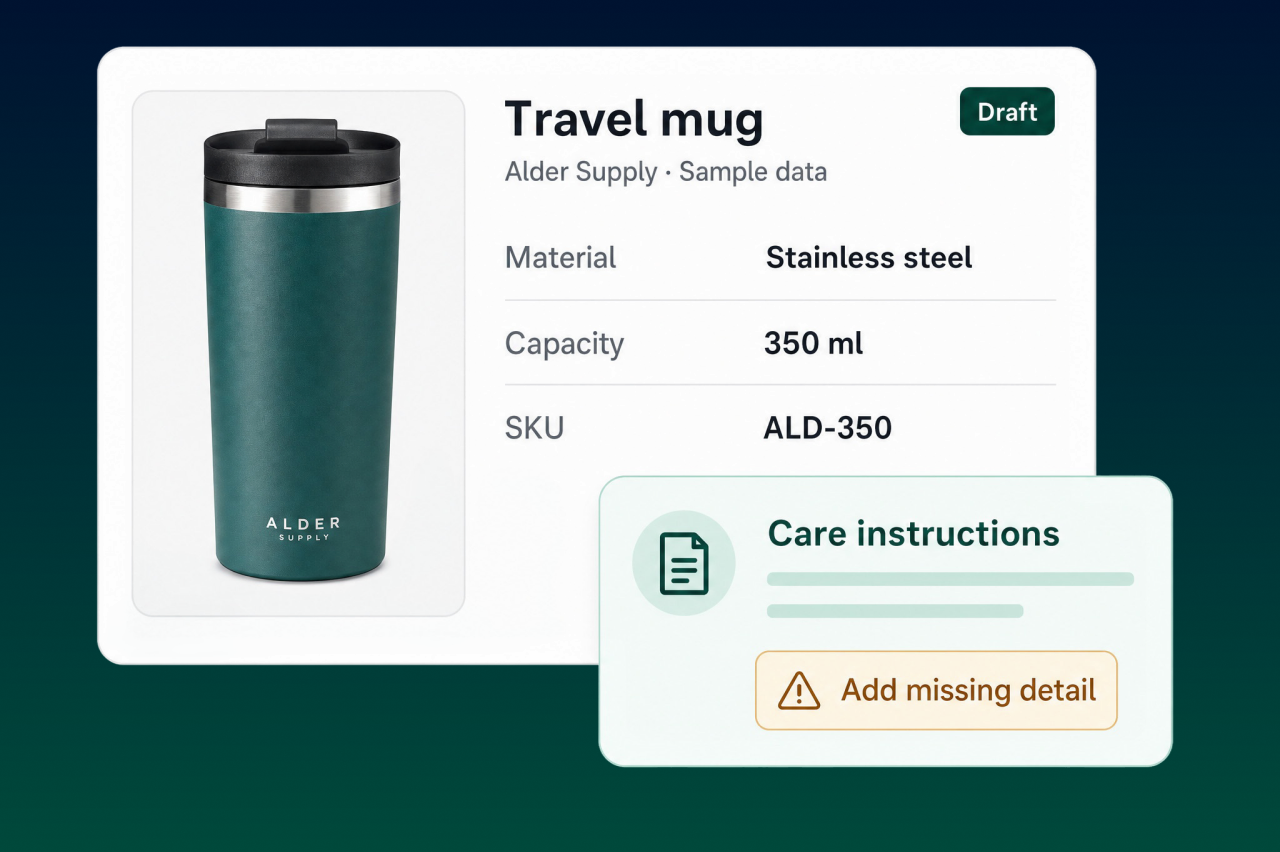

Product Data Powers More Than the Storefront
A product catalog is rarely used in only one place. The same information may support the storefront, search, feeds, marketplaces, structured data, integrations, internal tools, and emerging AI shopping experiences.
When product facts are incomplete, contradictory, poorly structured, or difficult to maintain, the inconsistency travels downstream. The work should improve the information model behind the catalog instead of repeatedly patching each destination.
Build a Stronger Product Data Foundation
The right scope depends on the catalog problem and the systems that consume the information. Work may focus on one product family or a broader data model when the source, affected records, and target state are clear.

Taxonomy & Category Structure
Clarify product types, categories, hierarchies, and classification rules so products are grouped consistently across storefront navigation and downstream channels. Changes affecting URLs, navigation, feeds, reporting, or SEO need cross-functional review.

Attributes & Specifications
Define the facts that matter for each product type, including allowed values, units, specifications, and field applicability. The structure should support shopper decisions and downstream systems without forcing every product into the same fields.

Variants, Options & Relationships
Represent variants, options, product families, bundles, accessories, compatibility, replacements, and related-product relationships according to the real catalog model rather than relying on naming alone.

Identifiers & Controlled Values
Improve SKUs, manufacturer identifiers, GTINs where applicable, brands, units, naming conventions, and other controlled values. Missing identifiers or facts should remain unresolved until a trusted source establishes the correct value.

Product Content & Enrichment
Restructure or improve titles, descriptions, features, and supporting product content from approved source facts. AI may assist with classification, normalization, formatting, summarization, or drafting, but it should not manufacture dimensions, materials, compatibility, certifications, pricing, inventory, or other factual product claims.
Keep Ownership and Source Truth Clear
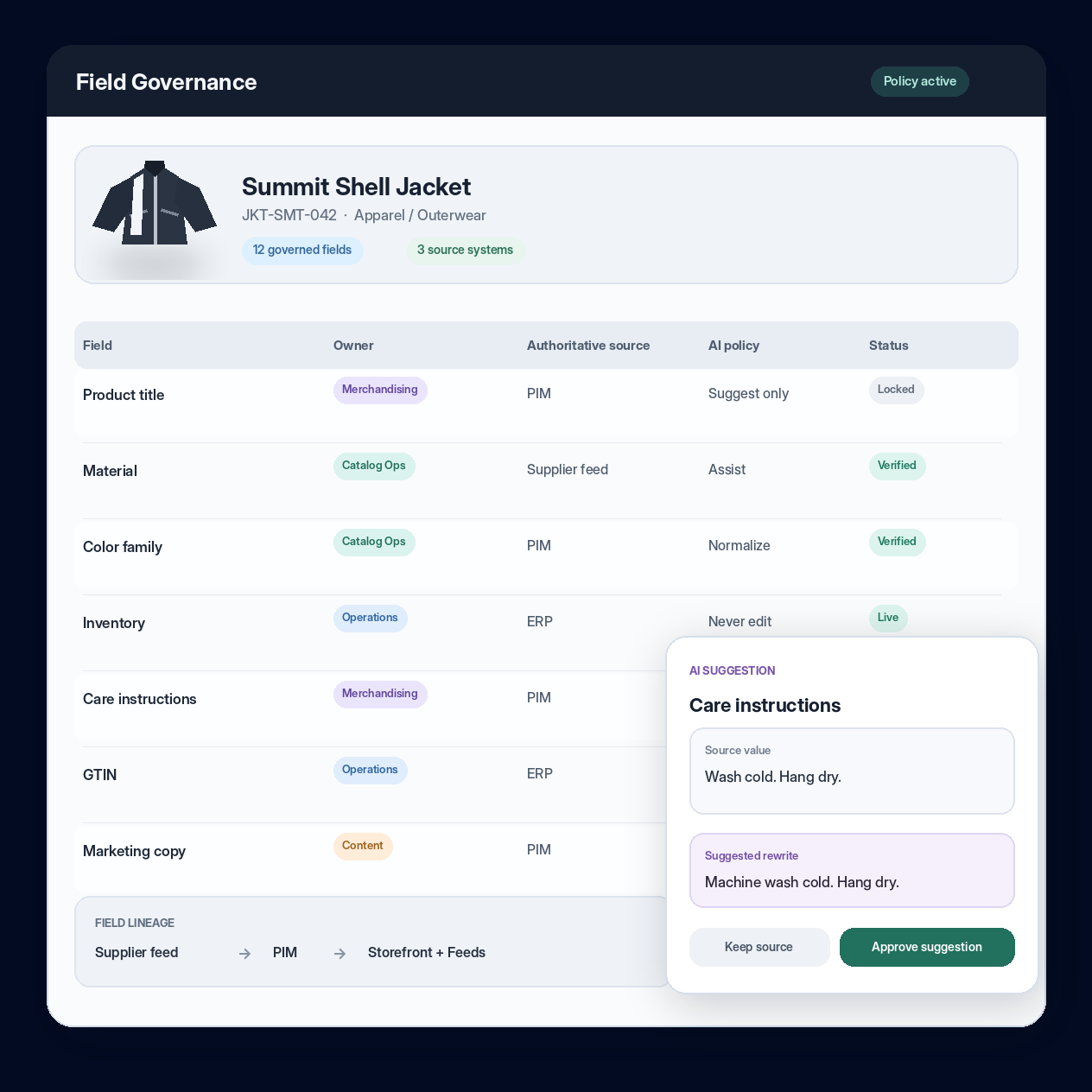
Product-data work becomes difficult when several systems can change the same information and nobody knows which source wins. Field ownership, precedence, and downstream effects should stay clear after the project ends.

Source of Truth & Field Ownership
Identify where authoritative information originates and which systems may change it. A PIM, ERP, ecommerce platform, supplier source, database, or another system may own different field families, and conflicts should be resolved before broad updates are applied.
AI Assistance Without Invented Facts
Use AI where it can transform verified information without changing its truth. Unknown values should stay unknown until the appropriate source or person resolves them. Better completeness does not come from making unsupported product information sound plausible.
Downstream Effects
Product-data changes can affect filters, search, feeds, structured data, integrations, analytics, pricing, and availability. Testing should follow the systems that consume the data, not only the source catalog.
Fix Repeating Data Problems at the Source
The objective is not to create a separate AI catalog. It is to improve the product information the business already depends on so different systems can reuse the same underlying facts more consistently.
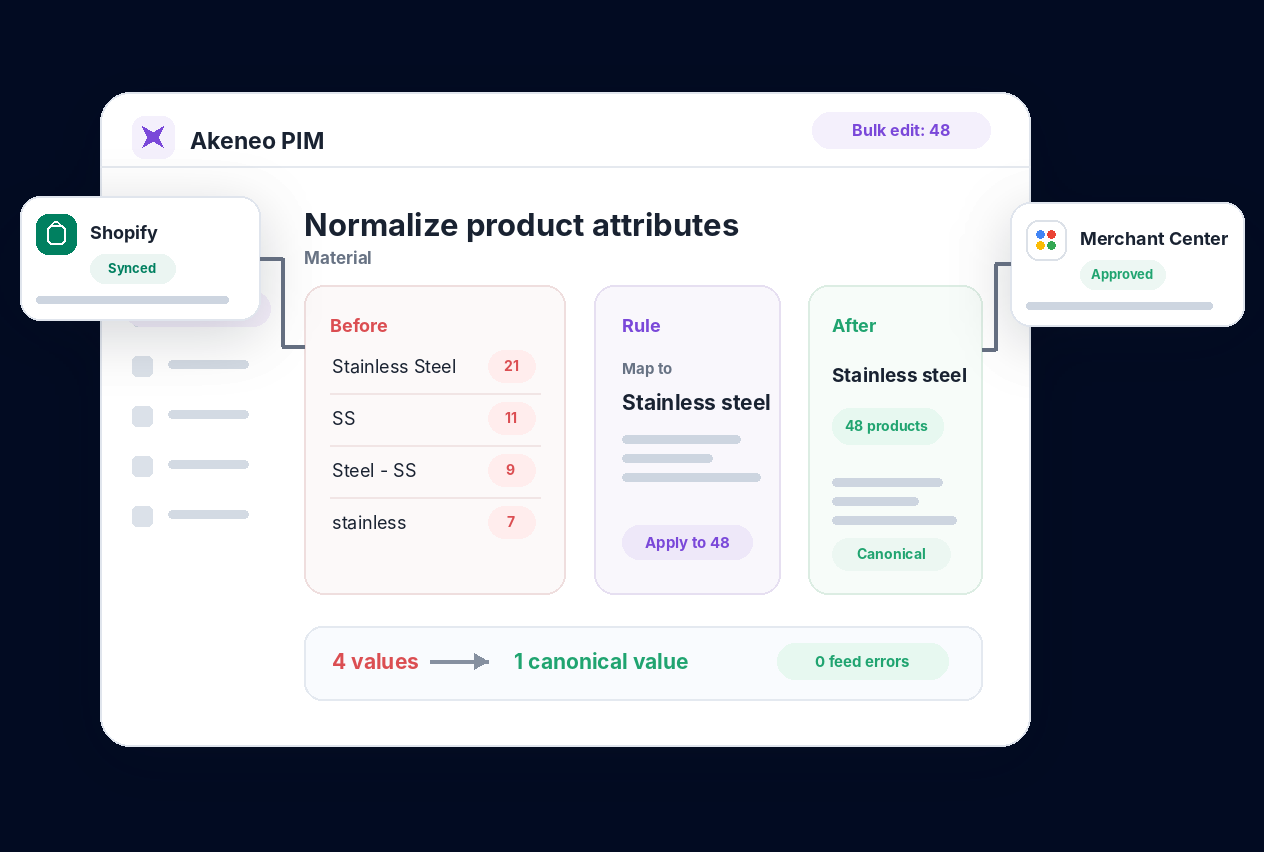
That may mean cleaning the source catalog, normalizing values, restructuring variants, improving approved content, clarifying field ownership, or defining channel-specific transformations. If the source or scope is still unclear, an AI Product Data & Catalog Audit may be the better first step.
Better product data can support search, feeds, integrations, marketplaces, and agentic shopping experiences, but it does not guarantee visibility, eligibility, recommendations, conversion, or sales.
Related AI Commerce Services

Establish the current state and prioritize remediation when the product-data problem, affected scope, or source ownership still needs diagnostic review.

Improve how verified brand, product, and supporting information can be accessed, interpreted, and surfaced across AI-assisted discovery.

Prepare product data and commerce dependencies for defined AI-assisted shopping actions when the relevant platform and channel support the use case.
Frequently Asked Questions
It is implementation work focused on making product information more accurate, structured, consistent, maintainable, and reusable across the systems that need it. The service can address taxonomy, attributes, specifications, identifiers, variants, relationships, content, mappings, and data-quality rules.
The audit is diagnostic. It establishes the current state and prioritizes remediation. AI Product Data Optimization applies approved changes when the problem, source data, target state, affected records, and implementation path are sufficiently understood.
No. Product copy can be part of the work, but the larger problem is the information model behind the catalog. Taxonomy, attributes, identifiers, variants, relationships, ownership, and mappings can matter more than the wording of a description.
Not without an approved factual source. AI can organize, classify, normalize, or draft from verified information, but unsupported product facts should not be invented to make a catalog look more complete.
Yes, within an approved project scope. The platforms represent product categories, custom data, variants, options, and catalog structures differently, so implementation needs to follow the actual platform and catalog model.

 USA
USA
 Philippines


