


Pipe17
Connect selling channels, fulfillment partners, and back-office systems around one workable order flow. Always Open Commerce helps ecommerce teams plan, validate, and troubleshoot Pipe17 so orders, inventory, product data, and fulfillment handoffs reflect how the business actually operates.

Connect Selling Channels to the Fulfillment Network
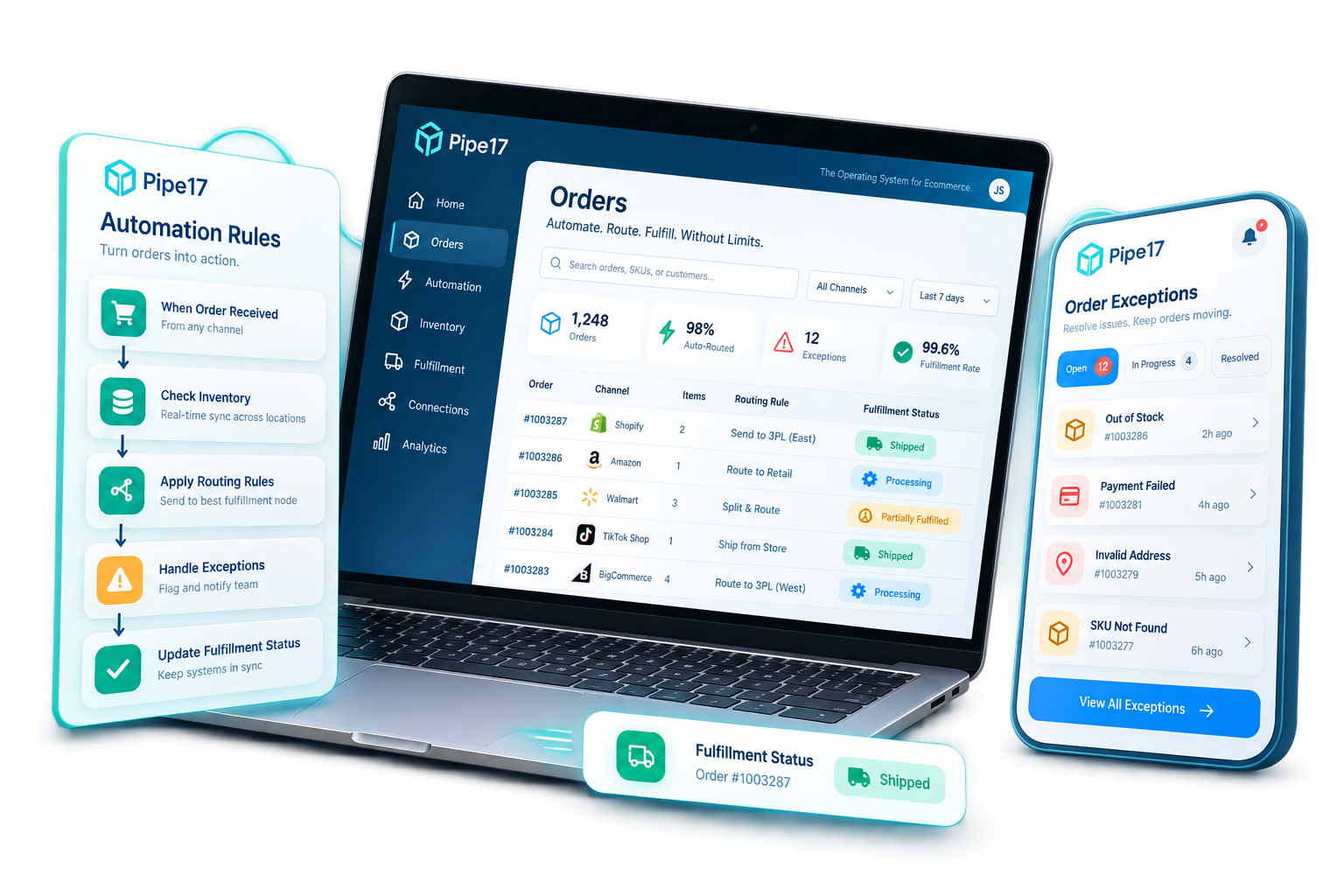
A growing commerce operation can collect orders from several places while fulfillment happens somewhere else entirely. Before adding another connection, map where orders originate, which destinations can fulfill them, which data needs to move, and which system is responsible for each decision.
Pipe17 can act as an order-operations layer between selling channels, fulfillment providers, 3PLs, and back-office systems. Before implementation, define which system owns each order, inventory, routing, fulfillment, and exception decision so connectivity does not blur operational responsibility. Always Open Commerce can help translate those ecommerce requirements into a clearer integration plan, with exact connector behavior and technical feasibility reviewed before implementation.
Automate Order Routing Without Hiding the Exceptions
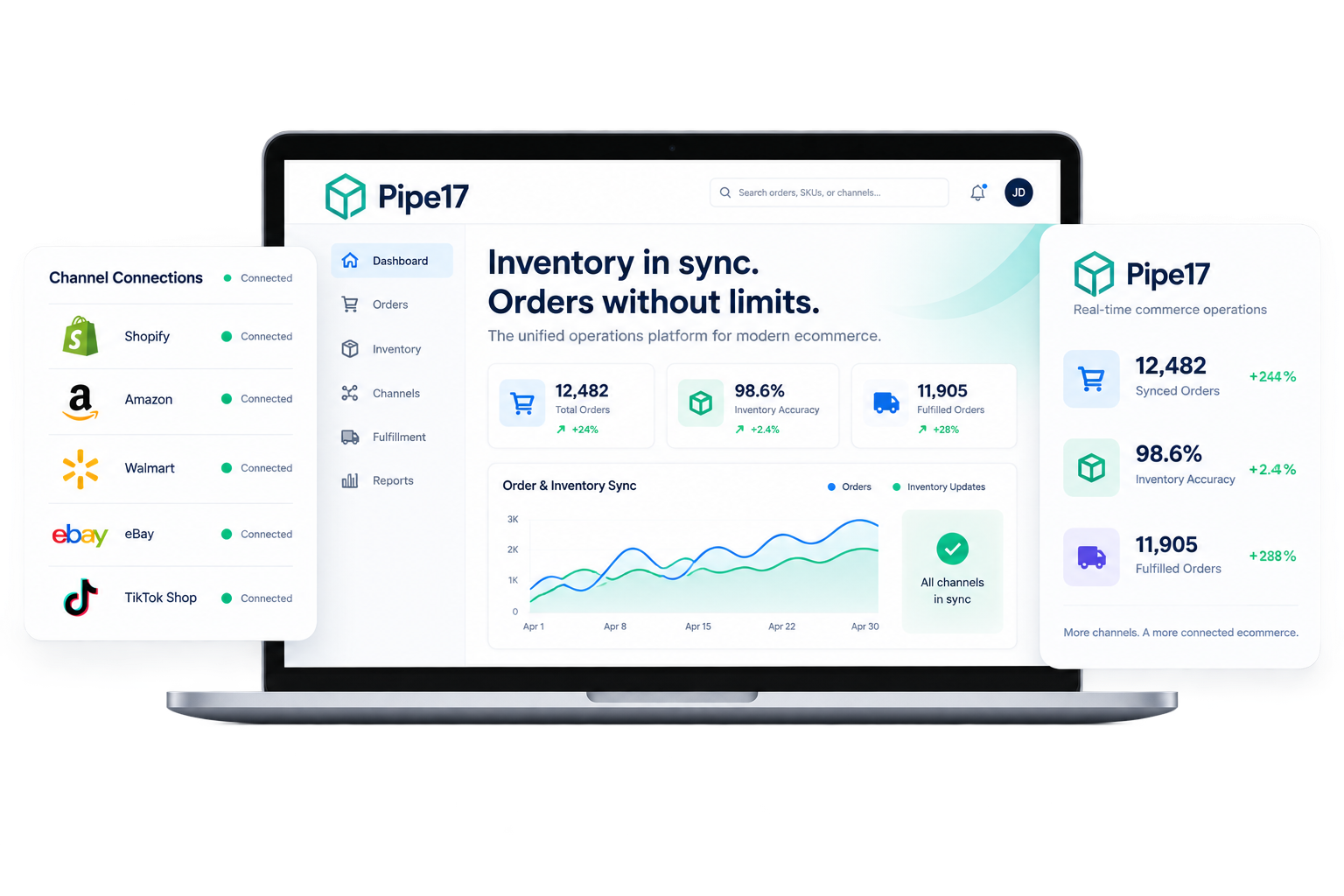
Order automation works best when the normal path and the exceptions are both understood. Routing may need to account for inventory availability, destination, fulfillment location, priority, and other business rules, while exceptions still need a clear path for review and resolution.
Pipe17 supports order management and routing across connected commerce and fulfillment systems. Always Open Commerce helps document the intended workflow, identify ecommerce-side dependencies, and coordinate approved integration or troubleshooting work. Live workflows should be tested against representative order scenarios before behavior is treated as settled.
Pipe17 Work We Can Support
Support should stay focused on the ecommerce and integration work the business actually needs, with Pipe17-specific technical decisions verified for the live environment.
1
Commerce & Channel Connections
Map the storefronts, marketplaces, and other order sources that need to participate in the workflow, then coordinate approved connection requirements around the data each source sends and receives.
2
Order Workflow & Routing Review
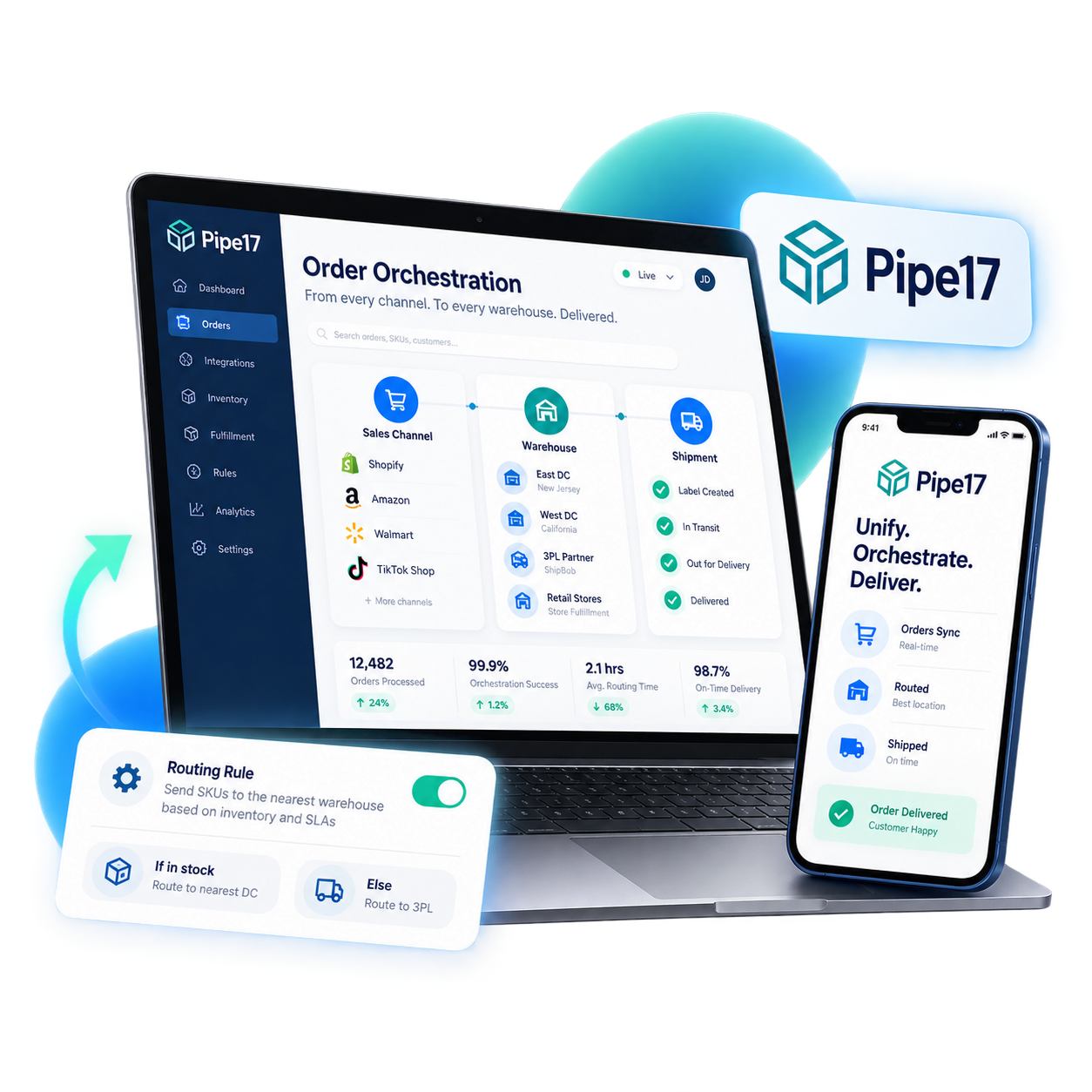
Document how orders should move from purchase to fulfillment, including routing logic, exceptions, status changes, and handoffs that need technical validation.
3
Inventory & Data Coordination
Clarify which systems own inventory, order, product, and fulfillment data so synchronization supports the customer experience without creating competing sources of truth.
4
Troubleshooting, QA & Technical Coordination
Investigate documented order-flow, inventory, or connection issues and coordinate review or fixes with the appropriate technical owners, vendors, and system specialists.
Decide Which Systems Should Own Orders, Inventory, and Fulfillment
Pipe17 sits between systems that may already have strong responsibilities. The useful architecture is the one where each tool has a clear job and duplicated workflow logic is minimized.
1
Order Operations
Use Pipe17 where order management, routing, and movement between connected systems need a dedicated operating layer rather than duplicating logic across every channel.
2
Inventory Visibility
Define how inventory availability should move between selling and fulfillment systems, including the source of truth and any timing or exception handling that matters to the business.
3
Fulfillment & 3PL Connections
Map which warehouses, 3PLs, or fulfillment providers should receive which orders and what information they need to execute them. Specific connector capabilities must be verified.
4
ERP & Back-Office Boundaries
Decide which order, inventory, product, customer, and fulfillment responsibilities remain with ERP or other back-office systems so Pipe17 complements rather than competes with existing ownership.

Pipe17 Work in Practice


Ecommerce Builds
A Rapid Shopify Launch Powered by Streamlined Setup and 3PL Integration
Pipe17 FAQs
Pipe17 is used to coordinate order operations across connected selling channels, fulfillment providers, and business systems. Its platform includes order management, routing, inventory synchronization, exception handling, and managed connectivity. Exact connectors and workflow behavior should be verified for the systems in the planned architecture.
Always Open Commerce can support approved ecommerce integration planning, workflow mapping, storefront coordination, troubleshooting, and technical coordination around a Pipe17 environment. Specific connector setup, custom development, and implementation feasibility should be confirmed for the systems and scope involved.
No. Pipe17 operates around order operations and connected systems rather than replacing the customer-facing commerce platform. The storefront, Pipe17, fulfillment providers, and back-office systems should each have clearly defined responsibilities.
Pipe17 provides connectors across order sources, fulfillment systems, and back-office applications. The exact channels, 3PLs, warehouses, data fields, and workflow behavior should be verified for the business’s live stack before implementation is committed.
Start by deciding which system owns each important record and workflow. Product, inventory, order, customer, and fulfillment responsibilities should be mapped before connections are configured so the stack does not create competing sources of truth.

 USA
USA
 Philippines


