


AI Search & GEO
AI-assisted discovery creates new ways for shoppers to find brands and products, but it still depends on clear, accessible source information. Always Open Commerce improves the content, entity clarity, technical access, and measurement foundations that support visibility across AI search and answer experiences.
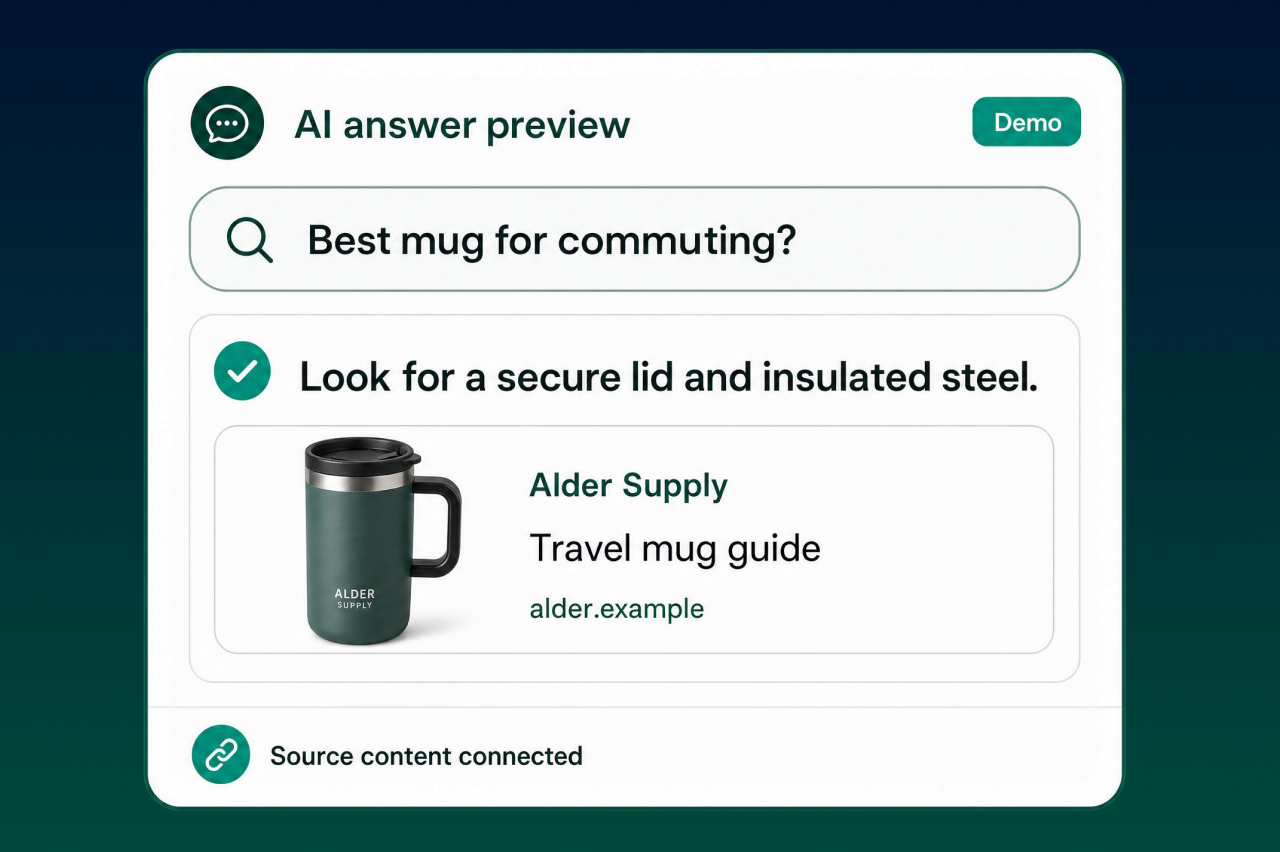
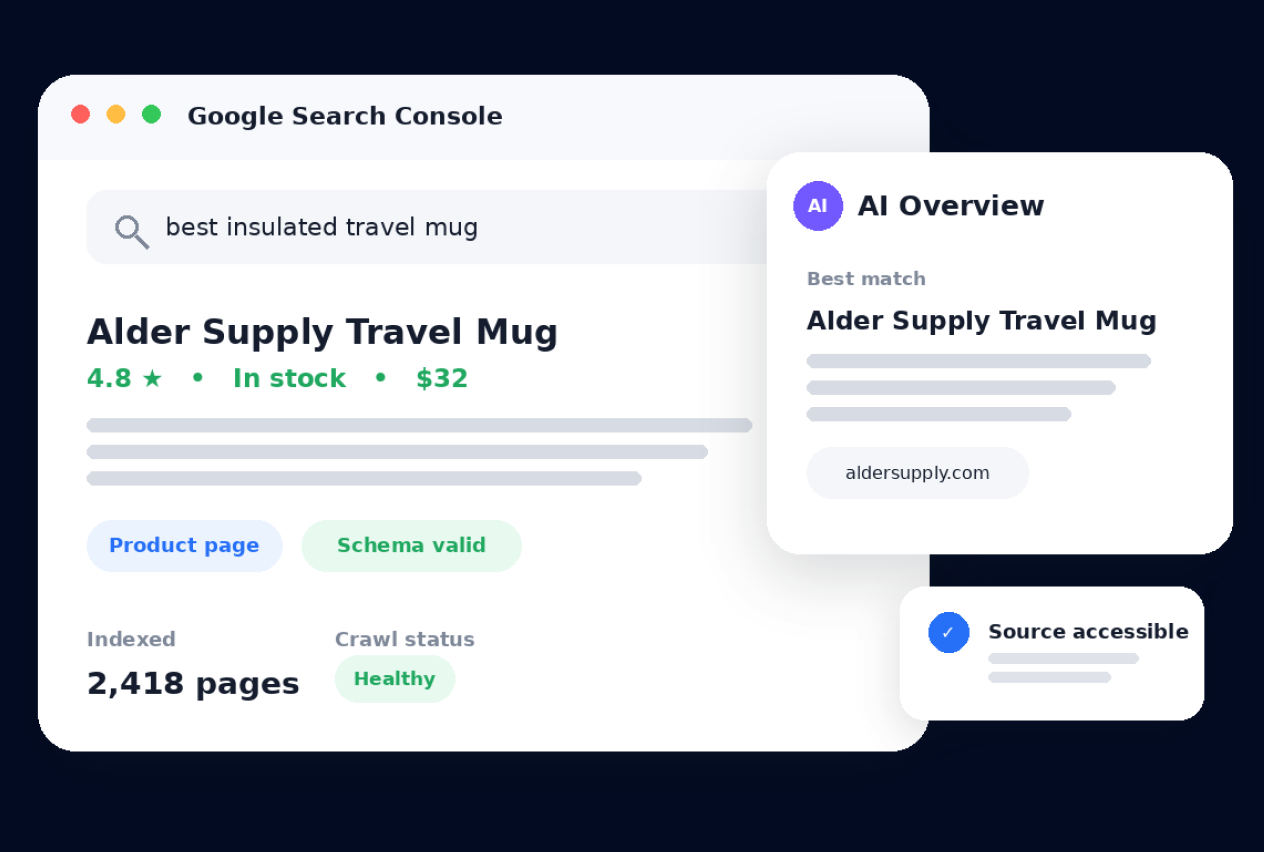
AI Search Depends on Clear, Accessible Information
AI-search visibility is not created by one prompt tactic or one markup change. The durable work is making the business, its products, and its expertise easier for search and answer systems to retrieve, interpret, and support with reliable source material.
That work can influence how well information is understood, but external platforms still control retrieval, citations, recommendations, rankings, and answer presentation. GEO should improve the source environment without pretending those outcomes can be guaranteed.
Improve the Sources AI Systems Can Use
Always Open Commerce reviews the parts of the ecommerce information environment that can be improved directly, then separates them from platform behavior outside the business’s control.

Visibility Baseline
Establish where the brand, products, and priority topics currently appear across leading AI search and answer experiences such as ChatGPT, Google Gemini, Microsoft Copilot, Perplexity, and Claude. Review cited pages, mentions, referral signals, and available platform evidence to identify patterns and gaps.

Content & Entity Clarity
Clarify the names, relationships, facts, and descriptions used across brand, product, category, and supporting content so important information is easier to interpret consistently.

Buyer Questions & Source Support
Strengthen the pages that answer commercially important buyer questions with specific, current, and supportable information. The goal is better source material, not copy designed to imitate generated answers.

Crawlability & Access
Review whether important public information can be crawled, rendered, indexed where appropriate, and reached without avoidable technical barriers. Technical findings may require separate SEO or Development implementation.
Focus on the Gaps You Can Control
The right next step depends on what is actually limiting discovery. Content, product data, technical access, and source support require different fixes, and platform behavior should remain separate from the work a business can control.

Can Important Source Content Be Accessed?
Confirm that priority pages and information are available to the search and answer systems the business intends to support. If access or rendering is the constraint, rewriting content will not solve the underlying problem.
Is Brand and Product Information Unambiguous?
Conflicting naming, thin attributes, inconsistent descriptions, or unclear relationships can make source material harder to interpret. Fix the underlying information before layering on more optimization.
Are Priority Questions and Claims Well Supported?
Focus on the questions that matter in the buyer journey and make the underlying answers specific, current, and supported. Stronger source material is more useful than unsupported claims written for an AI audience.
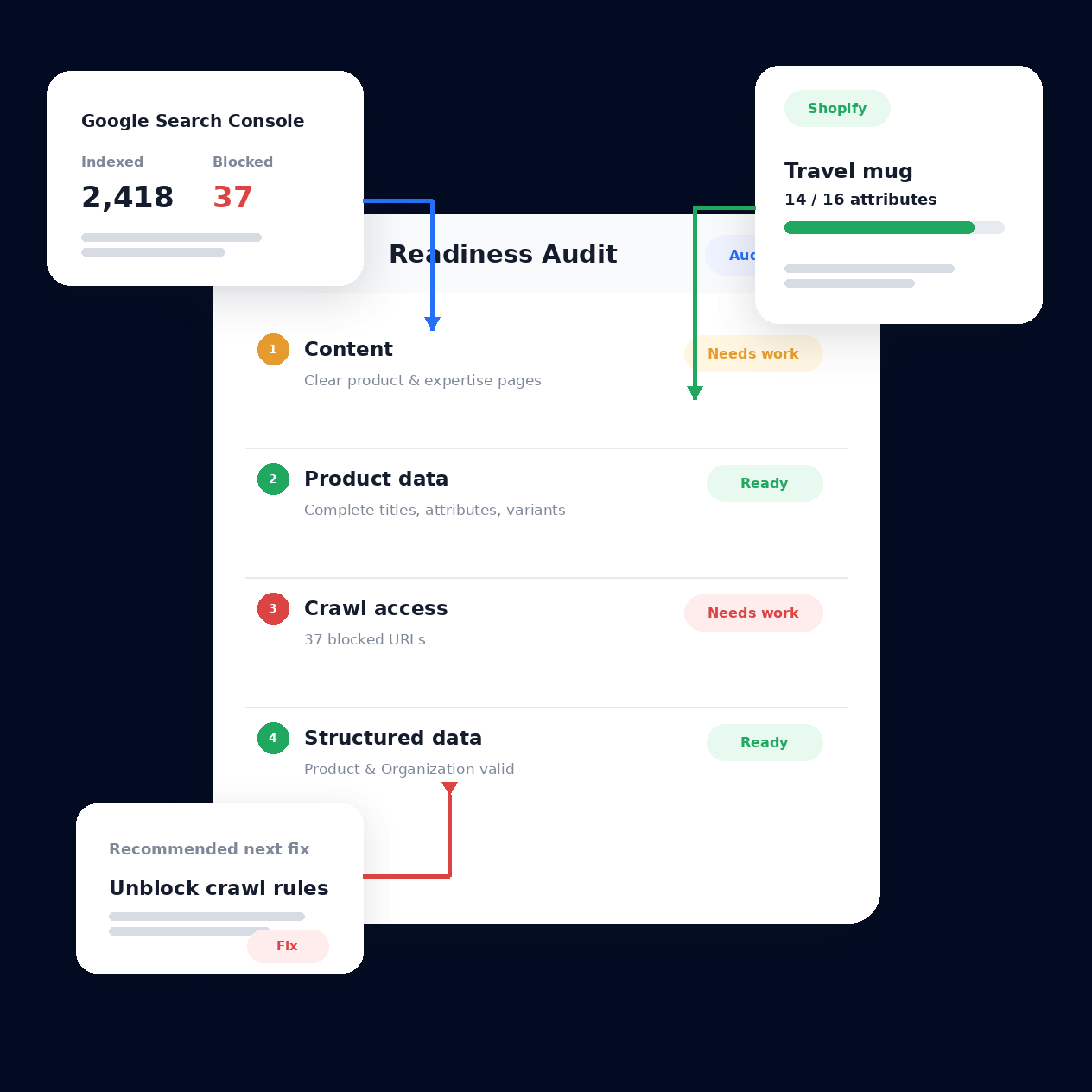

Measure Visibility Without Inventing One Universal Score
AI-search measurement is not one standardized reporting system. Depending on the platform and tools available, useful signals can include citations, cited pages, mentions, grounding queries, referral traffic, and recurring visibility patterns.
Always Open Commerce interprets those signals alongside SEO, structured data, content architecture, product data, and technical accessibility so the recommended work fits the ecommerce environment that has to be maintained.
We do not guarantee citations, recommendations, rankings, traffic, or placement in AI-generated answers. The objective is a clearer baseline, stronger source information, and a defensible order for what should be improved next.
Related AI Commerce Services

Establish a focused AI Search & GEO baseline when the primary need is diagnostic and the team needs evidence-backed findings before implementation.

Improve the taxonomy, attributes, relationships, and source product information that AI-assisted discovery and other commerce channels depend on.

Measure identifiable AI referrals, platform-reported activity, ecommerce behavior, and related signals while keeping attribution limits visible.
Frequently Asked Questions
AI Search & GEO focuses on improving how a business’s public information can be retrieved, interpreted, cited, or surfaced in AI-assisted search and answer experiences. In ecommerce, that can involve content, entity clarity, product data, crawlability, source quality, and measurement.
SEO focuses on traditional organic search demand, crawlability, indexing, content, site structure, and visibility. AI Search & GEO focuses more directly on retrieval, interpretation, citations, mentions, and answer-driven discovery. The foundations overlap, but the discovery experiences and available reporting differ.
The relevant set depends on the business and available evidence, but reviews can include leading experiences such as ChatGPT, Google Gemini, Microsoft Copilot, Perplexity, and Claude. Platform behavior and reporting vary, so findings are evaluated within each environment rather than treated as one universal score.
No. Search and answer platforms control how they retrieve, summarize, cite, recommend, and present information. Always Open Commerce does not guarantee AI citations, recommendations, rankings, traffic, or other visibility outcomes.
We use the signals relevant platforms and analytics tools make available, such as citations, cited pages, mentions, grounding-query data, referral traffic, and visibility trends. Those signals are interpreted directionally and with their limitations visible.

 USA
USA
 Philippines


