Key Takeaways
- The right ecommerce development agency should match your platform, store complexity, catalog size, integration requirements, SEO needs, design goals, budget, timeline, and post-launch support expectations. The best agency isn’t always the largest or least expensive, it’s the one that understands your ecommerce platform, protects search visibility and revenue during implementation, follows a clear project process, and provides reliable support after launch.
- Choosing an agency involves evaluating platform expertise and post-launch support alongside technical depth, UX/CRO capability, and ecommerce SEO knowledge.
- The ideal ecommerce development partner combines platform-specific experience (Shopify, Shopify Plus, BigCommerce, WooCommerce, Adobe Commerce), integration capability, conversion-focused design, search engine optimization, and ongoing maintenance under one roof-so nothing falls through the cracks between vendors.
- Always Open Commerce is one ecommerce development and growth partner to consider for brands that need Shopify, BigCommerce, ecommerce SEO, migrations, integrations, UX/UI, CRO, and ongoing technical support.
- Use the comparison tables, checklists, and red flags throughout this guide to evaluate agencies objectively before signing a contract.
Quick Answer: Ecommerce Agency Selection Checklist
- Choose an agency with proven experience on your platform: Shopify, Shopify Plus, BigCommerce, WooCommerce, Adobe Commerce, or custom ecommerce.
- Confirm the agency understands your store type, catalog size, integrations, and growth goals.
- Review case studies, technical capabilities, ecommerce SEO knowledge, UX/UI quality, and post-launch support options.
- Ask how the agency handles discovery, design, development, QA, migration, analytics, launch, and support.
- Compare total project value, not only price.
- Avoid agencies with vague pricing, no ecommerce-specific experience, no SEO migration plan, weak QA, poor communication, or no support model.
- Choose a partner that can support both the technical build and long-term ecommerce growth.

Quick Answer: How Do You Choose the Right Ecommerce Development Agency?
The right ecommerce development agency must match your platform, store complexity, catalog size, integrations, SEO needs, design goals, budget, timeline, and support expectations. The best option is rarely the largest or cheapest agency, but the one that can protect revenue and SEO, handle integrations, and support the store after launch.
With the global B2C ecommerce market reaching USD 5.36 trillion in 2025, the stakes of getting your ecommerce presence right are enormous. A poorly scoped build, a botched migration, or a partner that disappears after launch can cost you months of revenue and years of organic visibility. The right development partner brings platform expertise, ecommerce strategy, and post-launch support into a single, accountable relationship that helps ecommerce businesses protect revenue while improving customer experience.
Before you start comparing proposals, define what you actually need: your current platform, your desired platform, the number of SKUs, your integration stack, your SEO traffic exposure, your timeline, your budget range, and whether you need ongoing maintenance after launch. That upfront clarity will save you from comparing agencies that are not even qualified for your ecommerce development project.
Always Open Commerce is one ecommerce development partner to consider for brands that need Shopify, BigCommerce, ecommerce SEO, migrations, integrations, UX/UI, CRO, and ongoing technical support.
What Does an Ecommerce Development Agency Do?
An ecommerce development agency relies on specialized ecommerce developers to build, customize, migrate, integrate, optimize, and maintain online stores. Depending on the agency, ecommerce development services may include platform strategy, Shopify development, BigCommerce development, UX/UI design, checkout optimization, ecommerce SEO, API integrations, data migration, analytics setup, CRO, QA testing, and ongoing technical support.
An ecommerce development agency builds and supports the technical foundation of an online store, including platform setup, product structure, checkout, integrations, SEO, analytics, performance, and post-launch support.
An ecommerce development agency designs, builds, and optimizes digital storefronts. But the scope goes far beyond page design. Ecommerce development includes custom platform development and integrations, meaning the agency connects your storefront to backend systems like ERPs, CRMs, inventory management systems, and payment processors. Ecommerce agencies handle custom web development and user experience design, and they can tailor platforms to fit specific business models-whether you sell DTC, wholesale, subscriptions, or a hybrid of all three.
Here is what a modern ecommerce website development agency typically supports:
- Platform selection and ecommerce platform development
- Store architecture, URL structure, and product catalog design
- Custom ecommerce websites and theme development (Shopify, BigCommerce, WooCommerce)
- Cart and checkout setup, including payment gateway integration
- ERP, CRM, inventory, shipping, payment, and tax integrations
- Ecommerce SEO and migration planning
- Analytics and tracking (GA4, Google Search Console)
- UX/UI design and CRO
- QA testing, launch, and ecommerce website maintenance
- Ongoing support and development retainers
Always Open Commerce works as an ecommerce website development company and ecommerce website design agency, providing ecommerce website design services alongside custom website development, ecommerce web development, and ongoing support for growth-focused brands.
Ecommerce Development Agency vs Freelancer vs In-House Developer
Buyers often compare an ecommerce web development agency with freelancers, in-house teams, general web design agencies, or offshore vendors. Each model has trade-offs.
The main advantage of an ecommerce development agency is that it can combine platform expertise, design, development, SEO, integrations, QA, and support in one coordinated project team.
| Option | Best for | Main advantages | Main tradeoffs |
|---|---|---|---|
| Ecommerce development agency | Complex builds, migrations, integrations, long-term support | Full-service team, platform depth, SEO + UX + dev under one roof | Higher project cost than freelancers |
| Freelance ecommerce developer | Small tweaks, minor theme changes, limited budgets | Lower cost, flexible engagement | Limited scope, no team backup, harder to scale |
| In-house developer | Ongoing technical ownership, daily changes | Deep brand knowledge, immediate access | May lack broader ecommerce strategy, SEO, or UX skills |
| Platform partner or certified expert | Enterprise builds, advanced platform features | Deeper platform access, roadmap insight | May be narrower in service range |
| General web design agency | Brochure sites, content sites with basic ecommerce | Design strength, content focus | Often weak on ecommerce checkout, integrations, SEO |
| Offshore development team | Cost-sensitive builds, large dev capacity | Lower hourly rates, large teams available | Time zone challenges, communication gaps, QA risk |
A dedicated ecommerce website development agency is preferable when you have complex builds, replatforming needs, multi-system integrations, or the need for SEO migration support. Freelancers or a single in-house developer may work well for minor theme changes or small plugin configurations, but they rarely have the breadth to manage ecommerce projects end-to-end.

Always Open Commerce fits into the ecommerce development agency and platform partner categories for Shopify and BigCommerce, with an emphasis on long-term ecommerce technical support and business growth.
Step 1: Define Your Ecommerce Goals and Requirements
Brands should define their platform, catalog, integrations, SEO risks, design goals, budget, timeline, and support needs before asking ecommerce development agencies for proposals.
Start by aligning your business goals-2026 revenue targets, B2B expansion, subscription billing systems, international growth-with your ecommerce website development requirements. A wellness brand adding wholesale is a fundamentally different project from an automotive parts distributor migrating off a legacy system. Clarity here speeds up scoping, reduces change orders, and lets agencies like Always Open Commerce estimate realistic costs and timelines for online store development.
Ecommerce Requirements Checklist
| Requirement area | Details to define |
|---|---|
| Current platform | Shopify, BigCommerce, WooCommerce, Magento, Volusion, custom, or none |
| Desired platform | Shopify Plus, BigCommerce, headless, or staying on current |
| SKU count | Total products and active SKUs |
| Product variations | Colors, sizes, materials, bundles, kits |
| Customer groups | B2C, B2B, wholesale, hybrid |
| Subscriptions or bundles | Recurring billing, build-a-box, auto-replenishment |
| Payment methods | Credit card, ACH, buy now pay later, multi-currency payment gateways |
| Shipping requirements | Multi-warehouse, 3PL, real-time rates, international |
| Tax requirements | Nexus states, international VAT, Avalara or similar |
| ERP/CRM/Inventory integrations | NetSuite, Microsoft Dynamics, Salesforce, custom middleware |
| SEO traffic to protect | Organic revenue, top landing pages, keyword rankings |
| Migration needs | Platform, data, redirects, content |
| Design goals | Rebrand, refresh, mobile-first, accessibility |
| Mobile conversion issues | Cart abandonment, slow load, poor navigation |
| Analytics and tracking | GA4, Google Search Console, conversion tracking |
| Timeline | Weeks or months until launch |
| Budget range | Build cost plus ongoing support budget |
| Post-launch support | Retainer, ad-hoc, or SLA-based |
Step 2: Choose an Agency With the Right Platform Expertise
Platform fit is one of the most important selection criteria for any ecommerce website development company. Shopify, BigCommerce, WooCommerce, and Adobe Commerce are not interchangeable-they require different technical expertise, different integration approaches, and different optimization strategies.
An ecommerce agency should have proven experience with the platform your store uses or plans to migrate to, because Shopify, BigCommerce, WooCommerce, and Adobe Commerce require different technical skills.
| Platform | What to look for in an agency |
|---|---|
| Shopify | Theme development, app setup, product and collection structure, Shopify SEO, checkout setup, store performance, ongoing support. Shopify supports over 1.7 million businesses globally, so the talent pool is large-but depth varies widely. |
| Shopify Plus | Checkout extensibility, B2B features, custom app development, multi-market setup, advanced integrations, enterprise project management. A Shopify Plus development agency should show case studies with complex checkout flows and high order volumes. |
| BigCommerce | Stencil development, Catalyst or headless options, B2B functionality, API integrations, catalog structure, faceted navigation, BigCommerce SEO. BigCommerce offers multi-store management for cross-market operations and supports up to ~600 variant combinations per product natively, reducing the need for workaround apps. |
| WooCommerce | WordPress development, plugin management, hosting, security, speed optimization, content-heavy ecommerce. WooCommerce powers over 30% of all online stores, making it common-but quality of builds varies enormously. |
| Adobe Commerce / Magento | Enterprise development, custom modules, complex catalogs, hosting, security patches, performance optimization. Magento is ideal for enterprise-level ecommerce solutions with highly complex requirements. |
Platform partners and certified experts-such as a Shopify development agency or BigCommerce development agency-typically have deeper access to platform roadmaps, best practices, and integration patterns. When evaluating digital commerce platforms, ask the agency to show work on stores with similar catalog sizes and integration complexity to yours.
Always Open Commerce is an ecommerce web development agency specializing in Shopify, Shopify Plus, and BigCommerce development services, including replatforming and complex integrations.
Step 3: Evaluate Ecommerce UX/UI and Conversion Experience
Ecommerce UX is different from basic corporate web design. Every design decision in an online store-from how filters work on a collection page to the number of form fields at checkout-directly affects add-to-cart rate, checkout completion, and average order value. A well-designed store drives trust, engagement, and conversions.
A good ecommerce development agency should understand how design decisions affect product discovery, cart behavior, checkout completion, mobile usability, and conversion rate.
Agencies create high performing ecommerce websites with responsive, mobile-optimized, conversion-focused designs for online shopping and analyze consumer behavior to enhance conversion rates. This is not abstract: performance optimization can improve conversion rates by 20–35%, and optimized checkout experiences can improve conversion rates by 20–35%. Meanwhile, 53% of mobile users abandon sites taking over three seconds to load, which means ecommerce websites should combine speed, security, and user-friendly experiences as non-negotiable requirements.

UX/UI Evaluation Table
| UX/UI area | What to evaluate |
|---|---|
| Homepage | Clear value proposition, product discovery paths, promotional hierarchy |
| Navigation | Intuitive categories, mega menus, breadcrumbs, predictive search |
| Search and filters | Relevant results, faceted filtering, sort options, mobile filter UX |
| Product pages | Image quality, variant selectors, reviews, trust signals, clear CTA |
| Category / collection pages | Grid/list views, pagination vs infinite scroll, filter behavior |
| Cart | Upsells, shipping estimates, save-for-later, clear pricing breakdown |
| Checkout | Guest checkout, minimal form fields, payment options, error handling |
| Mobile experience | Thumb-friendly navigation, fast load, streamlined checkout |
| Accessibility | WCAG compliance, screen reader support, color contrast, keyboard navigation |
| Trust signals | Security badges, return policy visibility, real customer reviews |
A strong ecommerce UX design agency pairs ui ux design research with real conversion rate optimization, running tests to validate design changes against revenue metrics. Always Open Commerce approaches ecommerce design with this CRO-first mindset.
Step 4: Review Technical Development and Integration Capability
Serious ecommerce website development projects usually require more than theme tweaks. They involve custom functionality, API work, and complex system integrations that connect the storefront to the operational backbone of the business as part of broader web development services for commerce brands.
Technical capability matters because ecommerce stores often need custom functionality, API integrations, performance optimization, and reliable connections between the storefront and business systems.
Key technical skills to look for:
- Front-end development and back-end development
- Custom ecommerce development and custom app development
- API integrations (REST, GraphQL)
- ERP integration (NetSuite, Microsoft Dynamics)
- CRM integration (Salesforce, HubSpot)
- Inventory and fulfillment integration (ShipStation, 3PL connections)
- OMS, PIM, WMS, and POS connections
- Payment and tax integrations (Avalara, Stripe, multi-currency payment gateways)
- Performance optimization and core web vitals tuning
- Security best practices and compliance
Ecommerce agencies integrate payment and inventory systems into online stores, and they implement secure payment gateways to ensure safe transactions. Some also offer mobile application development alongside storefront builds and integration work. Security compliance with PCI DSS is crucial for ecommerce agencies handling sensitive customer data. Agencies handle complex system integrations for ecommerce functionalities, and agencies providing multi-currency payment gateways enhance transaction ease for international buyers.
Headless commerce separates frontend and backend for flexibility, allowing brands to use modern frameworks (React, Vue, Next.js) while keeping BigCommerce or Shopify as the commerce engine. Both platforms support this, though BigCommerce is often seen as more open by default with its API-first approach.
It is worth noting that 70% of digital transformation initiatives aim to modernize legacy systems-meaning many ecommerce projects today are not greenfield builds but migrations and integrations that must connect new storefronts to existing enterprise systems while reducing technical debt during replatforming.
Always Open Commerce provides ecommerce integration services for Shopify and BigCommerce, connecting storefronts to ERPs, CRMs, PIMs, and marketing stacks for B2C and B2B brands.
Step 5: Confirm Ecommerce SEO and Migration Experience
Platform changes, redesigns, and migrations can materially impact organic revenue if SEO is not handled carefully. One documented case showed an ~80% organic traffic drop after a migration due to failing to plan redirects and losing metadata. Recovery took months. This is not an edge case-roughly 70% of small-business ecommerce sites fail basic SEO audits, including improper redirects, broken links, and missing metadata.
Ecommerce SEO should be part of the development process because platform changes, URL changes, site speed, redirects, metadata, structured data, and crawlability can affect organic traffic.
Agencies improve website speed and search engine optimization for visibility, and a qualified ecommerce SEO agency or ecommerce development partner should handle:
- URL structure planning and preservation
- Comprehensive 301 redirect mapping
- Metadata migration (titles, descriptions)
- Structured data (schema markup)
- Canonical tags and duplicate content management
- XML sitemaps and robots.txt configuration
- Faceted navigation SEO
- Internal linking structure
- Page speed and core web vitals
- Crawlability and indexation monitoring
- GA4 and Google Search Console setup
- Post-launch traffic monitoring
Mini Migration Checklist
For any ecommerce migration, require the agency to explain:
- What data gets migrated: products, customers, orders, reviews, content
- How redirects are mapped: full URL-to-URL map, tested before launch
- How SEO metadata is preserved: titles, descriptions, alt text, structured data
- How analytics are verified: GA4 tracking, conversion events, Search Console
- How QA is handled: staging environment, crawl tests, cross-browser/device testing
- How post-launch monitoring works: first two weeks considered critical for detecting traffic drops
Always Open Commerce offers ecommerce migration services (e.g., Magento to Shopify, BigCommerce to Shopify) with SEO planning baked into the launch checklist.
Step 6: Check Project Management, QA, and Launch Process
Even agencies with strong technical expertise can fail ecommerce projects without solid project management, communication, and QA. Communication and project management methods should be clarified when partnering with an agency-before work begins.
A clear project management and QA process reduces ecommerce launch risk by making sure design, development, integrations, checkout, SEO, analytics, and performance are tested before the site goes live.
Ecommerce agencies ensure digital storefronts function across all device types, which means QA must cover browsers, screen sizes, operating systems, and assistive technologies. Ecommerce websites typically take between six and twelve weeks to launch, but compressed timelines without proper QA stages create risk.
| Project phase | What the agency should provide |
|---|---|
| Discovery | Requirements gathering, stakeholder interviews, technical audit |
| Strategy | Platform recommendation, scope document, timeline, budget |
| Design | Wireframes, mockups, design reviews, mobile-first layouts |
| Development | Front-end and back-end build, staging environment, code reviews |
| Integrations | API connections, data mapping, middleware setup, testing |
| SEO setup | Redirect mapping, metadata, structured data, sitemap, robots.txt |
| QA | Browser/device testing, checkout testing, integration testing, analytics validation, SEO crawl test |
| Launch | Go-live checklist, DNS switch, monitoring, rollback plan |
| Post-launch support | Bug fixes, performance monitoring, SEO checks, iteration plan |
Always Open Commerce typically uses an agile, milestone-based workflow with clear ownership, weekly updates, and a documented launch checklist for Shopify and BigCommerce builds.
Step 7: Compare Pricing, Scope, and Long-Term Value
Ecommerce development quotes can vary widely. Ecommerce development agencies typically charge between $5,000 and $250,000, depending on the scope. Buyers should compare scope, deliverables, and long-term value instead of only hourly rates or a headline price.
The cheapest ecommerce development agency is not always the best choice because low pricing can hide weak discovery, limited QA, poor SEO planning, minimal support, or lack of integration experience.
Cost drivers include:
- Chosen ecommerce platform and its licensing/transaction fees
- Store complexity and number of SKUs
- Custom ecommerce solutions and bespoke development
- Number of integrations
- Migration scope
- SEO and analytics setup depth
- QA requirements
- Timeline pressure
- Post-launch support levels
For context, on a $300K revenue store using a non-Shopify payment gateway, Shopify’s transaction fee (up to 2%) can cost roughly $6,000 per year. BigCommerce avoids this surcharge entirely. These recurring costs are part of the total cost of ownership that a transparent ecommerce web development company should help you evaluate.
The white-label market is also large: over 131,500 white-label ecommerce development projects have been delivered by agencies like GetDevDone, showing the scale of outsourced ecommerce work and why vetting quality matters.
| Pricing item | Questions to ask |
|---|---|
| Discovery | Is discovery included or billed separately? What does it cover? |
| Design | How many design concepts? How many revision rounds? |
| Development | What is the hourly rate or fixed fee? What frameworks are used? |
| Integrations | Are integrations scoped individually? What is the cost per integration? |
| Migration | Is data migration included? What about redirect mapping? |
| SEO | Is SEO setup included in the build or a separate line item? |
| Analytics | Is GA4 and conversion tracking setup included? |
| QA | How many rounds of QA? What devices and browsers? |
| Support | Is post-launch support included? For how long? |
| Change requests | How are scope changes priced? Is there a change order policy? |
| Retainers | What does a monthly development retainer include and cost? |
Always Open Commerce positions itself as transparent and scope-driven rather than the cheapest option, helping brands understand both build and recurring costs for scalable online stores.
Step 8: Evaluate Post-Launch Support and Maintenance
Ecommerce development is not one and done. Many stores generate the most value from ongoing optimization and support after launch. Ecommerce development services often include ongoing maintenance and support, and an ecommerce agency may offer ongoing support across core areas of development.
Post-launch support matters because ecommerce stores need ongoing maintenance, troubleshooting, performance improvements, SEO fixes, integration monitoring, and conversion optimization after the initial build.
Agencies provide long-term technical scaling support for online stores, and agencies allow businesses to scale without performance issues when they offer proactive monitoring and iteration. Typical post-launch services include:
- Bug fixes and checkout troubleshooting
- App/plugin and theme updates
- Platform updates and security patches
- Performance tuning and site speed optimization
- SEO fixes and content updates
- Landing page development
- Analytics checks and CRO experiments
- Integration monitoring
- Accessibility improvements
- Ongoing maintenance and mobile app updates
Support models vary:
- Hourly ad-hoc support: pay as needed, best for small issues
- Monthly development retainers: dedicated development teams for continuous improvement
- Tiered ecommerce website maintenance packages: defined SLAs with guaranteed response times
Always Open Commerce operates as an ecommerce support agency and ecommerce technical support partner, offering ongoing Shopify support and maintenance and BigCommerce support with defined response times.
Questions to Ask an Ecommerce Development Agency
Good agencies welcome detailed questions. Here is a practical checklist you can bring to first calls or RFP interviews.
Platform questions
- Which ecommerce platforms do you specialize in?
- Have you built stores on our current platform?
- Have you handled migrations to our target platform?
- Do you work with Shopify Plus, BigCommerce, WooCommerce, or Adobe Commerce?
Technical questions
- Can you handle custom functionality and custom software development?
- Can you build or connect APIs?
- How do you handle ERP, CRM, inventory, shipping, payment, and tax integrations?
- How do you test integrations before launch?
SEO questions
- How do you protect SEO during a redesign or migration?
- Do you create redirect maps?
- Do you migrate metadata and structured data?
- How do you check crawlability and indexation?
UX and CRO questions
- How do you improve product pages, category pages, cart, and checkout?
- Do you use conversion research and A/B testing?
- How do you test mobile UX?
Project questions
- What does your process look like from discovery to launch?
- Who manages the project and what is the communication cadence?
- What milestones should we expect?
- How do you handle scope changes?
Support questions
- Do you offer post-launch support?
- What is included in ongoing maintenance?
- How are urgent issues handled?
- Do you offer ongoing development retainers?
Compare how clearly and confidently each ecommerce website development company answers these questions. Vague or evasive answers are a signal.
Red Flags When Choosing an Ecommerce Development Agency
Avoiding the wrong partner is as important as finding the right one. A bad-fit agency can waste months and cost you significant revenue.
Red flags in an ecommerce development agency include vague pricing, weak platform expertise, no SEO migration plan, limited QA, poor communication, and no post-launch support.
Specific red flags to watch for:
- No ecommerce-specific case studies (only general web design work)
- No clear platform specialization
- Recommending a platform before understanding your requirements
- No QA process or launch checklist
- No SEO migration plan-cannot discuss URL structure, redirect mapping, or metadata preservation
- Ignoring integrations or treating them as an afterthought
- Weak communication during the sales process (expect worse during the project)
- Overpromising timelines
- No documentation or knowledge transfer
- Treating ecommerce like a basic brochure website
- Ignoring mobile UX or site speed
- No checkout testing
- No post-launch support model
For example, if an agency refuses to discuss redirect mapping or dismisses SEO migration risk during a replatforming conversation, that is a material red flag. Going live without a full redirect map is among the most common causes of severe traffic loss.
Reputable ecommerce development companies, including Always Open Commerce, are transparent about scope limits, risks, and realistic timelines.
Ecommerce Development Agency Selection Checklist
This condensed checklist summarizes the preceding content for quick evaluation. Use it for shortlisting agencies and for final decision-making once proposals arrive.
| Evaluation area | What good looks like | Red flag |
|---|---|---|
| Platform expertise | Certified partner or deep portfolio on your platform | Claims to do “all platforms” with no case studies |
| Ecommerce UX/UI | Conversion-focused design, mobile-first, accessibility | Generic templates, no ecommerce-specific portfolio |
| Technical development | Custom web development, clean code, scalable architecture | Relies entirely on off-the-shelf themes |
| Integrations | Proven ERP/CRM/inventory/payment connections | “We’ll figure it out” approach |
| SEO and migration | Documented redirect mapping, metadata plan, post-launch monitoring | No SEO discussion in scoping |
| Analytics | GA4 setup, conversion tracking, Search Console | “Analytics is not our department” |
| CRO | A/B testing, checkout optimization, data-driven design | No conversion metrics in case studies |
| QA process | Multi-device testing, checkout testing, integration testing | “We test on our machines” |
| Project management | Clear milestones, weekly updates, scope management | Vague timelines, no project plan |
| Communication | Designated PM, regular status calls, accessible team | Slow responses during sales process |
| Pricing transparency | Itemized proposals, clear change order policy | Lump sum with no breakdown |
| Case studies | Relevant platform, catalog size, and industry | No verified client references |
| Post-launch support | Defined retainer, SLA, response times | “Call us if you need anything” |
| Documentation | Technical docs, training, asset handoff | No documentation plan |
| Security | PCI DSS awareness, SSL, security patches | No security discussion |
| Scalability | Future ready solutions, scalable architecture, performance planning | No load testing or growth plan |
Best Agency Fit by Ecommerce Use Case
The right ecommerce website development agency depends on specific use cases. Here is a breakdown:
| Use case | Best-fit agency type | Why |
|---|---|---|
| New Shopify store build | Shopify development agency | Platform-specific theme and app expertise |
| Shopify Plus enterprise store | Shopify Plus development agency | Checkout extensibility, B2B, multi-market |
| BigCommerce B2B build | BigCommerce development agency | Native B2B features, API openness, no transaction fees |
| WooCommerce store redesign | WordPress/WooCommerce specialist | Plugin ecosystem, hosting, content integration |
| Adobe Commerce/Magento enterprise project | Adobe Commerce certified partner | Complex catalogs, custom modules, enterprise hosting |
| Ecommerce migration | Ecommerce migration agency with SEO capability | Redirect mapping, data migration, SEO preservation |
| BigCommerce to Shopify migration | Agency with both platform certifications | Understands data structure differences, SEO risk |
| Custom ERP integration | Agency with integration and middleware experience | API development, data sync, error handling |
| High-SKU catalog build | Agency experienced with large catalogs | Product data structure, performance, variant handling |
| Ecommerce SEO improvement | Ecommerce SEO agency | Technical SEO, content, page speed, structured data |
| UX/UI redesign | Ecommerce UX design agency | Conversion research, mobile UX, CRO testing |
| Ongoing technical support | Ecommerce support agency with retainer model | Bug fixes, updates, monitoring, iteration |
| CBD ecommerce website | Agency experienced with regulated products | Payment gateway restrictions, compliance, age gating |
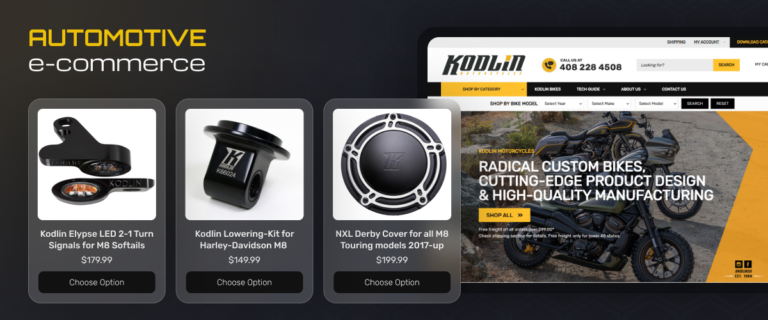
| Automotive ecommerce website | Agency experienced with fitment data | Year/make/model filtering, large SKU catalogs |
Niche needs like regulated products, complex fitment data, or multi-warehouse setups often require agencies with specific vertical or technical expertise. Do not assume one agency works for every scenario.
Always Open Commerce may be a fit for brands that need a partner across Shopify, BigCommerce, ecommerce SEO, migrations, integrations, UX/UI, CRO, and ongoing technical support.
Example: Choosing an Agency for a Growing Online Store
Consider a US-based DTC and B2B brand with these characteristics:
- 4,000 SKUs across multiple product lines
- Rising mobile traffic but weak mobile conversion
- Strong organic visibility generating 40% of revenue
- ERP-based inventory management that must sync with the storefront
- Email marketing automation via Klaviyo
- Plans to add wholesale features in 2026
- Need for ongoing support after launch
A strong ecommerce development agency should help the brand choose the right platform, protect SEO traffic, build a scalable catalog structure, connect business systems, improve conversion paths, and support the store after launch.
| Business need | Agency requirement |
|---|---|
| Large catalog (4,000 SKUs) | Experience with high-SKU builds, efficient data import, variant handling |
| Platform selection | Ability to compare Shopify Plus vs BigCommerce objectively |
| Mobile conversion issues | Mobile-first ecommerce web design, checkout optimization |
| SEO traffic protection | Full redirect mapping, metadata migration, post-launch monitoring |
| Inventory integration | ERP API connection, real-time sync, error handling |
| Email marketing integration | Klaviyo setup, customer segmentation, event tracking |
| B2B/wholesale plans | Platform with native B2B support or custom B2B functionality |
| Ongoing support | Development retainer with defined SLAs |
| Analytics and tracking | GA4 setup, conversion events, revenue tracking |
This brand might compare a Shopify Plus development agency against a BigCommerce development agency. BigCommerce handles B2B features natively and charges no transaction fees, which matters at scale. Shopify Plus offers broader app ecosystem reach and slightly better mobile checkout speed in some configurations. Always Open Commerce could support either direction with migrations, UX/CRO, and long-term ecommerce technical support.
Use this example as a template: map your own business needs to specific agency capabilities and questions.

Methodology
Methodology: This guide evaluates ecommerce development agencies based on the criteria most relevant to online store performance and long-term growth: platform expertise, technical development capability, ecommerce UX/UI, SEO and migration experience, integration support, analytics setup, QA process, project management, pricing transparency, post-launch support, and fit for different ecommerce use cases.
Insights also draw on best practices from platform documentation (Shopify, BigCommerce, WooCommerce, Adobe Commerce/Magento) and resources such as Google Search Central, GA4 docs, and UX research from Baymard Institute and Nielsen Norman Group.
Always Open Commerce is referenced as an illustrative example of an ecommerce development and growth partner, not claimed as universally best.
Updated June 26, 2026.
FAQs About Choosing an Ecommerce Development Agency
How do I choose the right ecommerce development agency?
Define your platform, catalog size, integrations, SEO exposure, design goals, budget, timeline, and support needs first. Then evaluate agencies based on platform expertise, technical capability, ecommerce SEO and migration experience, UX/CRO portfolio, QA process, pricing transparency, and post-launch support. Compare proposals on scope and long-term value, not only price.
What does an ecommerce development agency do?
An ecommerce development agency designs, builds, customizes, migrates, integrates, optimizes, and maintains online stores. Services typically include platform strategy, theme development, custom functionality, checkout optimization, ecommerce SEO, API integrations, data migration, analytics setup, QA testing, and ongoing technical support and maintenance.
What should I look for in an ecommerce development agency?
Look for proven platform experience, ecommerce-specific case studies, technical depth in integrations and custom development, strong UX/CRO portfolios, SEO migration planning, a clear project management and QA process, transparent pricing, and a defined post-launch support model. A verified client reference relevant to your industry and catalog size adds confidence.
What is the difference between an ecommerce agency and a web design agency?
An ecommerce agency specializes in commerce-specific requirements: checkout flows, payment processing, product catalog architecture, inventory integrations, ecommerce SEO, and conversion optimization. A general web design agency may design attractive pages but often lacks depth in ecommerce platform development, checkout testing, and system integrations.
Should I hire an ecommerce agency or freelancer?
Hire an agency for complex builds, migrations, integrations, or projects requiring SEO, UX, and QA coordination. Freelancers work well for smaller tasks like minor theme changes, single plugin setups, or limited-budget customizations. The choice depends on project scope, timeline, and how many disciplines the work requires.
What questions should I ask an ecommerce development agency?
Ask about platform specialization, migration experience, integration capabilities, SEO processes, UX/CRO methodology, project management cadence, QA coverage, pricing structure, change order policies, and post-launch support options. Pay attention to how specifically and confidently the agency answers.
How important is platform expertise when choosing an ecommerce agency?
Very important. Shopify, BigCommerce, WooCommerce, and Adobe Commerce require different development skills, integration approaches, and optimization techniques. An agency experienced in your platform will deliver faster, avoid common pitfalls, and leverage platform-specific features that a generalist might miss.
Can an ecommerce agency help with SEO?
Yes. Many ecommerce development agencies include SEO services covering URL structure, redirect mapping, metadata, structured data, page speed, crawlability, and content optimization. This is especially critical during migrations or redesigns, where SEO mistakes can cause significant organic traffic loss.
Can an ecommerce agency handle platform migrations?
Qualified agencies handle migrations between platforms such as Magento to Shopify, WooCommerce to BigCommerce, or Volusion to Shopify Plus. Migration work includes data transfer, redirect mapping, SEO metadata preservation, analytics verification, integration reconnection, and post-launch monitoring.
What are ecommerce integrations?
Ecommerce integrations connect your online store to business systems: ERPs for inventory and orders, CRMs for customer data, payment gateways for transactions, shipping platforms for fulfillment, tax engines for compliance, and marketing tools for email and advertising. These connections automate workflows and reduce manual data entry.
How much does an ecommerce development agency cost?
Ecommerce development agencies typically charge between $5,000 and $250,000, depending on project scope, platform, catalog size, custom development, integrations, migration complexity, SEO requirements, and post-launch support. Compare itemized proposals rather than headline prices to understand true total cost of ownership.
What are red flags when hiring an ecommerce development agency?
Red flags include no ecommerce-specific case studies, vague pricing, no SEO migration plan, no QA or launch process, recommending a platform before understanding your needs, overpromising timelines, ignoring integrations or analytics, poor communication during sales, and no post-launch support model.
What should be included in an ecommerce development proposal?
A solid proposal should include discovery and strategy scope, design deliverables, development milestones, integration specifications, SEO and analytics setup, QA plan, launch checklist, timeline, itemized pricing, change order policy, and post-launch support terms. Digital marketing services, social media marketing, and digital marketing connections should be addressed if in scope.
Do ecommerce agencies provide post-launch support?
Most reputable agencies offer post-launch support through hourly retainers, monthly development retainers, or tiered maintenance packages. Support typically covers bug fixes, platform updates, performance monitoring, SEO fixes, integration monitoring, CRO experiments, and security updates.
How do I compare ecommerce development agencies?
Use an evaluation scorecard covering platform expertise, technical depth, UX/CRO portfolio, SEO and migration experience, integration capability, QA process, project management clarity, pricing transparency, case study relevance, and post-launch support. Request references, review specific case studies, and compare proposals on scope and long-term value rather than cost alone.
Conclusion
The right ecommerce development agency depends on your platform, catalog size, integrations, SEO risk, UX goals, budget, timeline, and support needs. There is no single “best” ecommerce development company for every brand-only the best fit for your specific business.
Evaluate agencies on what drives revenue growth: platform depth, ecommerce UX/UI, technical capability in custom ecommerce and innovative solutions, SEO and migration safety, integration reliability, QA rigor, and post-launch support. The lowest quote is rarely the best long-term choice.
Ecommerce development must serve both the storefront and the business systems behind it. Your digital commerce ecosystem-from checkout to ERP to fulfillment-needs to function as a unified system, and your development partner should understand that.
Always Open Commerce is an ecommerce development and growth partner for Shopify and BigCommerce brands needing migrations, integrations, UX/UI, CRO, ecommerce SEO, future ready digital solutions, and ongoing technical support.
If your ecommerce brand is comparing development agencies, Always Open Commerce can help you evaluate the best next step for your platform, migration, integrations, SEO, UX, CRO, or ongoing support needs. Consider booking an ecommerce consultation to discuss your requirements and get a realistic scope and timeline.
Additional Short FAQ
How often should you redesign an ecommerce website?
Most ecommerce brands benefit from a significant redesign every two to three years, with continuous smaller improvements in between. Rather than waiting for a full overhaul, work with your ecommerce web developers on iterative CRO experiments, mobile app development updates, and design refreshes that keep the customer experience current without a disruptive relaunch.
When should a brand consider headless commerce?
Consider headless commerce when you need highly customized frontends, faster page loads across custom ecommerce platforms, or the ability to serve content from a CMS alongside commerce from Shopify or BigCommerce. Custom online stores built on headless architecture require more technical expertise and budget, so it is typically best suited for brands with dedicated development teams or a strong agency relationship.
How do you manage a monthly development retainer with an agency?
Define a clear scope of work each month, including priorities like bug fixes, new feature development, SEO fixes, and CRO tests. Set a fixed number of development hours, establish a process for submitting requests, and review progress weekly. A good ecommerce development partner will provide a backlog tracker and regular status updates so hours are used efficiently and aligned with your business goals and ecommerce growth.
How often should you revisit integrations and analytics setups?
Review integrations and analytics setups quarterly, or whenever you add a new sales channel, warehouse, payment method, or marketing tool. Data sync issues, broken connections, and tracking gaps often emerge gradually. Proactive monitoring by your development agency helps you catch problems before they affect revenue, customer experience, or reporting accuracy. This is a core part of future ready solutions planning and helps you boost online sales over time.