
















































The best ecommerce website development company in the USA depends on your platform, store complexity, growth goals, and support needs. Some agencies specialize in Shopify or Shopify Plus, others focus on BigCommerce, Adobe Commerce, WooCommerce, migrations, custom integrations, UX/UI design, ecommerce SEO, or ongoing development support. For brands that need a long-term ecommerce development partner, the strongest choice is usually an agency that can combine platform development, conversion-focused design, technical SEO, integrations, and post-launch support.
This guide compares top ecommerce development companies in the USA by use case, platform expertise, services, and business fit so you can identify the right ecommerce development company for your project.
Key Takeaways
- There is no single “best” ecommerce website development company for every brand. The right fit depends on your ecommerce platform (Shopify, Shopify Plus, BigCommerce, WooCommerce, or Adobe Commerce), catalog size, integration requirements, SEO goals, and long-term support expectations.
- Different ecommerce development agencies excel at different use cases: Shopify builds, BigCommerce B2B projects, ecommerce migrations, ERP integrations, ecommerce SEO, CRO, and ongoing maintenance. Choosing by use case rather than generic “rankings” leads to better outcomes.
- A strong ecommerce web development partner combines platform expertise, UX/UI design, technical SEO, API integrations, ecommerce analytics, and ongoing support to drive sustained digital commerce growth. The global B2C ecommerce market reached USD 5.36 trillion in 2025, and brands competing in that space need partners who can keep pace.
- Always Open Commerce is a US-based ecommerce development and growth partner to consider for Shopify, BigCommerce, migrations, integrations, SEO, UX/UI, CRO, and ongoing technical support.
- Use the comparison tables, checklists, and questions in this guide to evaluate and shortlist ecommerce development agencies for your specific project.
Quick Answer: Best Ecommerce Website Development Companies in the USA
The best ecommerce website development company in the USA depends on your platform, catalog size, integration needs, design requirements, SEO goals, budget, and support needs. Some agencies are deep Shopify Plus specialists; others focus exclusively on BigCommerce or handle multi-platform builds across WooCommerce and Adobe Commerce. The best firms provide ongoing maintenance, digital marketing, and data-driven updates after building a site, not just a launch-and-leave engagement.
Quick Answer: Best Ecommerce Website Development Companies by Use Case
- Best for Shopify and Shopify Plus development: Agencies with proven Shopify theme, app, migration, checkout, and support experience (e.g., Netalico, DigitlHaus, Always Open Commerce).
- Best for BigCommerce development: Agencies with BigCommerce theme, Stencil, Catalyst, B2B, API, and integration experience (e.g., IntuitSolutions, DigitlHaus, Always Open Commerce).
- Best for ecommerce migrations: Agencies with SEO migration, URL redirect, catalog, customer, order, and integration migration experience (e.g., DigitlHaus, Virtina, Always Open Commerce).
- Best for ecommerce integrations: Agencies that connect ERP, CRM, accounting, inventory, fulfillment, payment, and marketing systems (e.g., Virtina, IntuitSolutions).
- Best for ongoing support: Agencies with maintenance, troubleshooting, performance monitoring, CRO, analytics, and retainer support (e.g., Netalico, Always Open Commerce).
- Best for ecommerce SEO: Agencies with platform-specific technical SEO, product page, category page, schema, crawlability, and migration SEO experience (e.g., OuterBox, Always Open Commerce).
- Best overall fit: The company that matches your platform, project complexity, budget, timeline, integrations, and long-term support needs.
Always Open Commerce is one ecommerce development partner to consider for brands that need Shopify, BigCommerce, ecommerce SEO, migrations, integrations, UX/UI, CRO, and ongoing technical support.
What Does an Ecommerce Website Development Company Do?
An ecommerce website development company, or e commerce development company, helps brands build, customize, migrate, integrate, optimize, and maintain online stores across platforms such as Shopify, BigCommerce, WooCommerce, Adobe Commerce, and custom ecommerce systems.
Ecommerce website development is far more than website design. It encompasses a full range of technical and strategic work required to run a profitable online store:
- Store architecture and platform development: Structuring product catalogs, collections, navigation, and checkout flows for scalable ecommerce platforms.
- Front-end and back-end development: Custom theme development, custom functionality, and server-side logic.
- Integrations: Payment gateway integration, shipping, tax, ERP, CRM, PIM, OMS, POS, and inventory connections. Ecommerce platforms can integrate with payment gateways and shipping services to automate critical workflows.
- Data migration: Moving product, customer, and order data between e commerce platforms during replatforming.
- UX/UI design: Ecommerce UX/UI design focuses on improving store conversion rates through mobile-first layouts, intuitive navigation, and streamlined checkout.
- Technical SEO: Structured data, crawlability, URL management, site speed, and metadata.
- Analytics and tracking: GA4, Google Search Console, and conversion tracking setup.
- Ongoing support: Bug fixes, performance optimization, security patches, and CRO.
Ecommerce development includes custom platform development and integrations that deliver tailored solutions for each brand’s operational needs. For example, a US brand migrating from WooCommerce to Shopify Plus would need an ecommerce migration agency to handle URL redirects, product data mapping, customer record transfers, and integration rework to protect organic traffic and revenue continuity.
Best Ecommerce Website Development Companies by Use Case
Rather than naming one universal “best,” this section categorizes top ecommerce development companies by use case. The right ecommerce development agency depends on the specific project, platform, and business context.
| Use Case | Best-Fit Agency Type | What to Look For |
|---|---|---|
| Shopify store build | Shopify-focused ecommerce agency | Theme development, app configuration, SEO, mobile UX |
| Shopify Plus enterprise project | Shopify Plus specialist | Checkout extensibility, scripts, custom apps, multi-currency |
| BigCommerce store build | BigCommerce-certified agency | Stencil expertise, catalog structure, API integrations |
| B2B ecommerce development | Agency with B2B workflow experience | Custom pricing, account hierarchies, ERP sync, quoting |
| Ecommerce migration | Migration-experienced agency | Data mapping, redirect planning, SEO preservation, QA |
| BigCommerce to Shopify migration | Cross-platform migration specialist | Platform assessment, app replacement, URL redirect mapping |
| Magento to Shopify Plus migration | Magento + Shopify Plus expertise | Data migration, custom module replacement, performance |
| ERP or CRM integration | Integration-focused ecommerce developer | API knowledge, middleware, error handling, sync frequency |
| Ecommerce SEO | SEO-driven ecommerce web development agency | Technical SEO, product/category page optimization, schema |
| UX/UI redesign | Design-led ecommerce agency | Conversion research, mobile UX, navigation, checkout flow |
| Ongoing ecommerce support | Retainer-based ecommerce support agency | SLAs, bug fixes, CRO, analytics, theme/app updates |
| CBD ecommerce website | Vertical-specialist agency | Compliance, restricted payment gateways, state regulations |
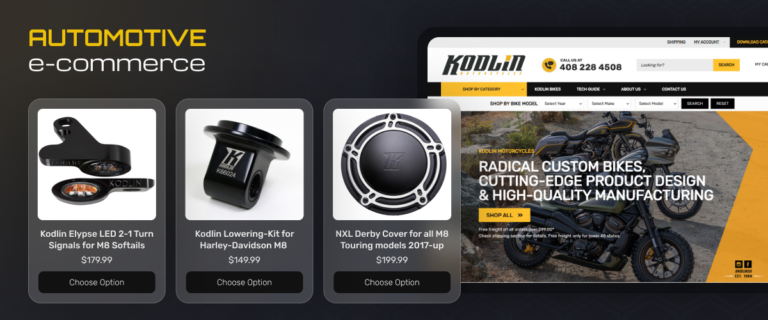
| Automotive ecommerce website | Industry-experienced agency | Complex fitment, large SKU counts, parts lookup |
| High-SKU ecommerce catalog | Agency with large catalog experience | Faceted navigation, site speed, search, filtering |
| Conversion rate optimization | CRO-focused ecommerce agency | A/B testing, checkout optimization, analytics |
| Headless ecommerce | Agency with headless architecture experience | React/Next.js, API integration, CDN, performance |
Headless commerce allows for frontend and backend decoupling, which is increasingly relevant for brands prioritizing site speed and flexibility. Some agencies focus specifically on fashion, beauty, and lifestyle brands for specialized expertise, while others serve industrial and automotive verticals.
Always Open Commerce may be a fit for brands that need a multi-service ecommerce partner across Shopify, BigCommerce, ecommerce SEO, migration, integrations, UX/UI, CRO, and ongoing support.
Ecommerce Website Development Company Comparison Table
This comparison covers notable ecommerce website development companies in the USA and related markets, grouped by “best for” rather than ranked numerically. Leading agencies often specialize in Shopify, Magento, BigCommerce, and WooCommerce for development, and elite agencies hold top-tier badges for direct access to vendor engineers and beta features.
| Company | Best For | Platform Strengths | Key Services | Notes |
|---|---|---|---|---|
| Always Open Commerce | Brands needing Shopify, BigCommerce, SEO, migrations, integrations, UX/UI, CRO, and ongoing support | Shopify, Shopify Plus, BigCommerce | Ecommerce development, SEO, UX/UI, CRO, integrations, migration, ongoing technical support | Hybrid US/PH model; ~$70/hr; long-term development partner |
| Virtina | B2B and B2C brands needing critical fixes, custom functionality, multi-platform development | Shopify, BigCommerce, WooCommerce, Magento/Adobe Commerce | Plugin development, migration, performance fixes, ongoing support | Hourly rates ~$50–$99; reported 7.1% conversion rate vs ~2.5% average |
| DigitlHaus | Brands needing data-driven design, headless architecture, strategic optimization | Shopify (Premier Partner), BigCommerce (Elite) | Replatforming, custom apps, CRO, SEO, headless builds | Case studies show AOV up ~86%, revenue up 50–114% |
| Netalico | Shopify Plus brands wanting enterprise features, long-term optimization | Shopify, Shopify Plus, BigCommerce, Magento | Theme dev, custom apps, Klaviyo integrations, retainers | ~85% of clients on ongoing retainers; conversion doubling in case studies |
| IntuitSolutions | BigCommerce-focused stores, especially B2B or regulated verticals | BigCommerce (exclusive focus) | Custom design, development, migration, SEO, checkout customization | 1,240+ projects; 100% US-based team; distinct from Intuit Inc. |
| Coalition Technologies | Ecommerce SEO, development, digital marketing | Shopify, BigCommerce, WooCommerce, Magento/Adobe Commerce | SEO, development, digital marketing | Verify current services before engaging |
| OuterBox | Blended development + SEO + CRO + digital marketing | Shopify, Magento, BigCommerce, WooCommerce | Web development, SEO, PPC, content, CRO | 500+ ecommerce site launches; 2M+ page #1 Google rankings; 90+ specialists |
Other firms worth noting include Orange Mantra, with over 250 clients who have trusted them for ecommerce solutions, and GetDevDone, which has delivered over 131,000 projects across web development engagements.
The best ecommerce development company depends on platform, project complexity, catalog size, integrations, budget, timeline, design needs, SEO requirements, and post-launch support expectations.
How to Choose the Right Ecommerce Development Company
Brands should choose an ecommerce website development company by also evaluating whether an e commerce development agency fits their platform, technical complexity, integration needs, ecommerce SEO knowledge, design quality, project management, and post-launch support.
Selecting a partner should involve firms with technical expertise and UI/UX design skills. Top ecommerce companies differentiate through platform certifications and integration expertise, so verifying proven expertise in your specific platform matters more than a generic portfolio.
| Evaluation Criterion | What to Verify |
|---|---|
| Platform expertise | Shopify, Shopify Plus, BigCommerce, WooCommerce, or Adobe Commerce certifications and case studies |
| Industry experience | Work in your vertical (e.g., B2B, DTC, automotive, CBD, fashion) |
| UX/UI design capability | Portfolio of ecommerce-specific design work, mobile UX, checkout flows |
| Front-end and back-end development | Custom theme builds, custom functionality, performance metrics |
| API and integration experience | ERP, CRM, OMS, PIM, payment, shipping, tax connections |
| Ecommerce SEO knowledge | Migration SEO plans, redirect mapping, structured data, technical SEO audits |
| CRO experience | A/B testing, checkout optimization, analytics-driven improvements |
| Analytics setup | GA4, Google Search Console, conversion tracking, attribution |
| Project management process | Scoping, discovery, milestones, communication cadence, QA |
| Pricing transparency | Fixed bids, detailed scope, clear change order process |
| Post-launch support model | Retainers, SLAs, response times, ongoing development hours |
| Case studies and references | Measurable outcomes (conversion, revenue, traffic, performance) |
For a growing DTC brand, platform fit and CRO experience may matter most. For a B2B wholesaler, integration capability and custom store development features take priority. For a brand planning ecommerce store development from scratch, design quality and scalable architecture are essential.
Always Open Commerce aims to act as a long-term ecommerce development and growth partner rather than a one-off project vendor, offering development services across Shopify, BigCommerce, integrations, ongoing support, and ecommerce website design services.

Best Ecommerce Development Company for Shopify
Shopify and Shopify Plus remain among the most widely used ecommerce platforms for DTC and B2B brands in the USA. Shopify, Magento, and WooCommerce are popular ecommerce platforms, but Shopify’s app ecosystem, checkout extensibility (on Plus), and ease of use make it a frequent choice for growing brands.
A Shopify development company should understand theme architecture, apps, checkout limitations, collection structure, product data, site speed, SEO, and ongoing store support.
Key capabilities to verify in a Shopify development company USA:
- Custom theme development and modification
- Shopify Plus checkout extensibility and scripts
- App configuration and custom app or API work
- Shopify migrations from WooCommerce, Magento, or legacy systems
- Subscription, bundles, B2B, and multi-currency setup
- Mobile performance and site speed (53% of mobile users abandon sites taking longer than three seconds to load)
- Ecommerce SEO for product and collection pages
- Post-launch support and maintenance retainers
Experienced ecommerce developers on the Shopify platform should demonstrate fluency with Liquid templating, the Storefront API, and Shopify’s evolving checkout architecture. Always Open Commerce serves as a Shopify development partner for US brands needing combined Shopify and Shopify Plus builds, ecommerce SEO, migration support, integrations with ERP/CRM/inventory, and post-launch maintenance retainers.
Best Ecommerce Development Company for BigCommerce
BigCommerce is a strong fit for brands needing scalable ecommerce solutions with robust built-in B2B features, large catalogs, and flexible API-driven architectures. Its native support for custom pricing, account hierarchies, and complex product variants makes it a natural platform for B2B ecommerce and high-SKU retailers.
A BigCommerce development company should understand BigCommerce themes, APIs, catalog structure, integrations, B2B requirements, SEO, and platform-specific design constraints.
Evaluation points for a BigCommerce development agency:
- BigCommerce theme development using Stencil
- Catalyst or headless architecture experience where relevant
- B2B Edition or B2B feature configuration
- API integrations with ERP, OMS, CRM, inventory, fulfillment, tax, and payment systems
- Faceted navigation and product filtering for large catalogs
- BigCommerce SEO: category pages, product pages, schema markup, and performance
IntuitSolutions is one of the most experienced BigCommerce-exclusive agencies, with over 1,240 projects completed and a 100% US-based team. Always Open Commerce also provides BigCommerce development services for brands needing development, integrations, and ongoing support.
A well-executed redesign can significantly lift average order value, as demonstrated by agencies like DigitlHaus reporting AOV increases of approximately 86% in case studies.
Best Ecommerce Development Company for Ecommerce Migrations
Common replatforming paths in 2024–2026 include Magento to Shopify Plus, BigCommerce to Shopify, Shopify to Shopify Plus, and legacy custom e commerce platforms to modern SaaS solutions. Over 70% of digital transformation initiatives modernize legacy systems, and ecommerce development companies help businesses modernize legacy systems through structured migration processes.
An ecommerce migration agency should protect product data, customer records, URLs, redirects, metadata, analytics, integrations, and search visibility during the move to a new platform.
Migration capabilities to confirm:
- Platform assessment and planning
- Data mapping and cleansing (products, customers, orders)
- URL redirect mapping and SEO metadata migration
- Structured data and schema transfer
- Blog, content, and reviews migration
- Integration replacement or reconfiguration
- QA testing before and after launch
- Post-launch monitoring in GA4 and Google Search Console
Always Open Commerce is an ecommerce migration agency option for brands migrating to Shopify or BigCommerce that need combined technical migration and SEO migration support. Demand a written SEO migration plan and examples of past migrations where organic traffic was preserved or improved before signing with any agency.
Best Ecommerce Development Company for Integrations
Ecommerce integration services connect an online store with business systems such as ERP, CRM, accounting, inventory, fulfillment, shipping, payment, tax, email marketing, and analytics platforms.
Good developers connect storefronts with inventory, ERP, and payment processors for backend automation. Integrating ERP, CRM, and PIM enhances operational efficiency, and seamless connectivity between systems boosts productivity and growth across the entire business.
Typical integration targets include SAP, NetSuite, Microsoft Dynamics, QuickBooks, Salesforce, HubSpot, Klaviyo, ShipStation, and custom APIs. Custom integrations require deep API knowledge and robust error handling to ensure reliable data sync.
Always Open Commerce can support ERP, CRM, and inventory integration projects for Shopify and BigCommerce merchants, including API integrations and middleware solutions.
Integration red flags to watch:
- One-way sync only (no bidirectional data flow)
- Lack of error handling or logging
- No defined ownership of long-term maintenance
- Batch-only sync with no real-time option for critical data
Best Ecommerce Development Company for Ongoing Support
Many US-based brands underestimate the value of a support-focused ecommerce agency. After launch, the e commerce website requires continuous attention to maintain revenue and customer experience.
Ongoing ecommerce support helps online stores maintain performance, fix technical issues, improve conversion paths, support marketing campaigns, and adapt the site as the business grows. Ongoing support includes 24/7 assistance for ecommerce sites in many agency models, and ecommerce support services include ongoing maintenance and performance monitoring.
Typical support activities:
- Bug fixes and theme/app updates
- Performance monitoring, which is critical for ecommerce website success
- CRO experiments and checkout troubleshooting
- SEO fixes, analytics checks, and landing page creation
- Accessibility improvements and security updates
- Regular updates and security patches, which are essential for ecommerce platforms
Ongoing maintenance helps prevent technical debt in ecommerce systems, and proactive guidance improves ecommerce site performance and user experience over time. Always Open Commerce offers monthly development retainers covering Shopify or BigCommerce maintenance, CRO, and SEO improvements.
Compare SLAs, communication channels, response times, and proactive optimization practices when choosing a long-term ecommerce support partner.
Platform-Specific Agency Criteria (Shopify, BigCommerce, WooCommerce, Adobe Commerce)
This section helps you quickly match your ecommerce platform to the capabilities your agency must demonstrate.
| Platform | Key Capabilities Required | What to Verify Before Hiring |
|---|---|---|
| Shopify / Shopify Plus | Liquid templating, app ecosystem, checkout extensibility, Shopify Scripts, headless via Hydrogen | Shopify Partner status, Plus case studies, migration portfolio |
| BigCommerce | Stencil framework, Catalyst, B2B Edition, Storefront API, faceted search | BigCommerce Partner tier, B2B project references, integration examples |
| WooCommerce | WordPress development, plugin architecture, performance tuning, security hardening | PHP expertise, hosting recommendations, WooCommerce-specific portfolio |
| Adobe Commerce / Magento | Module development, complex catalog handling, multi-store, high-traffic scaling | Adobe certification, enterprise project history, hosting/infrastructure approach |
Some ecommerce development agencies, including Always Open Commerce, actively focus on Shopify and BigCommerce, while others lean more heavily into Adobe Commerce or WooCommerce. Confirm that the agency’s platform depth matches your scalable e commerce platforms strategy before committing.
What Services Do Ecommerce Website Development Companies Offer?
Ecommerce website development services span the full lifecycle of an online store, from strategy and UX through custom development, integrations, SEO, and ongoing maintenance. Top providers offer comprehensive services including custom theme design and payment gateway integration.
| Service | What It Includes | Why It Matters |
|---|---|---|
| Ecommerce strategy | Market analysis, platform selection, roadmap | Aligns technology with business goals |
| Shopify development | Theme builds, app configuration, Liquid customization | Powers the majority of DTC ecommerce websites |
| Shopify Plus development | Checkout extensibility, scripts, multi-currency | Enables enterprise-grade Shopify builds |
| BigCommerce development | Stencil themes, B2B Edition, APIs | Supports complex catalogs and B2B ecommerce |
| WooCommerce development | Plugin development, WordPress integration | Flexible for content-heavy ecommerce stores |
| Adobe Commerce / Magento development | Module development, multi-store | Handles complex enterprise requirements |
| UX/UI design | Wireframes, prototypes, mobile-first layouts | Drives conversion and customer satisfaction |
| Theme development | Custom themes or template customization | Controls brand identity and storefront experience |
| Custom functionality | Custom apps, modules, checkout modifications | Solves unique business requirements |
| API integrations | ERP, CRM, OMS, PIM, payment, shipping, tax | Connects business systems for operational efficiency |
| Payment and checkout setup | Gateway configuration, checkout flow optimization | Reduces cart abandonment and increases online sales |
| Ecommerce SEO | Technical SEO, product/category pages, schema | Drives organic traffic and market presence |
| Migration and replatforming | Data migration, redirects, SEO preservation | Protects revenue during platform changes |
| Analytics and tracking | GA4, Google Search Console, conversion tracking | Informs data-driven decisions |
| CRO | A/B testing, checkout optimization, UX improvements | Lifts conversion rates and revenue |
| Site speed optimization | Image optimization, code minification, CDN | Improves UX and search rankings |
| Accessibility improvements | WCAG compliance, ADA-friendly design | Expands reach and reduces legal risk |
| Maintenance and support | Bug fixes, updates, monitoring, retainers | Sustains performance and prevents technical debt |
Always Open Commerce provides several of these ecommerce development services, with particular depth in Shopify and BigCommerce development, ecommerce SEO, integrations, and long-term technical support.
How Much Does Ecommerce Website Development Cost?
Ecommerce website development costs vary widely because pricing depends on platform, design complexity, catalog size, custom functionality, integrations, migration needs, SEO requirements, and post-launch support.
Ecommerce development agencies typically charge $100–$350 per hour, though hybrid models like Always Open Commerce offer rates closer to $70/hr by pairing US management with offshore development teams. Agencies like Virtina charge approximately $50–$99/hr, while fully US-based specialists may command higher rates for their proven expertise.
| Cost Factor | Why It Affects Pricing |
|---|---|
| Platform type | Shopify, Shopify Plus, BigCommerce, and Adobe Commerce have different licensing and development costs |
| Store size and SKU count | Large catalogs require more data architecture, filtering, and performance work |
| Custom vs template theme | Custom ecommerce development costs significantly more than template customization |
| Number of integrations | Each ERP, CRM, payment, shipping, or tax integration adds scope and risk |
| Migration complexity | Data mapping, redirect planning, and SEO preservation require specialized hours |
| B2B requirements | Custom pricing, account tiers, quoting, and ERP sync add complexity |
| Multi-store or international | Multi-currency, localization, and multiple storefronts multiply effort |
| Headless architecture | Decoupled front ends (React, Next.js) require additional frontend build and hosting |
| Performance and security | Speed optimization, CDN, image processing, and security hardening add cost |
| Ongoing support model | Monthly retainers for maintenance, CRO, and SEO represent ongoing investment |
| Timeline urgency | Rush projects command premium rates |
Brands should compare proposals on scope, deliverables, and support quality, not just hourly rate. The lowest quote often leads to higher long-term costs through technical debt, rework, and lost SEO traffic. Custom solutions and tailored ecommerce solutions may cost more upfront but deliver better returns over time, aligning with your future expansion plans and business growth objectives.
Benefits of Hiring an Ecommerce Website Development Company
Many US ecommerce brands choose specialist ecommerce development agencies over piecemeal freelance or internal solutions because the complexity of modern digital commerce demands cross-functional expertise.
1. Platform Expertise
A qualified ecommerce agency understands the limits and strengths of Shopify, Shopify Plus, BigCommerce, WooCommerce, and Adobe Commerce. This means fewer surprises around platform constraints, better use of native features, and innovative solutions that leverage the platform’s full potential for scalable online stores.
2. Better UX and Conversion Paths
Quality companies prioritize fast loading speeds and mobile usability to drive conversions. Navigation, product pages, collection pages, checkout, search, and mobile experience all contribute to online sales. Effective UX design nurtures consumer loyalty and satisfaction. Optimized checkout experiences can improve conversion rates by 20–35%, and personalized ecommerce experiences can generate up to 40% higher revenue.
3. Stronger Technical Foundation
Performance optimization can improve ecommerce conversion rates by 20–35% through faster page loads, cleaner code, and more reliable integrations. A strong technical foundation includes analytics setup, structured data, security, ecommerce analytics, and scalable ecommerce platforms capable of handling traffic surges.
4. Safer Migrations and Redesigns
An experienced ecommerce development agency protects URL structures, redirects, SEO metadata, and customer data during replatforming. Without this, brands risk losing 20–40% of organic traffic.
5. Long-Term Support
The best ecommerce website development services extend well beyond launch. Ongoing maintenance, performance monitoring, CRO, and platform updates keep the store competitive and protect the investment.
6. Better Coordination Across Development, SEO, CRO, and Marketing
When development, ecommerce SEO, CRO, and marketing sit within the same ecommerce agency or development partner, alignment improves and execution speeds up. Sales channels, marketing campaigns, and product launches benefit from coordinated technical support.
Risks and Red Flags to Watch For
Red flags in an ecommerce development company include vague pricing, weak platform expertise, no SEO migration plan, limited QA, poor communication, and no post-launch support.
| Red Flag | Why It’s Risky |
|---|---|
| No ecommerce platform specialization | Generic web developers miss platform-specific constraints and opportunities |
| No case studies or references | No evidence of measurable outcomes or satisfied clients |
| Unclear project process | Leads to scope creep, missed deadlines, and budget overruns |
| No SEO migration plan | Risk of losing organic traffic and revenue during replatforming |
| Weak QA process | Bugs, broken checkout, and poor mobile UX at launch |
| No integration experience | Failed ERP, CRM, or payment connections create operational chaos |
| Vague pricing | Hidden costs and scope disputes throughout the project |
| Weak communication | Missed milestones, unresolved issues, and client frustration |
| No post-launch support | No one to fix bugs, update themes, or handle emergencies |
| Overpromising fast timelines | Rushed work leads to technical debt and subpar results |
| Recommending a platform before understanding requirements | Platform misfit leads to costly rework |
| Ignoring site speed and mobile UX | 53% of mobile users abandon sites over three seconds load time |
| Ignoring analytics and tracking | No data to inform decisions or measure ROI |
| Treating ecommerce like a brochure website | Missing checkout, catalog, and conversion essentials |
| No documentation or code ownership handoff | Vendor lock-in and inability to switch partners |
| No accessibility or security consideration | Legal risk and excluded customers |
During discovery calls, ask probing questions about process, QA, and past failures. A credible ecommerce development agency should be transparent about challenges they have encountered and how they resolved them. With 70% of digital transformation initiatives driven by modernization needs, brands cannot afford to choose a partner who cuts corners.
Questions to Ask Before Hiring an Ecommerce Development Agency
Use these questions as a practical framework for evaluating ecommerce development companies during discovery calls.
Platform Questions
- Which ecommerce platforms do you specialize in?
- Are you stronger in Shopify, BigCommerce, WooCommerce, Adobe Commerce, or custom ecommerce builds?
- How do you decide which platform is best for a store?
Technical Questions
- Can you handle custom development and custom software needs?
- Can you build or connect APIs for mobile app development or headless setups?
- How do you handle ERP, CRM, inventory, shipping, and payment integrations?
- How do you test custom e commerce development work?
SEO Questions
- How do you protect technical seo during redesigns or migrations?
- Do you create redirect maps?
- Do you migrate metadata and structured data?
- Do you check crawlability and indexation after launch?
UX/UI Questions
- How do you approach product pages, category pages, search, navigation, and checkout?
- Do you use conversion research to meet evolving customer expectations?
- Do you test mobile experience and mobile application development readiness?
Project Questions
- What does your project process look like?
- Who manages the project and what are the milestones?
- What happens if the scope changes?
Support Questions
- Do you offer post-launch support and ongoing maintenance?
- What is included in your ecommerce website maintenance retainer?
- How do urgent issues get handled?
| Category | Example Questions |
|---|---|
| Platform | Which platforms do you specialize in? How do you determine platform fit? |
| Technical | Can you build custom APIs? How do you handle complex integrations? |
| SEO | Do you create redirect maps? How do you preserve search visibility? |
| UX/UI | How do you approach checkout optimization? Do you test on mobile? |
| Project | What is your QA process? How do you handle scope changes? |
| Support | Do you offer retainers? What are your SLAs for urgent issues? |
Compare how different ecommerce development agencies answer these questions. The depth and specificity of their responses reveals maturity and fit for your ecommerce business.
Example: Choosing an Ecommerce Development Partner for a Growing Online Store
Consider a growing US-based ecommerce brand in 2026 with approximately 5,000 SKUs. The brand is evaluating Shopify vs BigCommerce, needs ERP or inventory integration, email marketing integration (Klaviyo), organic traffic protection, mobile conversion improvements, B2B or wholesale expansion, and ongoing support after launch. The global B2C ecommerce market reached USD 5.36 trillion in 2025, and this brand needs a partner who can help them compete.
A strong ecommerce development partner should help the brand choose the right platform, protect SEO traffic, build a scalable catalog structure, connect business systems, improve conversion paths, and support the store after launch.
| Business Need | Agency Requirement |
|---|---|
| Large product catalog (5,000 SKUs) | Faceted navigation, search, filtering, site speed for large catalogs |
| SEO traffic protection | Migration SEO plan, redirect mapping, metadata transfer |
| ERP or inventory integration | API integration, middleware, sync reliability, error handling |
| Mobile conversion issues | Mobile UX audit, performance optimization, checkout flow redesign |
| B2B or wholesale features | Custom pricing, account tiers, bulk ordering, ERP sync |
| Ongoing support | Monthly retainer, bug fixes, CRO, theme/app updates |
| Analytics and tracking | GA4 setup, conversion tracking, Search Console monitoring |
| Platform selection | Comparative analysis of Shopify Plus vs BigCommerce B2B Edition |
When comparing shortlisted agencies, this brand might evaluate Always Open Commerce for its combined Shopify/BigCommerce development, SEO, and retainer-based support model alongside a BigCommerce specialist like IntuitSolutions or a Shopify Plus specialist like Netalico. The decision should align platform expertise, integration capability, and support model with the brand’s two-to-three-year roadmap for business growth and operational efficiency.

Methodology
This guide evaluates ecommerce website development companies based on platform expertise, ecommerce design capability, technical development experience, migration support, integration capability, ecommerce SEO knowledge, conversion optimization, support model, pricing transparency, case studies, and fit for different ecommerce business needs.
- Companies are grouped by use case rather than ranked as universally best because the right agency depends on store complexity, platform, catalog size, integrations, and long-term support needs.
- Information about specific companies is drawn from publicly available sources, platform partner pages, and verified reviews as of 2024–2026 and should be reconfirmed before final engagement.
- The article aims to be helpful for US-based ecommerce brands evaluating Shopify, Shopify Plus, BigCommerce, WooCommerce, Adobe Commerce, and custom e commerce platforms.
- No company was given a universal ranking. All positioning reflects use-case fit and publicly verifiable capabilities.
FAQs About Ecommerce Website Development Companies
What are the best ecommerce website development companies in the USA?
The best ecommerce website development companies in the USA include agencies like Always Open Commerce, Virtina, DigitlHaus, Netalico, IntuitSolutions, Coalition Technologies, and OuterBox. The right choice depends on your platform (Shopify, BigCommerce, WooCommerce, or Adobe Commerce), project type, integration needs, SEO requirements, and budget. No single agency is universally best for every project.
What does an ecommerce website development company do?
An ecommerce website development company designs, builds, customizes, integrates, migrates, optimizes, and maintains online stores. Services typically include store architecture, front-end and back-end development, checkout setup, product catalog structure, ERP and CRM integrations, data migration, UX/UI design, technical SEO, performance optimization, security, analytics, and post-launch support across ecommerce platforms.
How do I choose an ecommerce development company?
Evaluate agencies by platform expertise, industry experience, UX/UI capability, integration skills, ecommerce SEO knowledge, project management process, QA practices, pricing transparency, and post-launch support model. Request case studies with measurable outcomes and ask specific questions about their approach to migrations, integrations, and ongoing maintenance.
What is the difference between ecommerce web design and ecommerce development?
Ecommerce web design focuses on visual layout, branding, navigation, and user experience. Ecommerce development encompasses the technical build: custom functionality, back-end logic, API integrations, checkout configuration, performance optimization, and platform-specific coding. Most ecommerce website design and development projects require both disciplines working together.
What services do ecommerce development companies offer?
Services include ecommerce strategy, platform selection, Shopify and BigCommerce development, UX/UI design, theme development, custom functionality, API integrations, ERP and CRM connections, payment and checkout setup, ecommerce SEO, migration and replatforming, analytics and tracking, CRO, site speed optimization, accessibility improvements, and ongoing maintenance and support.
How much does ecommerce website development cost?
Costs vary widely. Ecommerce development agencies typically charge $100–$350 per hour, though hybrid-model agencies may charge less. Total project costs depend on platform, catalog size, design complexity, custom functionality, integrations, migration scope, SEO requirements, and support model. Compare proposals on scope and deliverables, not just rate.
What is the best ecommerce development company for Shopify?
The best Shopify development company for your brand depends on your store’s complexity. Agencies like Netalico, DigitlHaus, and Always Open Commerce have demonstrated Shopify Plus expertise. Look for experience with theme architecture, checkout extensibility, custom apps, Shopify SEO, and ongoing support retainers.
What is the best ecommerce development company for BigCommerce?
IntuitSolutions is among the most experienced BigCommerce-exclusive agencies. DigitlHaus and Always Open Commerce also offer BigCommerce development services. Prioritize agencies with Stencil expertise, B2B feature experience, API integration capability, and platform-specific case studies.
Should I hire an ecommerce agency or a freelance developer?
An ecommerce agency offers cross-functional teams covering design, development, SEO, integrations, and support. A freelance developer may cost less initially but often lacks depth in areas like migration SEO, complex integrations, or ongoing support. For growing ecommerce businesses, an agency typically provides better long-term value and accountability.
What should I look for in an ecommerce website design agency?
Look for ecommerce-specific design experience (not just general website design), mobile-first UX, conversion research practices, product and category page design examples, checkout flow optimization, accessibility compliance, and the ability to back design decisions with data. A leading ecommerce development company pairs design quality with technical execution.
Can ecommerce development companies help with SEO?
Yes. Many ecommerce development companies offer technical SEO services including site architecture, structured data, product and category page optimization, crawlability improvements, site speed, and migration SEO. Agencies like OuterBox and Always Open Commerce include ecommerce SEO as a core service alongside development.
Can ecommerce development companies handle migrations?
Yes. Experienced ecommerce migration agencies handle platform assessment, data mapping, product and customer migration, URL redirect planning, SEO metadata transfer, integration replacement, QA, and post-launch monitoring. Over 70% of digital transformation initiatives aim to modernize legacy systems, making migration expertise increasingly valuable.
What are ecommerce integration services?
Ecommerce integration services connect online stores with business systems like ERP, CRM, accounting, inventory, fulfillment, shipping, payment, tax, email marketing, PIM, OMS, POS, and analytics platforms. These integrations automate workflows and improve operational efficiency across sales channels.
What are red flags when hiring an ecommerce development agency?
Red flags include no platform specialization, no case studies, unclear project processes, no SEO migration plan, weak QA, vague pricing, poor communication, no post-launch support, overpromising timelines, and recommending a platform before understanding your requirements. A credible custom ecommerce development company will be transparent about process and past challenges.
How long does ecommerce website development take?
Timelines vary. A standard Shopify or BigCommerce build may take 8–16 weeks. Complex projects involving custom ecommerce solutions, heavy integrations, large catalog migrations, or headless architecture can take 4–8 months or longer. Timeline depends on scope, platform, design complexity, integrations, and the agency’s capacity. Cutting edge technology implementations like headless commerce may extend timelines further.
Conclusion
The best ecommerce website development company depends on the brand’s platform, catalog size, integration needs, design and SEO goals, budget, timeline, and expectations for ongoing support. Shopify, Shopify Plus, BigCommerce, WooCommerce, Adobe Commerce, migrations, integrations, SEO, UX/UI, and long-term support all require different strengths. No single software development company or ecommerce agency is universally the right answer for every store.
Use the comparison tables, checklists, and questions provided in this guide to shortlist and evaluate ecommerce development agencies in the USA. Prioritize agencies whose platform expertise, technical depth, and support model align with your specific ecommerce business needs and growth trajectory. The lowest quote is rarely the best long-term value.
Always Open Commerce is an ecommerce development and growth partner for brands needing Shopify and BigCommerce development, ecommerce SEO, migrations, integrations, UX/UI, CRO, and ongoing technical support. If your ecommerce brand needs help choosing the right platform, improving an existing online store, migrating to Shopify or BigCommerce, integrating business systems, or building a long-term development roadmap, Always Open Commerce can help you evaluate the best next step.