


Platform Migrations
Changing ecommerce platforms affects far more than the storefront. Data, URLs, apps, customer paths, and launch dependencies move differently, which is why Always Open Commerce organizes the migration around what must be preserved, rebuilt, redirected, or separately reviewed.
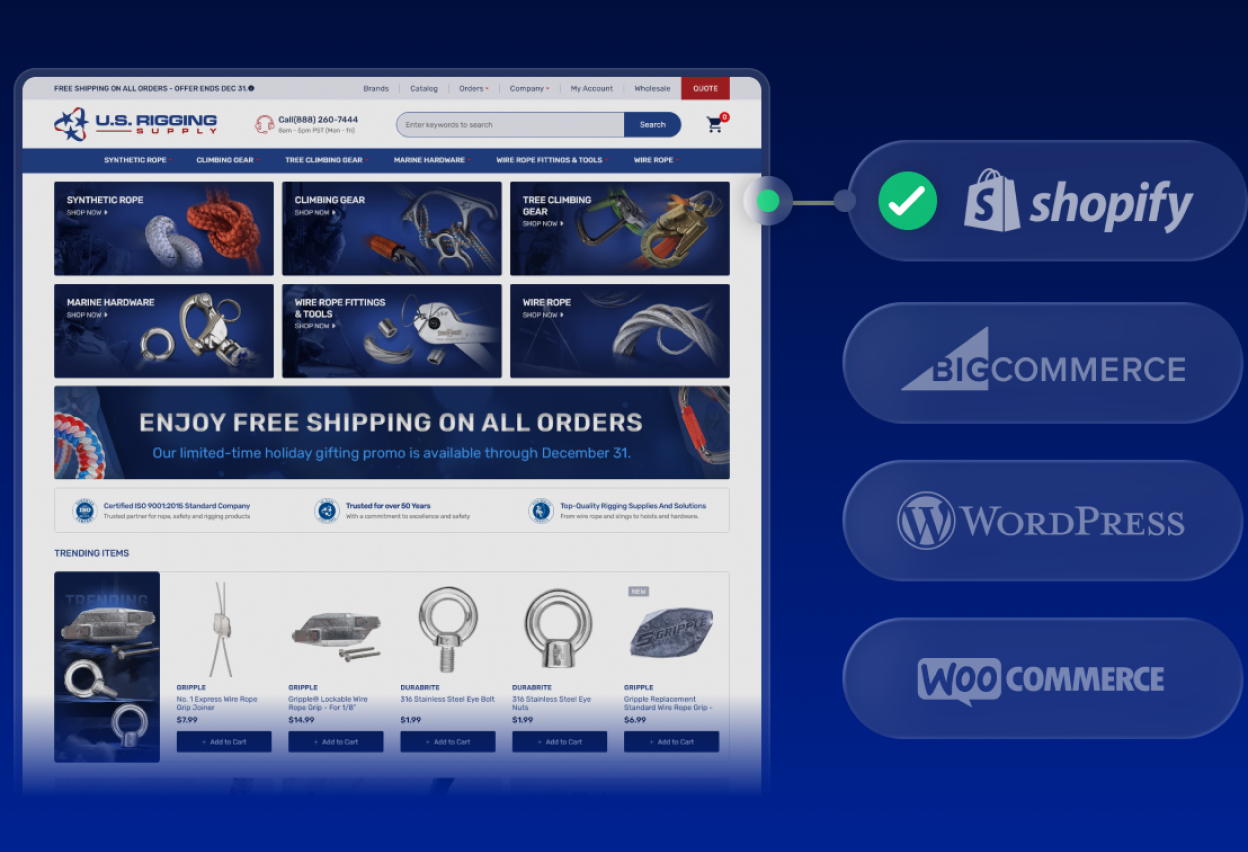
Move When the Current Platform No Longer Fits
A platform migration usually starts because the current environment no longer fits the way the business needs to operate. Store management may be harder than it should be, the catalog or customer experience may have outgrown the setup, or the business may simply need a cleaner foundation for what comes next.
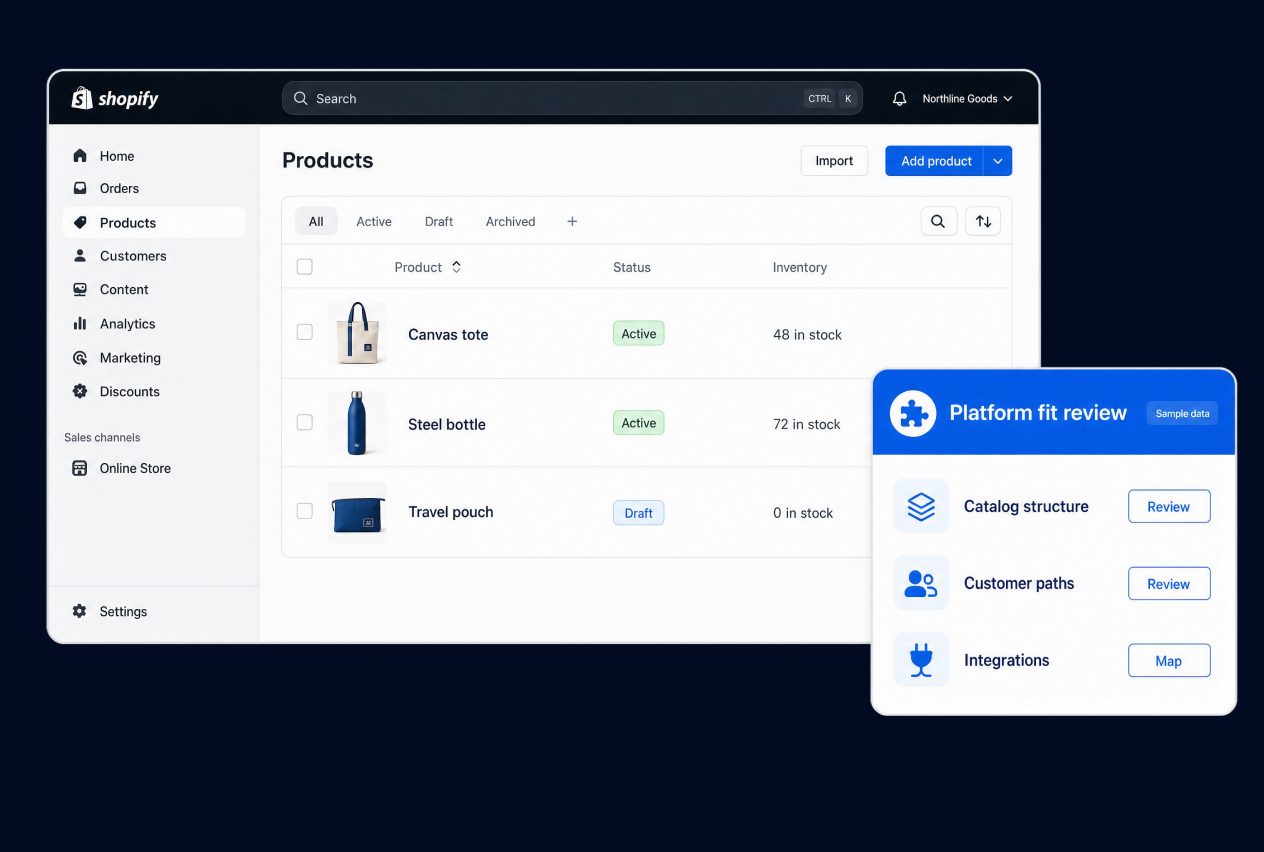
Choosing a destination is only part of the decision. The transition also has to account for the store that already exists: its data, content, URLs, customer paths, apps, integrations, and launch dependencies. Always Open Commerce helps organize those moving parts before the migration turns into disconnected transfer, rebuild, and launch tasks.
Coordinate Storefront, Data, and System Changes
A platform migration can touch storefront structure, data, URLs, apps, integrations, and launch readiness at the same time. The scope should make clear what is moving, what is being rebuilt, and which dependencies need separate work.

Migration Planning & Scope Mapping
Platform Migrations
Define the source, destination, in-scope storefront and data requirements, and known dependencies before transfer or rebuild work begins.

Data & Content Coordination
Platform Migrations
Map the records and content that need to move, including where restructuring or a dedicated Data/Catalog Migration scope is required.

URL & Redirect Planning
Platform Migrations
Identify material URL changes and coordinate redirect requirements early. Dedicated SEO Migration work can be added when the search risk or project scope requires it.

Storefront, Apps & Integrations
Platform Migrations
Define what must be recreated in the destination and which apps or integrations need configuration, replacement, or separate App Setup or API Integrations work.

QA & Launch Support
Platform Migrations
Review the in-scope migration and core customer paths before go-live, then coordinate launch issues and any dedicated Launch Support included in the project.
Define What to Preserve, Rebuild, or Reorganize
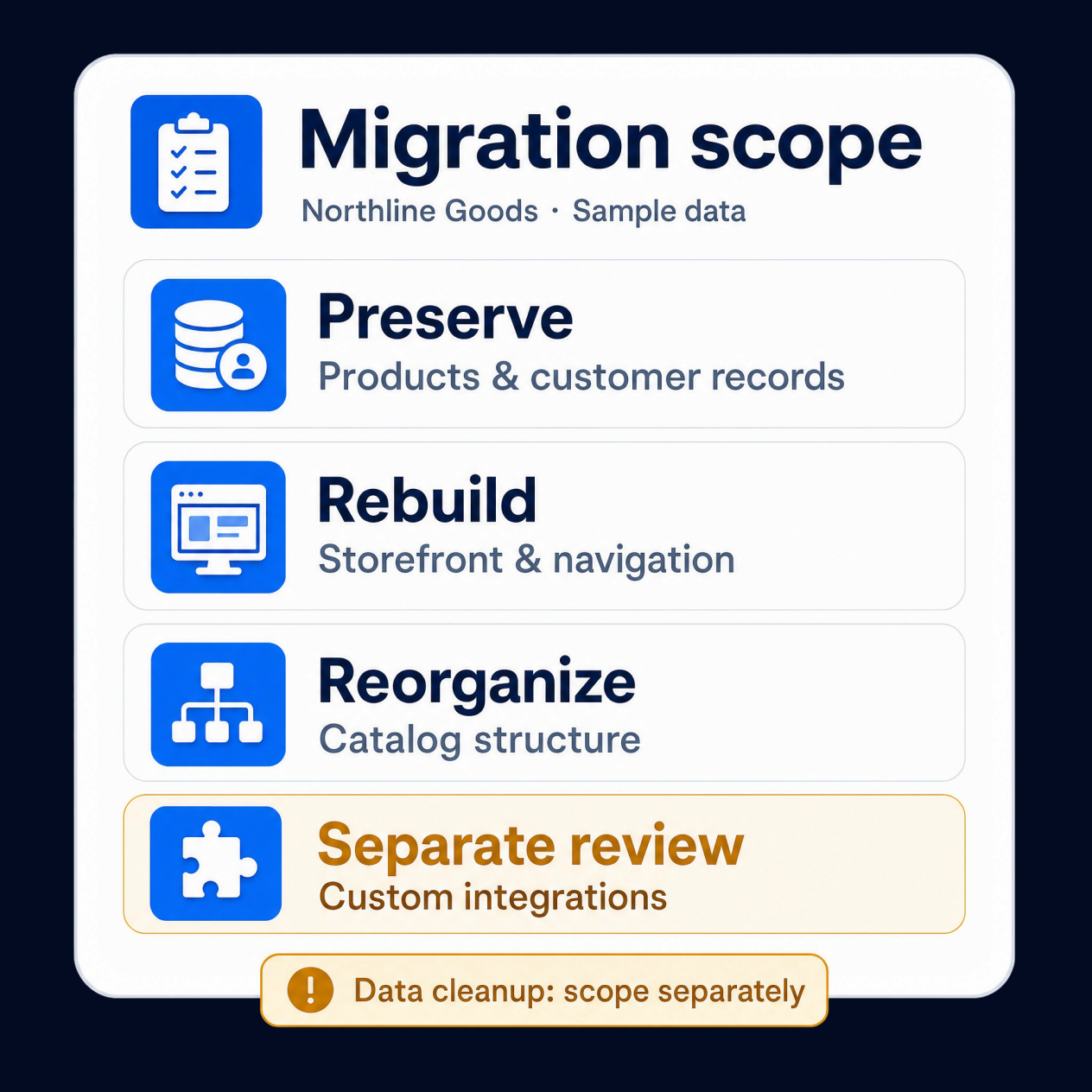
A migration should not copy the old store by default. The plan needs explicit decisions about what must be preserved, what should be reorganized for the destination, and which conditions create additional work.

What Must Be Preserved?
Identify the data, content, URLs, customer experiences, and operating requirements that cannot be lost in the move.
What Should Be Rebuilt or Reorganized?
Use the migration to address structures that do not fit the destination instead of reproducing every limitation of the old environment.
What Is the Condition of the Data?
Flag poor, duplicated, or inconsistent historical data early. Extensive cleanup or normalization is separate when it goes beyond the approved migration.
Which Dependencies Need Separate Work?
Apps, integrations, analytics, feeds, custom code, and other connected requirements can affect sequencing and launch readiness and may require specialist review or separate scope.

Move to a Better Operating Foundation
A migration is successful when the new environment supports the business without carrying forward avoidable structural problems or missed dependencies. That requires decisions about what should transfer, what should change, and what needs a separate workstream before launch.
Always Open Commerce can coordinate migration planning, Data/Catalog Migration, SEO Migration, App Setup, QA, and Launch Support when those services are part of the approved project. Custom integrations, custom app rebuilds, extensive data cleanup, and other advanced work remain separate unless specifically scoped.
Platform Migrations in Practice

Migration
Bird Rock Coffee Roasters Brews Up a Scalable BigCommerce Store with a Cost-Effective Migration From Shopify

Migration
A Modern Shopify Migration That Elevates a Medical Device Brand’s Digital Credibility
Migration Platforms


Frequently Asked Questions
Consider migrating when the current platform no longer fits how the business needs to operate, has become difficult to manage, or cannot support the foundation you need. Start with the reasons for moving and the requirements the next environment must support.
Products, customers, orders, and content may be part of data or catalog migration. What can move and how depends on the source, destination, data quality, mapping requirements, and approved scope.
Identify critical apps and integrations during planning. Reconfiguration, replacement, custom integration work, or custom app rebuilds may require separate technical review and scope.
Migration work can include planning, data coordination, redirect planning, QA, and launch support. Theme Updates & Migration, Data/Catalog Migration, SEO Migration, App Setup, API Integrations, or related work may require separate scope depending on the project.
Redirect planning can be part of the migration, with dedicated SEO migration work coordinated when needed. URL changes and search considerations should be planned without promising ranking preservation.
Yes. QA and launch support can be included in the approved migration scope. Broader launch coordination, post-launch monitoring, maintenance, or new feature work can be scoped separately.

 USA
USA
 Philippines


