
























































BigCommerce Migration
Moving to BigCommerce involves more than transferring store data. Always Open Commerce helps plan the storefront, catalog, URLs, integrations, and operating needs together so the new store supports how the business needs to sell and work after launch.

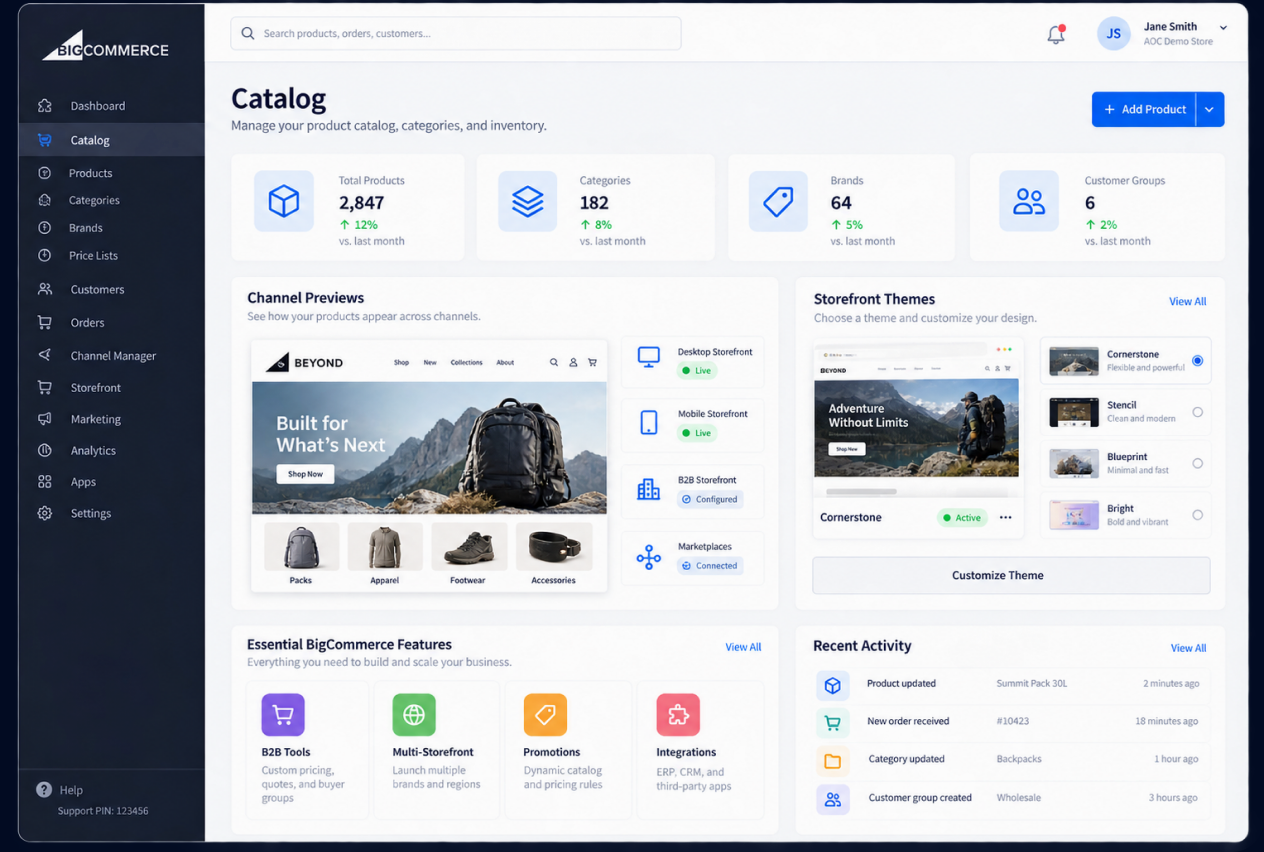
Decide What the Move to BigCommerce Needs to Solve
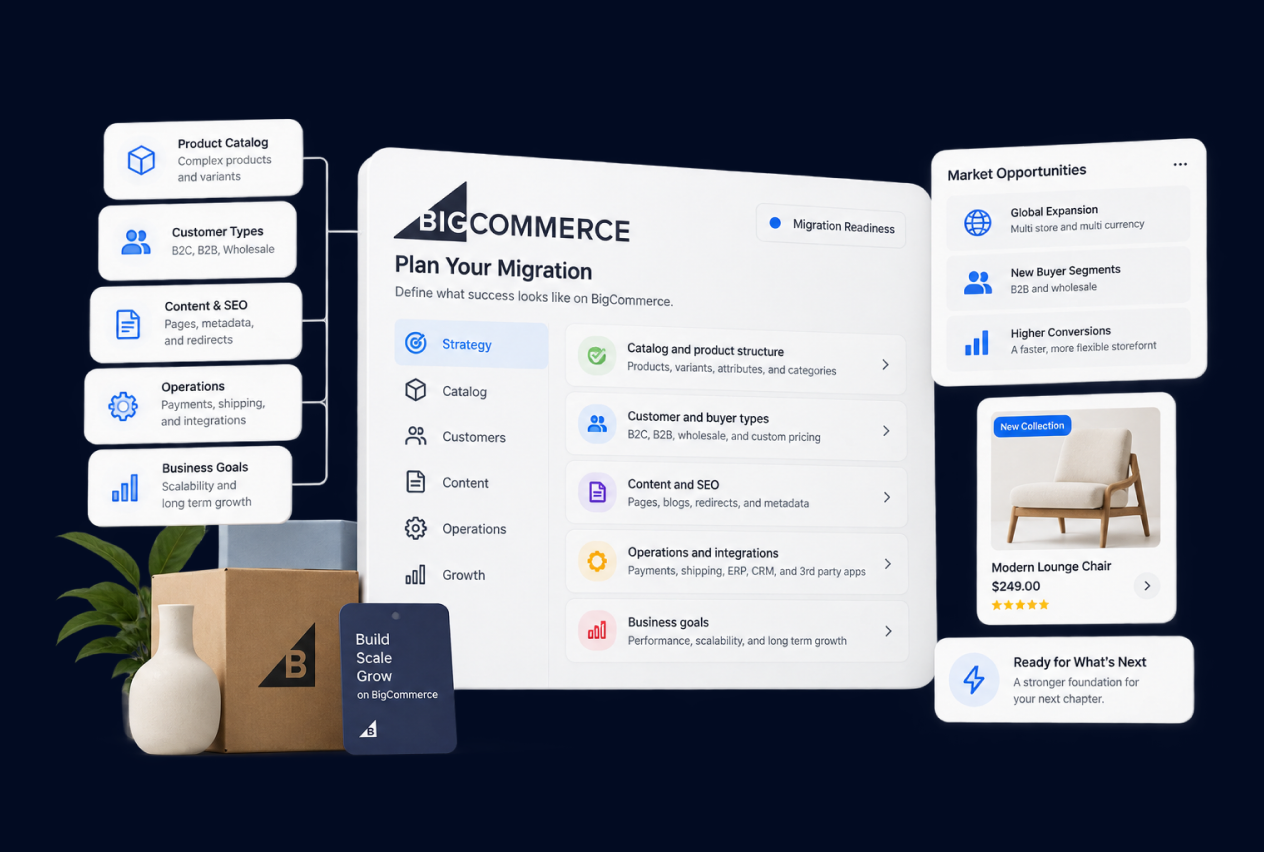
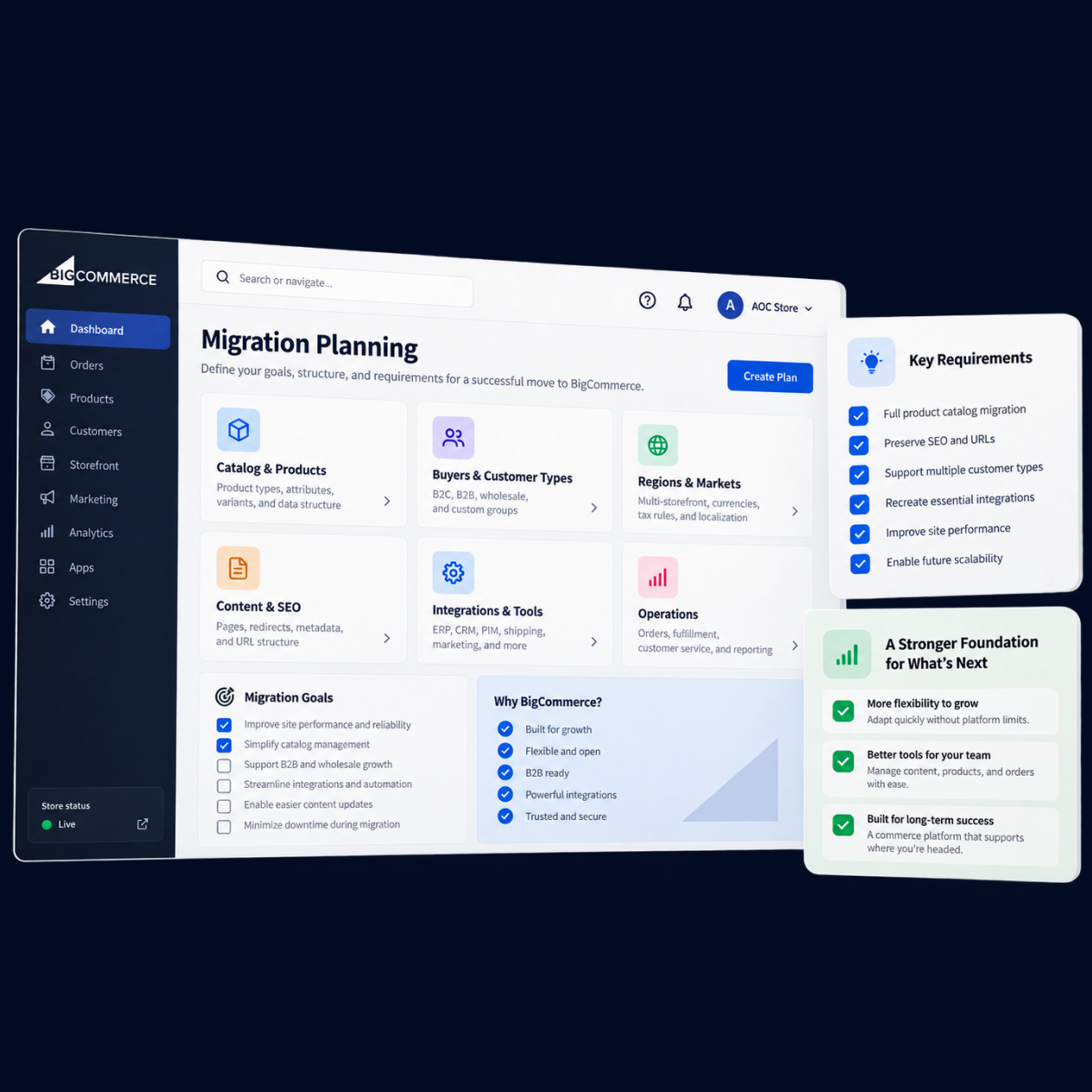
BigCommerce can support B2C and B2B selling, multiple storefronts, connected channels, and different storefront approaches. Those options matter only if they solve the reason for replatforming. Before migration work begins, we define what the new environment must improve across catalog complexity, buyer types, regions, content, integrations, and day-to-day ownership.
Always Open Commerce uses that requirement set to separate platform fit from migration activity. The goal is not to reproduce the old store inside BigCommerce. It is to confirm what should remain, what should change, and what the new platform needs to support after launch.
Build the New Store Around BigCommerce, Not the Old Platform
A source storefront rarely maps cleanly into a new platform. Themes, page structures, product relationships, B2B workflows, multi-storefront requirements, apps, and custom functionality may need different treatment in BigCommerce. Current storefront options also range from theme-based experiences to BigCommerce’s Catalyst composable framework, so the front-end decision should be made deliberately rather than inherited from the previous site.
We translate the approved customer journeys and business requirements into a BigCommerce structure the internal team can operate. That may mean recreating essential behavior, replacing an old dependency, simplifying something that became too complex, or using a BigCommerce-native capability where it fits the requirement. For businesses combining B2B and B2C or managing multiple brands or regions, migration planning should also decide which experiences can share the same BigCommerce backend and which need distinct storefront rules.

Plan Continuity Across Data, Search, and Operations
Products, customers, historical orders, content, URLs, shipping, analytics, and connected business systems do not all carry the same migration risk. The important work is identifying what needs to move, how it should map, what requires validation, and where the new platform changes an existing workflow.
Our team coordinates those dependencies across data, storefront implementation, integrations, SEO/GEO considerations, QA, and launch planning. URL mapping, redirects, metadata, tracking checks, and operational validation can reduce avoidable migration risk, but the plan should not assume perfect data transfer, identical app behavior, or guaranteed search continuity.
1
Buyer and Company Workflows
Document registration, approval, account structure, buyer roles, reordering, quotes, purchasing permissions, and other paths that matter to the commercial model.
2
Pricing and Catalog Logic
Define customer-specific pricing, product visibility, catalogs, quantity rules, and the source of truth for the commercial data that feeds the storefront.
3
Storefront-Specific Requirements
Identify where content, products, pricing, navigation, domains, currencies, or customer experiences need to vary across storefronts, regions, brands, or buyer groups.
4
Plan and Capability Fit
BigCommerce capabilities and limits can vary by plan and implementation. The migration scope should confirm the current platform requirements instead of relying on an older feature assumption.
BigCommerce Migration Process
1
Assess
Review the source store, catalog complexity, B2B or multi-storefront needs, integrations, shipping, and what the BigCommerce destination must support.
2
Map
Map products, customers, content, URLs, storefront rules, B2B requirements, and connected systems into the BigCommerce structure.
3
Build and Transfer
Build the approved BigCommerce storefront, transfer in-scope data and content, and configure the required apps, channels, or integrations.
4
Validate
Review migrated data, storefront and B2B journeys, connected systems, responsive behavior, redirects, and launch requirements.
5
Launch and Support
Coordinate the BigCommerce go-live plan and continue with post-launch validation or ongoing support when included in scope.
BigCommerce Migration Experience


Migration
Bird Rock Coffee Roasters – BigCommerce Migration Case Study


Migration
Catalyst Shop – BigCommerce Replatform and Redesign Case Study
BigCommerce Migration FAQs
Migration scope can include products, categories, customers, historical orders, content, URLs, and other approved records. What moves cleanly depends on the source platform, data quality, and how the destination is structured, so the source store should be reviewed before transfer methods or completeness are promised.
Each app and integration should be reviewed individually. Some systems may continue with a BigCommerce connection, while others may need different configuration, replacement, or custom technical work. Compatibility and implementation approach require project-specific technical review.
There is no responsible fixed timeline without reviewing the source environment. Catalog size, storefront work, data quality, integrations, content, testing, and launch requirements all affect the schedule, so timing should be defined after assessment and technical review.
Not necessarily. A migration can preserve an approved design direction, make targeted UX improvements, or include a broader redesign. BigCommerce supports different storefront approaches, including themes and Catalyst, so the right approach should be confirmed against the approved experience and technical requirements.
Important source URLs, BigCommerce destination paths, redirects, metadata, internal links, and launch checks should be mapped before go-live. This can reduce avoidable search risk, but it does not guarantee rankings, traffic, or identical indexation after migration.

 USA
USA
 Philippines


