






















































Ongoing Maintenance
After launch, ecommerce stores continue to accumulate updates, fixes, QA needs, and technical improvements. Within a defined agreement, Always Open Commerce gives routine work and emerging issues a consistent maintenance path instead of letting every request become a separate emergency.
A Live Store Keeps Changing After Launch
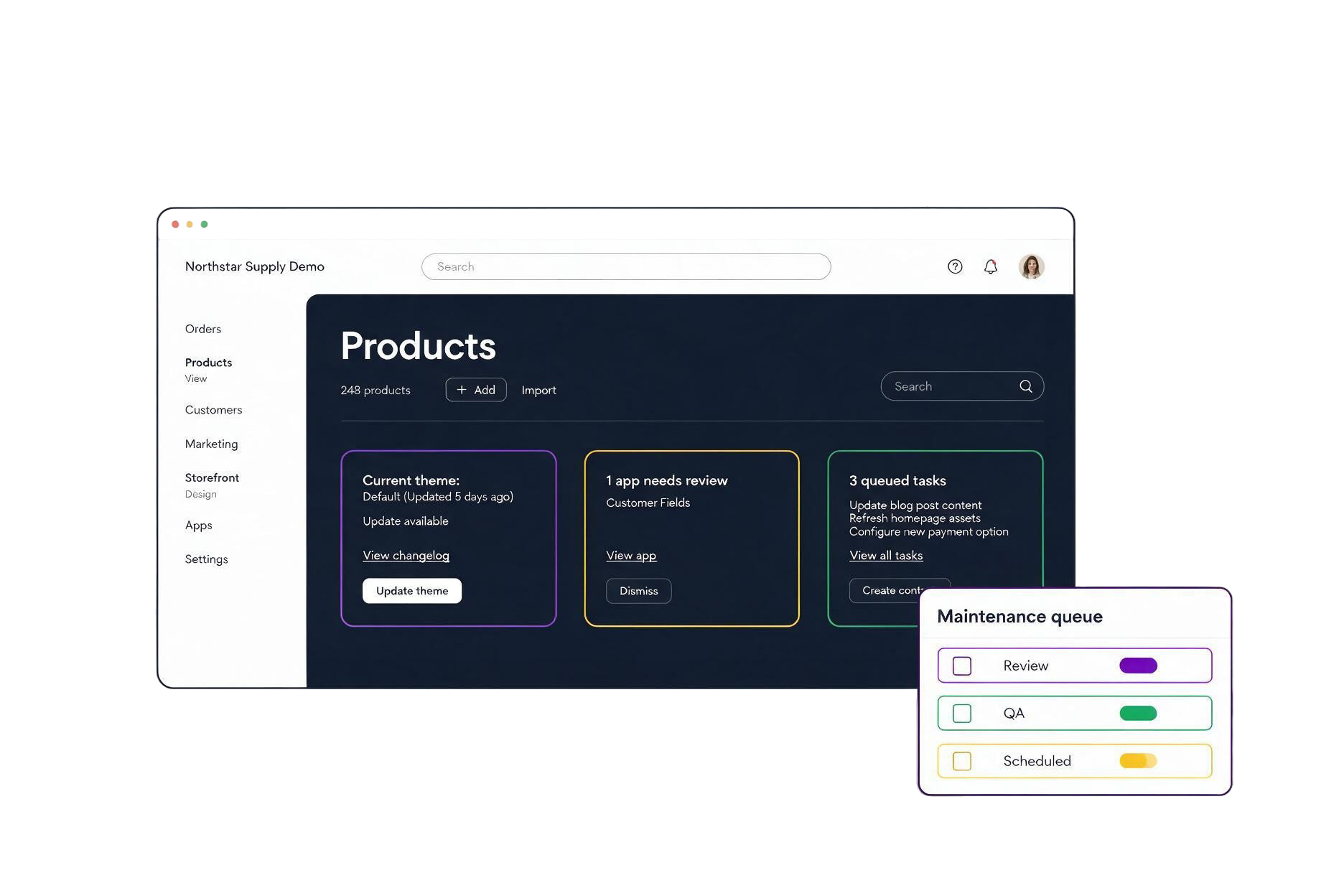
An ecommerce site is not static once it reaches production. Themes, apps, integrations, content, promotions, platform releases, and business requirements continue to change, and even small updates can affect customer journeys or connected functionality. Without a defined maintenance path, minor issues and deferred updates can accumulate until they become harder to separate and prioritize.
Ongoing Maintenance gives approved recurring technical work a consistent home. Always Open Commerce can support updates, QA, smaller fixes, and incremental improvements within the active agreement. New feature development, major redesigns, and work outside the maintenance scope require separate review.
Updates, Fixes, QA & Small Improvements
Priorities depend on the active agreement, platform, integrations, storefront condition, and technical or business changes that arise over time.

Technical Updates & Adjustments
Ongoing Maintenance
Handle approved theme, configuration, script, or storefront changes that fit the maintenance agreement.

Small Fixes & Issue Follow-Up
Ongoing Maintenance
Address scoped defects or unexpected behavior, with Bug Fixes & Diagnostics when the cause needs to be understood before a correction is made.

QA & Regression Checks
Ongoing Maintenance
Validate affected functionality after approved changes and review relevant customer journeys, devices, integrations, or regression risk.

Platform, App & Dependency Review
Ongoing Maintenance
Review relevant platform, theme, app, or connected-tool changes when they may affect existing functionality.

Incremental Improvements
Ongoing Maintenance
Implement smaller approved enhancements when they fit the agreement rather than treating every improvement as a separate project.
Decide What Belongs in Ongoing Support
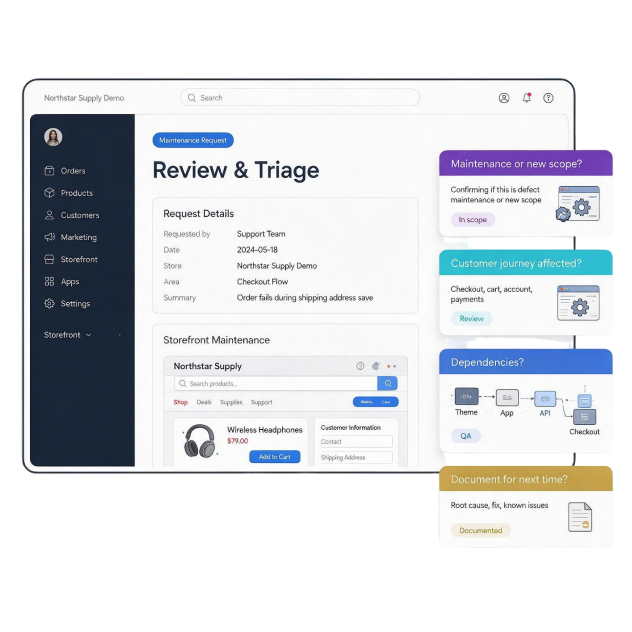
Maintenance works best when requests are evaluated for scope, customer impact, dependencies, and the context that should carry forward to future work.

Is the Request Maintenance or New Scope?
A small correction may fit the agreement, while a new feature, major redesign, or broader workflow change may require separate review and approval.
What Customer Journey Could Be Affected?
Consider whether the change touches navigation, product discovery, cart, checkout, accounts, forms, subscriptions, or another important customer flow.
Which Dependencies Could Change?
Review apps, APIs, themes, scripts, and platform changes when a maintenance request may interact with them.
What Should Be Documented for Next Time?
Document recurring issues, known limitations, and important dependencies when they can help future work on the same part of the store.

Preserve Context Between Requests
Ongoing maintenance gives routine technical needs and follow-up work a defined operating path so the team can preserve context without restarting the relationship for every small request.
Always Open Commerce can coordinate recurring technical work with Bug Fixes & Diagnostics and Custom Development when a request crosses those boundaries. Exact coverage and prioritization depend on the approved maintenance agreement. Any formal service-level commitments are governed by that agreement, not this page.
Store Support in Practice

Related Support Paths


Frequently Asked Questions
It can include recurring technical support, approved updates, QA, smaller fixes, and incremental improvements that fall within the active maintenance agreement.
No. Coverage is governed by the approved agreement. Larger projects, major redesigns, new features, and out-of-scope requests require separate review and approval.
Yes, when the issue and required work fit the agreement. Problems that need deeper investigation may first require diagnostic work to determine the likely cause and appropriate next step.
Major redesigns, new features, complex integrations, or other work outside the active maintenance agreement require separate review and approval.
Relevant updates can be reviewed or supported when they fall within scope. Vendor-controlled changes, deprecated features, or major upgrade work may require additional technical review.
Prioritization should reflect business impact, customer impact, technical risk, dependencies, and the terms of the approved agreement. Formal priority or response rules must be confirmed in that agreement.

 USA
USA
 Philippines


