























































SEO Migration
A relaunch can change URLs, content, and crawl paths before the impact on search visibility becomes clear. Always Open Commerce helps coordinate redirect and metadata planning, crawl considerations, and launch checks to reduce avoidable migration risks without guaranteeing rankings.
Plan Search-Sensitive Changes Before Launch
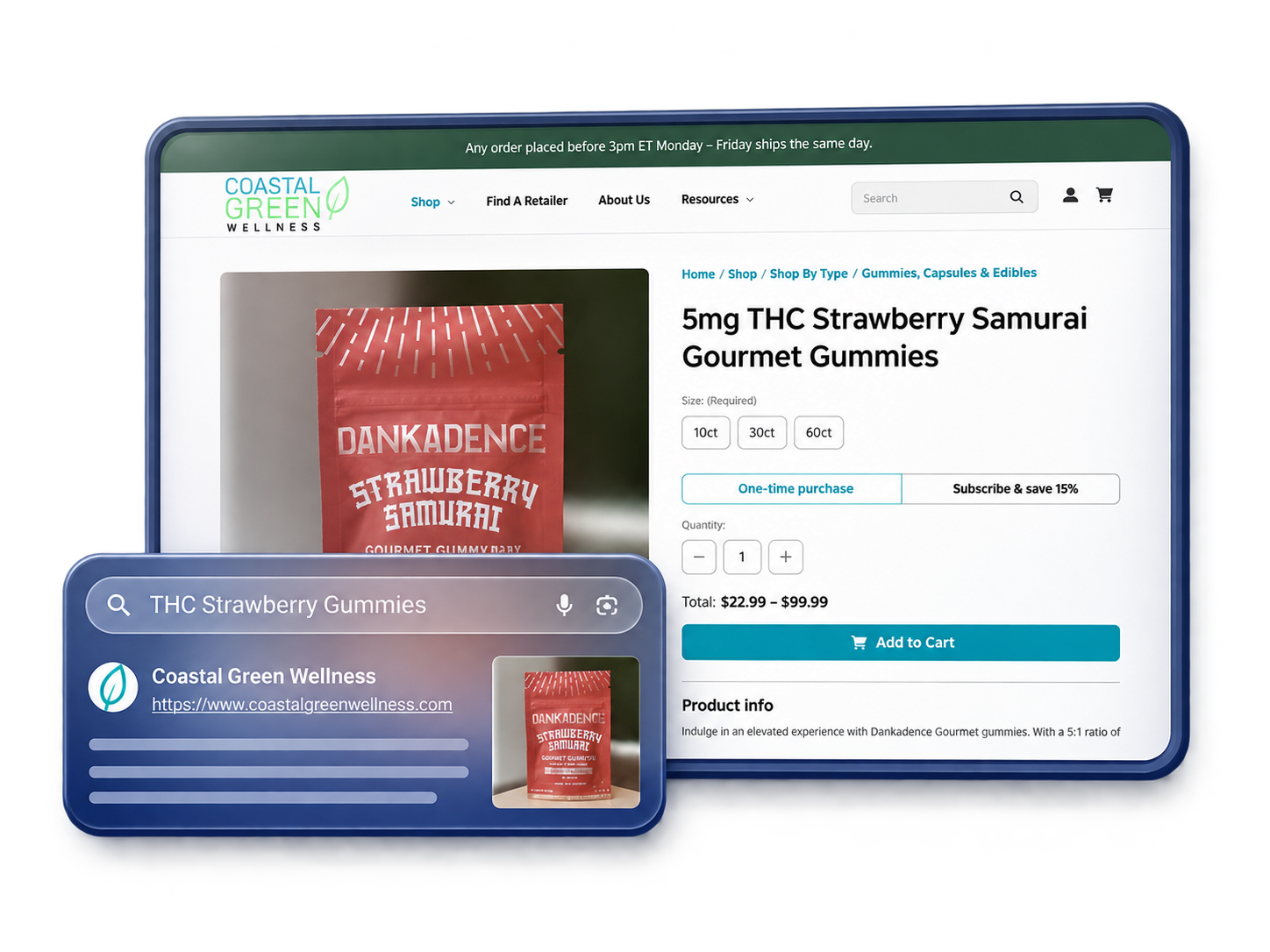
A relaunch can change URLs, navigation, content, templates, metadata, and technical controls even when the domain stays the same. Search engines then have to process how the new site relates to the old one.
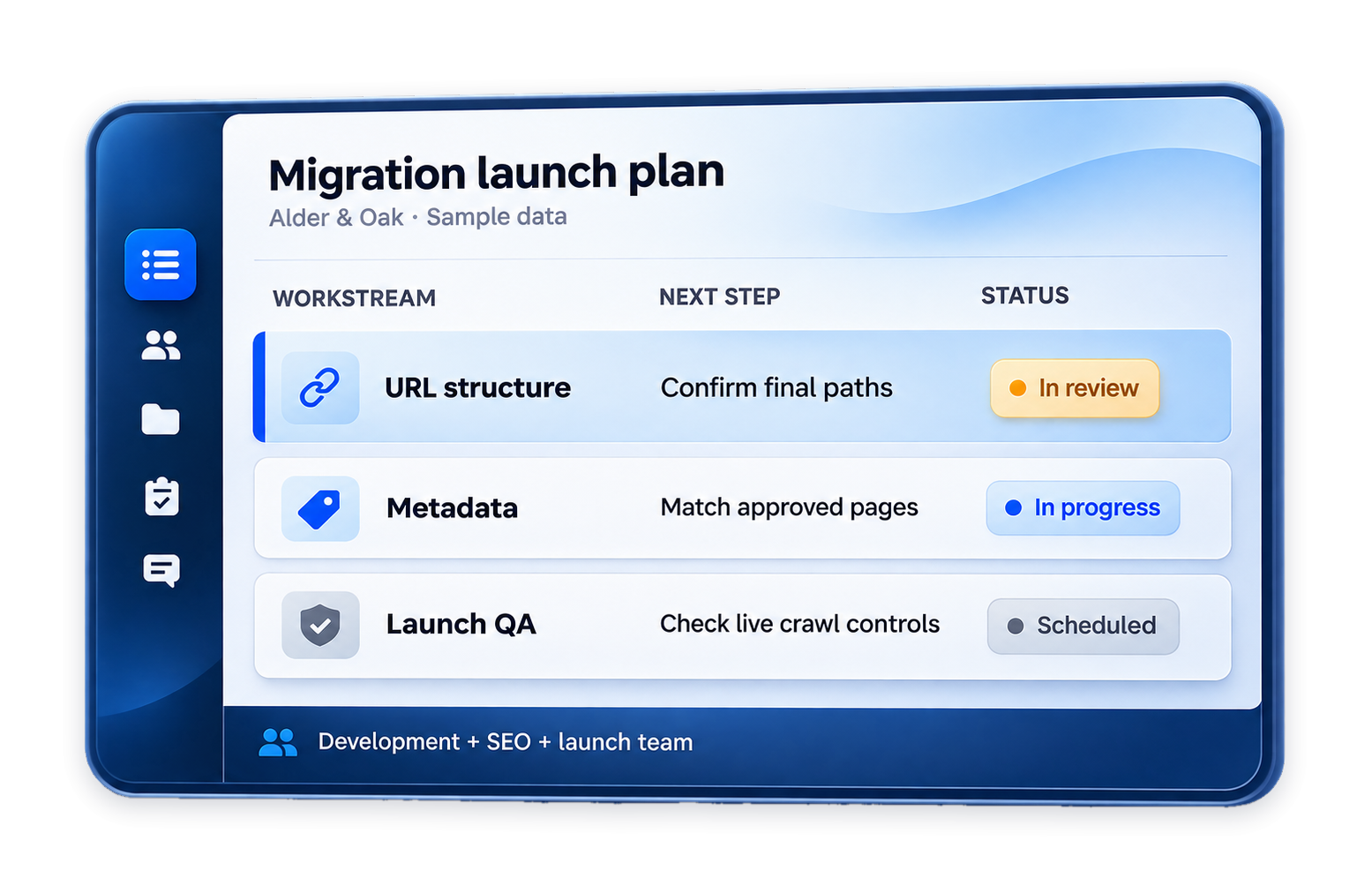
SEO Migration brings search-sensitive decisions into the project before go-live. Always Open Commerce can help identify affected pages and signals, coordinate redirects and metadata planning, and support launch checks. The goal is to reduce avoidable search risks, not promise unchanged rankings.
Coordinate URLs, Metadata, and Crawl Readiness
The scope depends on what is changing. Identifying search-facing requirements early allows URL mapping, metadata, crawl controls, and launch checks to be coordinated with the wider migration.

URL Inventory & Mapping
Review existing in-scope URLs and map important pages to their intended destinations when site paths or structure change.

Redirect Planning
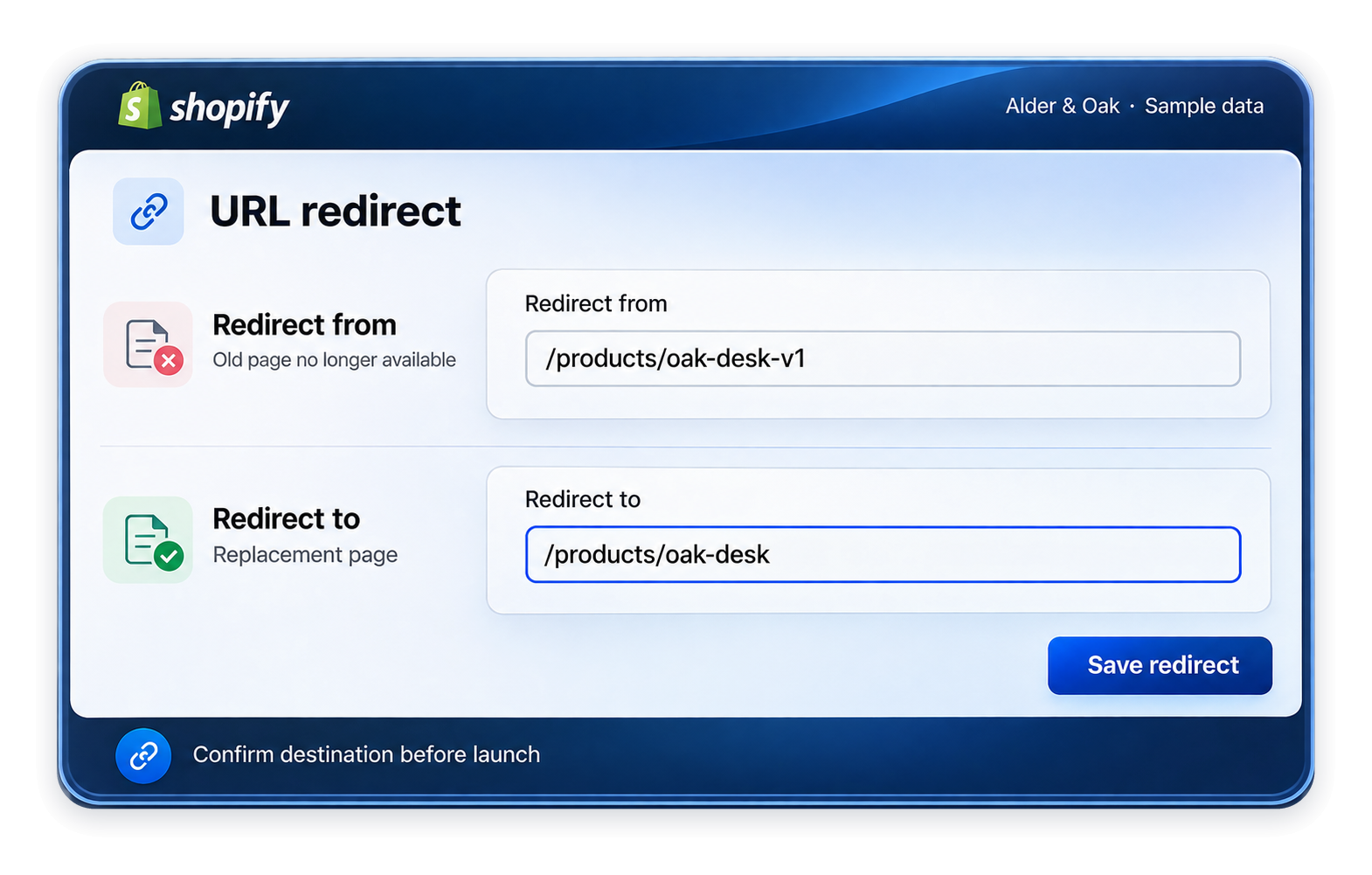
Define redirect requirements for permanently moved pages so relevant old URLs have an intentional destination before launch.

Metadata & Page Signals
Review in-scope titles, descriptions, canonical signals, and other page-level elements that may need to carry forward or be updated.

Crawl & Indexation Readiness
Check for unintended blocking, noindex rules, sitemap changes, or other launch conditions that could affect discovery of the new site.

Launch QA & Follow-Up
Coordinate search checks around go-live and review material redirect, crawl, indexation, or page-signal issues that surface after release.
Know Where Search Risk Enters the Migration
Search risks often emerge when URLs, content, and technical signals change between the old and new sites. Identifying these differences early helps the team plan appropriate redirects and validation checks before launch.

URL and Content Changes
Changing, removing, combining, or reorganizing pages can alter how existing URLs and content relate to the new site. Redirect and content decisions should follow the new information architecture rather than defaulting to the old structure.

Technical Search Signals
Staging rules, canonicals, redirects, internal links, sitemaps, and indexation controls can affect how the new site is discovered and processed. Required technical changes should be coordinated and validated within the approved scope.

Launch Validation and Follow-Up
Review material redirect, crawl, indexation, and page-signal issues around go-live. Search visibility may fluctuate during a significant move, so the service is intended to reduce avoidable migration risk rather than guarantee unchanged rankings or traffic.
Coordinate SEO With the Migration Plan
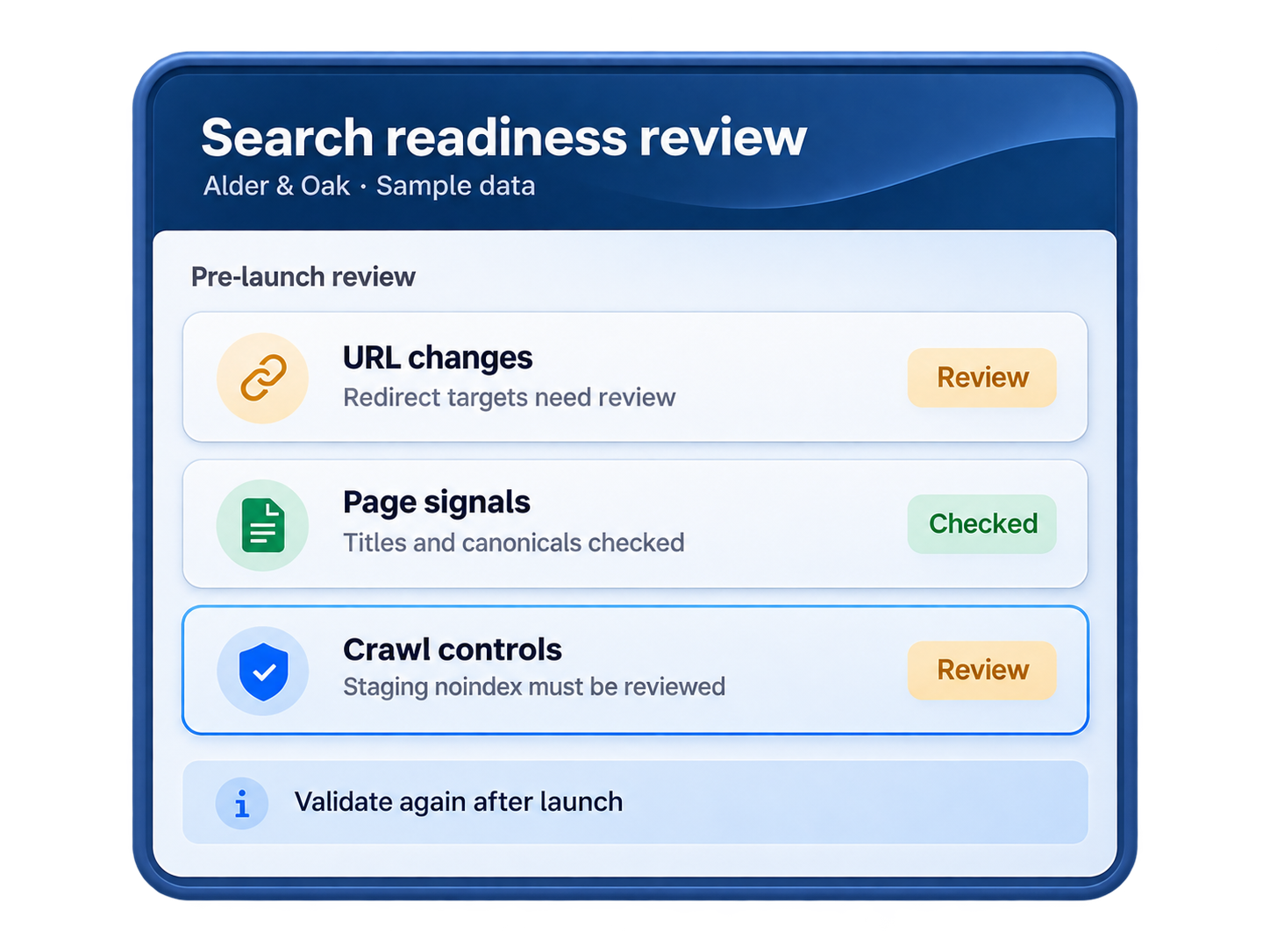
Redirects depend on the final URL structure, metadata depends on the pages that will exist, and crawl and indexation checks depend on the launch environment. Planning these elements together makes SEO Migration part of the release process rather than a cleanup task after launch.
When those workstreams are in scope, Always Open Commerce can coordinate SEO Migration with Platform Migrations, Data/Catalog Migration, development, and launch work. Ongoing SEO remains a separate service, and ranking or traffic preservation cannot be guaranteed.
SEO Migrations in Practice


Migration & SEO Planning

Review migration requirements, dependencies, and risks before committing to the build.

Identify technical SEO issues and search opportunities that need a clearer action plan.

Explore platform transitions, migration planning, and launch support.
Frequently Asked Questions
No. Search visibility can fluctuate during a significant relaunch or migration while search engines crawl and process the changes. The service is intended to reduce avoidable migration risk, not guarantee ranking or traffic preservation.
SEO considerations are most useful before URLs, page structure, redirects, and launch decisions are finalized. The exact timing depends on the project, but waiting until after launch can limit the options available for preventing avoidable issues.
SEO Migration can still be relevant when page URLs, navigation, content, templates, metadata, or indexation signals are changing. A domain change is only one type of migration that can affect search.
Redirect planning can be part of the service. Technical implementation and validation depend on the platform, technical requirements, and approved project scope.
Yes. It can be coordinated alongside a platform migration, relaunch, redesign, restructuring project, or other change where important search-facing pages or URLs may be affected.
Launch support can include checking in-scope redirects, page signals, crawl or indexation issues, and other migration-related search concerns. Ongoing SEO work remains separate unless it is specifically scoped.

 USA
 Philippines


