























































A/B Testing
When two experience choices compete, a controlled test can replace opinion with evidence. Always Open Commerce can help define the hypothesis, identify what to measure, and review results when testing supports a clear decision.
Test a Question, Not Just a Different Design
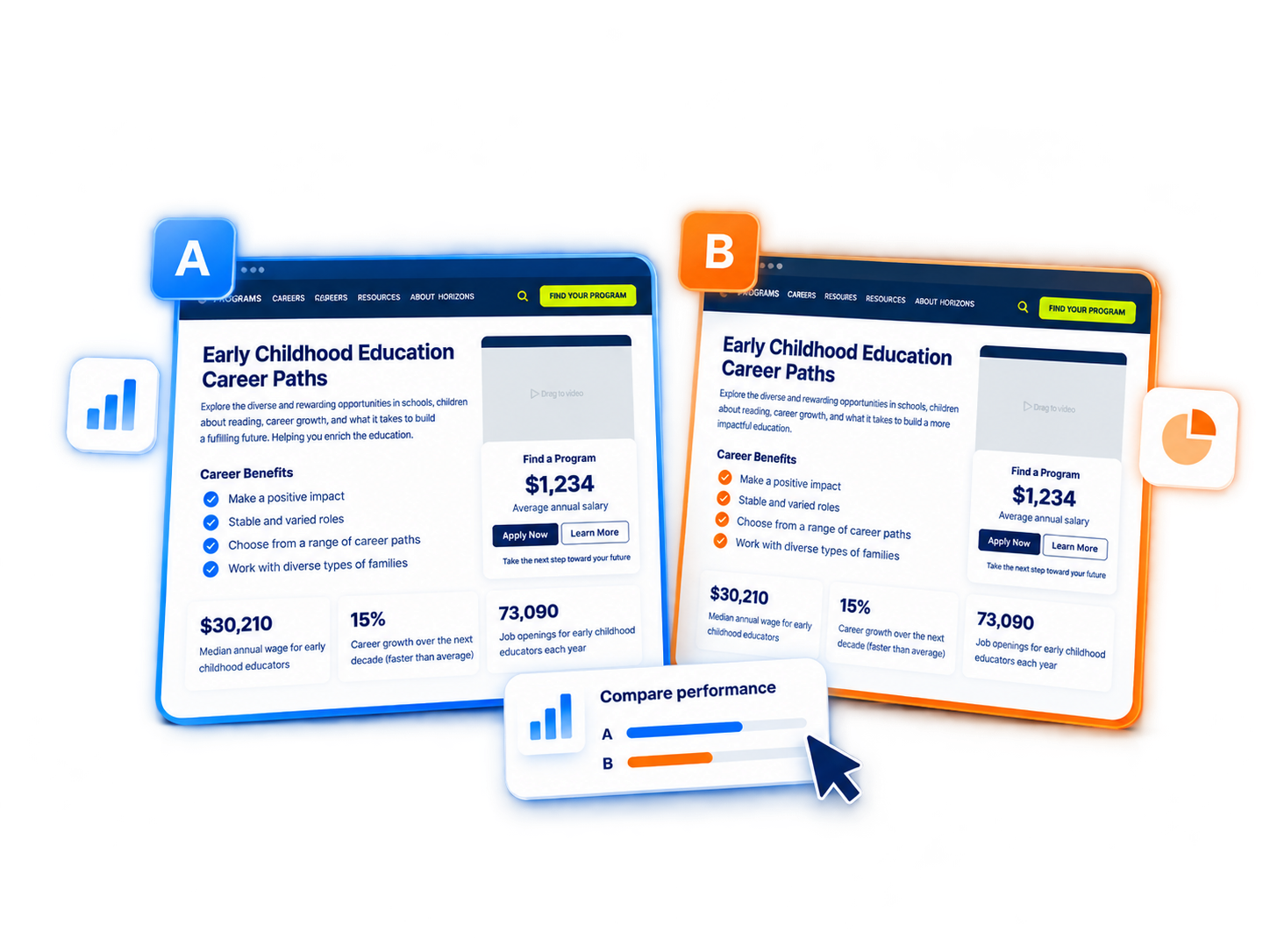
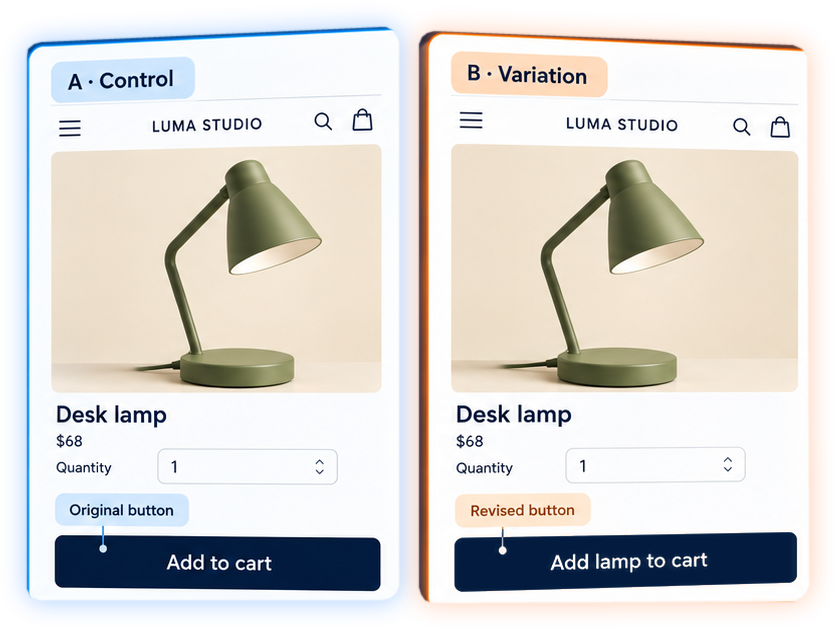
A/B testing is useful when there is a specific question worth measuring. Rather than debate a headline, layout, offer, or CTA, a structured experiment compares a control and a defined variation against an agreed metric.
Always Open Commerce can help develop the hypothesis, identify what to test, and review the evidence. Each experiment should address a real customer or business problem and inform a decision, not simply produce another variation.
Hypothesis, Variation, Measurement, and Results Review
The work included depends on the question, available evidence, testing platform, and approved scope.

Test Idea & Hypothesis Planning
Define the problem, proposed change, expected behavior, and why the idea is worth testing before building a variation.

Control & Variation Definition
Document the current experience, the variation, and what should remain consistent so the comparison answers the intended question.

Success Metric & Measurement Review
Identify the primary event or metric for the test and confirm that the required measurement is available and appropriate for the decision.

Audience & Traffic Plan
Define eligible visitors and traffic-allocation requirements for the approved testing platform, with implementation and technical setup included only when specifically scoped.

Results Review & Next-Step Recommendation
Review the outcome, data quality, business context, and limits before deciding whether to implement, iterate, retest, or keep the control.
Protect the Test From Bad Conclusions
An experiment can produce numbers without trustworthy evidence. Setup, traffic assignment, implementation, measurement, and concurrent changes can all affect interpretation.

Is There Enough Opportunity to Learn?
Traffic and conversion-event volume affect the evidence a test can collect. Requirements depend on the experiment, metric, method, and platform rather than one universal threshold.
Is Measurement Working Before the Test Starts?
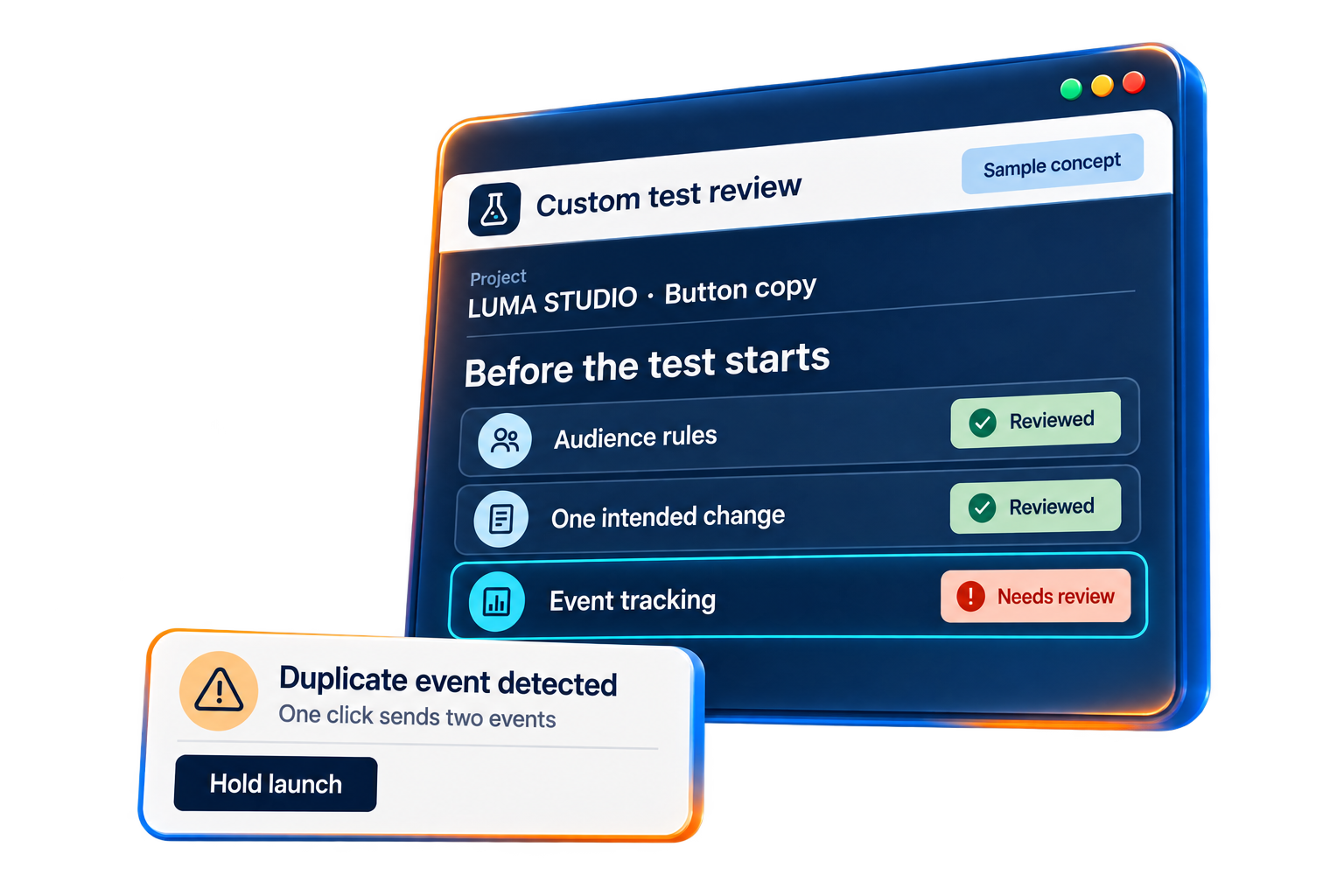
Review the primary event, audience rules, variation exposure, and tracking before using results for a decision. Broken or inconsistent measurement can mislead.
Is the Comparison Actually Controlled?
The variation should address the intended hypothesis without unnecessary differences that make the comparison difficult to interpret.
Is Traffic Reaching Variations as Intended?
Unexpected traffic imbalance can signal implementation or data-quality problems. Review experiment health rather than assuming a reported split is valid.
Are Other Changes Interfering With the Result?
Promotions, releases, tracking changes, or overlapping experiments can complicate interpretation. Review the test in the context of what else changed.
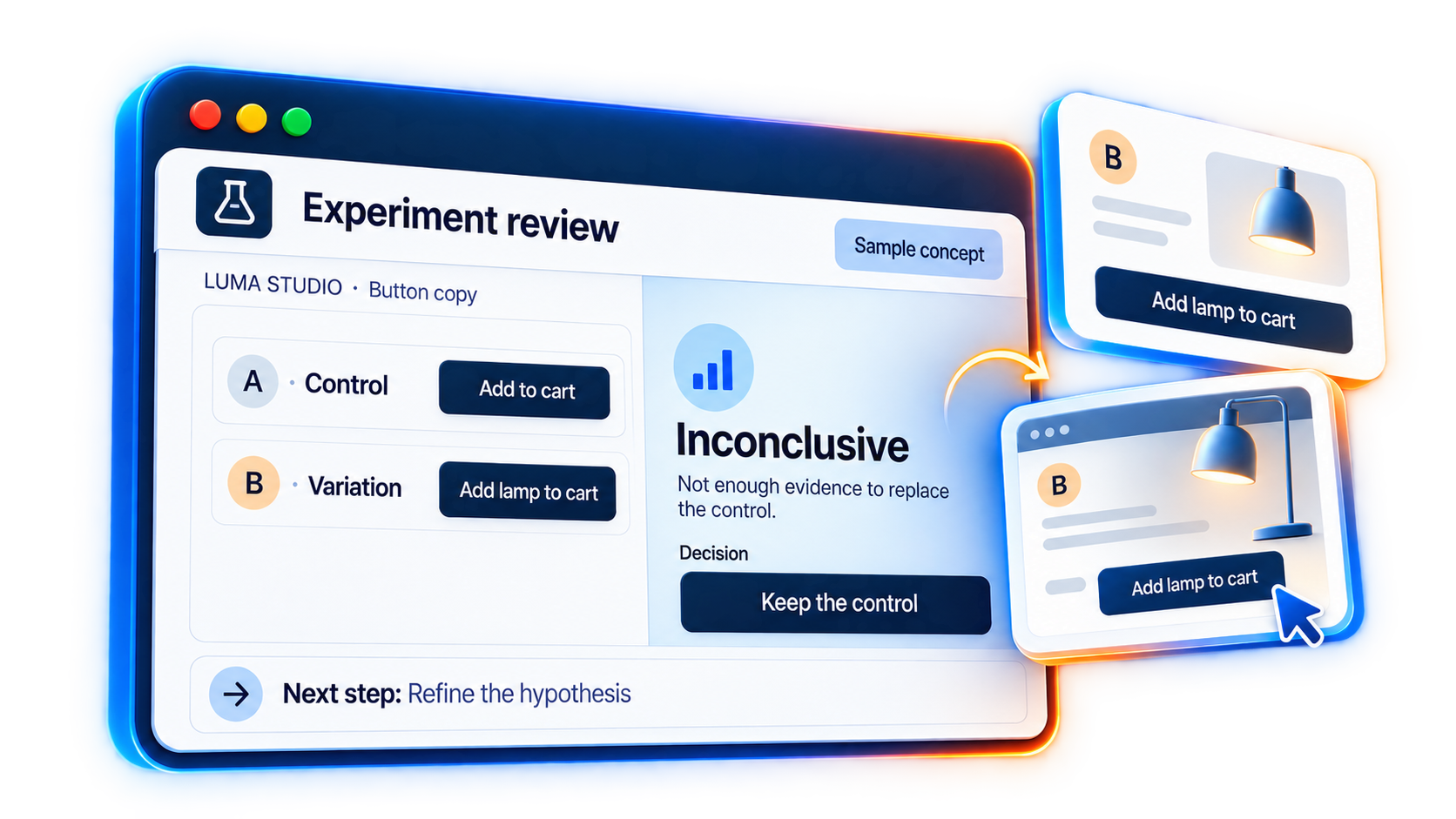
Use Experiments to Learn, Not to Manufacture a Winner
A/B testing helps teams make decisions with stronger evidence. A winning variation is not guaranteed, and an inconclusive result may mean there is not enough evidence to replace the control.
Always Open Commerce can coordinate A/B Testing with Conversion Rate Optimization, UX/UI Design, and Custom Development when those services are included in the approved engagement. Support may include hypothesis planning, measurement review, and results analysis. Testing-platform setup and implementation require explicit scope. Performance improvements are not guaranteed.
Testing & Optimization


Frequently Asked Questions
Potential tests can involve headlines, calls to action, page layouts, forms, product presentation, navigation treatments, offer presentation, or other defined customer-facing elements. The test should begin with a specific hypothesis and measurable decision.
There is no universal duration. Traffic, conversion volume, audience size, statistical method, seasonality, experiment design, and testing-platform requirements can all affect how long a test needs to collect useful evidence.
An inconclusive result should not be forced into a winner. The team can review the hypothesis, measurement, test design, effect size, and business context to decide whether to keep the control, revise the idea, or test a different question.
Start with a real customer or business problem supported by available evidence. CRO findings, analytics, usability research, customer feedback, or other approved inputs can help identify questions worth testing instead of selecting ideas at random.
Not automatically. Testing-platform setup and implementation are separate unless included in the approved scope. Technical feasibility and tracking requirements should be reviewed before launch.
No. Experiments can show that a variation performs better, worse, or not meaningfully differently under the tested conditions. Always Open Commerce does not guarantee a winning variation, conversion increase, revenue increase, or other performance outcome.

 USA
 Philippines


