














































Meta Ads
Meta Ads can create and re-engage demand before shoppers start searching. Always Open Commerce helps connect audience strategy, creative, offers, landing pages, and measurement so paid social supports the ecommerce funnel, not just isolated campaign metrics.
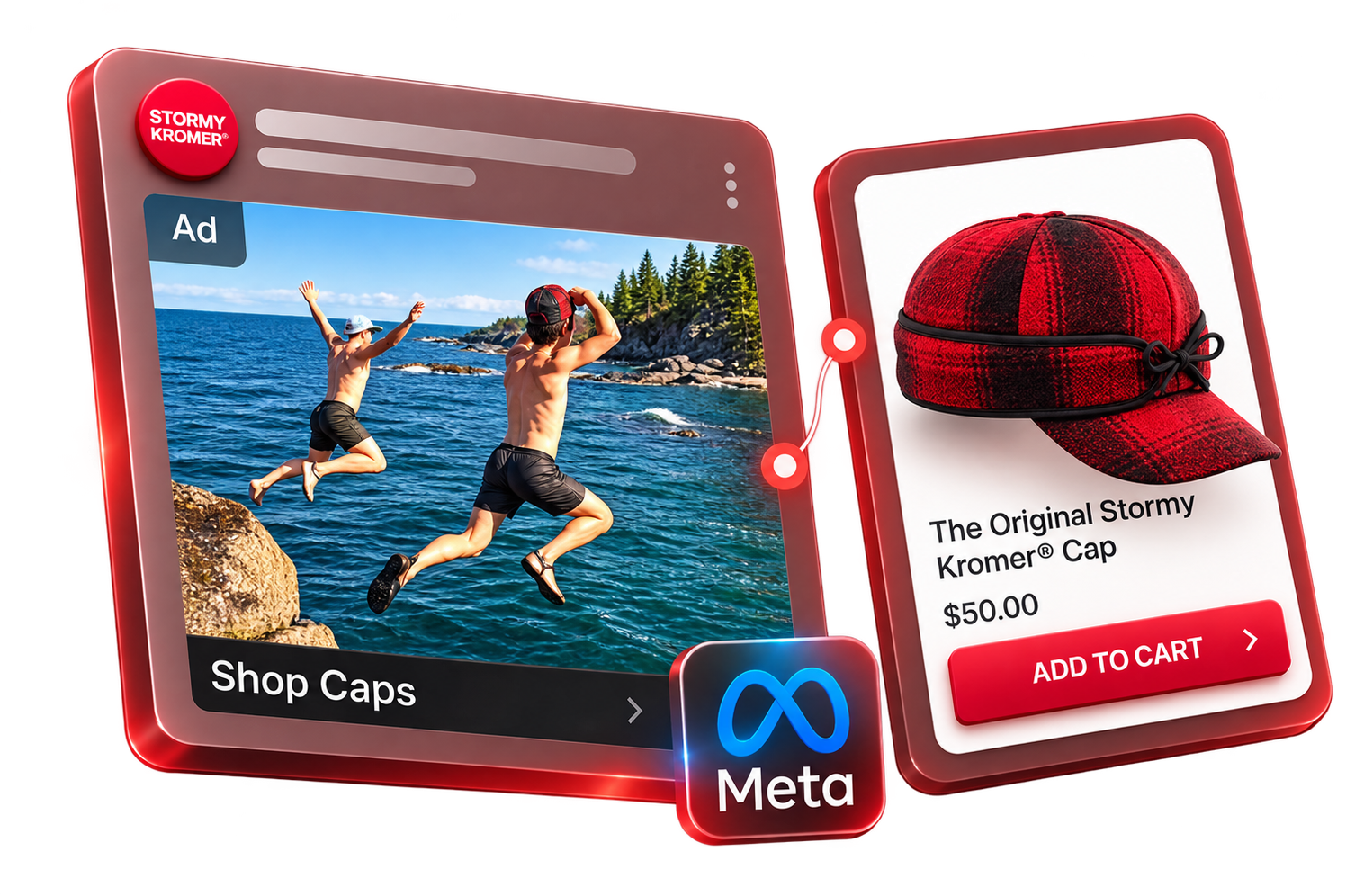

Creative, Audience & Offer Have to Work Together
Paid social depends on more than targeting. The product story, offer, creative, audience, and destination all influence whether attention becomes meaningful traffic and conversion activity.
The first job is to define what Meta should do in the acquisition plan: introduce the brand or product, re-engage prior interest, support a promotion, or reconnect with existing customers. The campaign structure and creative plan should follow that role.
Audience Structure, Creative Testing & Offer Alignment
Always Open Commerce organizes Meta Ads around the campaign role, creative supply, offer, catalog readiness, landing experience, and the signals available for performance review.

Audience & Funnel Role
Define which audiences and stages each campaign is intended to support. Prospecting, retargeting, and existing-customer activity should have clear jobs so performance can be interpreted in the right context.

Creative Direction & Testing
Plan testable messages, formats, product stories, offers, and calls to action, using approved proof where relevant. Always Open Commerce can provide creative direction and briefs; visual design, photography, video, and broader asset production are scoped separately when needed.

Offer & Catalog Fit
Make sure the offer and product information match what the ad promises. Product sets, pricing, availability, and catalog quality can affect delivery and performance analysis. Dedicated feed work is handled separately through Shopping Feeds when needed.

Landing Experience
Carry the message through to a destination that supports the same product, offer, and next action. Landing Pages, Conversion Rate Optimization, or UX / UI Design can address post-click friction when the media itself is not the main constraint.

Performance Review
Review spend, audience response, creative performance, conversion signals, and downstream behavior together. Reporting should help decide what to test, adjust, pause, or investigate next.
Separate Creative, Audience, Tracking & Funnel Issues
When performance changes, the account does not always explain why. The next decision depends on whether the constraint is creative supply, audience strategy, the offer, measurement, or what happens after the click.

Is There Enough Useful Creative to Test?
Meta can distribute and optimize across creative, but the account still needs enough relevant assets and message variation to learn from. Creative refreshes should respond to actual needs and observed performance rather than a fixed production calendar.
Can Conversion Signals Be Trusted?
Pixels, consent, checkout behavior, attribution settings, and analytics can change the reported conversion story. Material discrepancies should be investigated before campaign performance is treated as settled.
Does Spend Fit the Funnel Role and Economics?
Budget should reflect the campaign’s job, audience size, creative supply, product economics, seasonality, and confidence in measurement. Spend decisions remain business decisions informed by performance rather than automatic platform outputs.


Use Meta to Create and Re-engage Demand
Meta can play a different role from paid search by reaching people through audience and creative-led discovery, then re-engaging shoppers who have already shown interest. That makes creative supply and the post-click experience important parts of the acquisition plan.
Always Open Commerce can coordinate Meta Ads with Landing Pages, Performance Audits, Shopping Feeds, and Google Ads when the constraint crosses destination experience, measurement, catalog quality, or explicit search-demand capture.
We do not guarantee ROAS, revenue, leads, conversions, or acquisition cost. The goal is a clearer role for Meta, better campaign inputs, and a disciplined basis for deciding what to test or change next.
Paid Media & Measurement

Paid Ads Audit
Review advertising accounts, campaign structure, targeting, conversion tracking, and spend efficiency to identify issues and prioritize practical next steps.


Frequently Asked Questions
Depending on scope, support can include audience and campaign planning, prospecting and retargeting structure, creative direction, offer and catalog alignment, landing-page coordination, performance review, and ongoing optimization.
Always Open Commerce can provide creative strategy, test direction, message angles, formats, and asset briefs when included in scope. Visual design, photography, video, and broader production are scoped separately when required.
Meta is generally used for audience- and creative-led discovery and re-engagement, while Google Ads can capture more explicit search and Shopping intent. The right mix depends on the product, buyer journey, economics, creative supply, and measurement.
No. Results depend on demand, audience quality, competition, creative, offer, budget, landing experience, tracking, platform behavior, and other factors. Always Open Commerce does not guarantee ROAS, conversions, revenue, leads, or acquisition-cost outcomes.

 USA
USA
 Philippines


