
















































SMS Marketing
SMS works best when each message has a clear reason to reach the customer now. Always Open Commerce helps ecommerce teams identify those moments, then plan campaigns, flows, audiences, and messaging that support the wider customer journey.
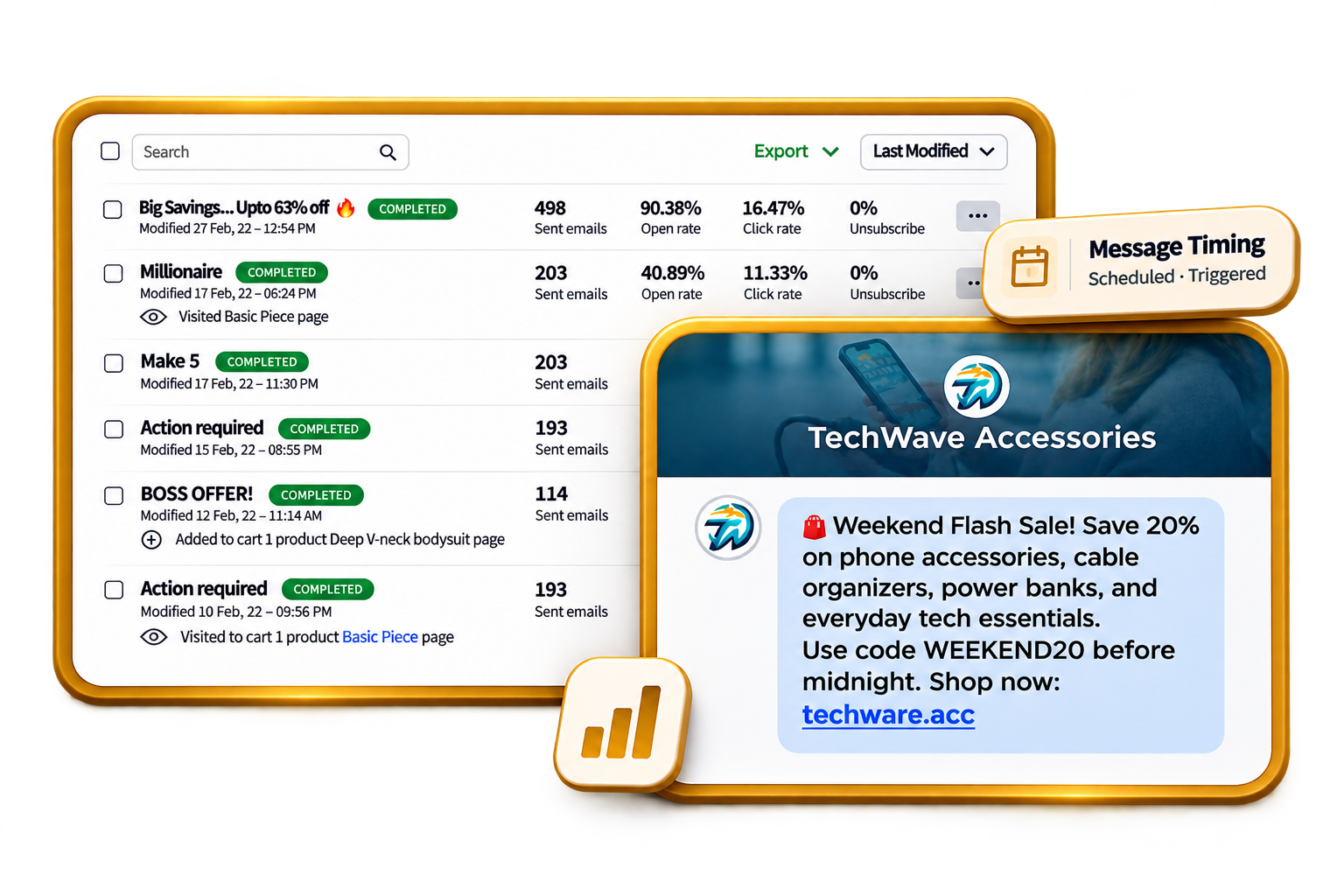
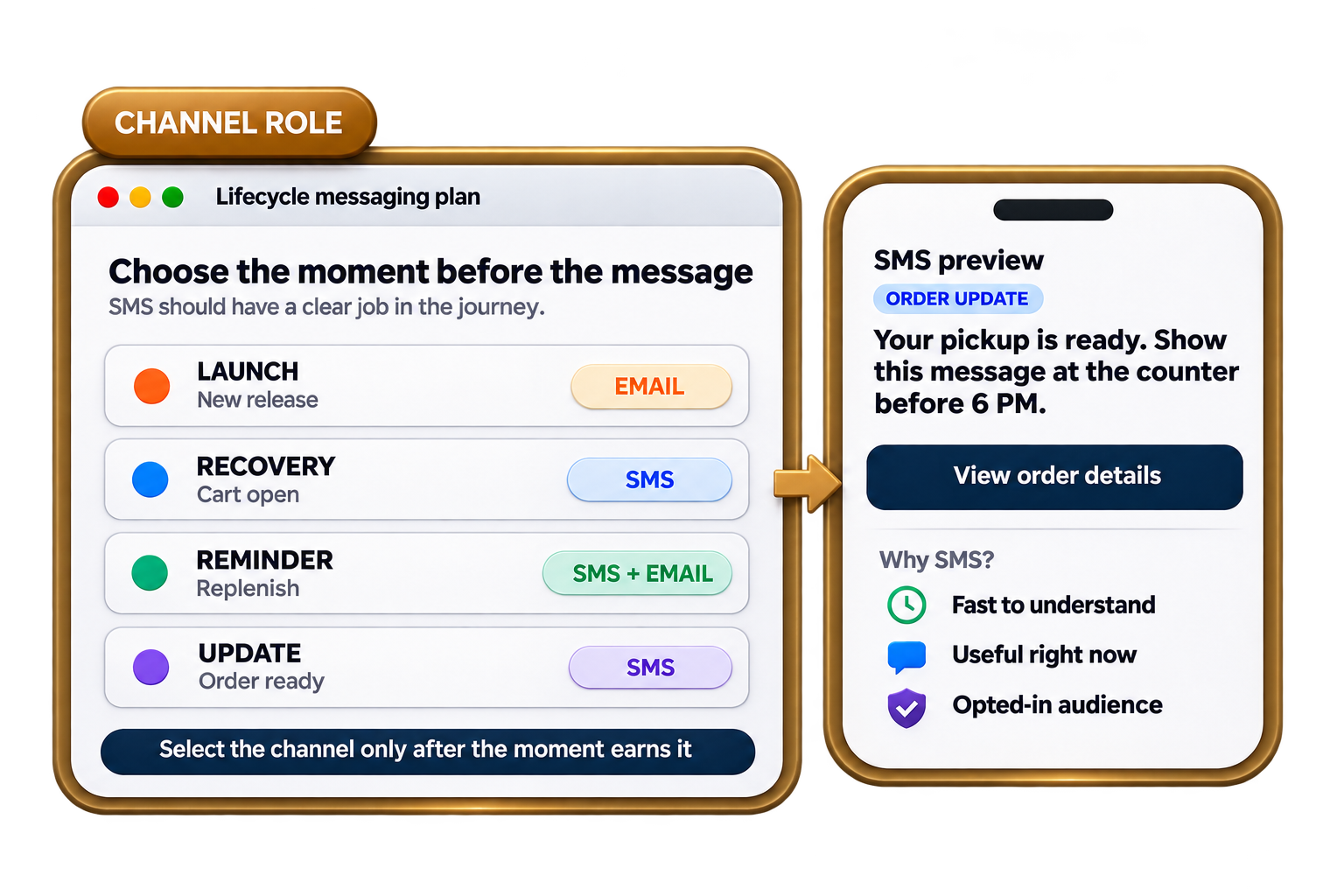
Give SMS a Clear Job in the Customer Journey
SMS can help when a short message is timely and useful. But when every promotion becomes a text, the channel risks creating noise rather than value. The choice to send should follow the customer moment, not the marketing calendar.
Always Open Commerce starts with the moments that might deserve a text, such as a timely offer, lifecycle reminder, recovery opportunity, or relevant update. We then consider the audience, timing, and message before deciding how SMS should be used.
Campaigns, Flows & Audience Decisions
Campaigns cover planned communication, flows respond to supported customer actions, and audience rules help decide who should receive each message. Together, they give SMS a distinct role without duplicating the email calendar.

Subscriber Entry Points
Plan signup and opt-in experiences so customers know they are choosing text messages and what kind of communication to expect. Consent and opt-out requirements still depend on current platform, industry, and applicable legal guidance.

Campaign Moments
Use SMS for promotions, launches, reminders, or customer updates when speed and brevity improve the message. The copy should make the reason for the text clear without manufacturing urgency.

Triggered Messaging
Build or refine messages around supported customer actions and lifecycle stages, such as signup, purchase, replenishment, re-engagement, or recovery. The trigger should represent a moment where a text makes sense, not simply a moment the platform can detect.

Audience Rules
Use available profile, purchase, engagement, and lifecycle data to decide who should receive a message and who should not. A smaller, more relevant audience can be more useful than sending every campaign to the entire SMS list.

Email & SMS Coordination
Coordinate email and SMS so each channel serves a clear purpose and customers do not receive unnecessary duplicate messages. Use available engagement, unsubscribe, and conversion signals to review timing, targeting, and messaging.
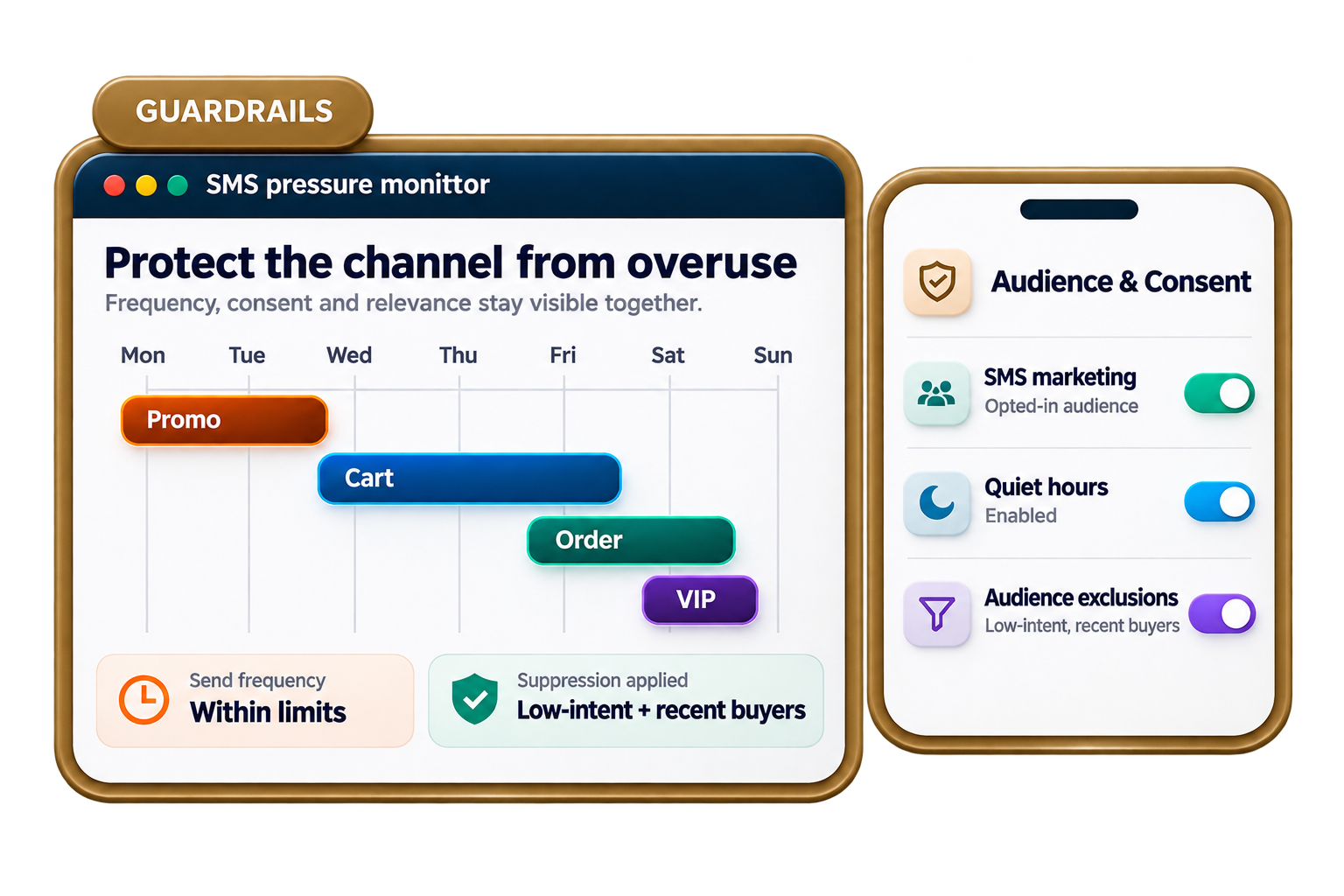
Protect the Channel From Overuse
Sending too often, without context, or without clear permission can make SMS less useful. Reliable customer data, considered timing, and consent and opt-out practices should guide the program as closely as the message itself.

Data Shapes Who Gets What
Triggered messaging and audience decisions may depend on customer profiles, purchases, product data, events, or connected systems. If those inputs are missing or unreliable, the targeting problem may need technical attention rather than another marketing rule.
Timing Has to Earn Attention
A text should arrive when the customer can quickly understand why it matters. Messages that need more explanation, richer content, or no immediate response may be better handled through email or another channel.
Permission Comes First
Consent, customer preferences, and opt-out handling have to remain visible in the program. Always Open Commerce can work within current platform and industry guidance, but does not provide legal advice or compliance certification.
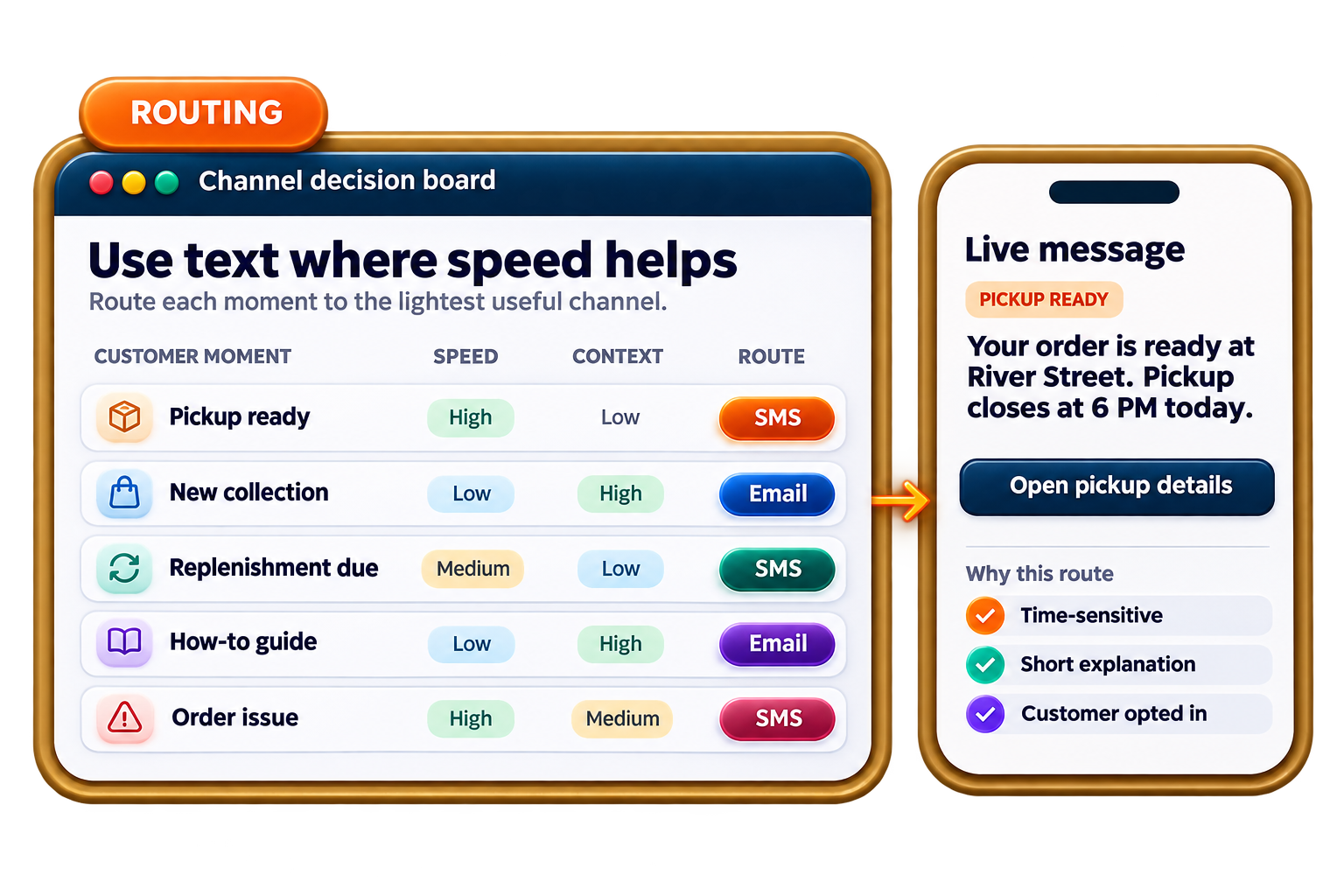
Use Text Where Speed Helps the Customer
Use SMS when a concise, timely message helps the customer. When a message needs more detail or has no immediate value, another channel may be the better fit. Keeping those boundaries clear makes the lifecycle program easier to coordinate.
When SMS needs support beyond the channel itself, our team can bring in Email Marketing, Cart Recovery, Klaviyo Optimization, and Content Writing & Strategy when those services are relevant and included. The goal is a clearer role for text inside the customer journey. Delivery, conversion, repeat purchase, recovered revenue, and other performance outcomes are not guaranteed.
SMS & Messaging Platforms We Work With

Coordinate SMS campaigns, subscriber entry points, and audience targeting around timely, permission-based customer communication.

Review SMS flows, audience rules, and email handoffs to support a more coordinated customer lifecycle.

Plan SMS campaigns, triggered messages, and audience decisions alongside email, with attention to timing and consent.
Frequently Asked Questions
Depending on the engagement, SMS Marketing can include campaign planning, triggered messaging, audience rules, opt-in experience, copy, email coordination, and program review. We focus on the parts of the channel that need attention rather than forcing the same playbook onto every program.
SMS is a more immediate, constrained channel. Email can carry more explanation, education, and visual content. The two can support the same lifecycle, but they should not automatically send the same message to the same customer.
Yes, when the customer is eligible for SMS and the platform and data support the trigger. If the larger problem involves browse, cart, checkout, recovery logic, or onsite friction, Cart Recovery is the more complete service path.
No. Always Open Commerce can keep consent, opt-out handling, messaging practices, and platform requirements visible in the work. Legal obligations and compliance determinations remain the responsibility of the business and its qualified advisors.

 USA
 Philippines


