






















































Conversion Rate Optimization
When traffic is arriving but the path to action is unclear, start with evidence instead of redesigning by instinct. Ecommerce CRO from Always Open Commerce identifies friction, prioritizes opportunities, and connects recommendations to shopper behavior and measurable journeys.
Start With the Buying Problem, Not the Solution
A store can have traffic, strong products, and a working checkout but still lose sales when the buying journey feels unclear or harder than it should.
Conversion Rate Optimization helps identify where that friction exists, what shopper behavior is showing, and which improvements are worth prioritizing.

Find Friction
Spot the parts of the journey that slow shoppers down.

Review Evidence
Use shopper behavior and on-site signals to see what is happening.

Prioritize Changes
Focus on the improvements most likely to help conversion.
Where Conversion Friction Shows Up
The exact CRO scope depends on the store, available data, and the questions the business needs to answer.
Journey & Funnel Review
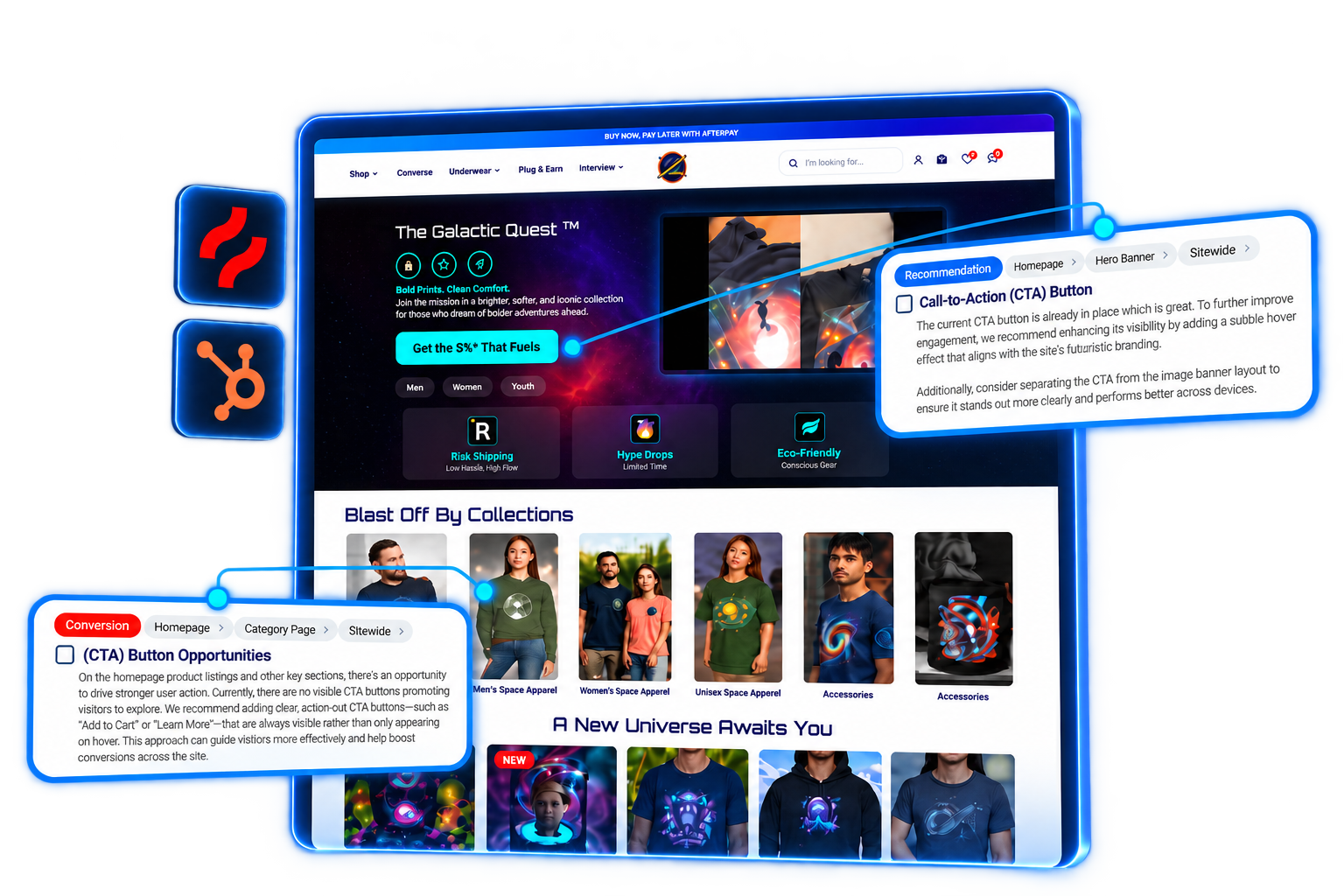
Review important paths such as product discovery, product evaluation, cart, checkout, lead capture, or other conversion journeys to identify where friction may be occurring.

Page & Experience Analysis
Evaluate layouts, hierarchy, calls to action, product presentation, forms, navigation, and other customer-facing elements that may be making decisions harder.
Behavior & Evidence Review
Use available analytics, session behavior, research findings, or other approved evidence to understand what is happening before recommending a change.
Opportunity Prioritization
Organize findings by likely importance, effort, dependencies, and business relevance so the team can focus on the changes that deserve attention first.

Hypothesis & Test Planning
Translate selected findings into clear hypotheses or test ideas when experimentation is appropriate, without assuming every recommendation requires an A/B test.
Use Evidence to Decide What Should Change
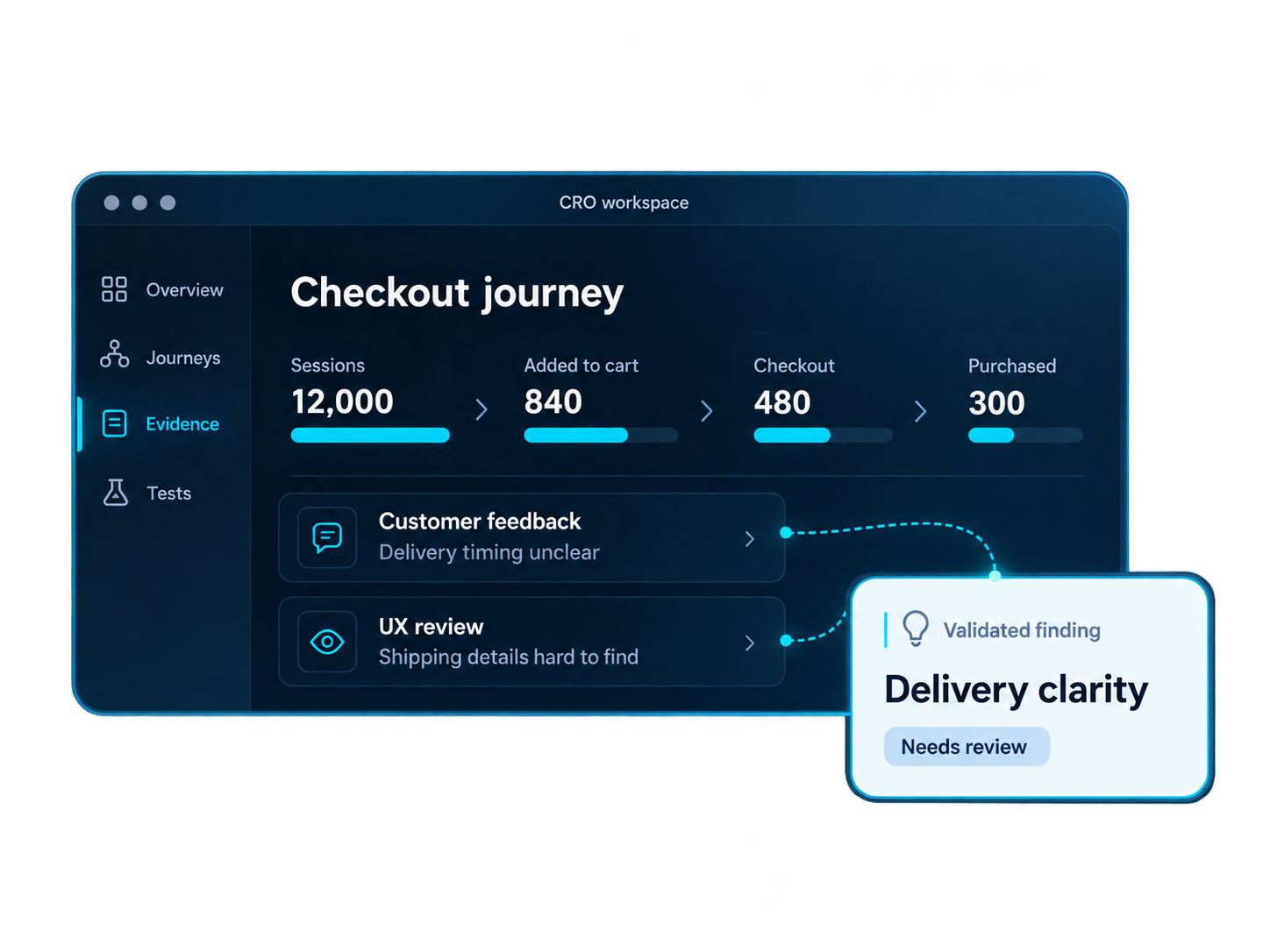
CRO is most useful when recommendations come from a clear problem rather than a list of generic best practices. Quantitative and qualitative evidence can play different roles, and not every signal should be treated as proof of causation.
What Is the Actual Conversion Problem?
Define the journey, action, or decision that needs attention before choosing a solution. A weak product-page interaction and a checkout drop-off are different problems even when both affect conversion.
What Evidence Supports the Finding?
Look at analytics, observed behavior, customer feedback, UX findings, or other approved inputs together instead of allowing one metric or screenshot to dictate the conclusion.
Can the Change Be Implemented Reliably?
Some recommendations are simple design or content changes. Others depend on development, platform behavior, apps, tracking, or data quality and need separate feasibility review.
Does the Idea Need a Test?
A/B testing can be useful when there is meaningful uncertainty and sufficient measurement capability, but testing is not the default answer to every usability issue or obvious defect.
Turn Findings Into an Improvement Roadmap
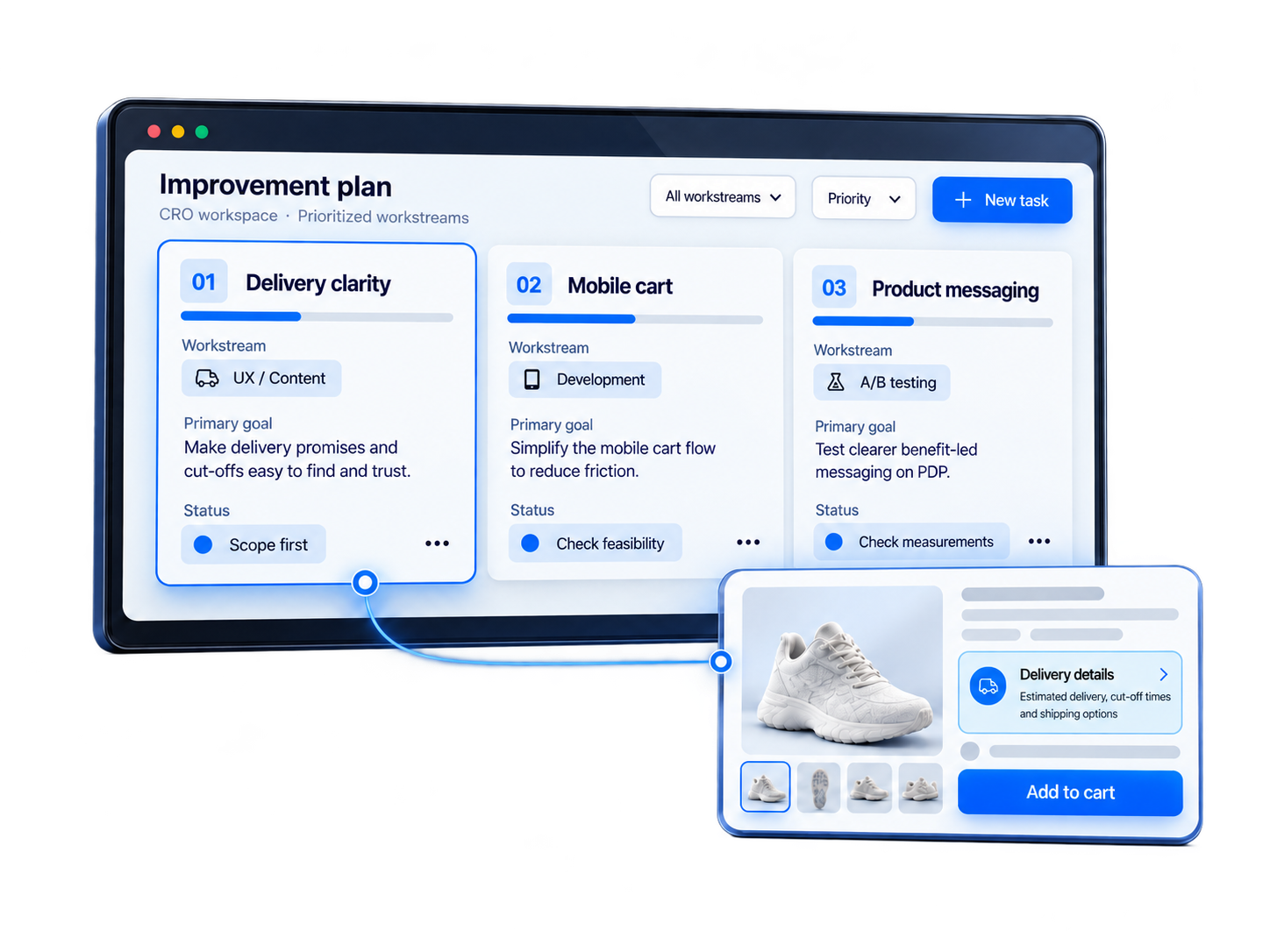
Good CRO turns findings into a practical roadmap—not just a list of observations. The goal is to clarify what should change, why it matters, and which improvements deserve attention first.
Depending on the findings, recommendations may involve UX/UI Design, Custom Development, Mobile Optimization, Landing Pages, or A/B Testing. Always Open Commerce can coordinate these workstreams when included in the approved engagement. Implementation is only included when explicitly scoped.
CRO in Practice


CRO Audits & Behavioral Analytics

CRO Audit
Review your storefront and buying journey to uncover conversion barriers, usability issues, and the most valuable improvement opportunities.

CRO & Behavioral Analytics
Analyze shopper behavior, traffic patterns, and interaction data to identify friction points and understand where conversions are lost.

A/B Testing
Compare variations of key page elements to see which experiences perform better and guide future optimization decisions.
Frequently Asked Questions
CRO can include reviewing shopper journeys, page experience, available behavioral evidence, friction points, and improvement opportunities. The exact analysis and recommendations depend on the approved scope and data available.
Analytics can make CRO more informative, but the required evidence depends on the question being investigated. UX findings, customer behavior, qualitative research, and other approved inputs may also help identify friction.
No. Testing is useful for some hypotheses, but not every issue needs an experiment. Obvious defects, usability problems, technical limitations, and low-risk improvements may require a different decision path.
Implementation can be coordinated when it is included in the approved engagement. Design, development, landing-page work, mobile optimization, or other follow-up services remain separate unless specifically scoped.
Prioritization can consider the seriousness of the friction, how many shoppers may encounter it, available evidence, business importance, implementation effort, dependencies, and whether the change can be measured reliably.
No. CRO is intended to improve how decisions are made about the shopping experience, but results depend on traffic quality, products, pricing, offers, implementation, seasonality, measurement, and other factors. Always Open Commerce does not guarantee conversion increases.

 USA
 Philippines


