


















































Custom Commerce Systems
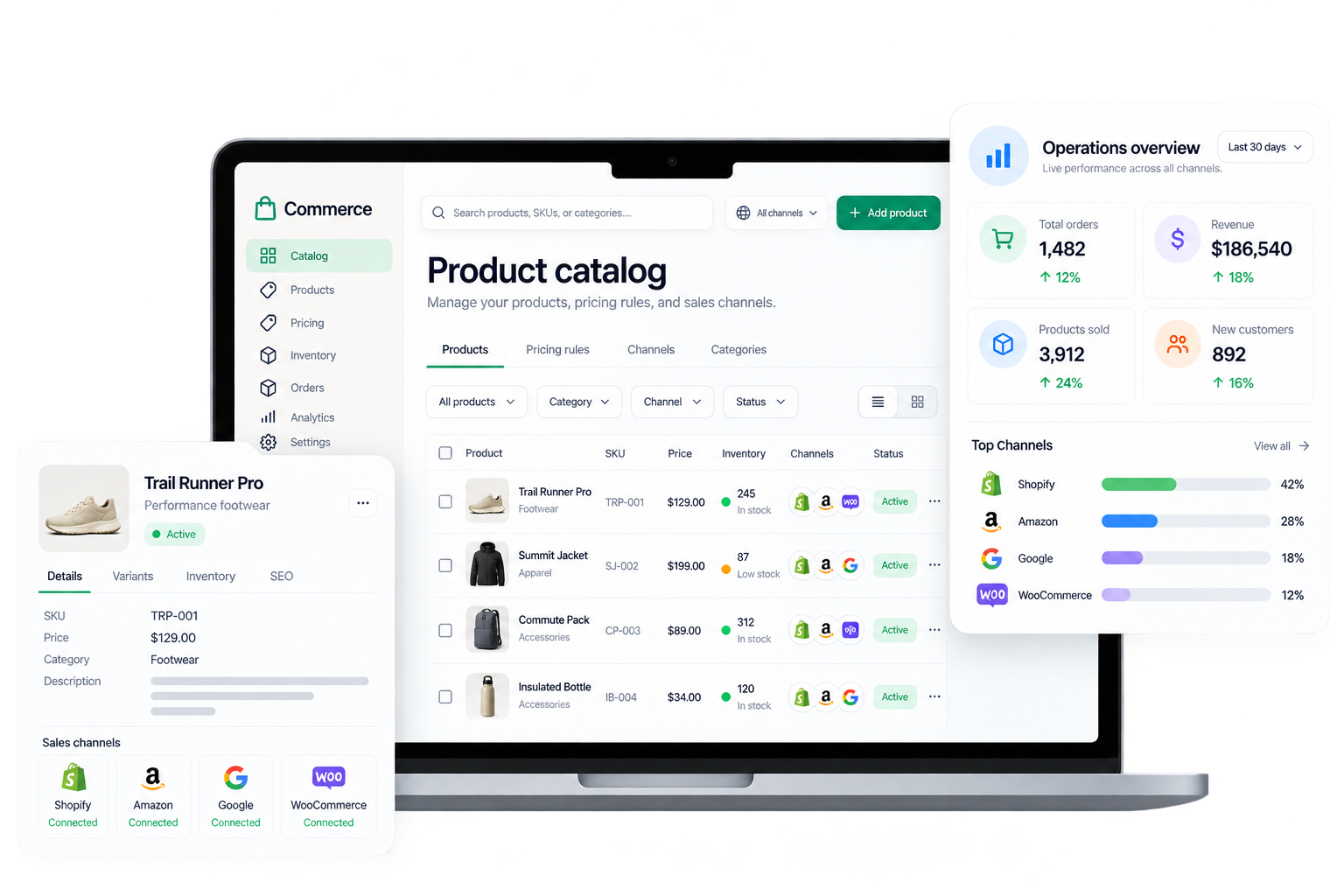
Replace expensive apps with one system built for your business.
Always Open Commerce identifies the capabilities your team actually uses, then designs a more unified commerce system around those requirements using native platform features, custom development, integrations, automation, and AI agents where they create practical value.
Replace App Sprawl With a System That Fits
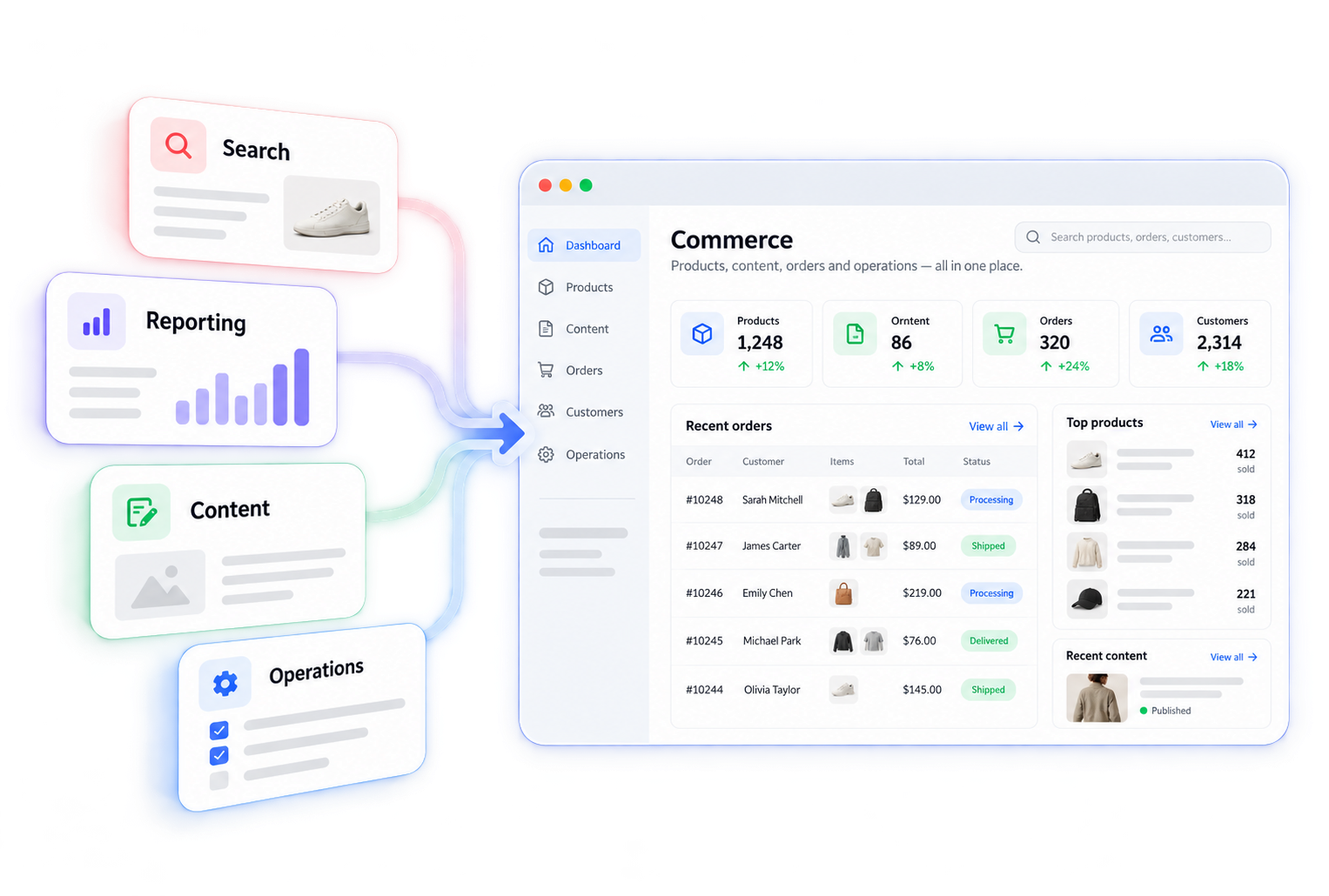
Ecommerce stacks often grow one subscription at a time. Search, merchandising, reporting, content, operations, support, and workflow tools can become expensive and difficult to manage when several apps overlap, pass data inconsistently, or require separate processes.
Custom Commerce Systems starts with the business requirements behind those subscriptions. The goal is not to rebuild every feature from every vendor. It is to preserve the essential capabilities, remove unnecessary duplication, and create a system the business can understand and operate.
Build Around the Capabilities the Business Actually Needs
The final architecture depends on the approved requirements, platform, data, integrations, risk, and maintenance model. A solution may combine several approaches instead of forcing every function into custom code.

Native Platform Capabilities
Use supported commerce-platform features when they meet the requirement cleanly and reduce avoidable dependencies.

Purpose-Built Workflows and Tools
Create focused interfaces, rules, and workflows for the functions the business actually uses instead of carrying the full weight of a broader application.

Integrations and Shared Data
Connect approved systems and data sources so information can move more consistently across the storefront and operating workflow.

Automation and AI Agents
Use controlled automation or agents for defined work when the inputs, permissions, exceptions, outputs, and human-review points are clear enough to support it.
Designed for Safe Change and Long-Term Ownership

Discovery and Requirements
Document the jobs each app performs, the people and workflows that depend on it, the data it reads or changes, important exceptions, and the capabilities that must be preserved.
Architecture and Feasibility
Confirm which requirements belong in native platform features, custom development, integrations, automation, or retained third-party tools. Security, privacy, access, and platform limitations are reviewed before commitment.
Migration and Rollback
Plan data movement, configuration, dependencies, transition steps, and a rollback path before an existing tool is removed or a production workflow is changed.
Testing and Launch
Validate critical functions, permissions, data behavior, integrations, storefront impact, analytics, and exception handling before launch.
Documentation and Managed Maintenance
Document how the system works, who owns decisions and access, how issues are escalated, and what must be monitored or updated. Ongoing maintenance can be scoped separately when the business wants continuing support.


Move From Review to a Controlled Replacement Plan
When the business does not yet know what should change, App Stack Review & Recommendations is the diagnostic starting point. It identifies overlap, cost, performance, compatibility, and operational concerns without assuming a replacement is already justified.
Custom Commerce Systems is the separately scoped implementation path after the required capabilities and priorities are understood. Each approved replacement follows a phased plan so the business can validate the new system before a dependency is removed.
Frequently Asked Questions
A purpose-built commerce system organized around the capabilities your business actually needs. It can combine native platform features, custom development, integrations, automation, and AI agents where they create practical value.
Custom development may be part of the solution, but the architecture can also use native platform features, integrations, automation, and retained third-party tools. The approved requirements determine the approach.
No. Each requirement must be reviewed for feasibility, security, privacy, access, and platform limitations. Supported native features or retained third-party tools may remain when they are the better fit.
The review identifies overlapping subscriptions and opportunities for consolidation. Any replacement decision should also consider development, migration, risk, and ongoing maintenance; savings are not assumed before the requirements and architecture are reviewed.
If the business does not yet know what should change, App Stack Review & Recommendations is the diagnostic starting point. Custom Commerce Systems is a separately scoped implementation path once the required capabilities and priorities are understood.
The engagement documents how the system works, who owns decisions and access, how issues are escalated, and what needs monitoring or updating. Ongoing managed maintenance can be scoped separately when the business wants continuing support.
Build the Commerce System Your Business Actually Needs
If your store is paying for overlapping tools or relying on disconnected workflows, Always Open Commerce can help determine what should remain, what may be consolidated, and what is worth replacing with a purpose-built system.

 USA
USA
 Philippines


