



















































Cart Recovery
An abandoned cart is a signal, not a diagnosis. Always Open Commerce looks at where shoppers drop off, what the store can reliably know about them, and whether the right response is a reminder, a storefront fix, or no follow-up at all.
Start With Why the Purchase Stopped
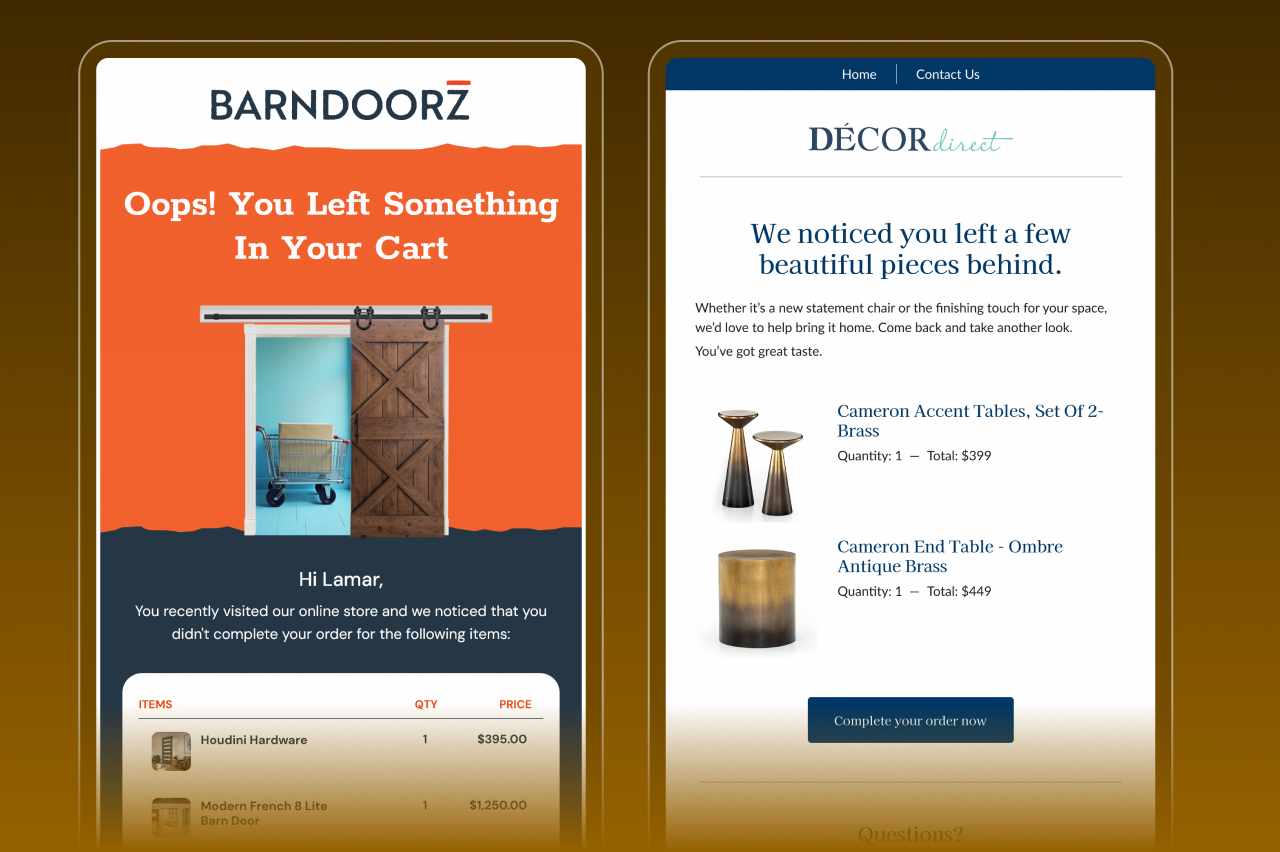
A cart can mean several things. A shopper may be comparing options, saving an item for later, getting distracted, or running into shipping, checkout, payment, or usability friction. Those situations do not deserve the same response.
Always Open Commerce starts by separating normal shopping behavior from problems the business can actually address. That keeps recovery from becoming a blanket sequence aimed at every shopper who did not buy.
Build Recovery Around Shopper Intent
We build the recovery approach around what the shopper did, what the store can reliably detect, and what kind of follow-up makes sense for that stage of the purchase journey.

Browse, Cart & Checkout Signals
Browse, Cart & Checkout Signals
Clarify whether the signal comes from browsing, cart activity, or checkout, and whether the platform is capturing enough customer, product, and purchase-state information to support useful follow-up.

Return Path
Return Path
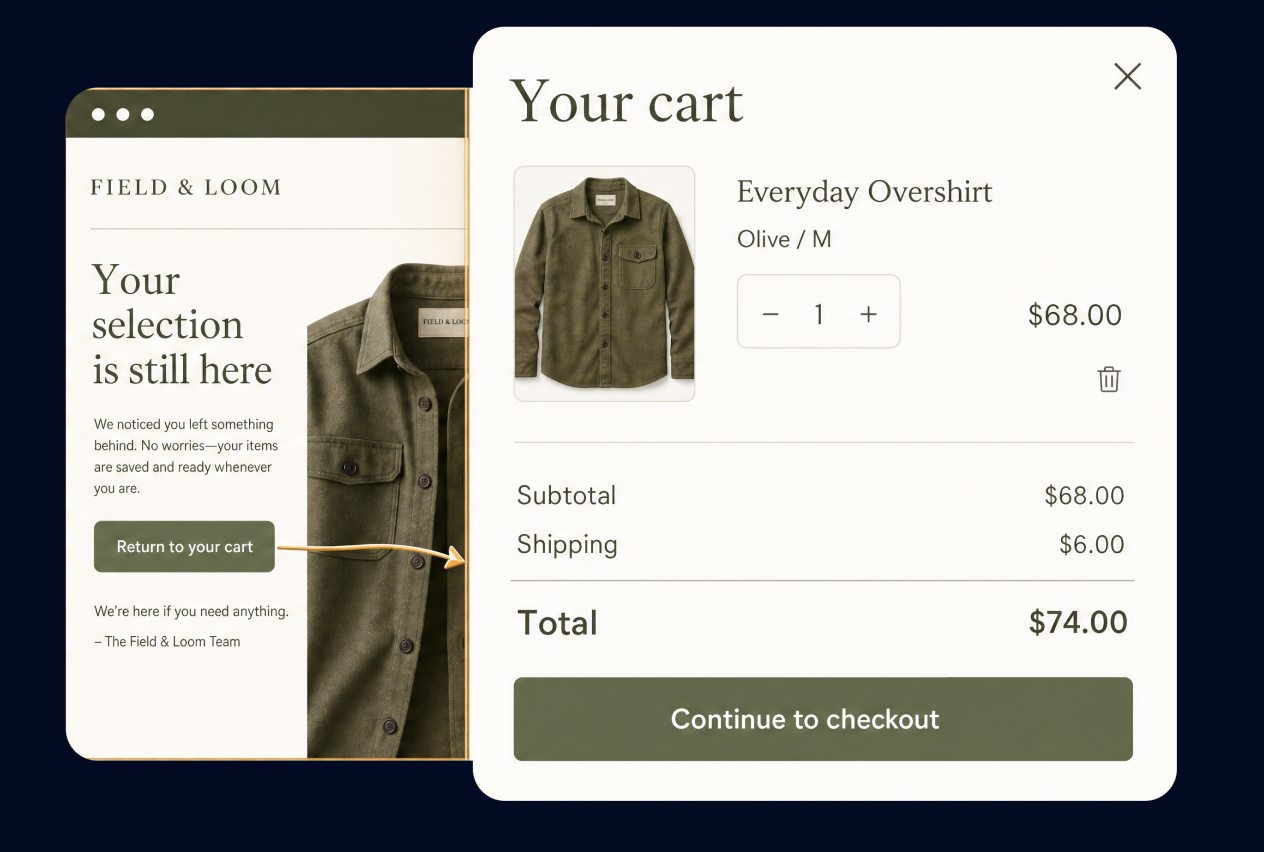
Make it easy for the shopper to return to the product, cart, or checkout state that matters. A reminder is less useful when the customer has to reconstruct the purchase or lands back on the same unresolved problem.

Message Sequence
Message Sequence
Plan the number, timing, and role of follow-up messages so each one adds something. A sequence should not keep repeating the same reminder after the shopper has already chosen not to continue.

Offer Discipline
Offer Discipline
Discounts, free shipping, and other incentives can be useful in the right situation, but they should not become the automatic response to abandonment. The offer has to make sense for the shopper, margin, promotion strategy, and reason the purchase stopped.

Suppression & Exit Rules
Suppression & Exit Rules
Customers who purchased, no longer qualify for the channel, or have moved into another journey should not keep receiving recovery messages. Exit and suppression rules help the sequence stop when the context has changed.
Know When Messaging Is Not the Fix
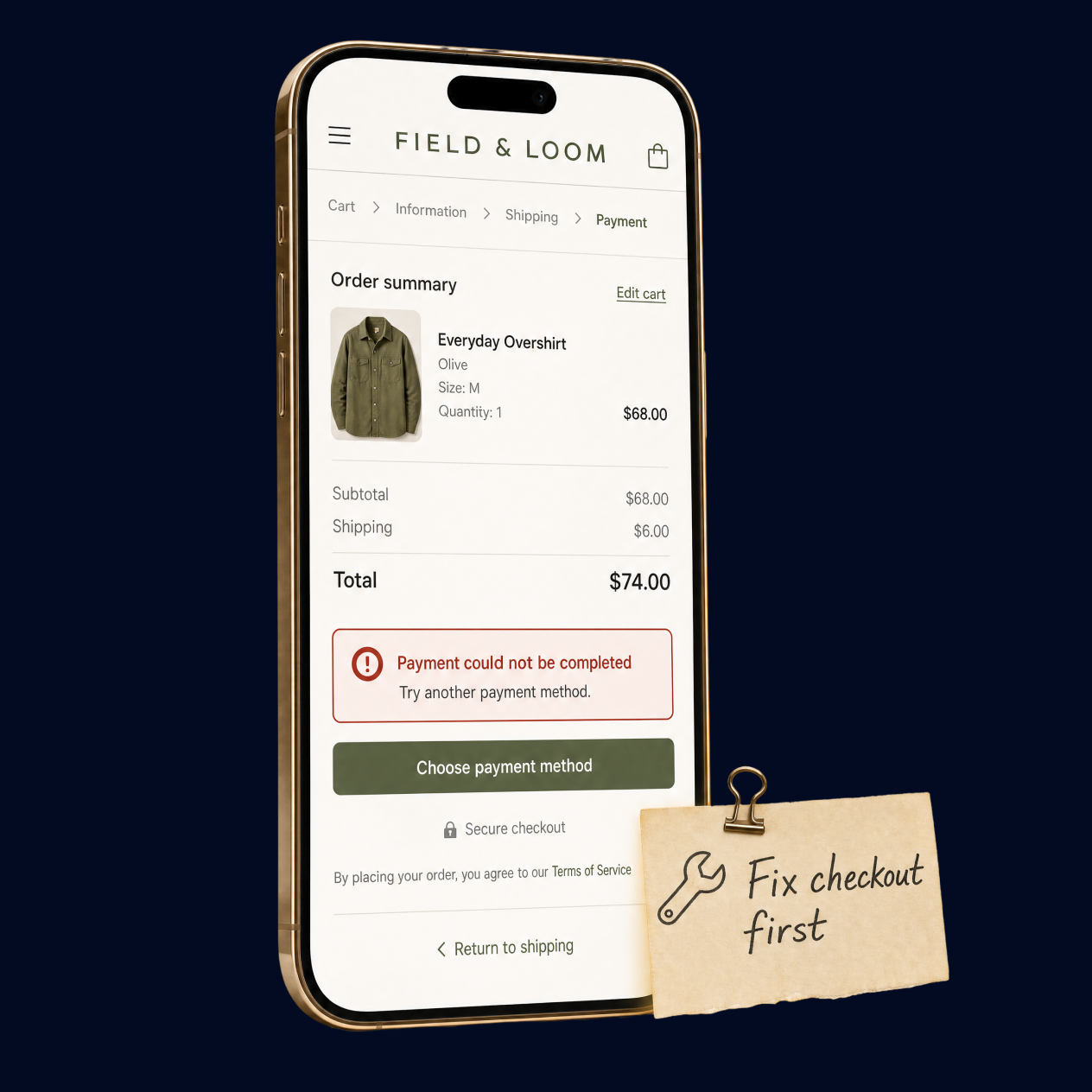
Recovery messaging can only solve a messaging problem. If the real issue is checkout friction, poor data, or weak purchase intent, another reminder may add noise without addressing what stopped the order.

Checkout Friction
Shipping presentation, form usability, payment concerns, mobile behavior, or another storefront issue may be getting in the way. Cart Recovery can surface the pattern, while deeper UX, CRO, or development work is handled through the appropriate service.
Missing or Unreliable Signals
Recovery depends on captured events, customer identity, cart or checkout information, and connected systems. If those inputs are incomplete or inaccurate, the first job may be fixing the signal rather than changing the message.
Weak Purchase Intent
Not every abandoned cart was close to becoming an order. Shoppers use carts to compare, save, and explore. Always Open Commerce does not treat every abandonment as lost revenue that could have been recovered.

Make the Return Experience Worth Coming Back To
The recovery message and the experience after the click have to support the same decision. If the shopper returns to a broken, confusing, or unchanged purchase path, the message has done all it can do.
When the problem extends beyond recovery messaging, our team can bring in Email Marketing, SMS Marketing, Klaviyo Optimization, and the appropriate storefront or technical service when those areas are relevant and included. Advanced integration fixes and platform fees are separate, and no recovery program comes with a guaranteed revenue result.


Frequently Asked Questions
Depending on the engagement, Cart Recovery can cover browse, cart, or checkout signals, return paths, message sequencing, audience and exit rules, offer decisions, and the relationship between recovery messaging and the onsite experience.
No. A discount is one possible tactic, not the default recovery strategy. The right response depends on the shopper context, margin, current promotions, and whether the purchase stopped for a reason an incentive can actually address.
Yes, when the customer is eligible for each channel and both are part of the engagement. Email and SMS should have coordinated roles rather than automatically sending the same reminder twice.
Yes, we can identify when the return path or checkout experience appears to be part of the problem and route the issue to the appropriate service. Specific changes are separate and depend on the platform and technical feasibility.

 USA
USA
 Philippines


