


Google Ads
Google Ads works best when the account is organized around the demand, products, and outcomes the business actually values. Always Open Commerce connects campaign structure, search intent, product data, landing experience, and conversion signals to those commercial priorities.
Give Every Campaign a Commercial Job
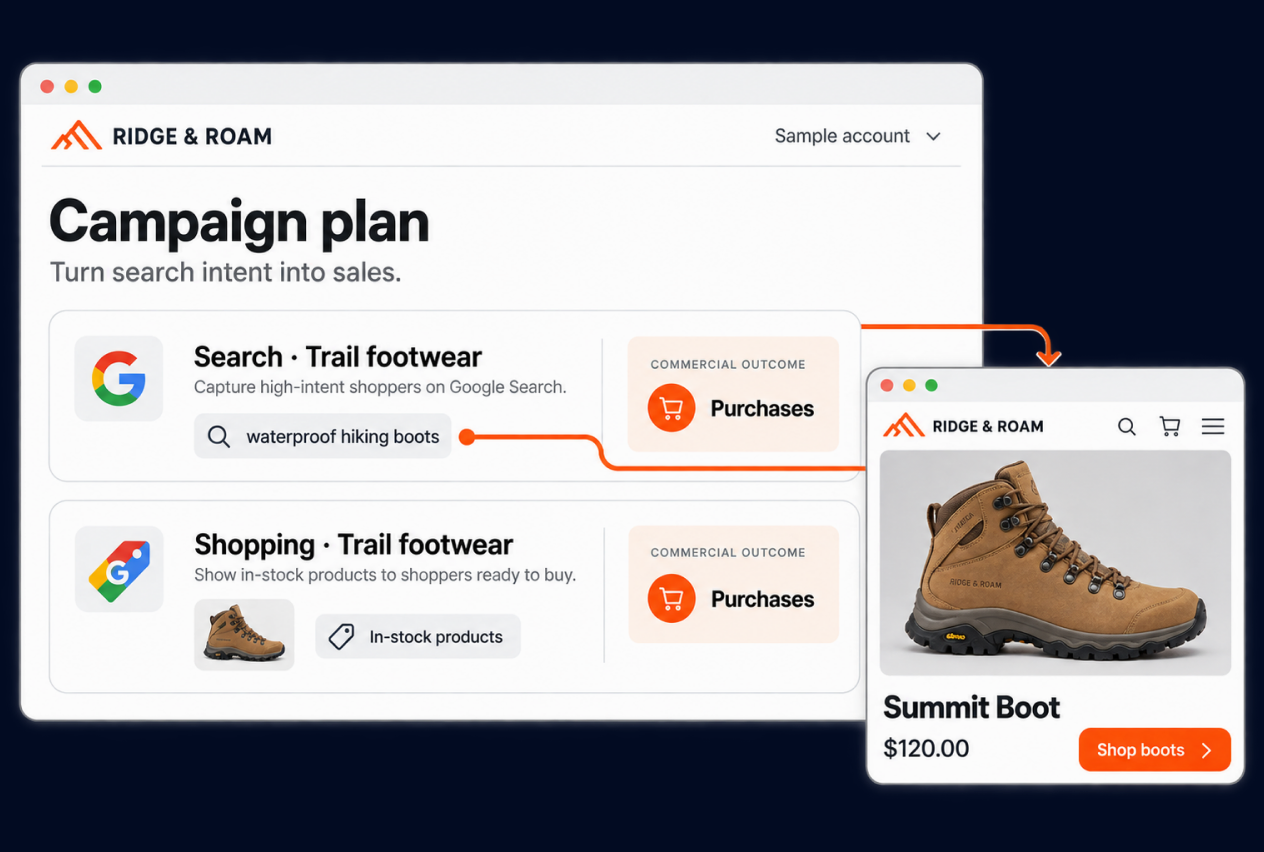
Paid search and Shopping can capture high-intent demand, but each campaign still needs a clear reason to exist. When objectives, products, queries, landing pages, and conversion goals point in different directions, the account becomes harder to evaluate and optimize.
The work starts by defining the demand worth buying, the products or offers behind it, and the conversion outcome the business trusts. Campaign structure should follow those decisions rather than become the strategy itself.
Campaign Structure, Search Intent, Shopping & Measurement
Always Open Commerce organizes Google Ads around the commercial role of each campaign and the inputs Google uses to match ads, products, and conversion goals to demand.

Campaign Architecture & Objectives
Structure campaigns around distinct business goals, product or service priorities, geographies, and budget logic. The account should make it easier to understand what each campaign is trying to accomplish and where spend is going.

Search Intent & Keyword Direction
Use search terms, keyword direction, negatives, and match choices to separate qualified commercial demand from irrelevant or lower-value searches. Priority queries should lead to the offer or page that best matches the intent.

Shopping & Product Data
Google Shopping uses Merchant Center product data to match products to relevant searches. Feed quality, identifiers, attributes, price, availability, and destination consistency should be stable enough that product-data problems are not mistaken for media problems.

Ad, Offer & Landing Alignment
Align ad messaging and assets with the actual offer, category, product, and landing experience. If the destination is the constraint, Landing Pages, Conversion Rate Optimization, or UX / UI Design can address the post-click experience separately.

Performance Review
Review spend, search demand, conversion value, acquisition cost, product performance, search terms, and other approved signals in business context. Recommendations should be tied to what the business is trying to sell, not to one platform metric.
Validate the Signals Behind Optimization
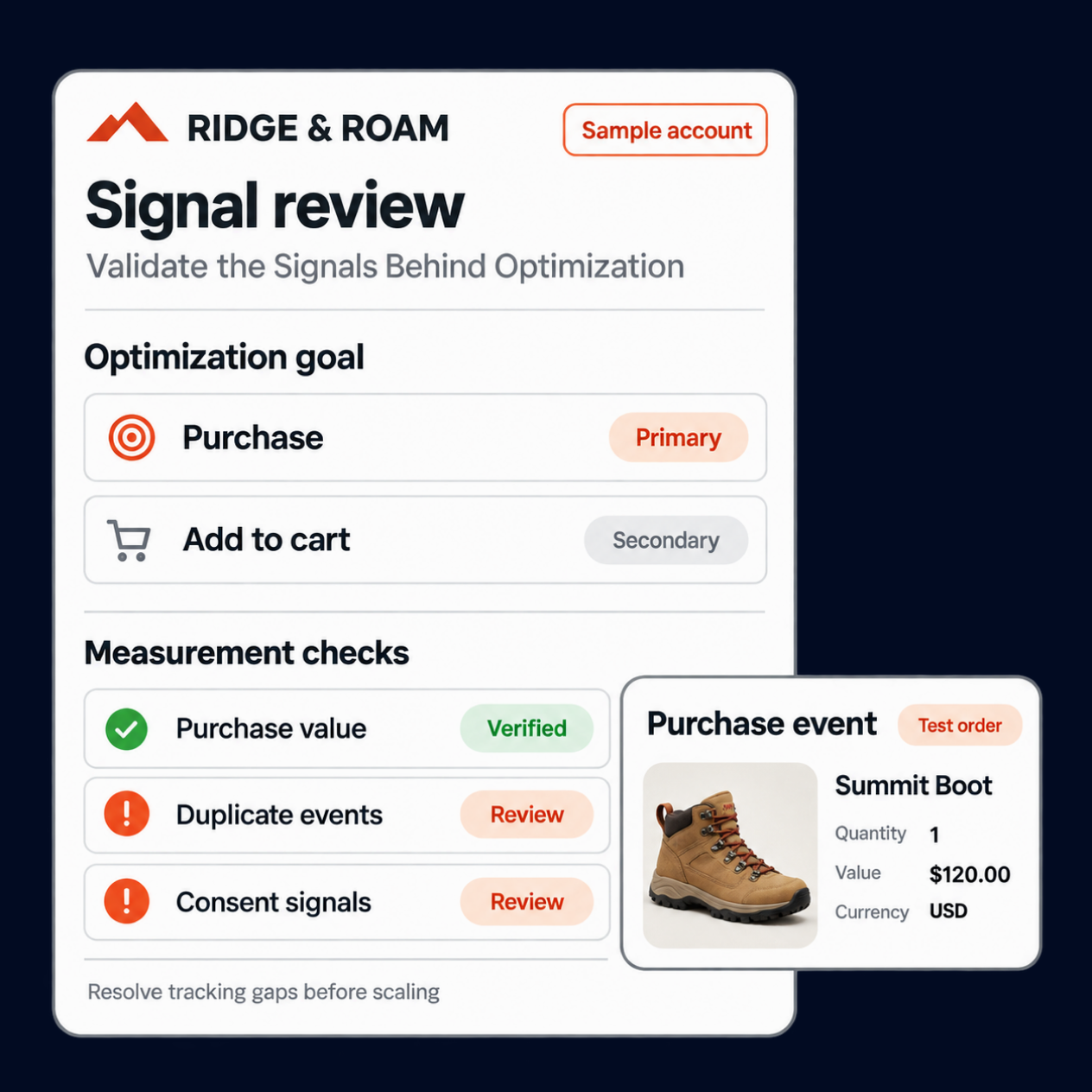
Automation can adjust bids and delivery quickly, but it still depends on the goals, values, product data, and measurement available to the account. Before changing spend or structure, confirm which signals deserve to guide the decision.

Which Conversion Outcome Should Guide the Campaign?
Purchases, leads, calls, sign-ups, and other actions do not carry the same value. Define which outcome should guide optimization and how that outcome relates to the campaign’s commercial job.
Can the Measurement Be Trusted?
Tracking, consent, checkout behavior, attribution settings, and linked systems can change what Google Ads and analytics report. Material discrepancies should be investigated before they become budget decisions.
Does Spend Fit Demand and Product Economics?
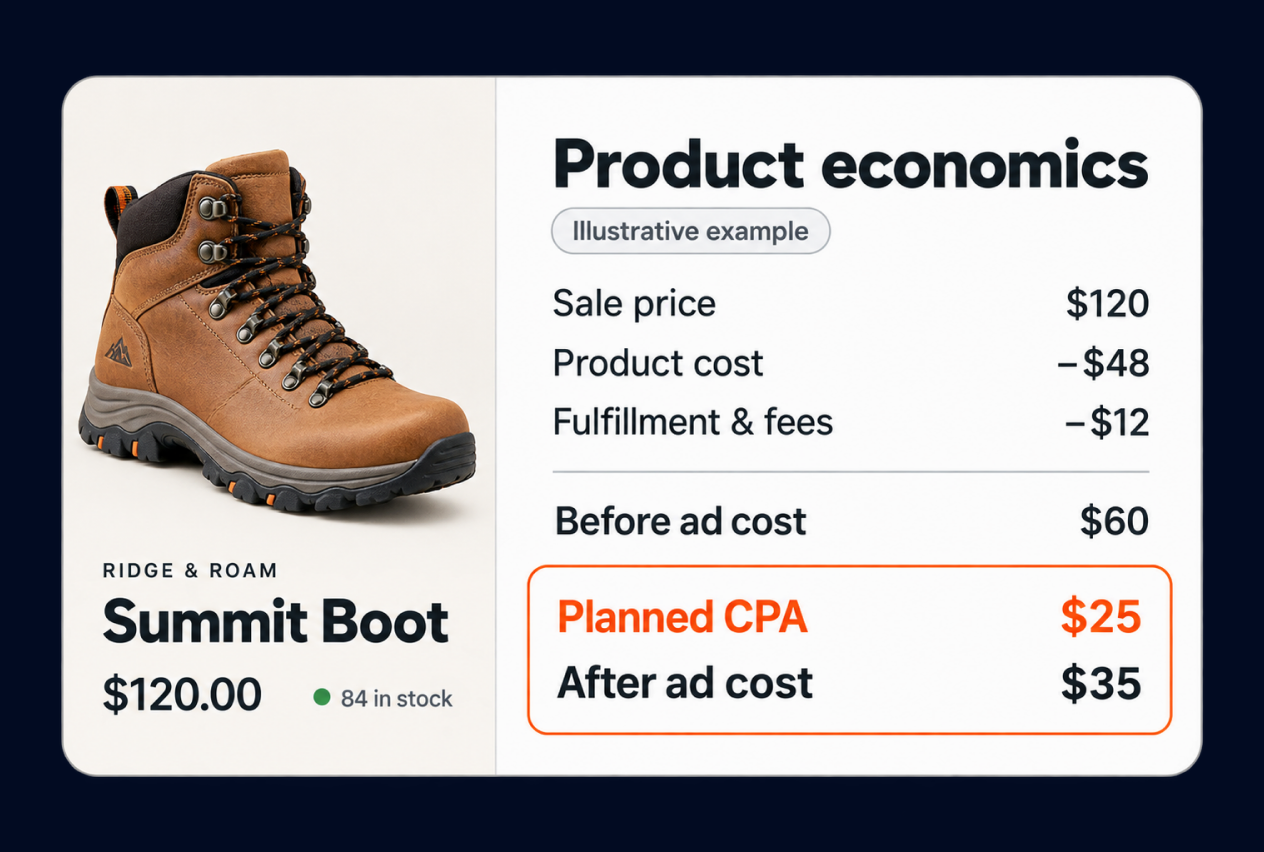
Budget and ROAS or CPA expectations should reflect demand, margin, inventory, seasonality, and confidence in the measurement. The right level of spend is a business decision informed by the account, not something the platform should define on its own.
Connect Paid Search to Product Economics
Google Ads is most useful when the business knows which demand it wants to capture and what an acceptable outcome looks like. That keeps campaign decisions connected to merchandising, margin, inventory, and the customer experience after the click.
Some paid-media problems originate outside the ad account. Shopping Feeds, Landing Pages, Performance Audits, and Meta Ads may be the right next step when the constraint is product data, destination experience, measurement, or demand creation.
Always Open Commerce does not guarantee ROAS, revenue, conversion volume, or acquisition cost. The goal is a clearer commercial role for Google Ads, better inputs, and a more defensible basis for campaign and spend decisions.
Paid Search in Practice

Paid Media & Measurement


Frequently Asked Questions
Depending on scope, work can include campaign architecture, search-term and keyword direction, Search and Shopping considerations, messaging, landing-page alignment, conversion-goal review, performance analysis, budget guidance, and ongoing optimization.
Yes. Search campaigns can use keywords and search intent, while Shopping campaigns depend heavily on Merchant Center product data. Dedicated source-data or feed work belongs in Shopping Feeds when the issue is upstream of the ad account.
Always Open Commerce can review measurement issues within the approved scope. Fixes involving tags, consent, checkout behavior, analytics configuration, or other technical implementation may require separate work before the account can rely on those signals.
No. Paid-media results depend on competition, demand, budget, product economics, landing experience, tracking, platform behavior, and other factors. Always Open Commerce does not guarantee ROAS, revenue, conversions, or acquisition-cost outcomes.

 USA
USA
 Philippines


