
























































Site Speed Optimization
Site speed work should identify what is actually slowing the storefront before changes are made. Always Open Commerce uses available performance evidence to isolate issues across assets, theme code, apps, third-party scripts, and page behavior, then prioritizes improvements within the store’s control.
Site Speed Is More Than One Score
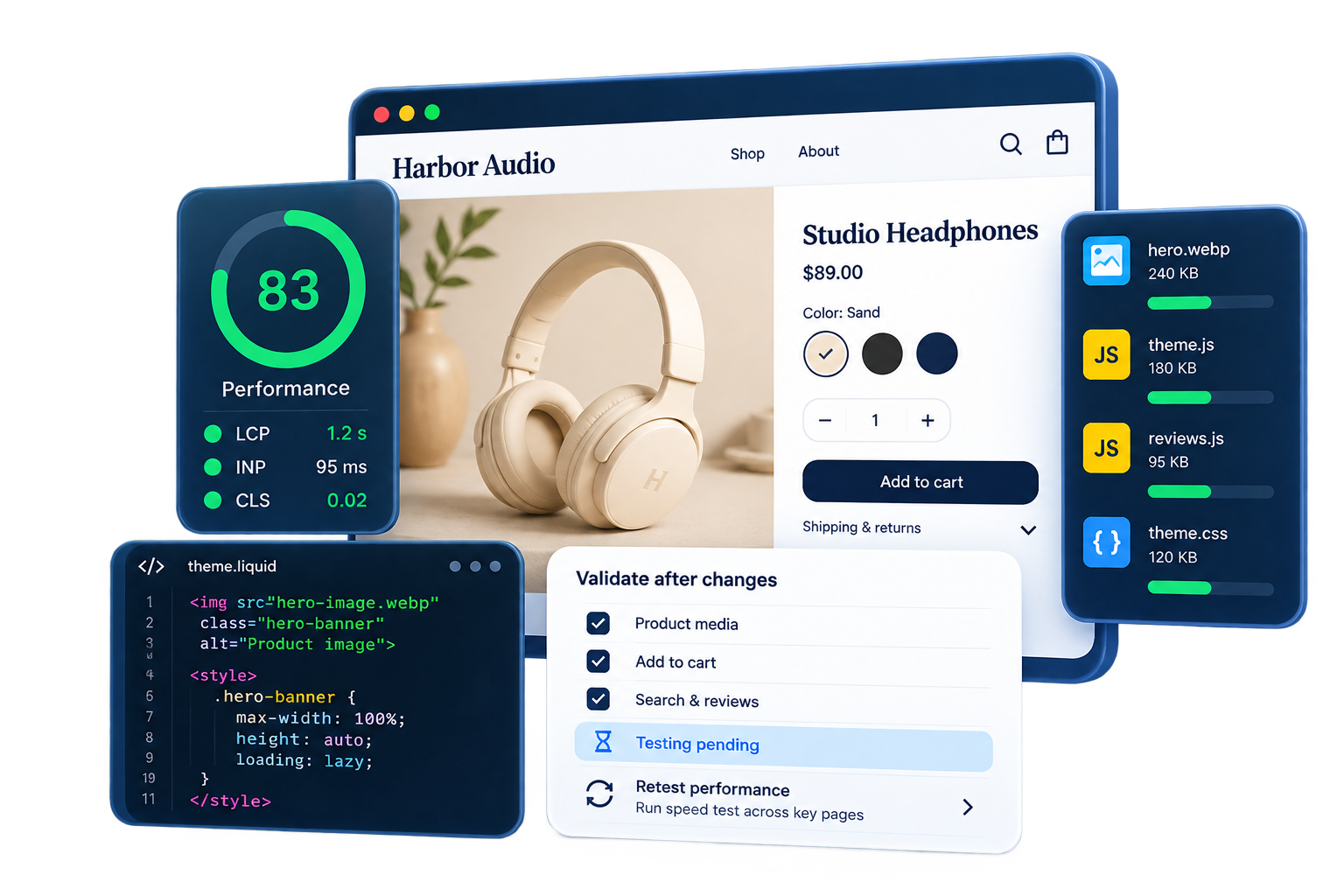
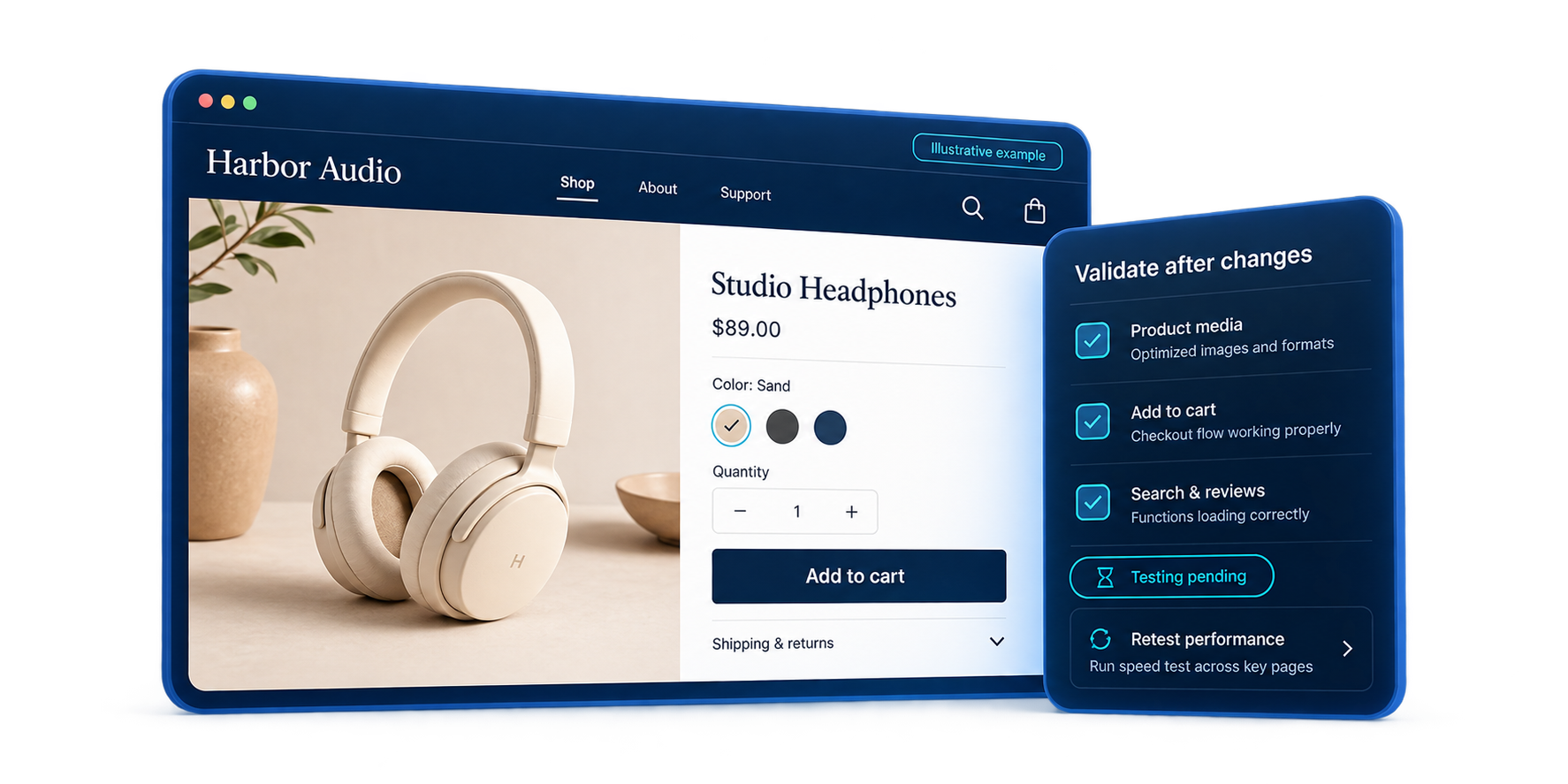
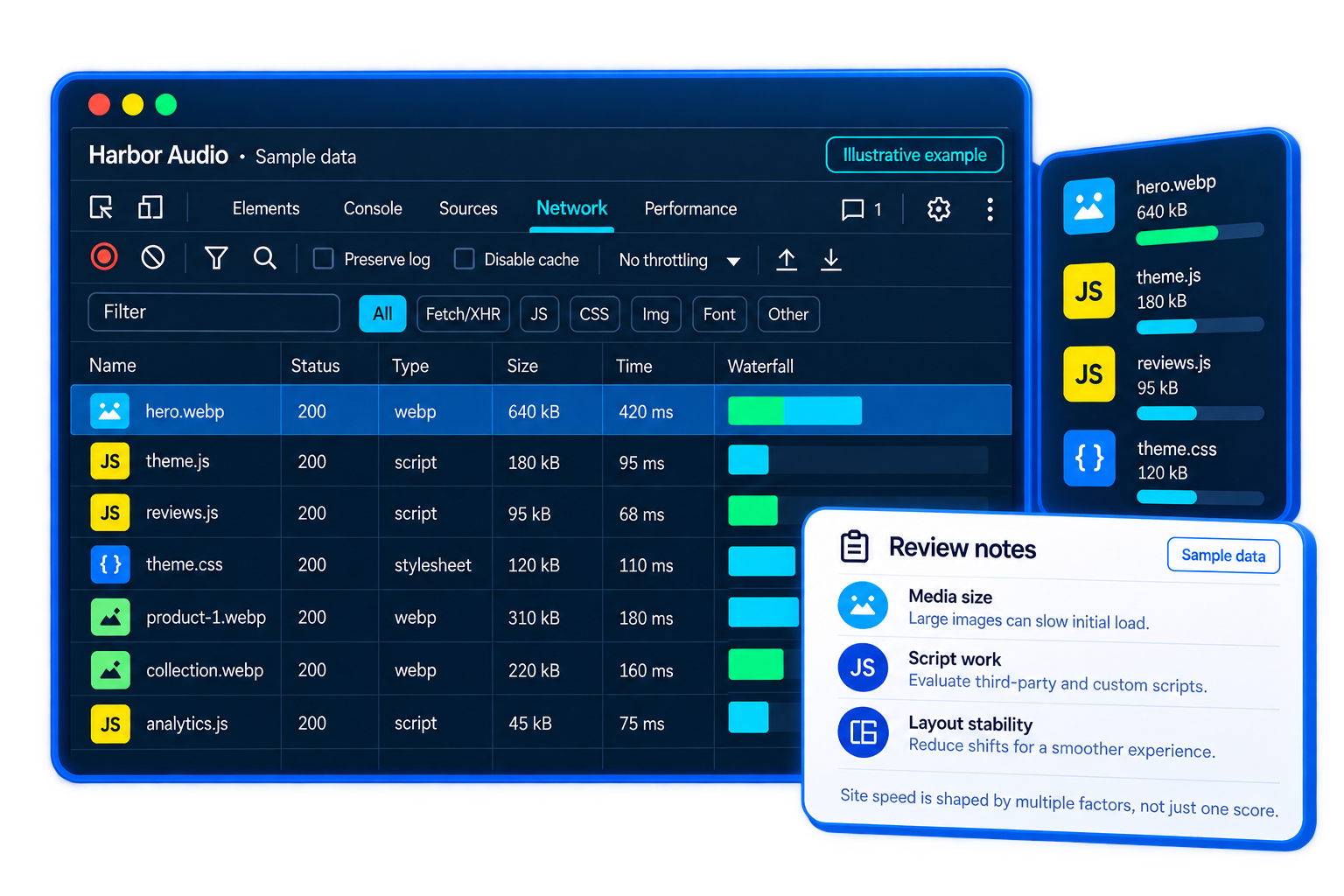
A storefront can feel slow for different reasons. Large images may delay the main content, scripts can slow interaction, apps add browser work, and shifting layouts can make pages feel unstable. Site Speed Optimization identifies issues that can be addressed within the ecommerce environment and prioritizes practical improvements.
Always Open Commerce can review heavy assets, theme bloat, app load, and page-level performance concerns. Advanced infrastructure changes and third-party vendor fixes remain separate unless scoped.
Assets, Theme Code, Apps, and Front-End Load
The exact work depends on the platform, theme, apps, page templates, and issues found during review.

Asset & Media Review
Identify oversized or inefficient images, video, fonts, and other front-end assets that may be adding unnecessary loading work to important storefront pages.

Theme & Front-End Review
Examine theme code, templates, reusable sections, and front-end behavior for avoidable bloat, duplicated work, or issues that may require development changes.

App & Third-Party Load
Review apps, tags, embeds, widgets, and third-party scripts while recognizing that some vendor-controlled behavior may sit outside Always Open Commerce’s direct control.

Page & Template Performance
Compare representative page types such as home, category, product, cart, or other important templates so the team is not optimizing one URL while missing broader patterns.

Measurement & Revalidation
Repeat appropriate performance checks after approved changes to understand whether the targeted issue improved and whether another bottleneck became more visible.
Read Performance Data in the Right Context
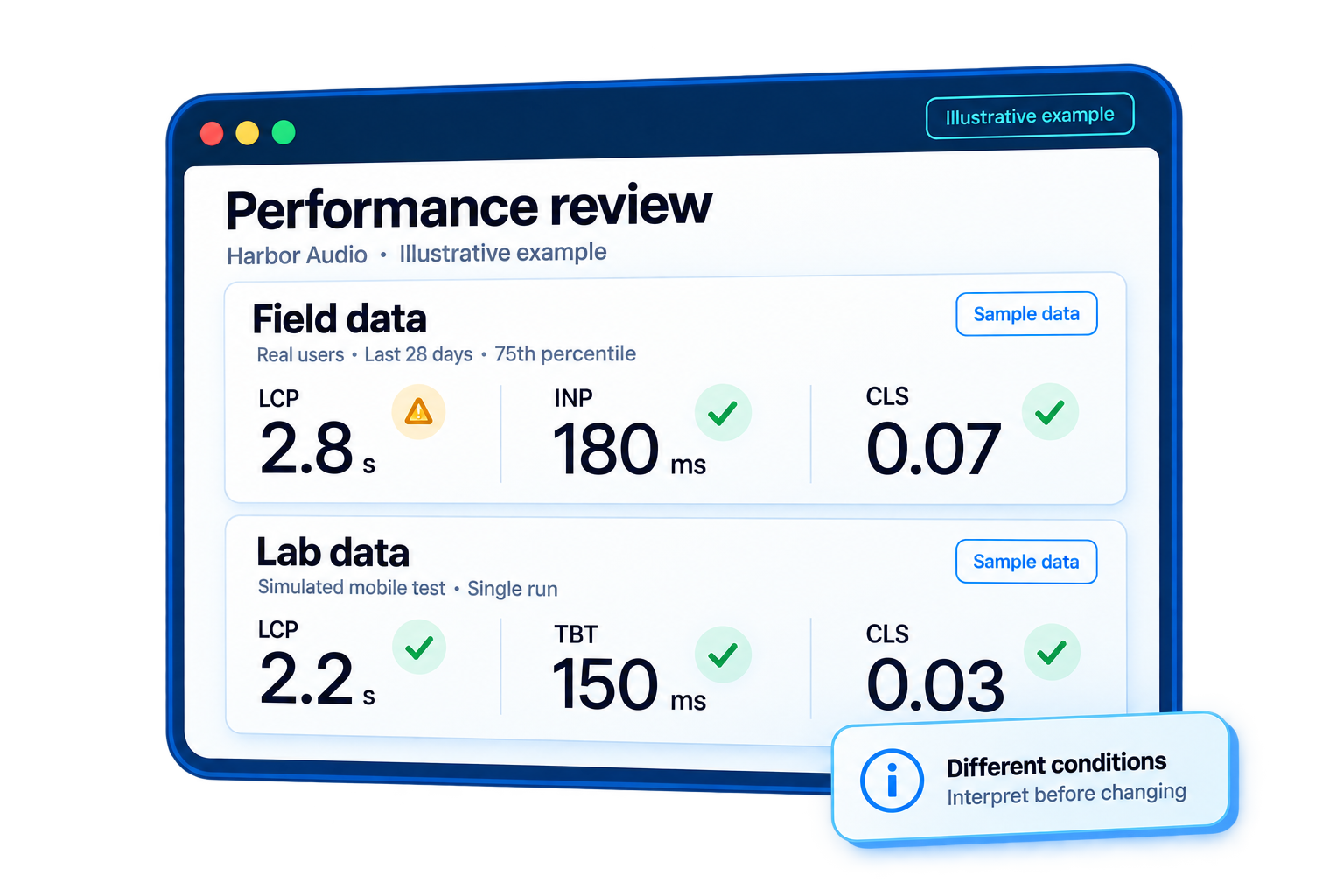
Performance tools are useful, but results need context. Field data reflects real-user experiences, while lab data comes from simulated conditions. The two can show different results for the same page.

Which Metric Is Showing the Problem?
Current Core Web Vitals cover loading performance, interactivity, and visual stability through LCP, INP, and CLS. A weak result indicates where to investigate but does not necessarily identify the cause.
Is the Issue Visible in Field Data, Lab Data, or Both?
Lab data helps diagnose issues under controlled conditions. Field data reflects real-user experiences when enough data is available. Comparing both helps determine how confidently an issue can be diagnosed.
Is the Problem Page-Specific or Systemic?
Templates, campaigns, app integrations, and content blocks can perform differently across the store. Testing representative pages helps distinguish isolated issues from broader theme-wide patterns.
What Is Controlled by the Store?
Some issues can be addressed through assets, theme work, app choices, or implementation changes. Others depend on the platform, third-party services, network conditions, or vendor code and may require separate review.
Improve Load Behavior Without Breaking the Store
The fastest theoretical version of a page is not always the right ecommerce experience. Product media, reviews, search, personalization, analytics, and subscriptions can add value while also increasing browser work.
Always Open Commerce can coordinate Site Speed Optimization with Custom Development, Conversion Rate Optimization, and SEO when included in the approved engagement. The service can address common speed-related issues within scope, but it does not automatically include advanced infrastructure changes or third-party vendor fixes, or guarantee PageSpeed, Core Web Vitals, ranking, conversion, or revenue outcomes.
Site Speed Optimization in Practice
Performance & Technical Review

Website Speed & Health Audit
Review storefront performance across key pages, devices, apps, scripts, and assets to identify issues and prioritize next steps.

Expert Technical Review & Planning
Assess technical feasibility, dependencies, and risks to clarify implementation options and prioritize work before development.

Technical Audits
Review storefront structure, themes, applications, and technical foundations to identify risks and dependencies before making changes.
Frequently Asked Questions
The service can include reviewing common performance issues such as heavy assets, theme bloat, app load, third-party scripts, and page-level concerns, then addressing the approved improvements that fall within scope.
Core Web Vitals are Google’s current user-experience performance metrics for loading, interactivity, and visual stability. The current set includes Largest Contentful Paint, Interaction to Next Paint, and Cumulative Layout Shift.
Performance results can vary because lab tests use simulated conditions while field data reflects aggregated real-user experiences. Device, network, page content, third-party scripts, and testing conditions can also affect what is measured.
No. Always Open Commerce does not guarantee score targets. Performance depends on the platform, theme, apps, third-party services, content, device and network conditions, and which changes are technically appropriate.
Not automatically. An app may support important business or customer functionality. The performance cost, business need, alternatives, and technical implications should be reviewed before a removal or replacement decision is made.
No. Performance can affect user experience and is one consideration in a broader ecommerce and search environment, but Always Open Commerce does not guarantee ranking, traffic, conversion, or revenue outcomes from speed work.

 USA
 Philippines


