
















































Loyalty & Rewards
Loyalty works when customers can understand what they earn and the business can afford to keep rewarding it. Always Open Commerce helps shape rewards, referrals, member messaging, and program rules around a value exchange that makes sense on both sides.
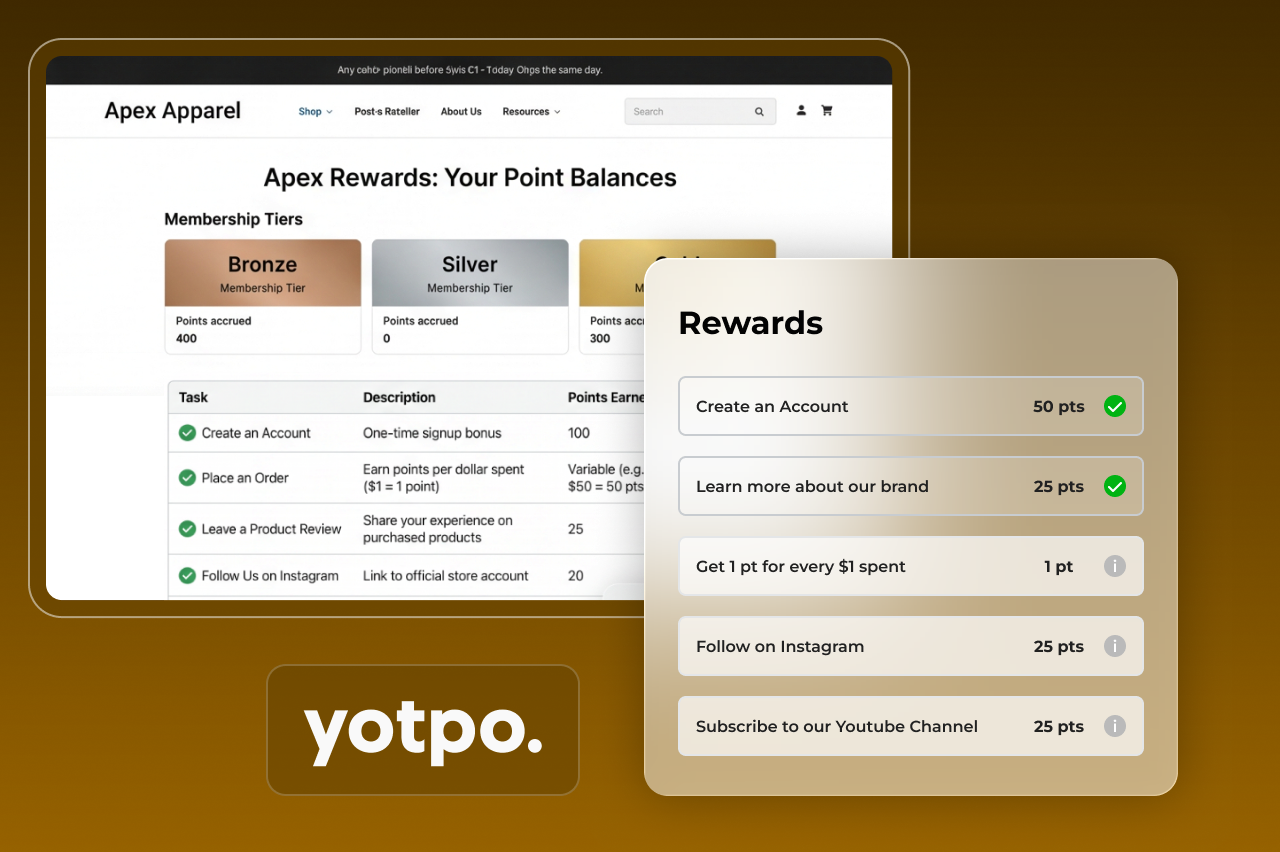
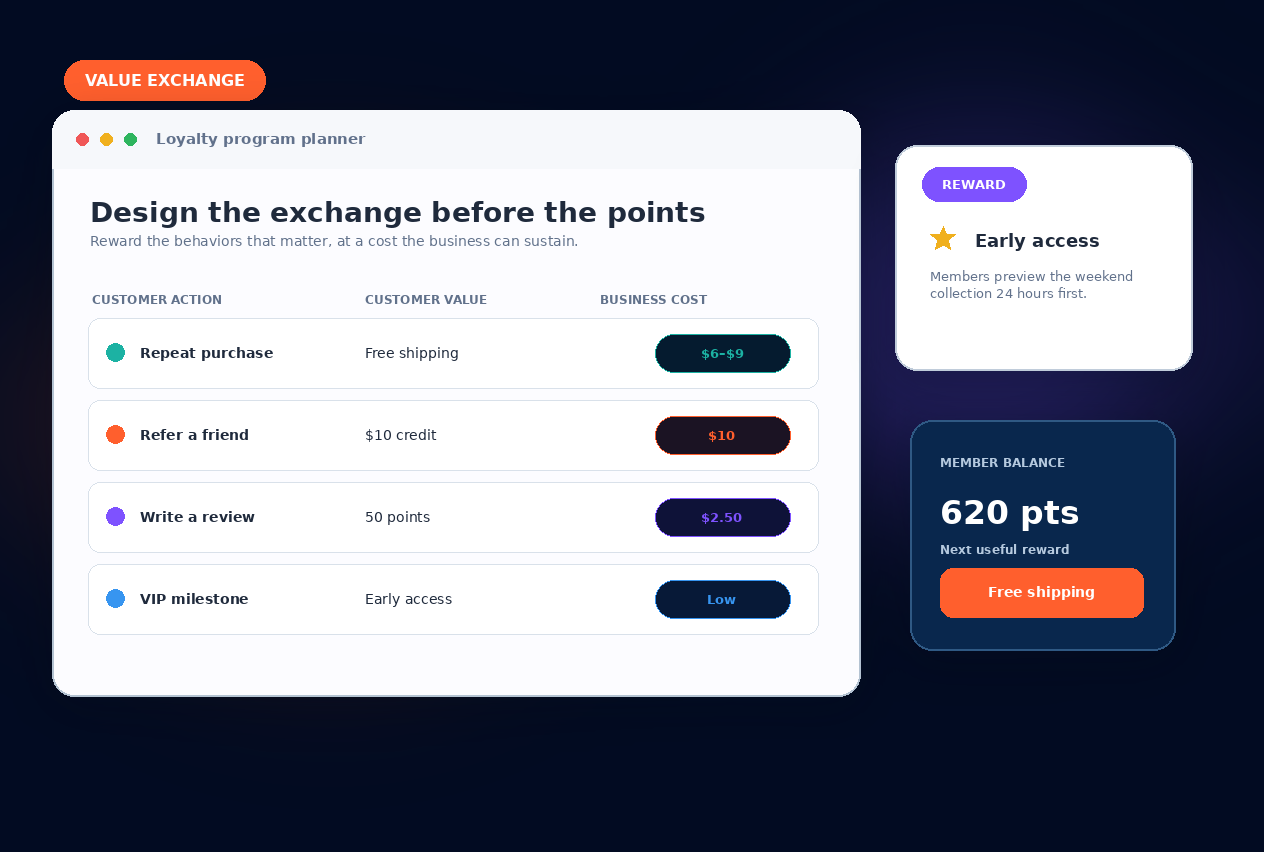
Design the Value Exchange Before the Points
Points, perks, tiers, referrals, shipping benefits, access, and product rewards are all ways to structure loyalty. None of them matters until the program is clear about which customer behaviors are worth encouraging and what the business can sustainably give back.
Always Open Commerce starts with that exchange, not the app. The program should be easy to explain, useful enough to participate in, and realistic enough to operate without turning every repeat purchase into a discount decision.
Build a Program Customers Can Actually Use
We organize the program around what members should do, what they receive in return, and how those benefits show up across the storefront and customer relationship.

What Gets Rewarded
What Gets Rewarded
Decide which actions genuinely matter to the business and customer relationship. Purchases may be one part of the program, while referrals, reviews, account activity, milestones, or other approved behaviors can play different roles.

Rewards Worth Redeeming
Rewards Worth Redeeming
Choose rewards that feel meaningful to customers without ignoring margin or existing promotions. Discounts, products, shipping benefits, access, or experiences can all work when the value is clear and the redemption path is practical.

Tiers & Status
Tiers & Status
Tiers or status levels can recognize different customer relationships when the added benefits are understandable and operationally realistic. More levels are not automatically better if customers cannot see why moving up matters.

Referral Experience
Referral Experience
Plan what the existing customer receives, what the referred shopper receives, when the reward is earned, and how the program is explained. The referral should feel straightforward to share and straightforward to understand.

Member Communication
Member Communication
Customers need to know the program exists, what they have earned, what is available next, and how to use it. Onsite content and lifecycle messaging should support that understanding instead of leaving loyalty inside an isolated widget.
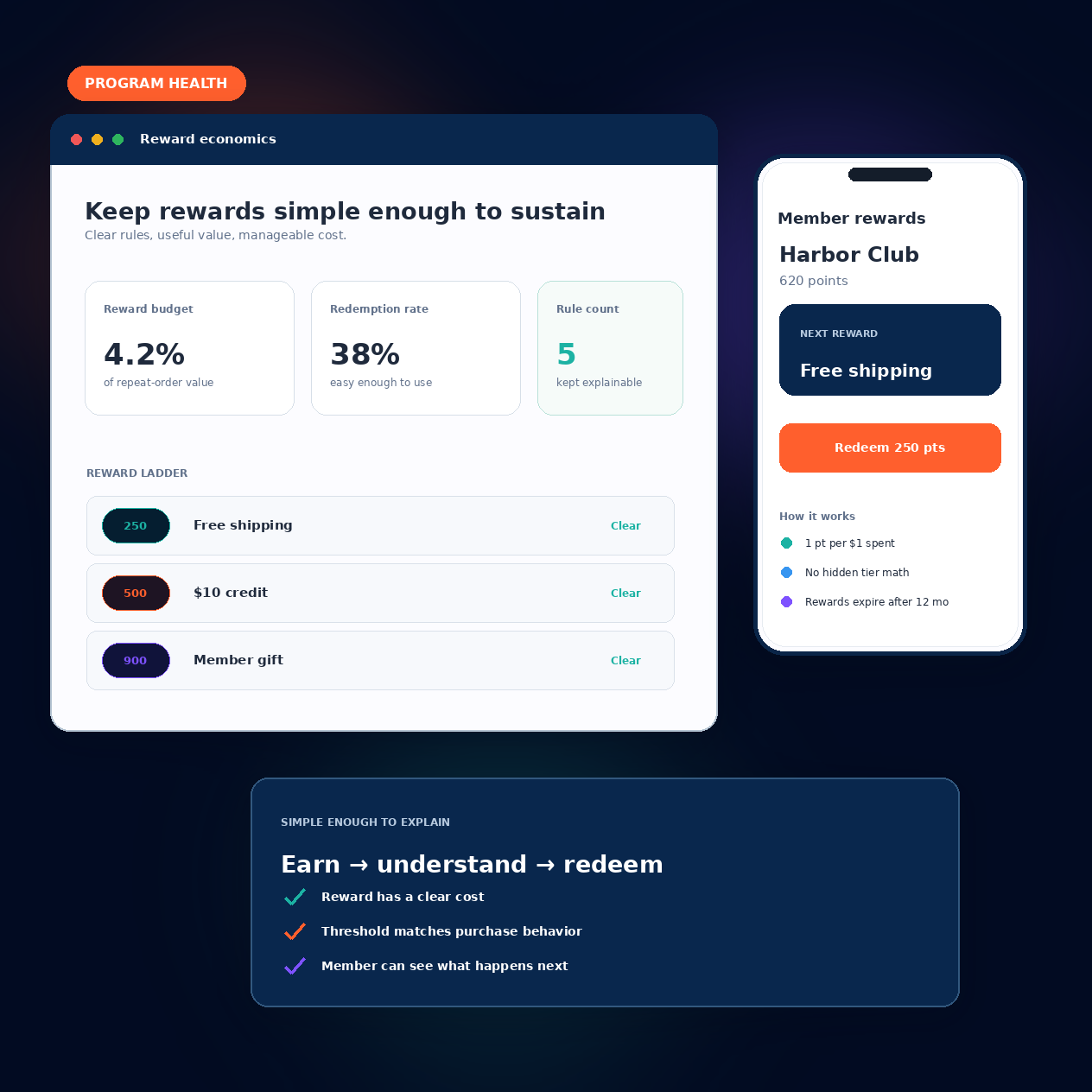
Keep Rewards Simple Enough to Sustain
A program can become expensive or confusing long before it becomes useful. The structure has to balance customer value with margin, operational effort, and the capabilities of the selected loyalty technology.

Margin Before Generosity
Every reward carries a cost. Values, thresholds, and redemption options should be considered alongside margin, purchase frequency, existing promotions, and the behavior the program is supposed to encourage.
Rules Customers Can Explain
If customers cannot explain how they earn and redeem value, the program is doing too much. Naming, exclusions, thresholds, status rules, and redemption steps should stay clear enough that participation does not require a manual.
Technology Has to Support the Experience
Member status, purchases, rewards, referrals, and messaging may depend on data moving between the storefront, loyalty platform, and other systems. Specific capabilities and integrations still need to be confirmed for the selected technology.

Make Loyalty Part of the Customer Experience
Loyalty should feel connected to the way customers already shop, communicate, and come back. The program is easier to maintain when rewards, referrals, onsite experience, and lifecycle messaging support the same customer relationship instead of behaving like separate promotions.
When the program touches other parts of the customer journey, our team can bring in Email Marketing, SMS Marketing, Reviews & UGC, Subscription Retention, and Custom Development when those services are relevant and separately included. App fees, custom loyalty development, and legal review of promotion rules are separate. Repeat purchase, participation, referral volume, LTV, and revenue outcomes are not guaranteed.
Loyalty Platforms We Work With


Frequently Asked Questions
Depending on the engagement, Loyalty & Rewards can include program structure, earning rules, rewards, tiers, referrals, messaging, onsite experience, and app coordination. We shape the work around the customer behavior and business economics the program needs to support.
No. Points are one model. Perks, tiers, referrals, access, product rewards, shipping benefits, and other structures may fit better depending on the customer relationship, economics, and platform.
Yes, when the platform and requested work fit current Always Open Commerce capabilities. We can support program strategy, messaging, customer experience, and app coordination. Custom integrations or development need separate technical confirmation.
Start with the behavior the business wants to encourage and the value customers would reasonably care about. The answer should also fit margin, purchase patterns, brand positioning, existing promotions, and what the selected technology can support.

 USA
USA
 Philippines


