





















































Agentic Commerce
Agentic Commerce helps ecommerce teams prepare for AI-assisted shopping actions beyond product discovery. Always Open Commerce defines the shopper action first, then verifies the platform, product data, channel conditions, checkout boundaries, integrations, and technical path needed to support it.
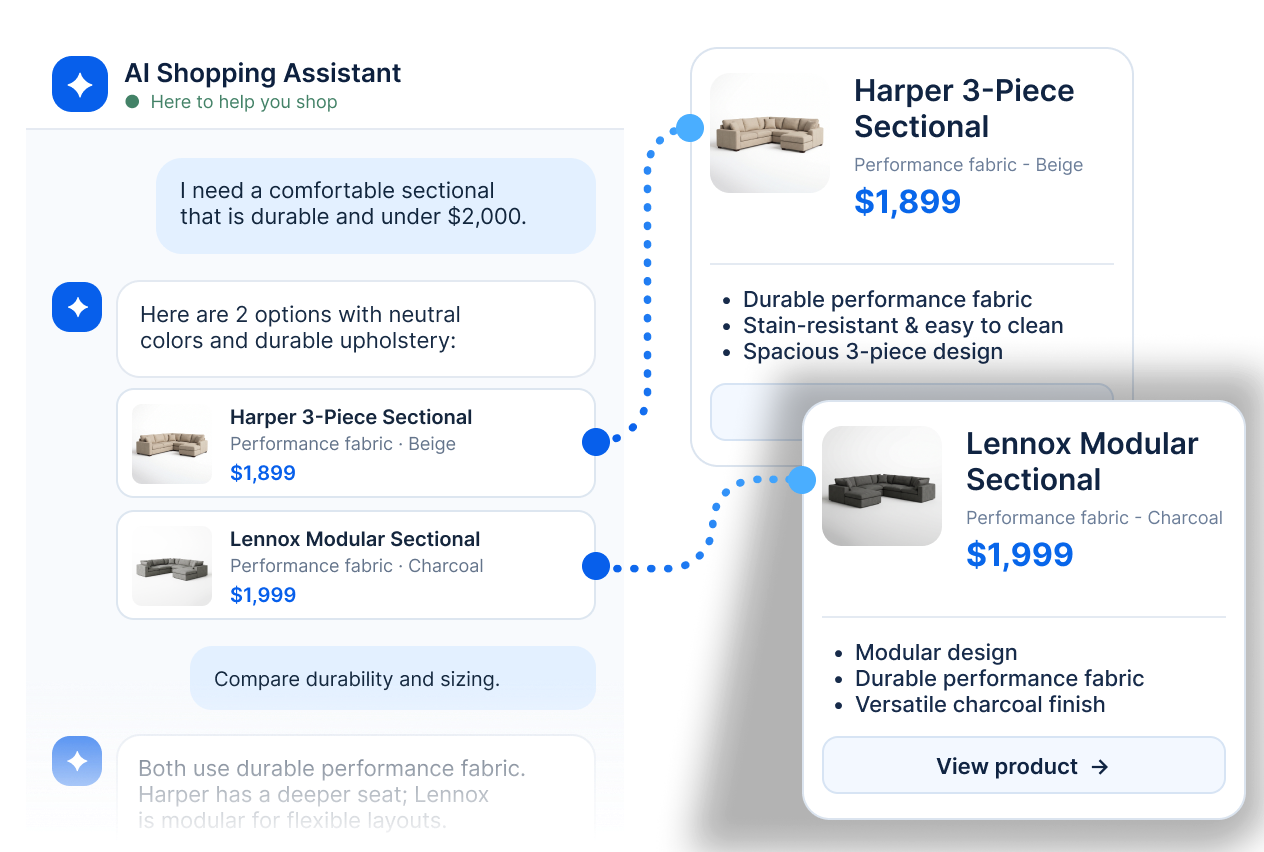
Define How Far the AI Shopping Journey Should Go
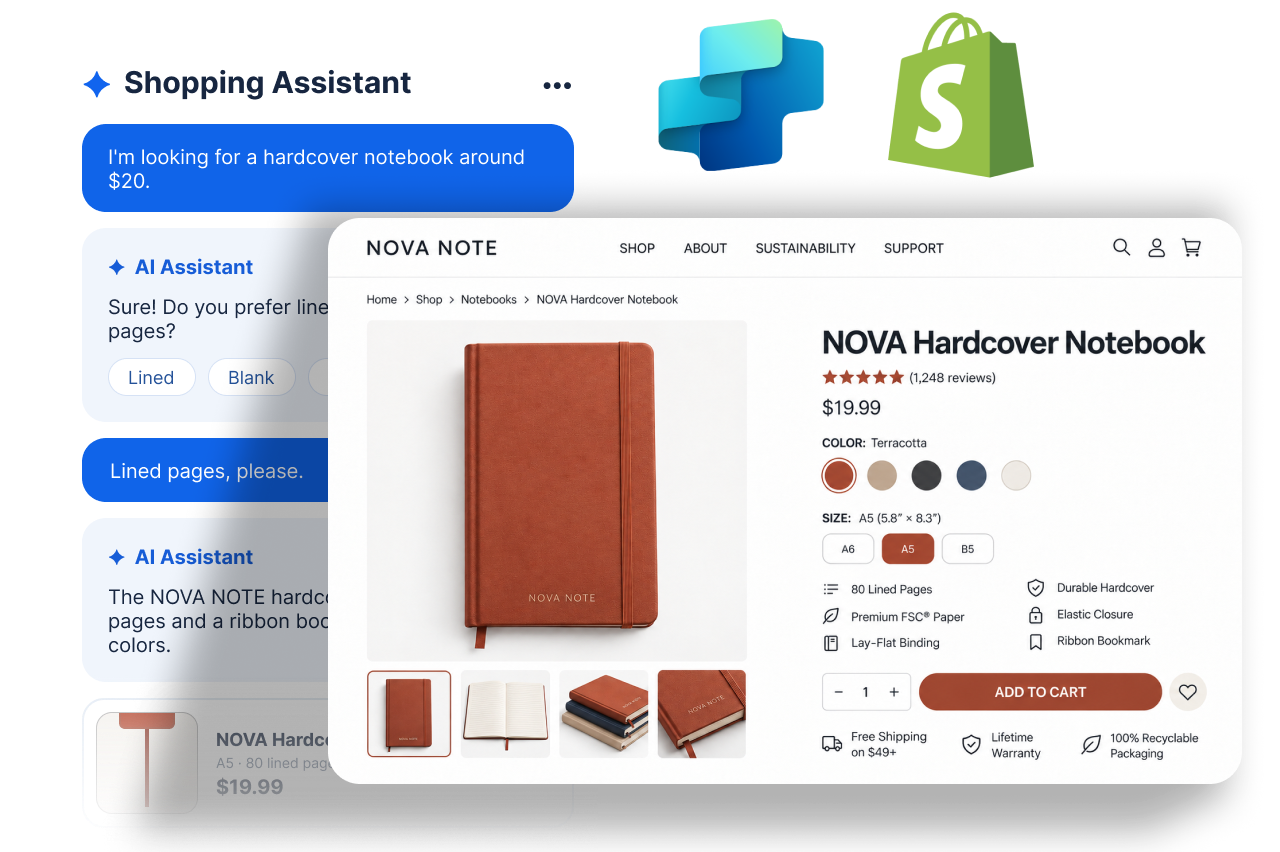
Agentic commerce is not one feature or checkout switch. A shopper may use an AI experience to discover products, compare options, retrieve commerce information, create a cart, or move into checkout. Each step can depend on different data, platform, channel, permission, and transaction rules.
The first decision is what the shopper or agent should be able to do and where the experience should stop. Once that action is clear, the current platform and channel path can be verified.
What the Shopping Action Requires
Implementation should follow the verified use case rather than a protocol trend. Product discovery can require different readiness than cart, checkout, account, or transaction work.

Platform & Channel Readiness
Confirm that the capability is available for the merchant, products, geography, channel, and store configuration. Beta, early-access, eligibility-dependent, or partner-specific functionality should remain labeled accordingly.

Product Data & Catalog Access
Make sure the experience can access the product and variant information it needs. Taxonomy, identifiers, descriptions, attributes, media, URLs, price, and availability need supported sources and current values. Product-data remediation may come first.

Commerce & Checkout Boundaries
Separate discovery, cart creation, checkout handoff, direct checkout, payment, and order creation. The supported path depends on the platform and channel. Checkout, payment, account, pricing, and other consequential flows require technical review.

Integration & Measurement Needs
Some use cases work through platform-native connections; others may involve feeds, APIs, protocols, or another interface. Use only the mechanism the use case requires, and define what the path can expose for measurement.
Availability and Channel Rules Change the Path
A merchant can be ready for one use case and not another. Availability, eligibility, product requirements, checkout behavior, authentication, and reporting differ by platform and channel and can change.

Confirm Current Availability
Recheck current first-party documentation and the merchant’s configuration before implementation. A platform capability does not establish that every store, country, product, or AI channel has access.
Define Where the Shopper Confirms
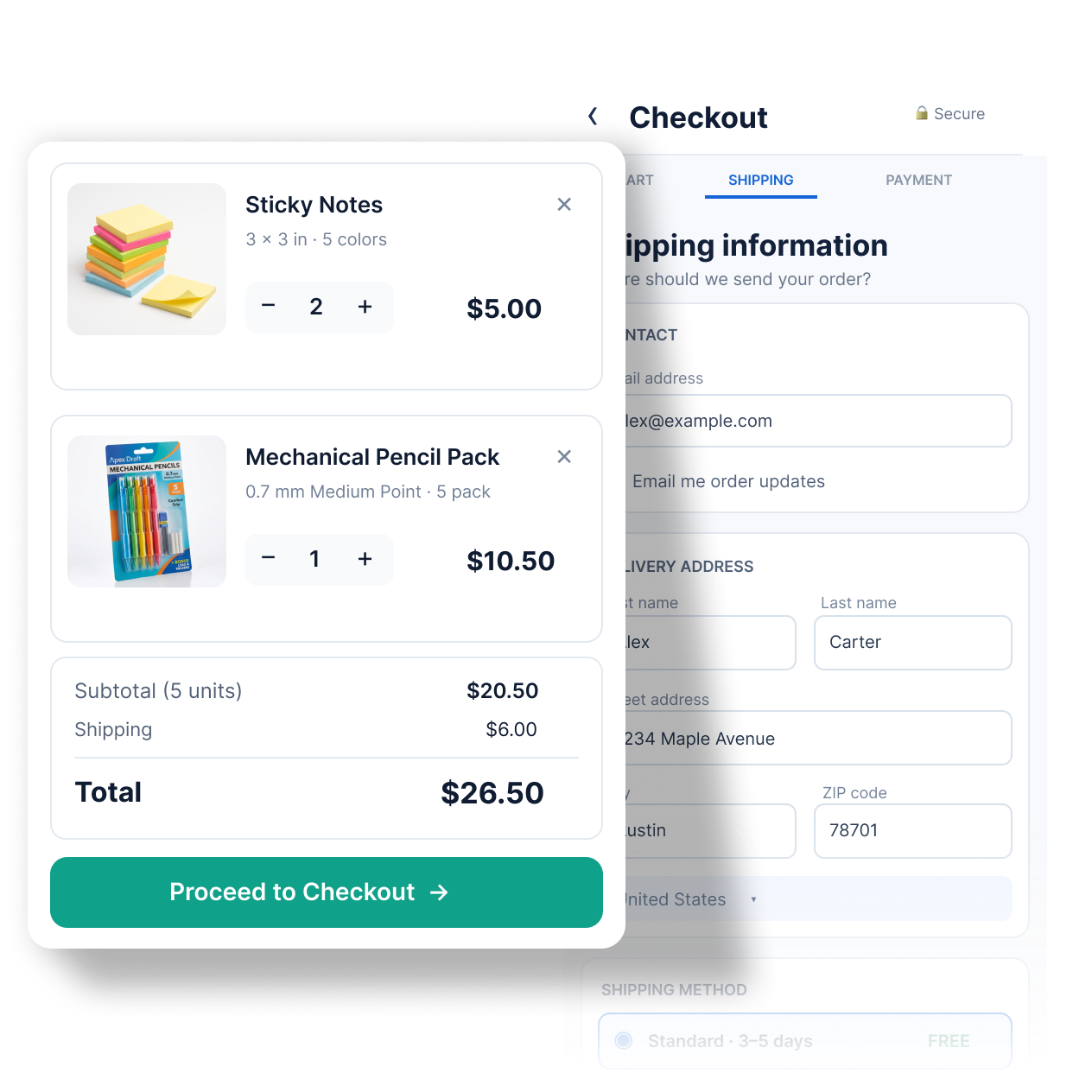
A product recommendation, cart action, checkout handoff, and completed transaction are different outcomes. The journey should make clear where the AI experience stops, where the shopper confirms, and which system remains responsible for checkout, payment, and the order.
Escalate Protected or Consequential Actions
Customer accounts, personalized pricing, order history, B2B context, payments, and other protected actions need appropriate authentication, authorization, security, testing, and human review. Discovery does not imply those higher-risk paths are supported.
Use the Simplest Supported Path That Meets the Business Goal
The objective is not maximum autonomy. It is a useful shopping experience that the current platform, channel, data, and business can support and maintain.
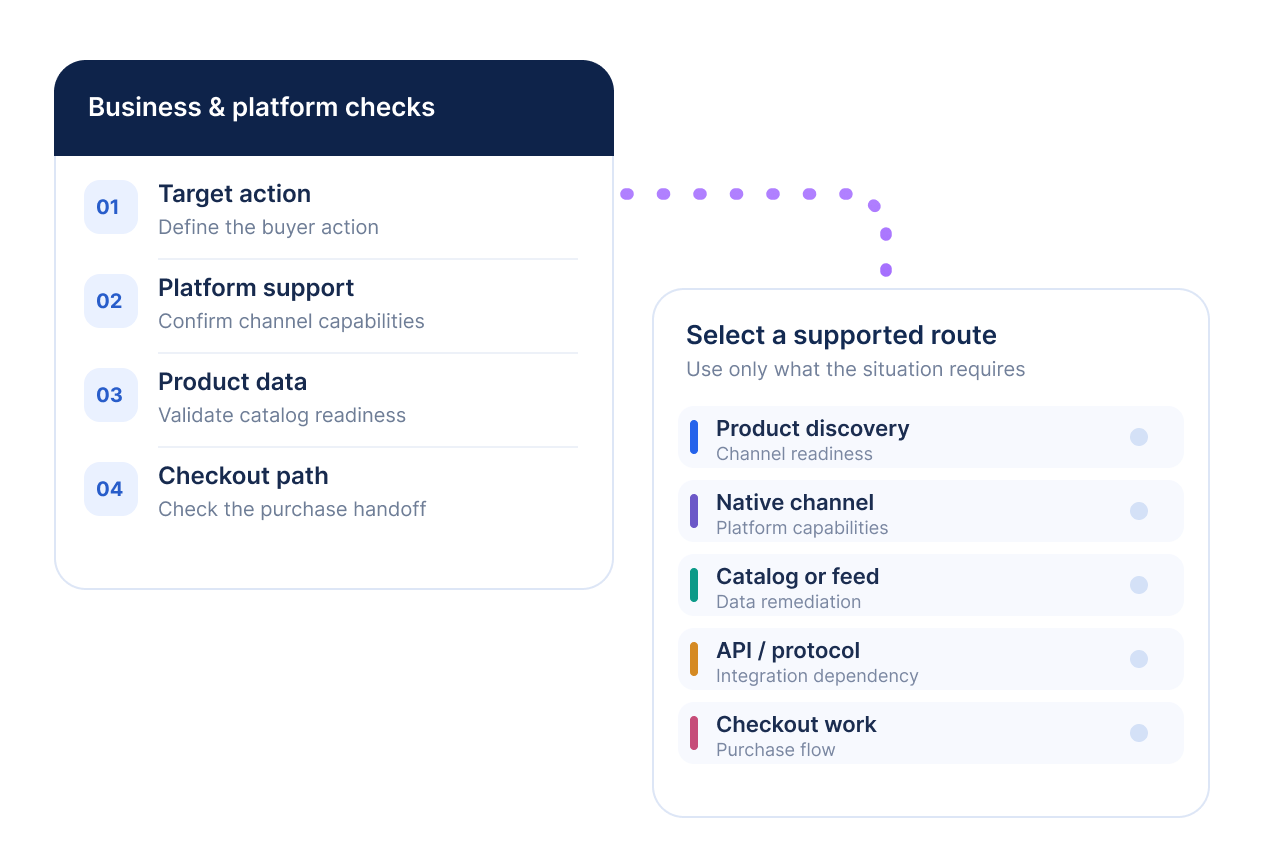
For some merchants, the right starting point may be product-discovery readiness or a platform-native channel. Others may require catalog remediation, a feed, an API or protocol integration, checkout work, or another dependency. Architecture should follow the business requirement.
When the target action, merchant eligibility, platform support, checkout path, or technical boundary is unclear, an Agentic Commerce Readiness Audit should come first. External platforms control availability and placement, so Always Open Commerce does not guarantee recommendations, channel eligibility, checkout availability, transactions, conversion, or revenue.
Related AI Commerce™ Services

Assess Agentic Commerce readiness when the target shopping action, merchant eligibility, product-data readiness, checkout path, or technical boundary still needs validation.


Improve the taxonomy, attributes, identifiers, variants, relationships, and source product information that AI-assisted shopping experiences depend on.

Build a purpose-designed commerce system when the use case requires custom integrations, automation, or capabilities that do not fit a standard app stack.
Frequently Asked Questions
Agentic commerce describes shopping experiences in which AI systems or agents can help people discover products and, where the current platform and channel support it, coordinate additional commerce actions. The exact journey depends on the merchant, platform, channel, data, and technical path.
Yes, when the target channel, merchant eligibility, use case, platform path, data requirements, security boundary, and technical feasibility support the engagement. Work may involve channel readiness, catalog access, product-data remediation, platform configuration, or technical implementation. Placement or recommendation remains controlled by the external channel.
That depends on the current platform, channel, merchant eligibility, checkout architecture, payment boundary, and supported integration path. Direct purchasing should be verified for the specific merchant before it is presented as an available capability.
Not necessarily. MCP, UCP, APIs, feeds, and platform-native connections are different implementation mechanisms. Define the shopper action and supported platform path first, then introduce a protocol only when it is actually part of the appropriate solution.
Not always. The audit is the better starting point when the target action, eligibility, platform support, product-data readiness, checkout path, or technical boundary is uncertain. A more defined use case can move directly into feasibility review and scoping.
Prepare for the Shopping Action That Matters
If AI-assisted shopping is becoming relevant to your ecommerce roadmap, Always Open Commerce can help define the action that matters, verify the current platform and channel path, identify data and technical dependencies, and determine what should be ready before implementation begins.

 USA
 Philippines


