























































AI Audits
An AI Audit gives ecommerce teams a clearer view of where AI can help, what needs attention first, and which questions still require validation. Always Open Commerce combines evidence, specialist review, and business context to turn uncertainty into next steps.
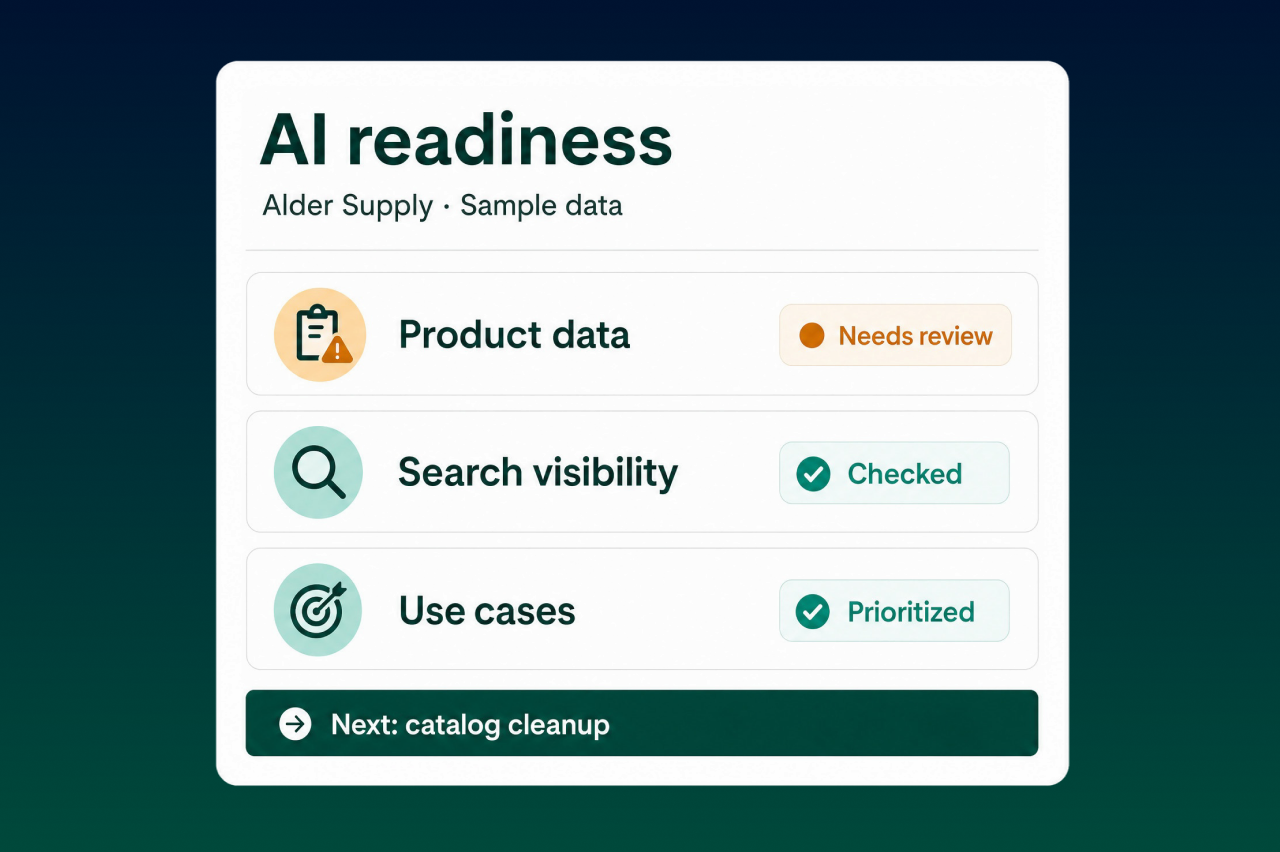
Start With the Decision the Audit Needs to Support
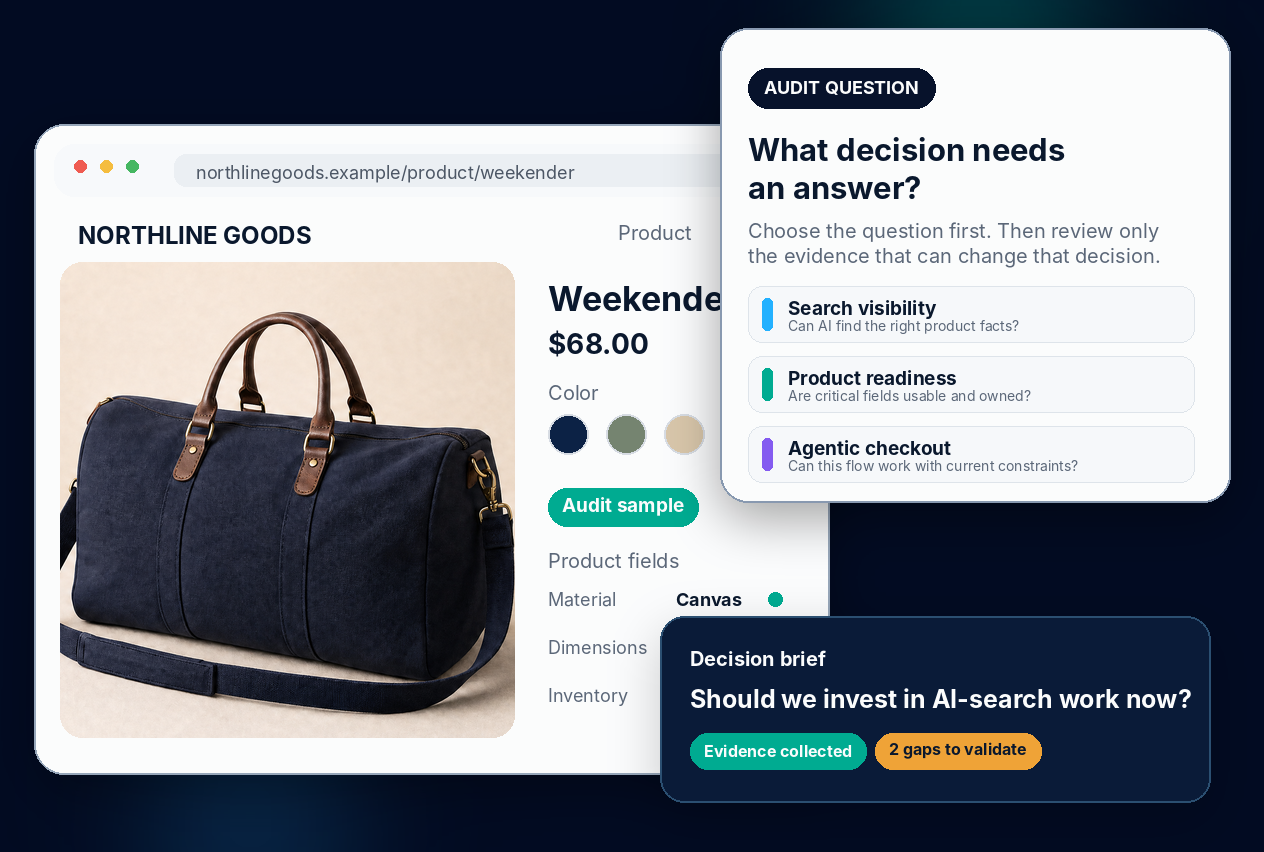
A useful AI Audit is scoped around a specific question, not a general search for AI ideas. The starting point might be AI-search visibility, product-data readiness, internal operations, or readiness for an agentic shopping use case.
That focus determines which evidence matters, which specialists should be involved, and how far the conclusions can reasonably go. It keeps the engagement centered on a decision that can be acted on instead of producing a long list of possibilities.
Four Audits for Four Different Questions
AI readiness is not one universal condition. Each audit uses the evidence and specialist context that fit the problem being reviewed.

AI Search & GEO Audit
Review how your brand, products, and content appear across leading AI search and answer experiences such as ChatGPT, Google Gemini, Microsoft Copilot, Perplexity, and Claude. Assess content, entity clarity, technical access, source signals, citations, mentions, and available visibility evidence to identify gaps the business can improve while separating them from behavior controlled by external AI platforms.

Agentic Commerce Readiness Audit
Assess a defined AI-shopping use case against current platform support, merchant eligibility, product data, channel conditions, checkout dependencies, and technical constraints before implementation is considered.

AI Business Operations Audit
Review company knowledge, workflows, roles, handoffs, current AI use, and human-review needs to identify where AI could support operations and which foundations need attention first.

AI Product Data & Catalog Audit
Evaluate taxonomy, attributes, identifiers, variants, product relationships, source ownership, and data consistency to determine whether the catalog can reliably support storefronts, feeds, search, integrations, and AI commerce use cases.
A Useful AI Audit Separates Evidence From Possibility
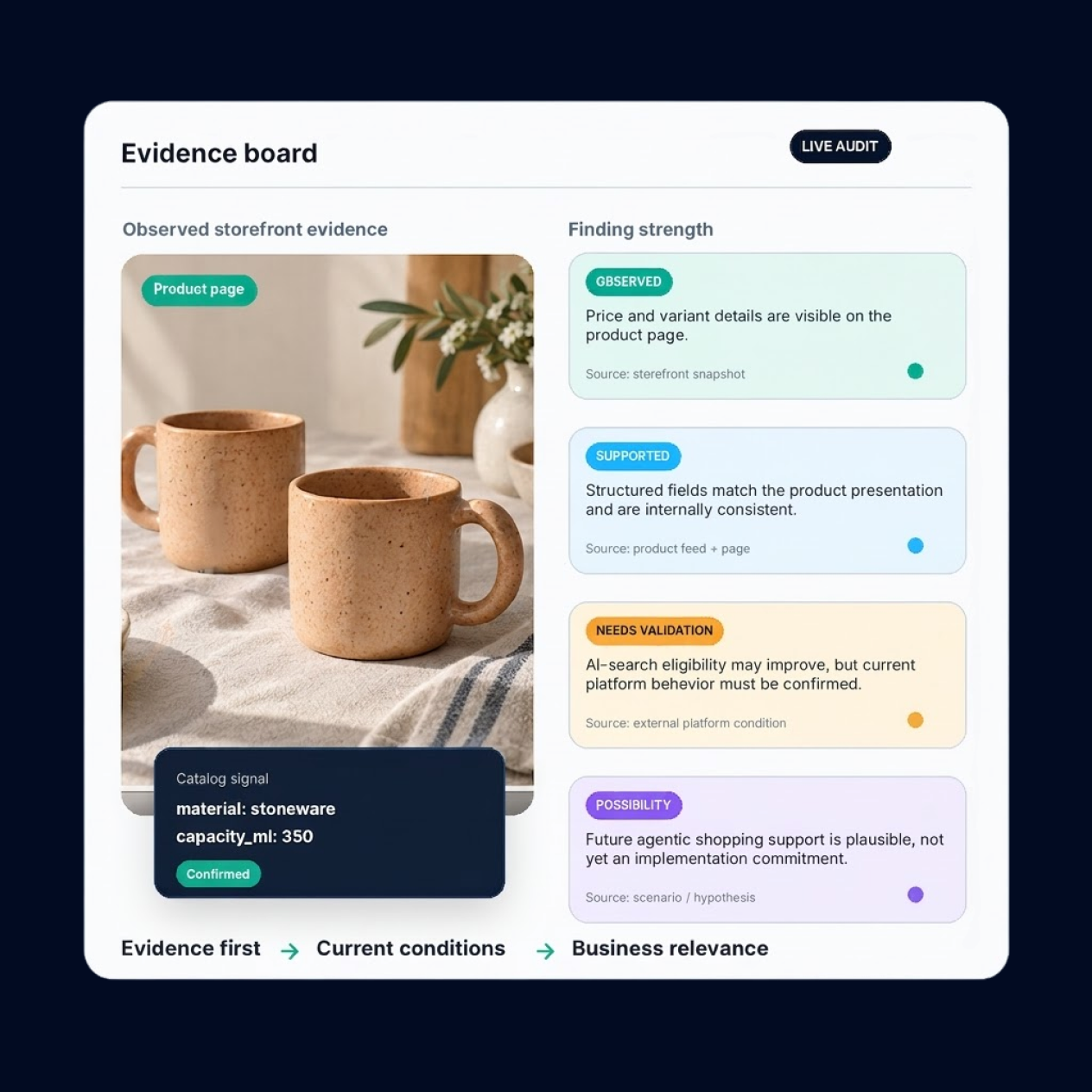
AI platforms and commerce environments change quickly, and not every finding carries the same level of certainty. A useful audit makes those differences visible so recommendations are based on what can actually be supported.

Evidence Before Opinion
Material findings should be tied to direct observation, client-provided facts, reproducible tests, current official documentation, or clearly labeled supporting evidence. Missing or conflicting information stays visible rather than being filled in with assumptions.
Current Conditions Matter
When a conclusion depends on a search platform, commerce channel, merchant configuration, or technical capability, current conditions need to be checked. Availability, eligibility, features, and reporting can change.
Business Relevance Guides Priority
A technically possible improvement is not automatically worth pursuing. Priority should reflect the business objective, expected value, risk, dependencies, workflow readiness, and implementation effort.

Separate Audit Findings From Implementation Work
The value of the audit is a clearer current-state picture, evidence-backed findings, important limitations, and a practical order for what deserves attention next.
Some findings may point to better information, process changes, training, or specialist validation before any build work makes sense. Others may identify a defined gap that is ready to move into strategy or implementation.
Implementation is reviewed and scoped separately so the appropriate specialists can confirm feasibility, ownership, dependencies, risk, and delivery requirements before findings become production changes.
Related AI Commerce Services

Turn broader AI priorities, workflows, governance questions, and adoption needs into a practical operating plan.

Improve the content, entity clarity, technical accessibility, and source information that support AI-assisted discovery.

Improve the taxonomy, attributes, relationships, content, and source structure behind product information used across commerce channels.
Frequently Asked Questions
It is a focused diagnostic review of a defined AI-related ecommerce question. The audit establishes the current state, identifies meaningful gaps and dependencies, and gives the team a stronger basis for deciding what should happen next.
Start with the immediate question. AI Search & GEO focuses on AI-assisted discovery. Agentic Commerce Readiness evaluates a defined AI-shopping use case. AI Business Operations looks at internal knowledge and workflows. AI Product Data & Catalog focuses on the information model behind the catalog.
Potentially. Closely related areas can share evidence, but one primary question should still guide the engagement. When the need spans several AI domains and requires broader prioritization, AI Consulting & Enablement may be the better starting point.
An AI Audit is a focused diagnostic review of a defined area. AI Consulting & Enablement is broader and can connect multiple use cases, workflows, teams, governance questions, and adoption decisions into a coordinated plan.
Not automatically. The audit identifies findings, priorities, dependencies, and potential next steps. Technical changes, content work, data remediation, automations, integrations, training, and other implementation are reviewed and scoped separately when needed.

 USA
USA
 Philippines


