

















































Akeneo
Create a cleaner source of product truth before catalog data spreads across storefronts, marketplaces, feeds, and internal systems. Always Open Commerce helps ecommerce teams plan, structure, connect, and troubleshoot Akeneo around product information, catalog workflows, integrations, and multichannel operations.
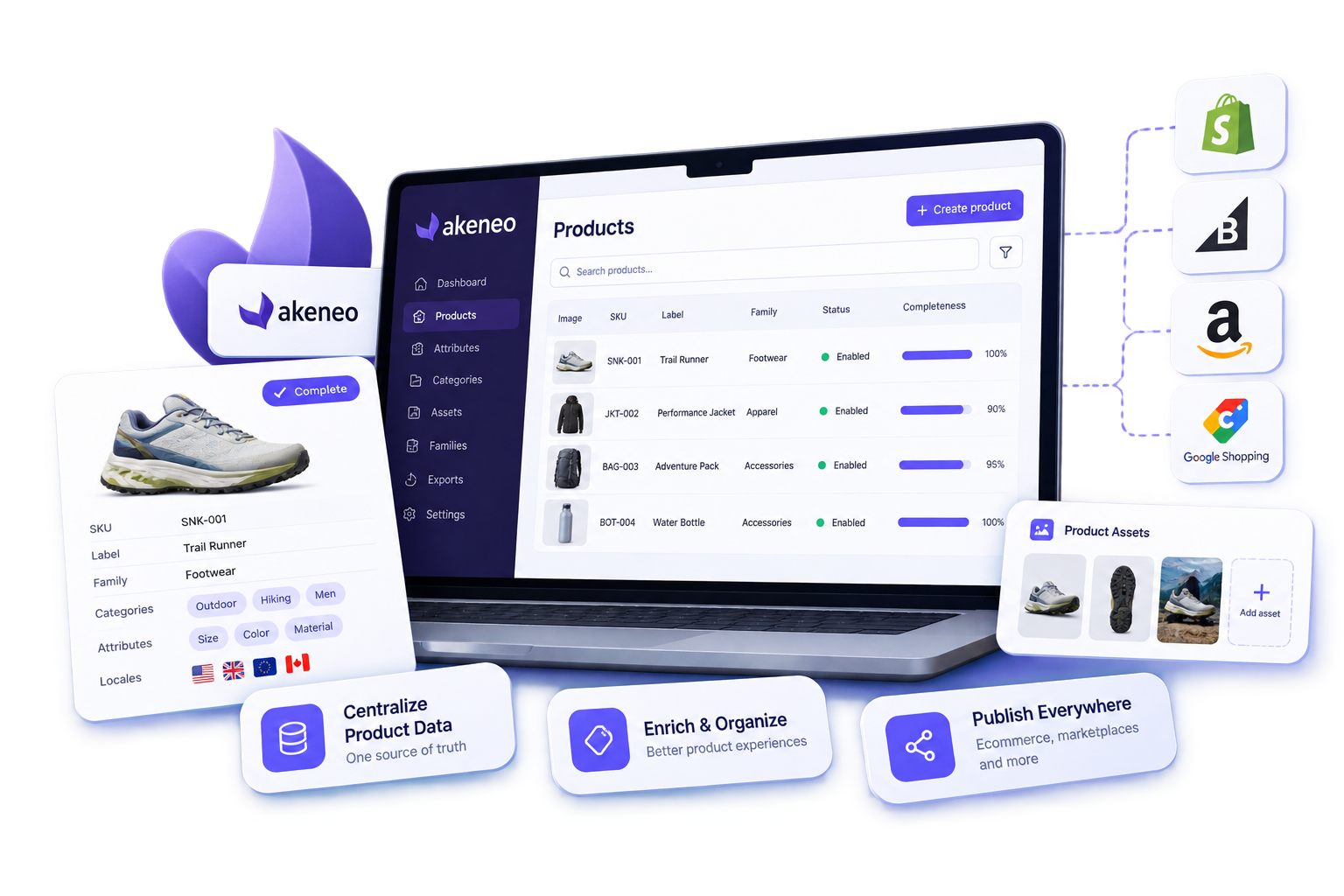
Create a Governed Product Information Source Before It Reaches the Storefront
Product information gets harder to manage when titles, attributes, variants, assets, translations, and channel requirements are spread across spreadsheets, ERP records, ecommerce platforms, suppliers, and regional teams. Before adding another storefront or marketplace, decide what belongs in the central product record and who maintains it.
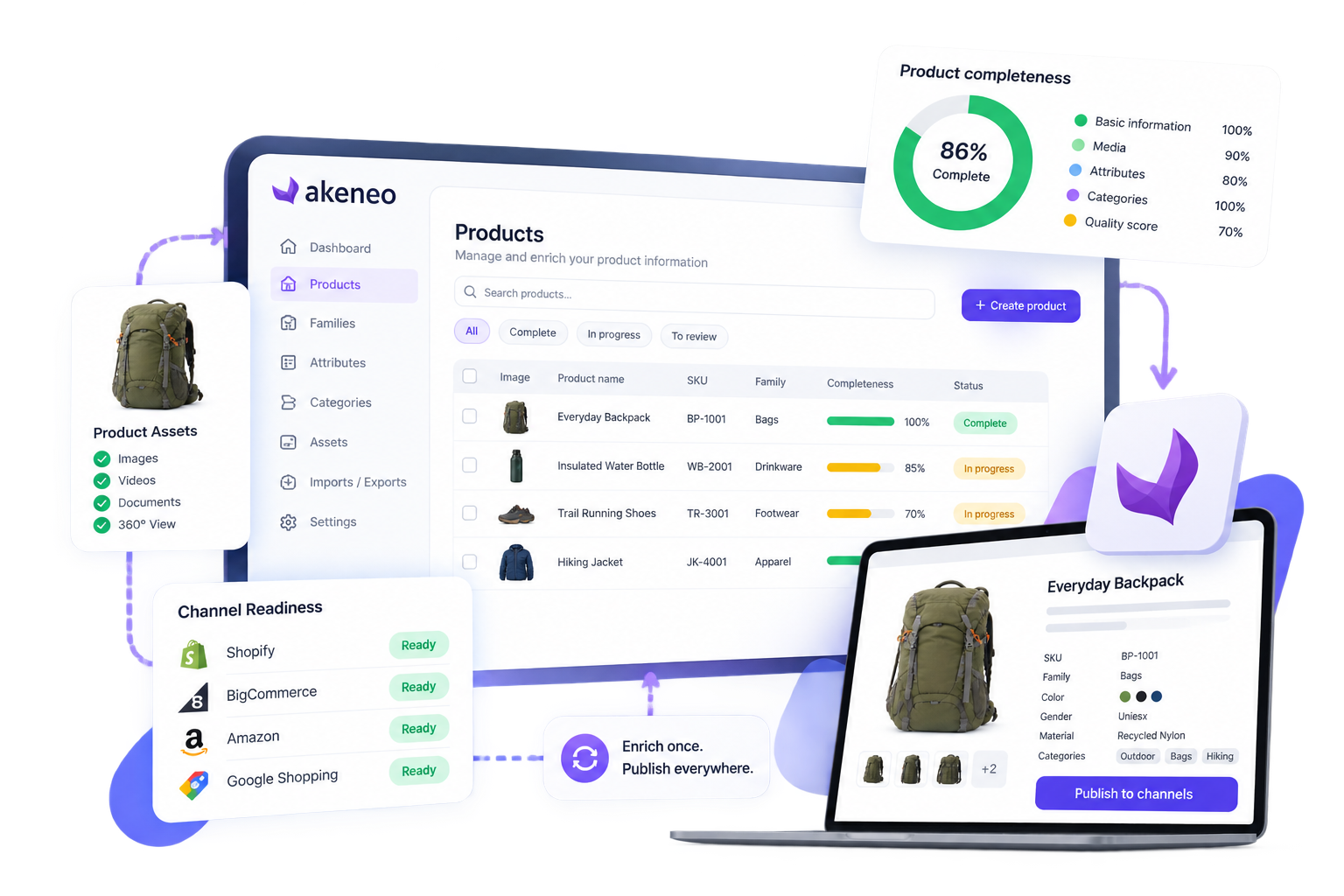
Akeneo PIM can centralize and enrich product information before that information is distributed to ecommerce storefronts and other channels. The useful business decision is which product attributes belong in the PIM, who is responsible for improving them, and what qualifies a product record as ready for downstream use. Always Open Commerce can help define the catalog structure, attributes, categories, variants, locales, workflows, and system responsibilities that should shape the setup.
Separate Product Enrichment From Storefront and ERP Responsibilities
Product information, operational data, and storefront presentation do not necessarily belong in the same system. ERP or supplier systems may originate operational fields, Akeneo may govern and enrich customer-facing product information, and the ecommerce platform may control how approved information is presented.
Define those boundaries before integration work begins so the same field is not maintained independently in several systems. Always Open Commerce can help map what belongs in Akeneo, what stays in the ecommerce platform or ERP, and how approved product information should reach each channel.
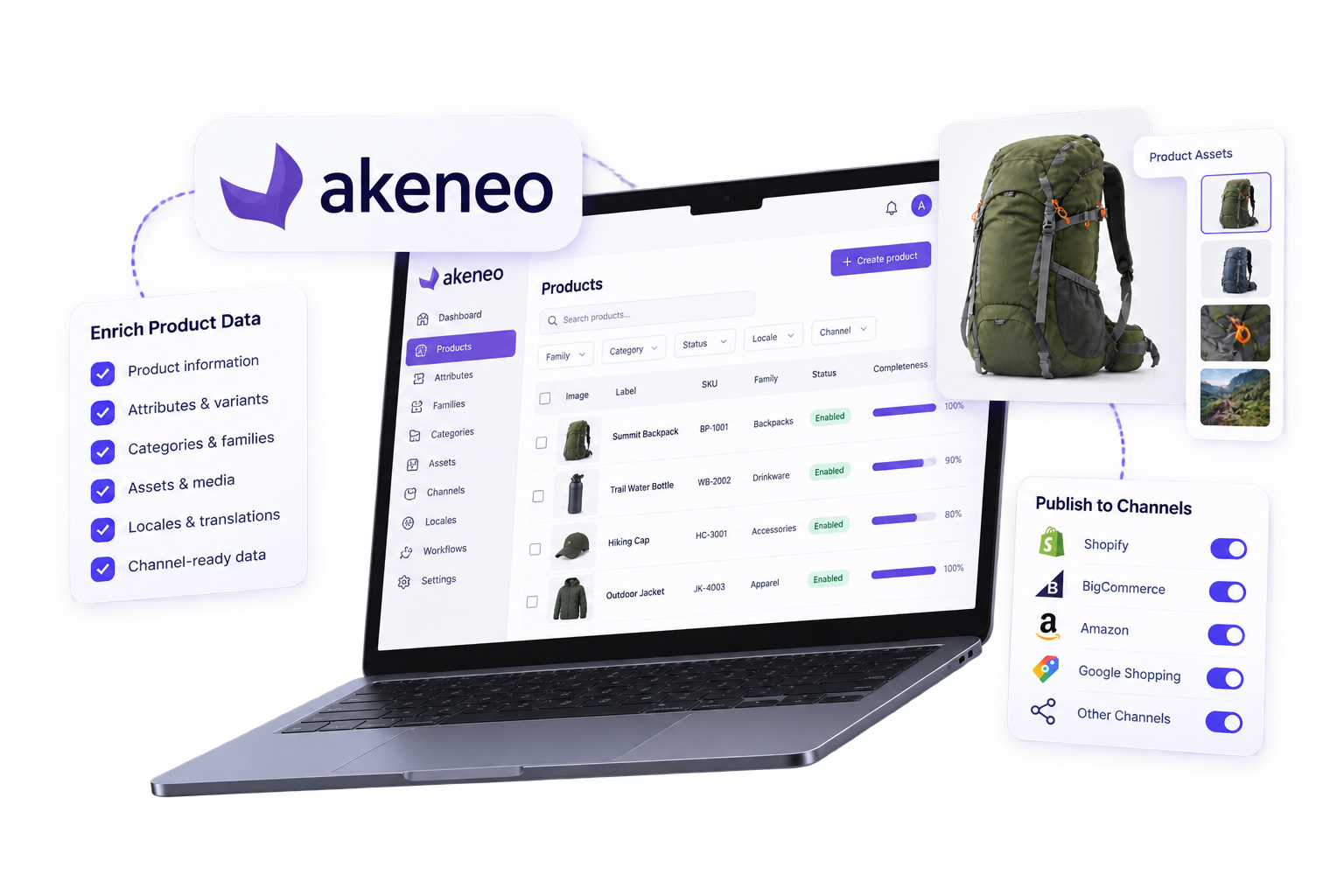
Akeneo Work We Can Support
Support can focus on a new product-data foundation, improvement of an existing PIM, or a specific catalog, workflow, or integration problem.
1
Product Information & Catalog Structure
Plan or refine product families, attributes, categories, variants, identifiers, locales, and completeness requirements around the information the business needs to maintain and publish.
2
Product Enrichment & Workflow Planning
Organize how product information is imported, enriched, reviewed, approved, localized, and prepared for different channels without simply moving existing data problems into a new system.
3
Ecommerce & System Connections
Coordinate data flow between Akeneo and approved ecommerce, ERP, marketplace, feed, DAM, or other systems. Exact connector and custom integration feasibility require technical validation.
4
Troubleshooting & QA
Investigate missing fields, inconsistent data, synchronization issues, mapping problems, or channel-specific output and coordinate approved fixes and validation.
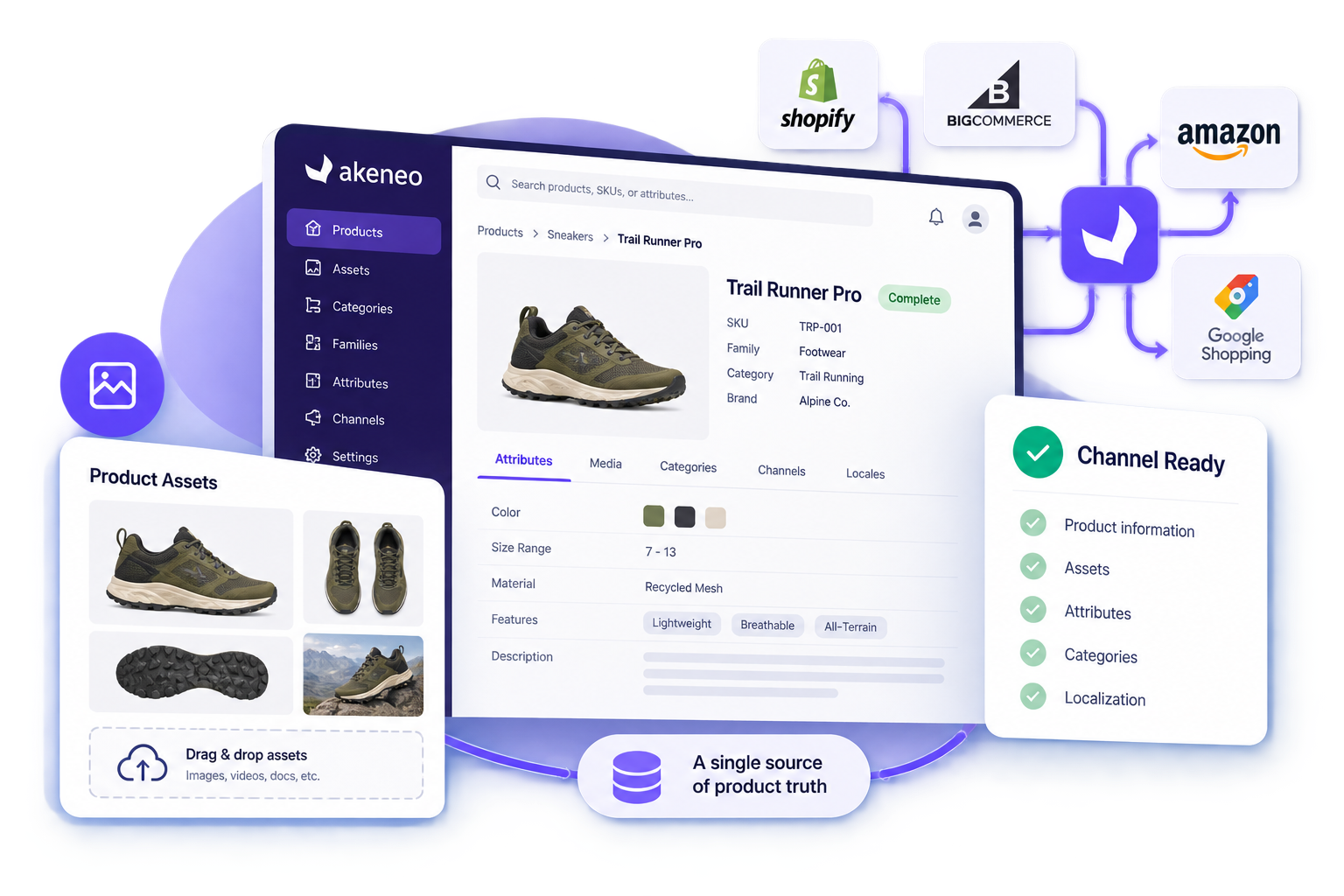
Prepare Product Information for Each Channel
Product information often needs to change by market, language, storefront, marketplace, or downstream channel. Prepare those differences deliberately so each destination receives the information it actually needs.
1
Locales & Market Requirements
Define which descriptions, attributes, units, language, and market-specific information must vary across destinations.
2
Assets & Product Context
Coordinate approved imagery, documents, specifications, and supporting product information with the records they belong to.
3
Storefront & Marketplace Outputs
Decide which enriched product information should be sent to ecommerce platforms, marketplaces, feeds, and other downstream channels.
4
Data Quality & QA
Validate required attributes, identifiers, relationships, and channel outputs before product information is treated as ready for distribution.
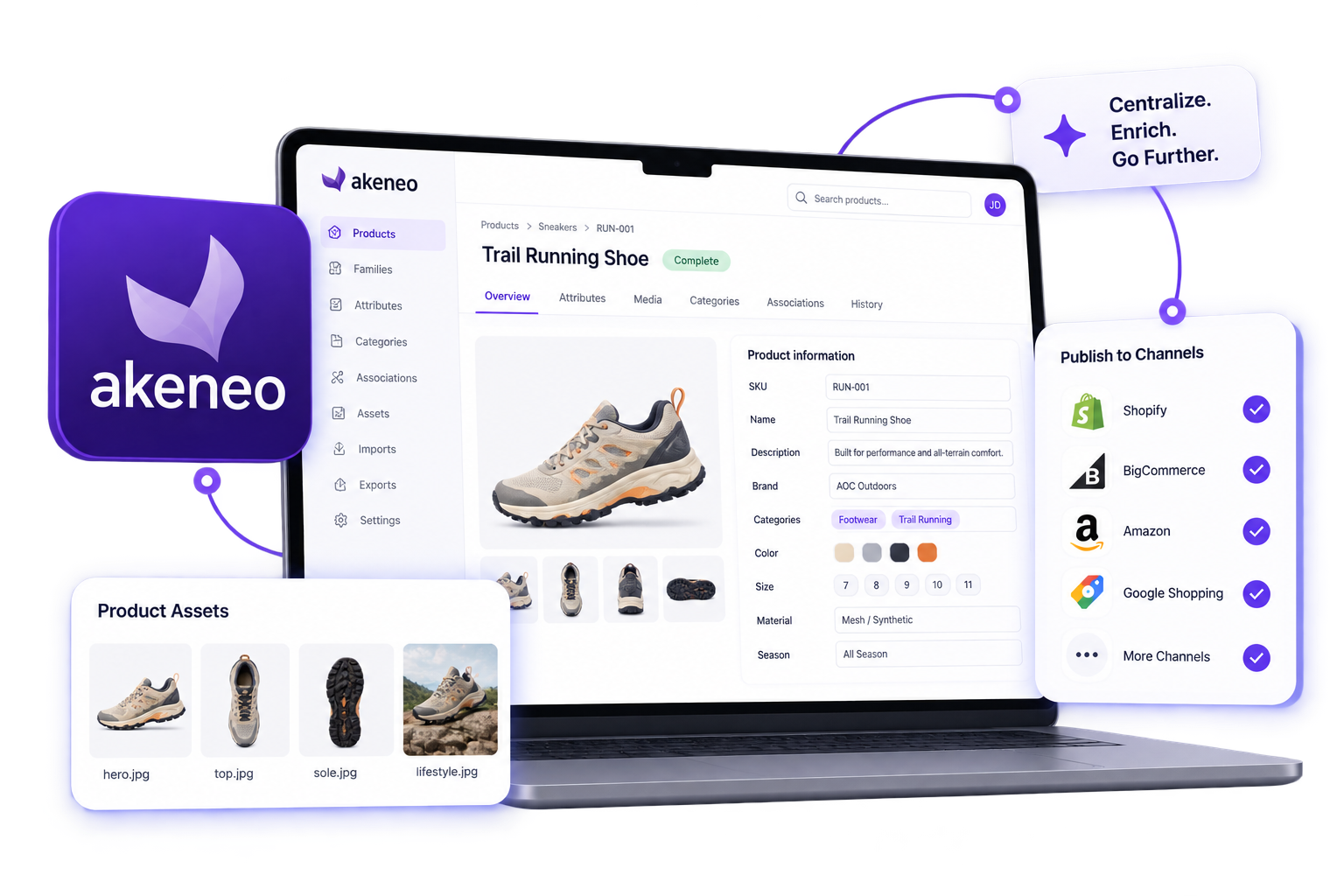
Akeneo FAQs
Start with the information that affects identification, enrichment, relationships, and downstream distribution: product identifiers, variants, attributes, categories, required specifications, translations, assets, and inconsistent source values. The cleanup plan should reflect the future data model rather than importing every historical inconsistency.
No. Akeneo is a product-information and product-experience layer, not the ecommerce storefront or transaction platform. The ecommerce platform still handles the shopping and purchasing experience, while Akeneo can provide approved product information to that storefront and other channels.
Always Open Commerce offers PIM Setup & Support for product-data structure, catalog workflows, and connections between product information and ecommerce operations. In an Akeneo environment, the exact connector, data-flow, and implementation requirements should be technically validated before changes are committed.
Start by defining which system owns each type of data. ERP or supplier systems may originate operational data, Akeneo may enrich and govern product information, and ecommerce platforms or marketplaces consume the approved output. Exact mappings, synchronization rules, and connector behavior should be documented and validated.
A dedicated PIM becomes more useful when product information is fragmented, catalogs are large or complex, multiple teams maintain the same data, or products must be prepared for several channels, markets, or languages. The decision should start with the operating problem, not the software category.

 USA
 Philippines


