
























































Cart2Cart
Move store data between ecommerce platforms without treating automation as the entire migration plan. Always Open Commerce helps teams scope, coordinate, validate, and troubleshoot Cart2Cart transfers while managing the storefront, SEO, integrations, and launch work around them.
Treat Cart2Cart as a Data Transfer Layer, Not the Migration Plan
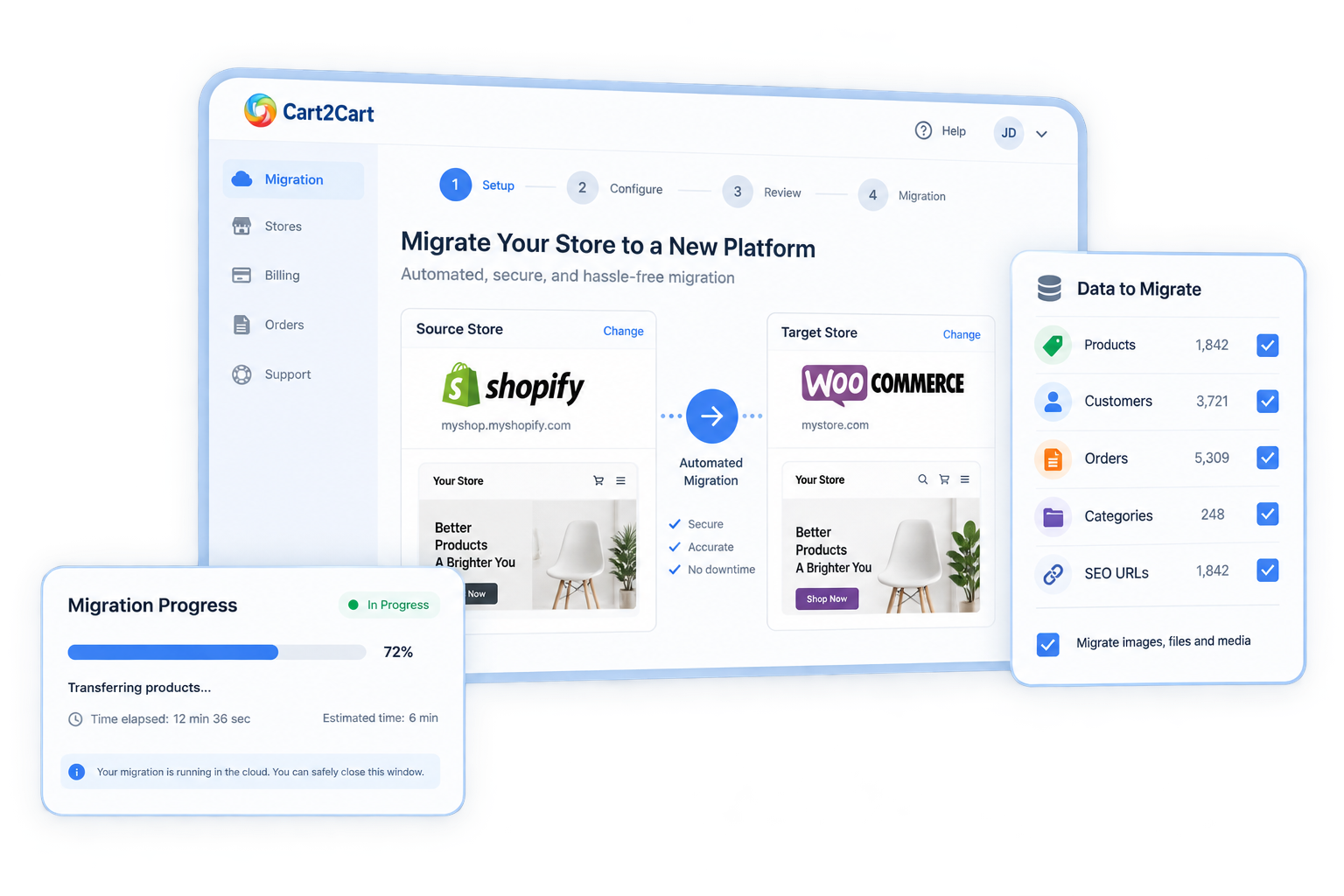
Cart2Cart is built to automate the movement of ecommerce data between supported source and target platforms. That can reduce manual transfer work, but a successful replatform still depends on decisions about what should move, what should be rebuilt, what needs cleanup, and what must be handled outside the migration tool.
Always Open Commerce can help define the migration scope around products, categories, customers, orders, images, and other supported entities, then coordinate the transfer with the broader replatform. The goal is to use Cart2Cart where automation is useful without assuming it replaces design, development, app work, SEO planning, or launch QA.
Test the Transfer Before Committing to Cutover
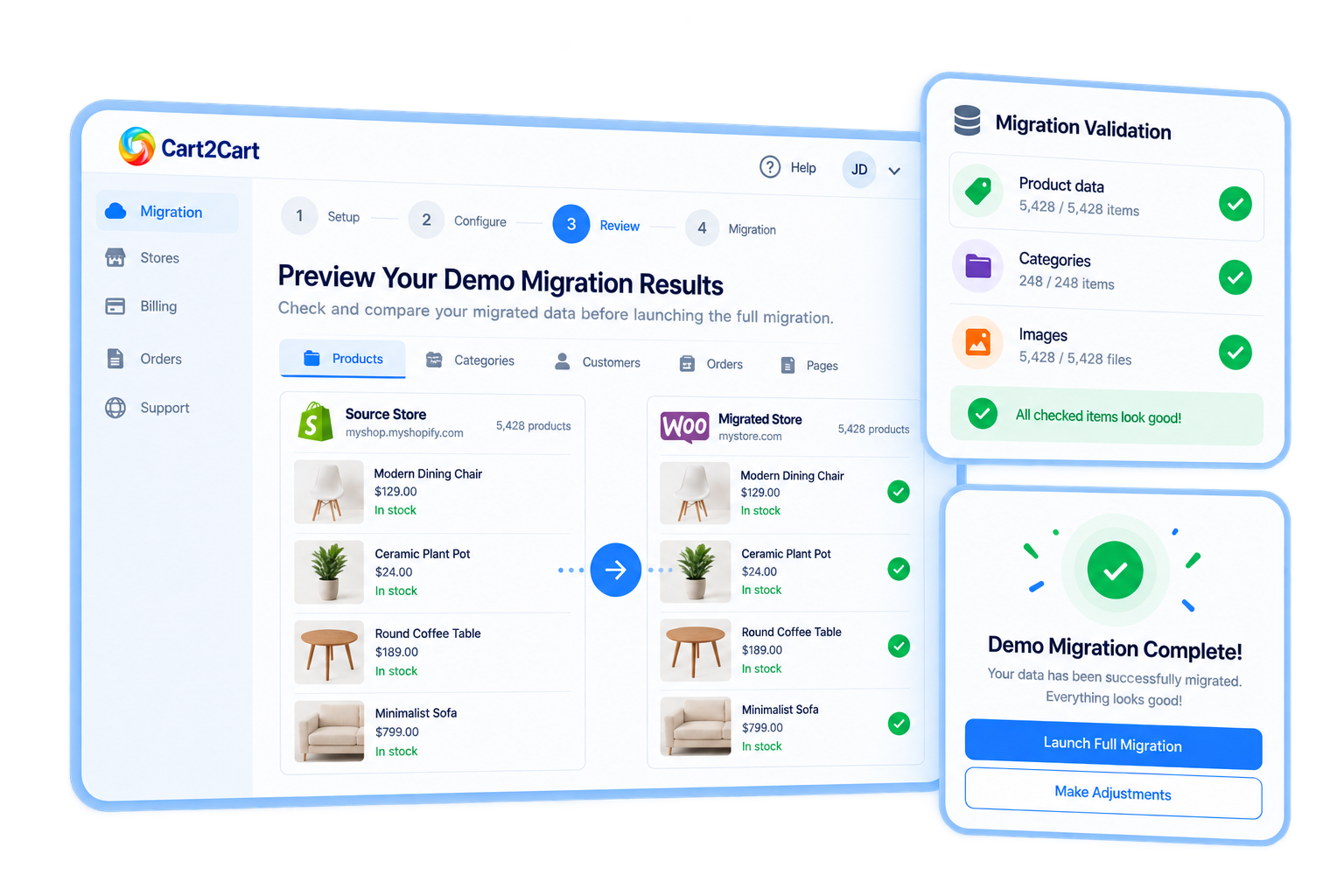
A demonstration or preview transfer can help reveal mapping, formatting, and destination-store issues before the full migration is treated as ready. Always Open Commerce can compare sample results with the approved source data, document exceptions, and identify what needs correction or separate implementation before cutover.
That preview should be treated as a validation step, not proof that every production detail is finished. Always Open Commerce can help compare sample results with the source catalog, identify mapping or cleanup issues, document exceptions, and decide what needs adjustment before the full transfer and launch sequence continue.
Cart2Cart Work We Can Support
Support can focus on the migration route and data problem that need attention while keeping Cart2Cart’s automated transfer role separate from the rest of the replatform.

1
Migration Scope & Data Planning
Define which store records should move, what should be cleaned first, and which source and target systems are in scope so the automated transfer starts from a documented migration plan.
2
Source & Target Store Preparation
Coordinate the ecommerce-side setup needed before data movement, including catalog structure, target-store readiness, and dependencies that could affect how migrated records are interpreted.
3
Transfer Coordination & Troubleshooting
Support Cart2Cart migration runs, investigate unexpected data results, and coordinate approved corrections or reruns when the transfer does not match the planned outcome.
4
Validation, Cleanup & QA
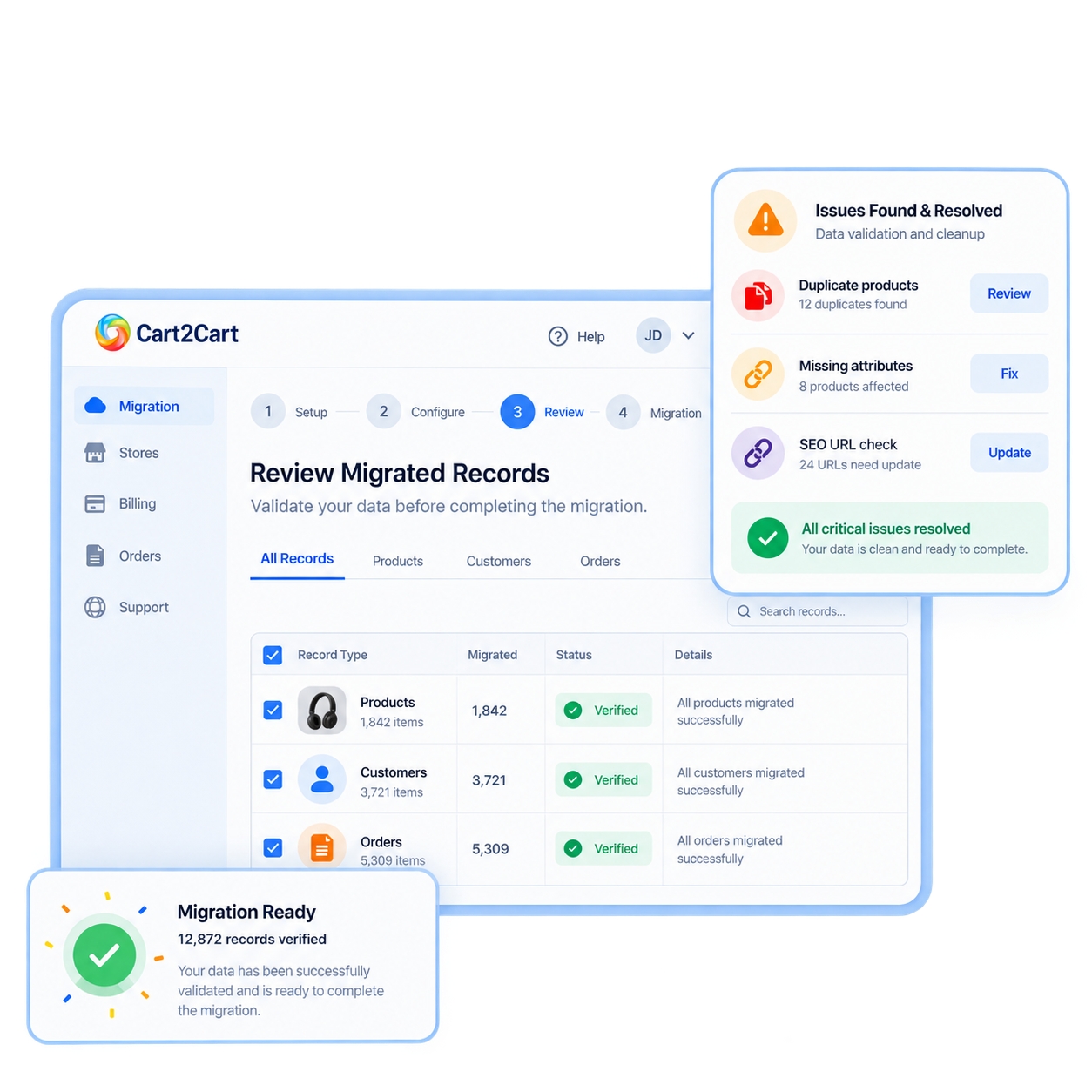
Review migrated products, customers, orders, categories, images, and other selected data against the source, then track remaining cleanup and launch issues within the approved project scope.
Plan the Cutover Around Data That Keeps Changing
A migration plan also needs to account for records that keep changing between the main transfer and the final switch. Define how those changes will be reconciled before the destination becomes authoritative.
1
Recent Orders & Customers
Decide how transactions and customer records created after the main migration run will be handled before the final switch.
2
Catalog Reconciliation
Compare products, categories, images, identifiers, and other migrated records with the source before the destination becomes authoritative.
3
URLs & SEO Handoff
Coordinate migrated content with redirect mapping, metadata review, URL checks, and the separate SEO migration responsibilities required for launch.
4
Launch Reconciliation
Define the final data checks, issue ownership, and post-cutover review so migration completion is based on the working destination store rather than a successful transfer status alone.
Cart2Cart FAQs
Cart2Cart is an automated ecommerce migration service for transferring supported store data between source and target platforms. It supports many ecommerce systems and lets users select data entities for transfer rather than rebuilding each record manually.
Cart2Cart supports many source and target ecommerce platforms. Exact route compatibility and supported data entities should be checked for the planned migration before scope is finalized.
Yes. A Demo migration and Migration Preview options can support testing sample data before a full transfer for applicable routes. Production results still need to be validated against the actual source and target environments.
Yes. Support can include migration planning, data coordination, transfer validation, troubleshooting, storefront work, SEO preservation, and launch QA within the approved project scope.
No. It can automate supported data movement, but a replatform may also require theme work, apps, integrations, custom functionality, redirects, SEO checks, content review, testing, and launch coordination. Those responsibilities should be planned separately.

 USA
USA
 Philippines


