


















































Convermax
Help automotive shoppers find parts that fit the vehicle they selected and keep that context useful across search, categories, filters, product pages, and orders. Always Open Commerce supports Convermax-related ecommerce work across YMM journeys, fitment data, catalog UX, integrations, and QA.

Make Year-Make-Model Fitment the Start of Automotive Discovery
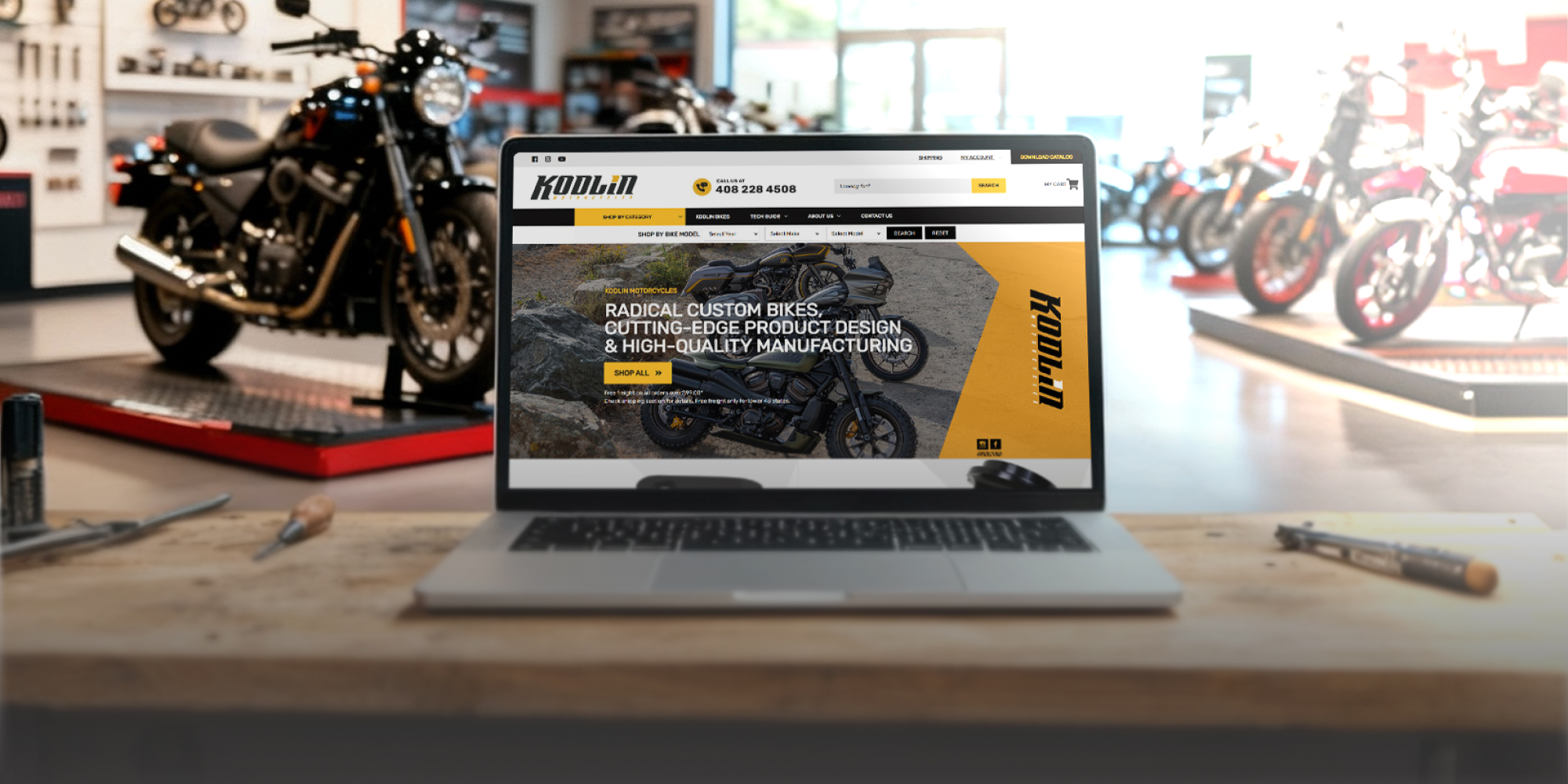
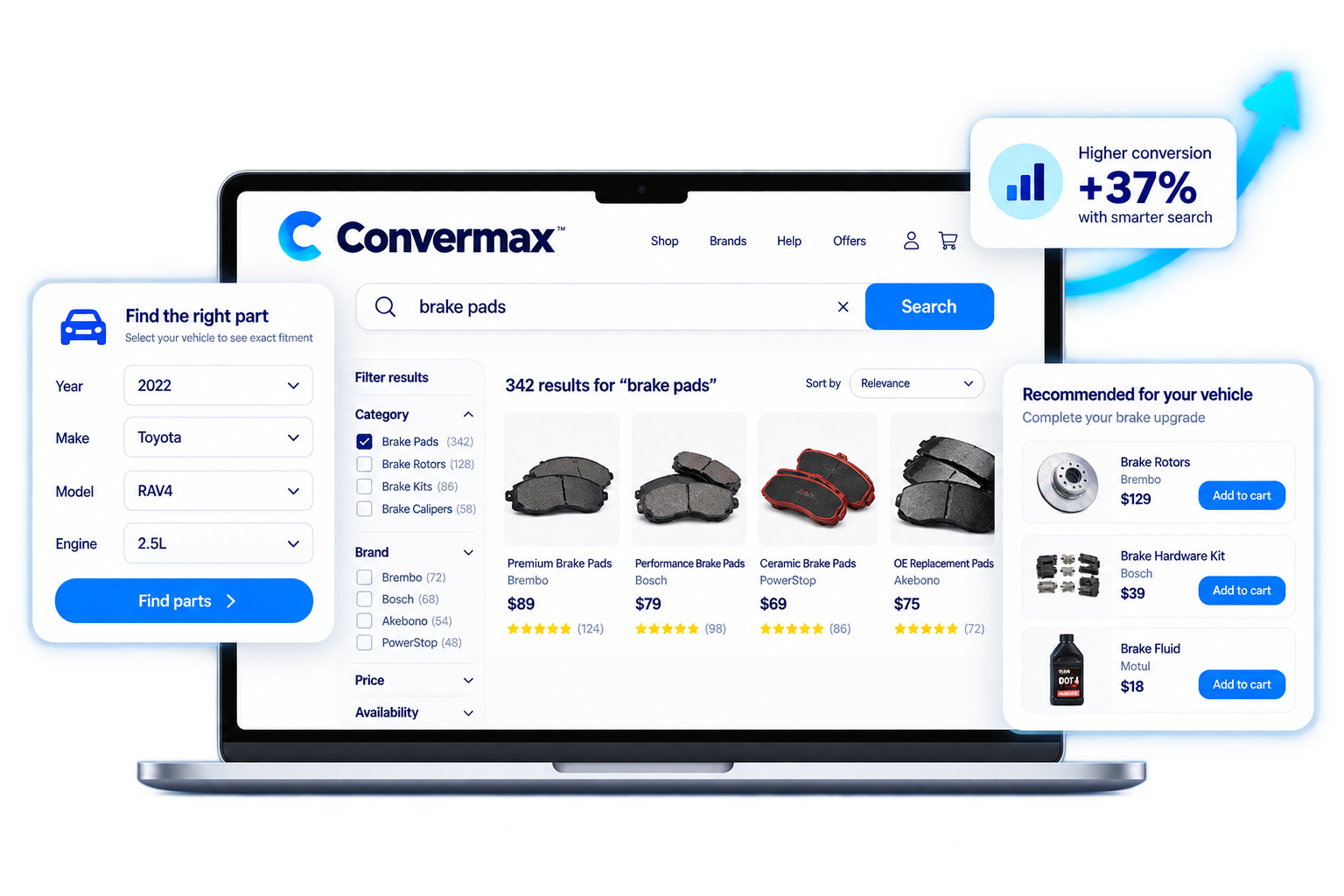
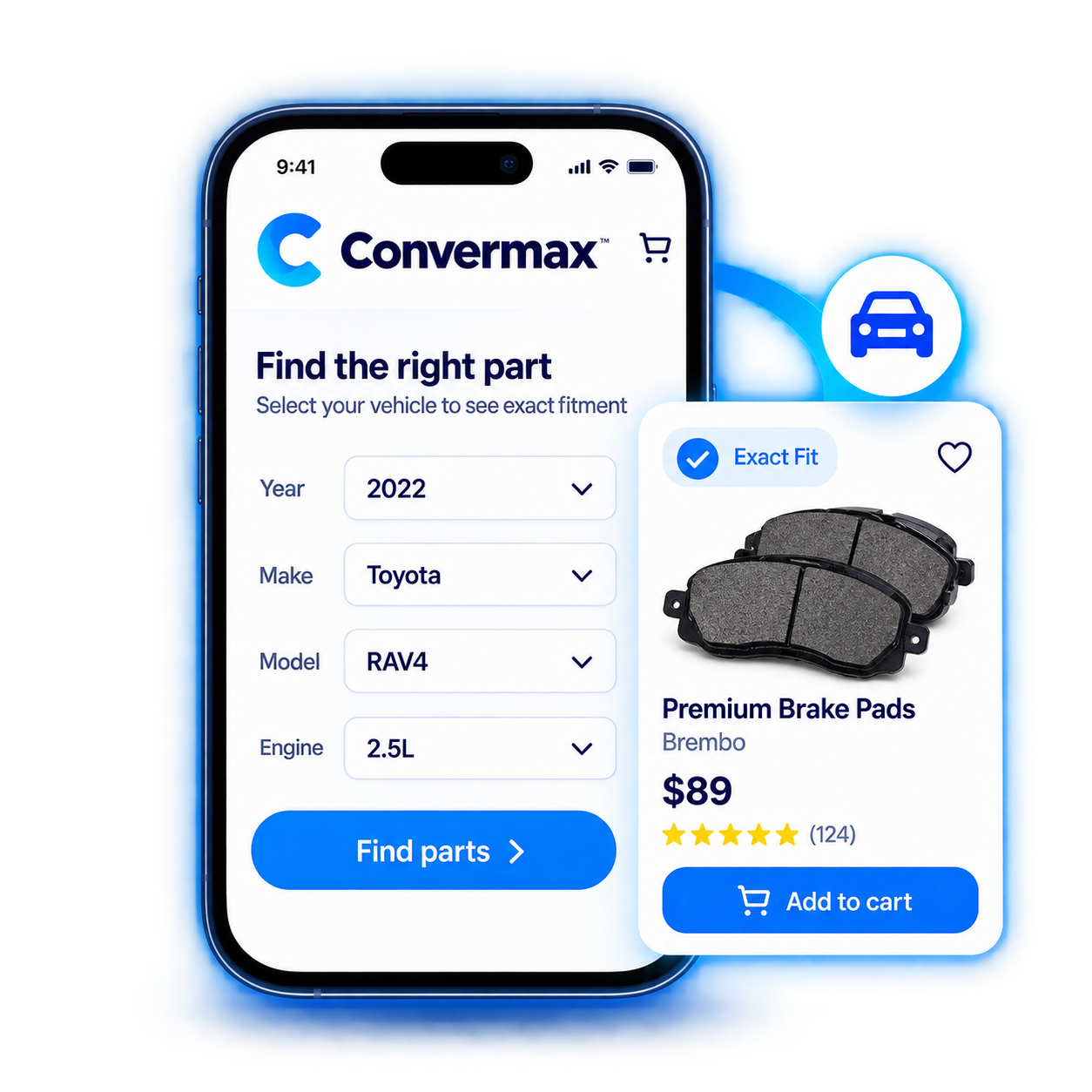
For many automotive catalogs, product discovery begins with a vehicle, not a keyword. Convermax supports Year-Make-Model lookup, keyword search, filters, fitment verification, and vehicle context that can follow the shopper through the store. Those capabilities are most useful when the site makes the selected vehicle obvious and uses it consistently.
Always Open Commerce can help design the YMM journey around how customers actually shop for parts, including where vehicle selection appears, how universal products are handled, how shoppers change vehicles, and how fitment context works across mobile and desktop. The goal is a clearer decision path, not simply adding another filter.
Keep Fitment Data, Search, and Product Detail Logic in Agreement
A strong YMM interface cannot compensate for incomplete or conflicting fitment data. Vehicle applications, product identifiers, catalog attributes, universal-part rules, wheel and tire data, and product-page compatibility information need to describe the same reality.
Before implementation, define the fitment source, how multiple data sources are reconciled, which attributes support filters, and which system owns corrections. Always Open Commerce can coordinate catalog and storefront requirements around that data. Exact data-provider connectivity, fitment mapping, and technical behavior require specialist review.
Convermax Work We Can Support
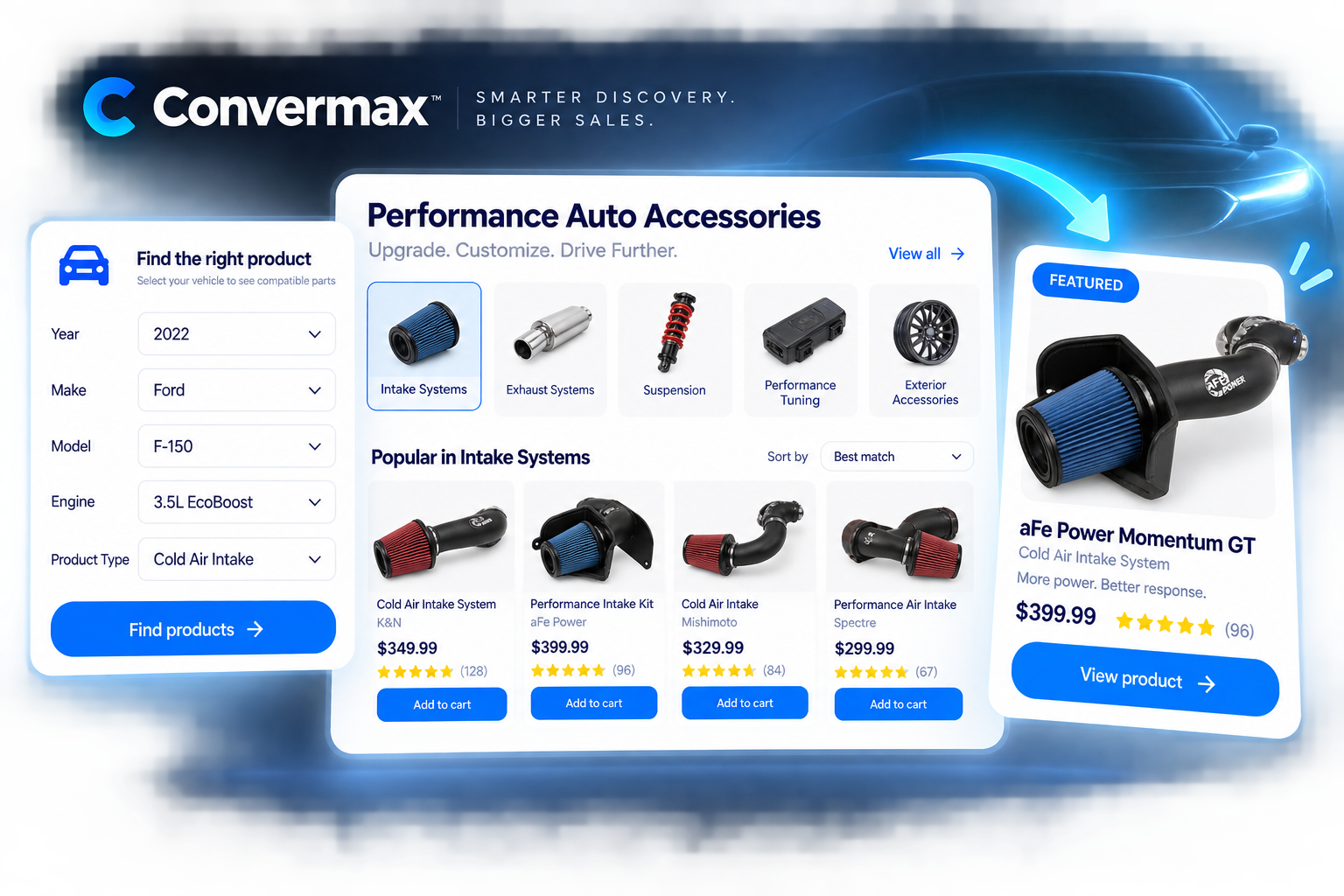
Support can focus on a new automotive search experience, an existing Convermax setup, or the catalog and UX work needed to make fitment useful.
1
YMM Selection & Vehicle Context
Plan where shoppers select Year, Make, Model, and other required vehicle attributes, how that choice persists, and how users can verify or change the selected vehicle.
2
Automotive Search, Filters & Categories
Structure keyword search, faceted filters, category navigation, and vehicle-filtered results so shoppers can move between compatibility and broader product attributes without losing context.
3
Fitment Data & Catalog Coordination
Review the product and application data required by the experience, clarify source ownership, and coordinate cleanup or mapping work within the approved ecommerce scope.
4
Product Page, Cart & Order Handoffs
Define how compatibility information, selected vehicle context, and relevant identifiers should appear on product pages and move into cart or order workflows. Exact implementation requires development review.
Preserve Vehicle Context Across the Store
Automotive discovery breaks down when the site knows the shopper’s vehicle in one place and forgets it everywhere else. Treat vehicle context as part of the customer journey and catalog logic.
1
Saved Vehicle & Browse Context
Keep the selected vehicle understandable as shoppers search, browse categories, compare products, and return to earlier pages, while making vehicle changes easy to find.
2
Universal Parts & Mixed Catalogs
Define how universal products, vehicle-specific products, accessories, fluids, apparel, and other mixed catalog items should behave when a vehicle has been selected.
3
Wheel & Tire Requirements
Treat wheels and tires as a specialized fitment case when relevant. Their size and compatibility data may require different attributes or data sources than standard auto-parts YMM lookup.
4
Fitment QA & Ongoing Catalog Change
Test representative vehicles, categories, products, universal items, filters, and product-page compatibility after data, catalog, theme, or integration changes.
Convermax FAQs
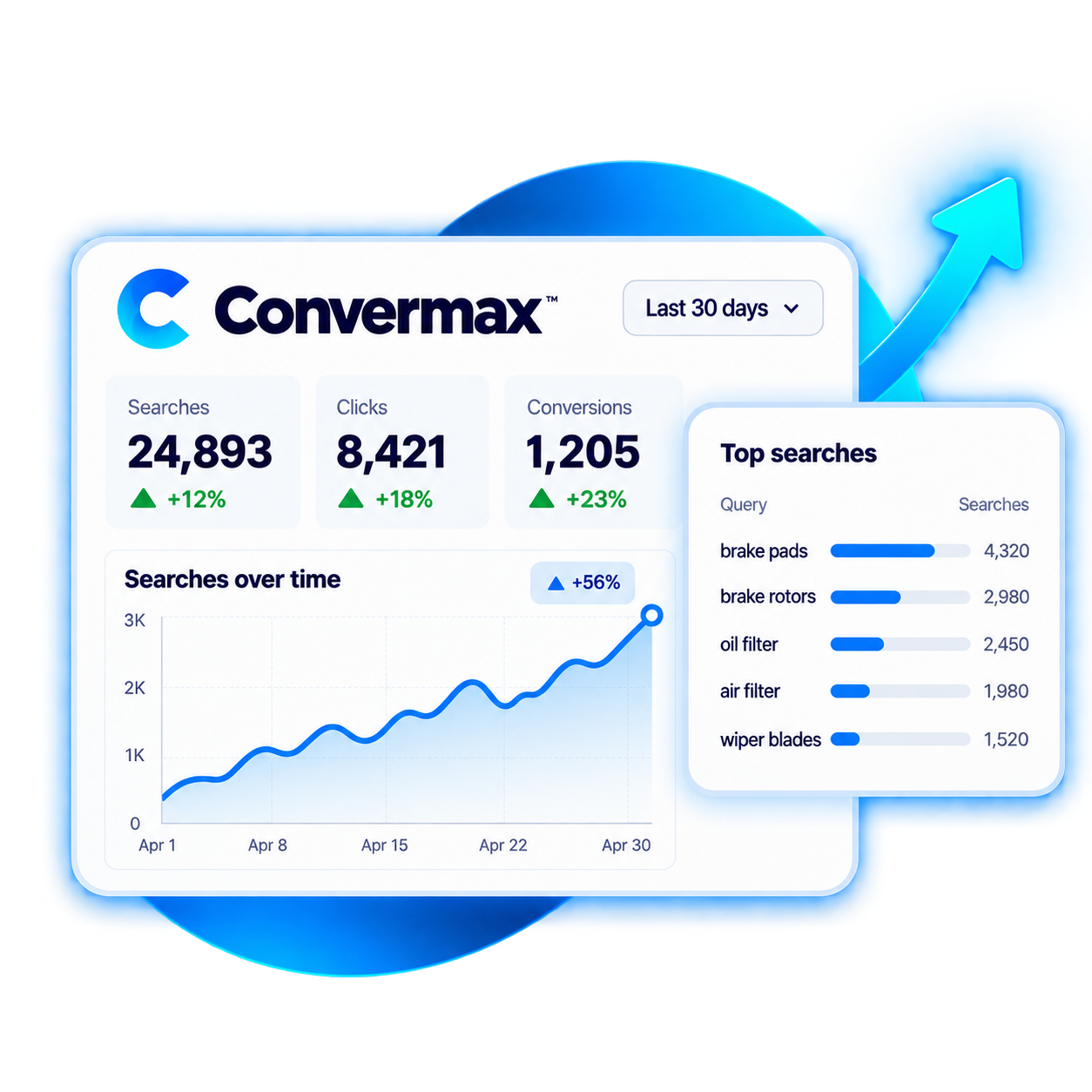
Convermax provides automotive ecommerce search and fitment experiences, including Year-Make-Model lookup, keyword search, filters, fitment verification, vehicle context, and specialized wheel and tire discovery.
YMM represents vehicle compatibility. A shopper is not merely narrowing preferences such as brand or price; the store is using vehicle application data to determine which products should fit the selected vehicle.
Yes. Support can include YMM UX, catalog structure, filters, fitment-data coordination, product-page behavior, integration coordination, troubleshooting, and QA within the approved scope. Exact Convermax configuration and data connectivity require technical review.
Convermax markets support for fitment data from multiple formats and providers, including ACES-related data. The exact source, licensing, mapping, fields, and implementation approach should be verified for the business’s catalog.
The relevant vehicle context should be preserved wherever it helps the customer or fulfillment team understand what was selected. Exactly what is stored in cart or order data depends on the storefront, catalog, and implementation requirements.

 USA
USA
 Philippines


