





















































LitExtension
Move ecommerce data into a new platform with a clear plan for what moves, what changes, and what still needs implementation. Always Open Commerce helps teams coordinate LitExtension migrations with data preparation, target-store setup, validation, and launch planning.

Choose the Right LitExtension Migration Path
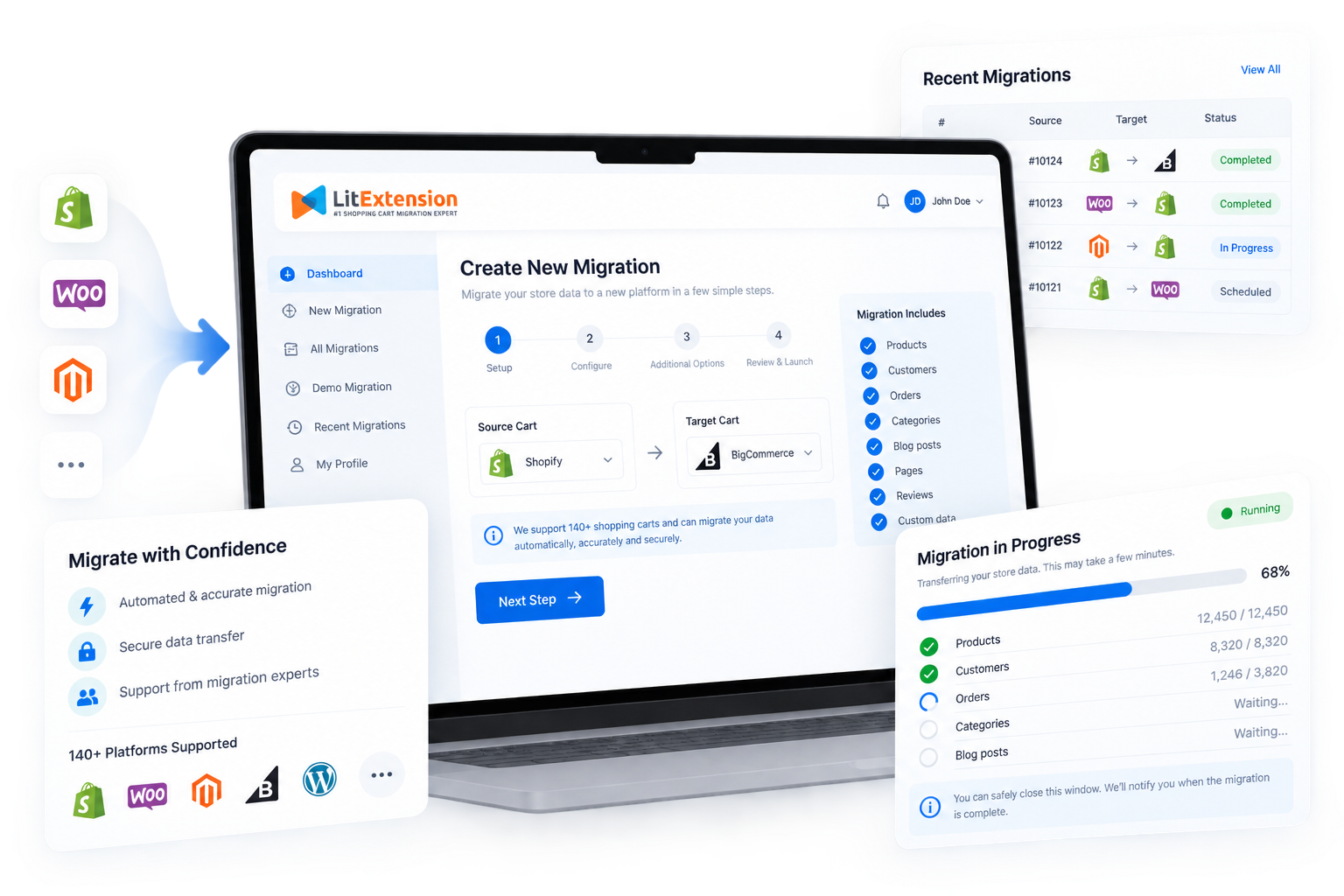
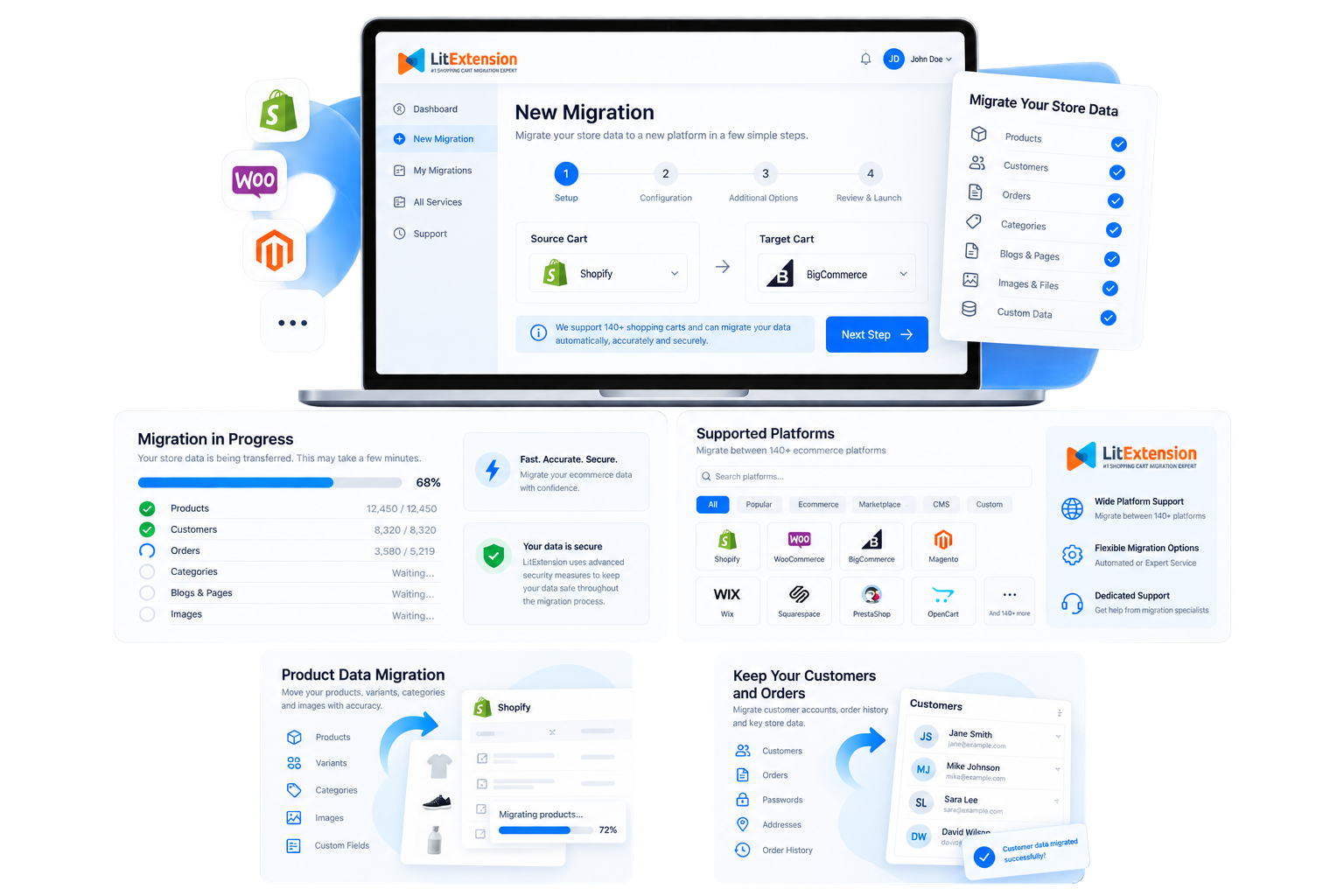
LitExtension supports ecommerce data migration across many source and target platforms, with automated migration as well as an expert-managed service path. It can also work with source data delivered through files, databases, APIs, and other formats. The practical question is not simply whether data can be moved, but which migration approach fits the store, the records involved, and the amount of customization required.
Always Open Commerce can help define the migration requirements before the transfer begins. That includes identifying the systems involved, the data that matters, known catalog issues, target-platform requirements, and any records or workflows that need separate review. Exact route compatibility, custom data handling, and technical feasibility should be confirmed for the specific project.
Map the Target Store Before Moving the Data
A successful transfer depends on how the receiving platform is structured. Products, variants, categories, customers, orders, content, URLs, and custom fields may not map cleanly when the source and target stores organize information differently. Moving records before those differences are understood can create additional cleanup after the migration.
The target-store model should be clear enough to judge whether migrated data landed in the right place and whether the new platform can support the intended storefront and operations. Always Open Commerce can coordinate data mapping with catalog structure, platform setup, redirects, app requirements, and other approved migration work so validation is based on the target business requirements rather than the transfer completing without an error.

LitExtension Migration Work We Can Support
Support can cover the ecommerce work around a LitExtension transfer while keeping the vendor’s migration service and Always Open Commerce’s project responsibilities clearly separated.
1
Migration Scope & Data Planning
Identify the source and target environments, in-scope records, known data issues, migration dependencies, and any information that needs special handling before the transfer starts.
2
Target Store & Catalog Preparation
Prepare the receiving ecommerce environment and review catalog structure, identifiers, variants, categories, content relationships, and other approved requirements that affect how migrated records should be organized.
3
Transfer Coordination & Validation
Coordinate the LitExtension migration within the broader replatform, compare transferred records with the approved source, document exceptions, and track corrections or additional review before launch.
4
Launch & Post-Migration Checks
Review in-scope data and customer-facing paths in the target store, coordinate remaining migration issues, and connect the data work with approved launch, SEO, app, and storefront checks.
Know Which Data Routes Need More Review
The source of the data and the way it has been customized can change the migration effort. These situations should be identified early instead of treated as equivalent transfers.
1
Standard Platform-to-Platform Data
Supported ecommerce platforms may provide a more direct migration route for common store records. The exact entities, fields, and platform pair still need to be confirmed before scope is finalized.
2
Files, Databases & Other Sources
CSV, Excel, XML, database, and API-based source data can require additional preparation and mapping before it is ready for the destination platform.
3
Custom & Third-Party Data
Custom fields, extension-generated records, nonstandard database structures, and other specialized data may need a customized migration approach. Do not assume those records will move with the default store data.
4
Data Changed Before Cutover
Orders, customers, products, and other records can change after the main migration run. LitExtension provides options for moving newer or updated data, but the final approach should be planned around the specific source, target, and cutover requirements.
LitExtension FAQs
LitExtension is an ecommerce migration service for moving supported store data between ecommerce environments. Its migration services cover common records such as products, customers, and orders, with additional paths for files, databases, APIs, and customized data requirements.
Both are used for ecommerce data migration. LitExtension also offers an expert-managed migration path and migration services for special source formats and customized requirements. The better fit depends on the platforms, data, project responsibilities, and level of migration support required.
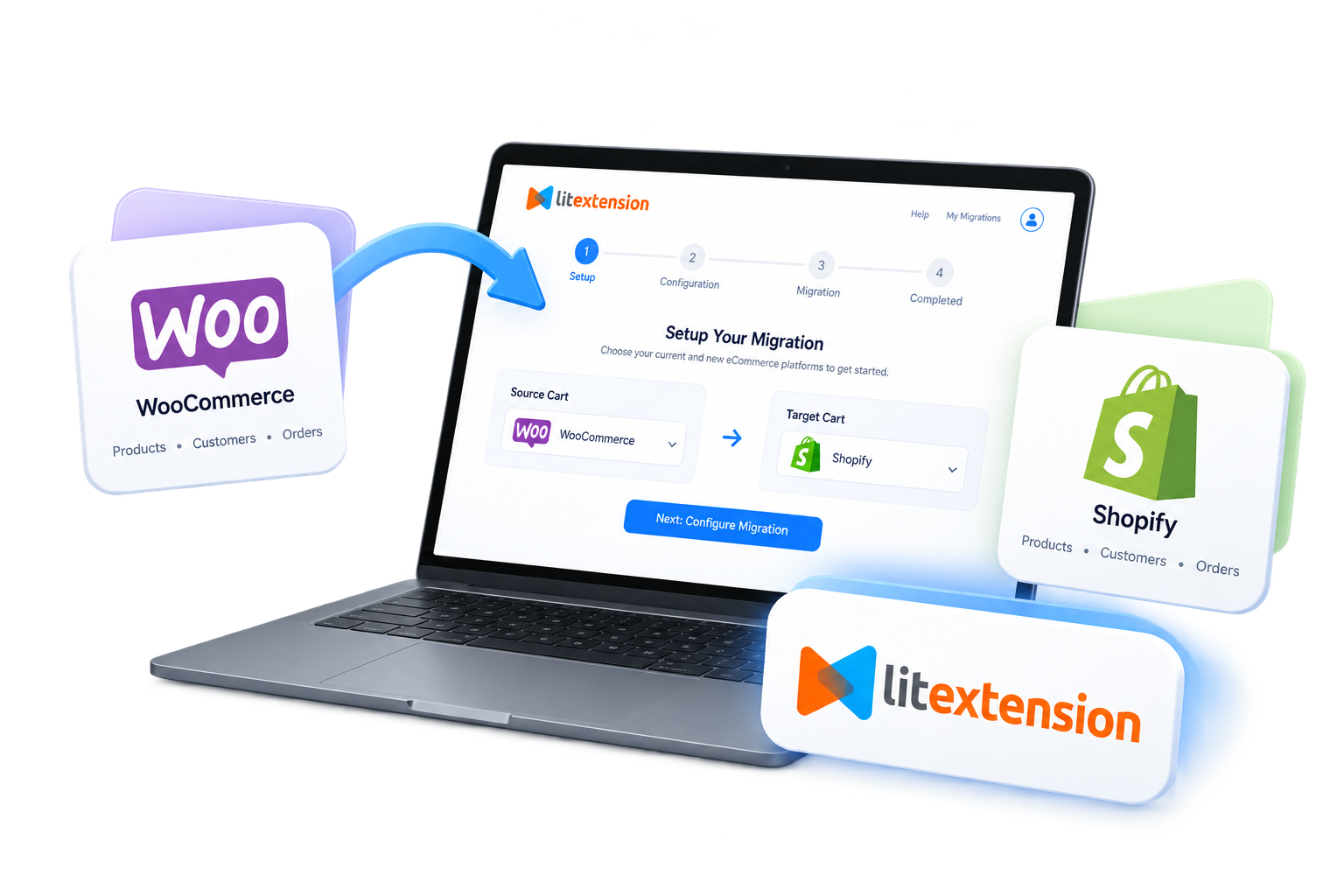
Yes. Always Open Commerce used LitExtension for Venabulum’s WooCommerce-to-BigCommerce migration, moving products, customers, and historical orders and coordinating validation, BigCommerce setup, and launch readiness.
LitExtension provides services for moving newly created or updated data after a full migration. The appropriate method and timing should be verified for the specific migration route and coordinated with the final cutover plan.
Do not assume those parts of the store will move with the data migration. Theme work, apps, custom code, integrations, URLs, SEO requirements, and storefront behavior should be scoped separately and technically reviewed where needed.

 USA
USA
 Philippines


