















































PDM Automotive
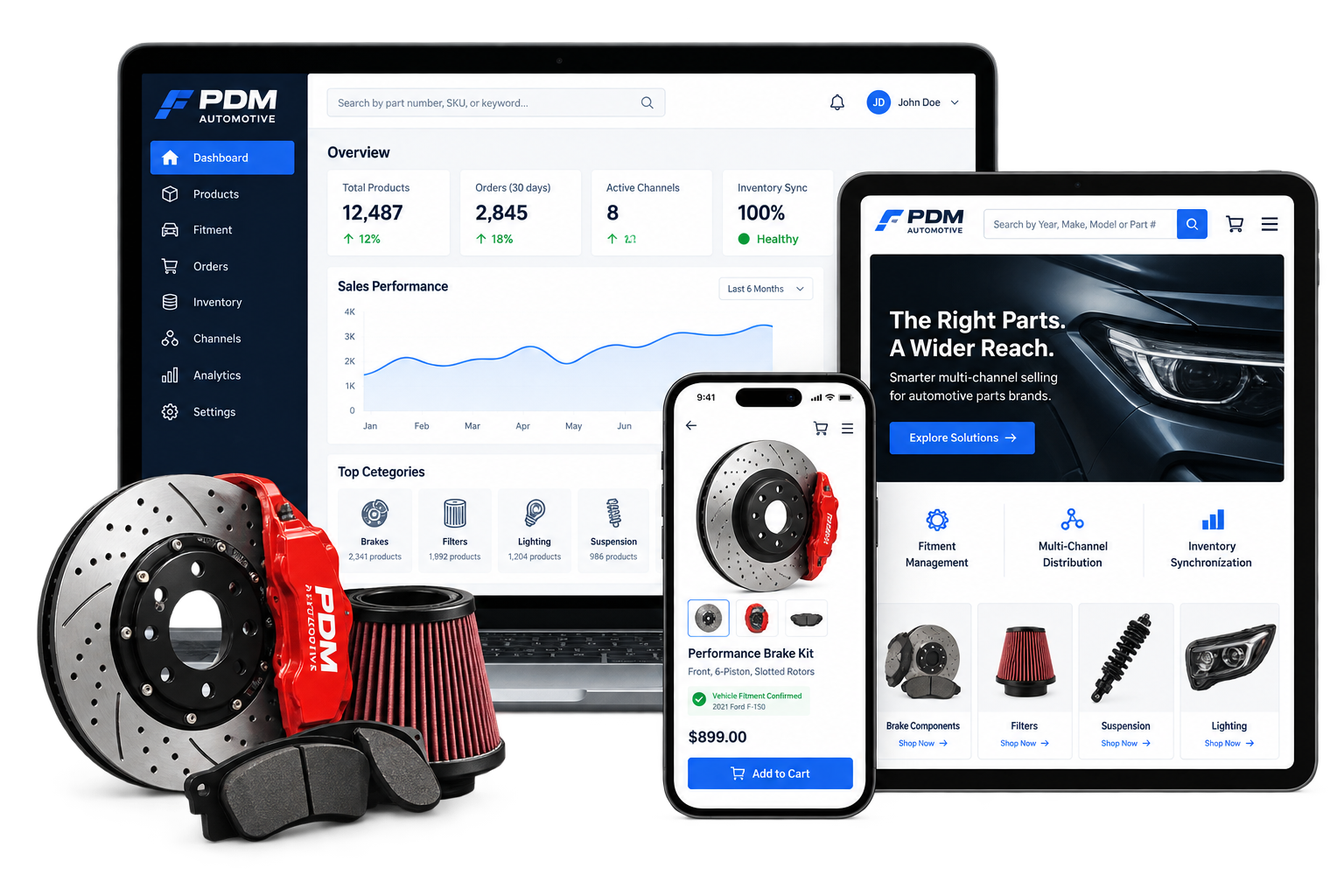
Organize automotive aftermarket product content, fitment, and channel requirements around a dependable source of catalog data. Always Open Commerce helps ecommerce teams connect PDM Automotive-related data work to storefront structure, product discovery, integrations, and ongoing catalog operations.
Treat Automotive Product Data as Commerce Infrastructure
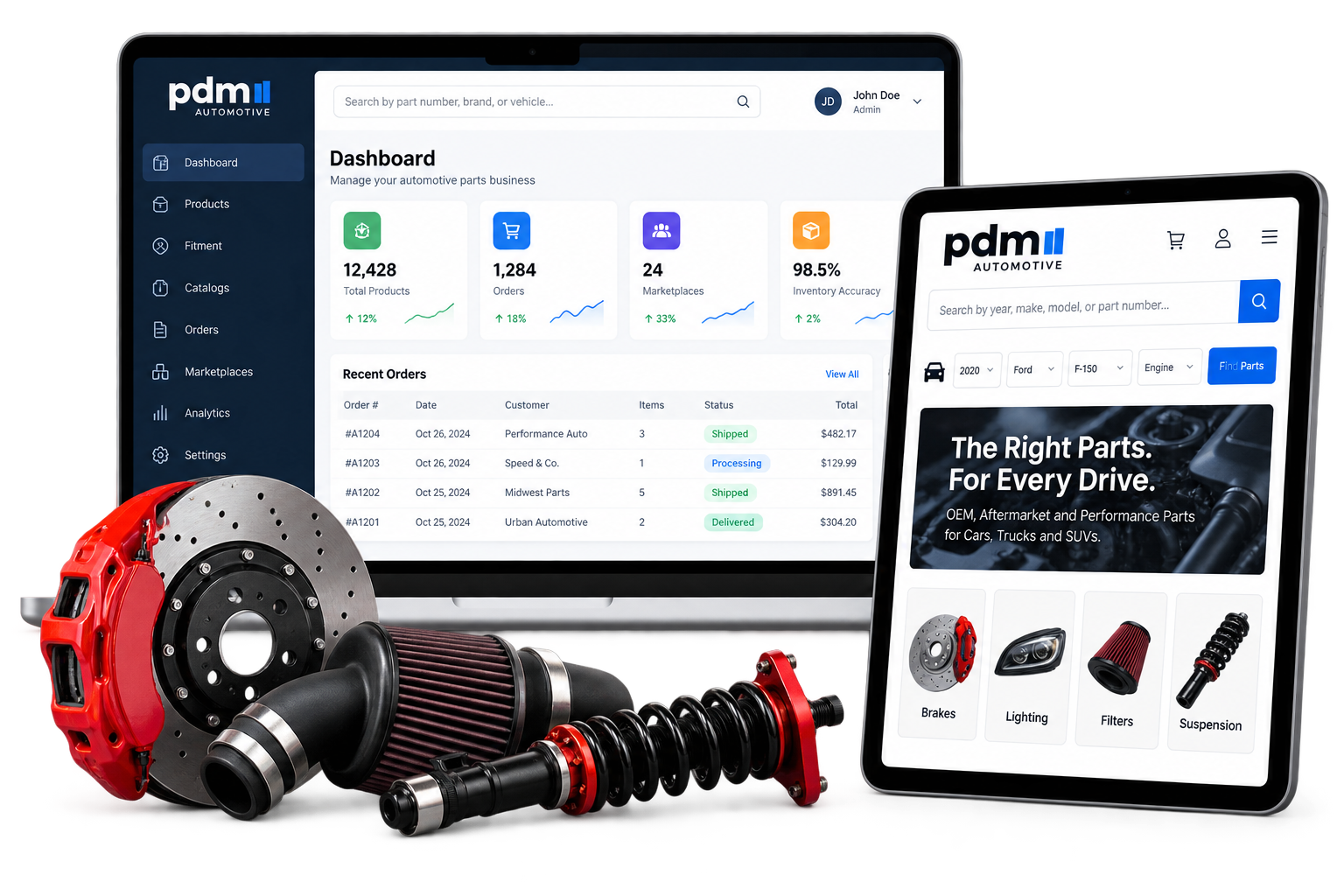
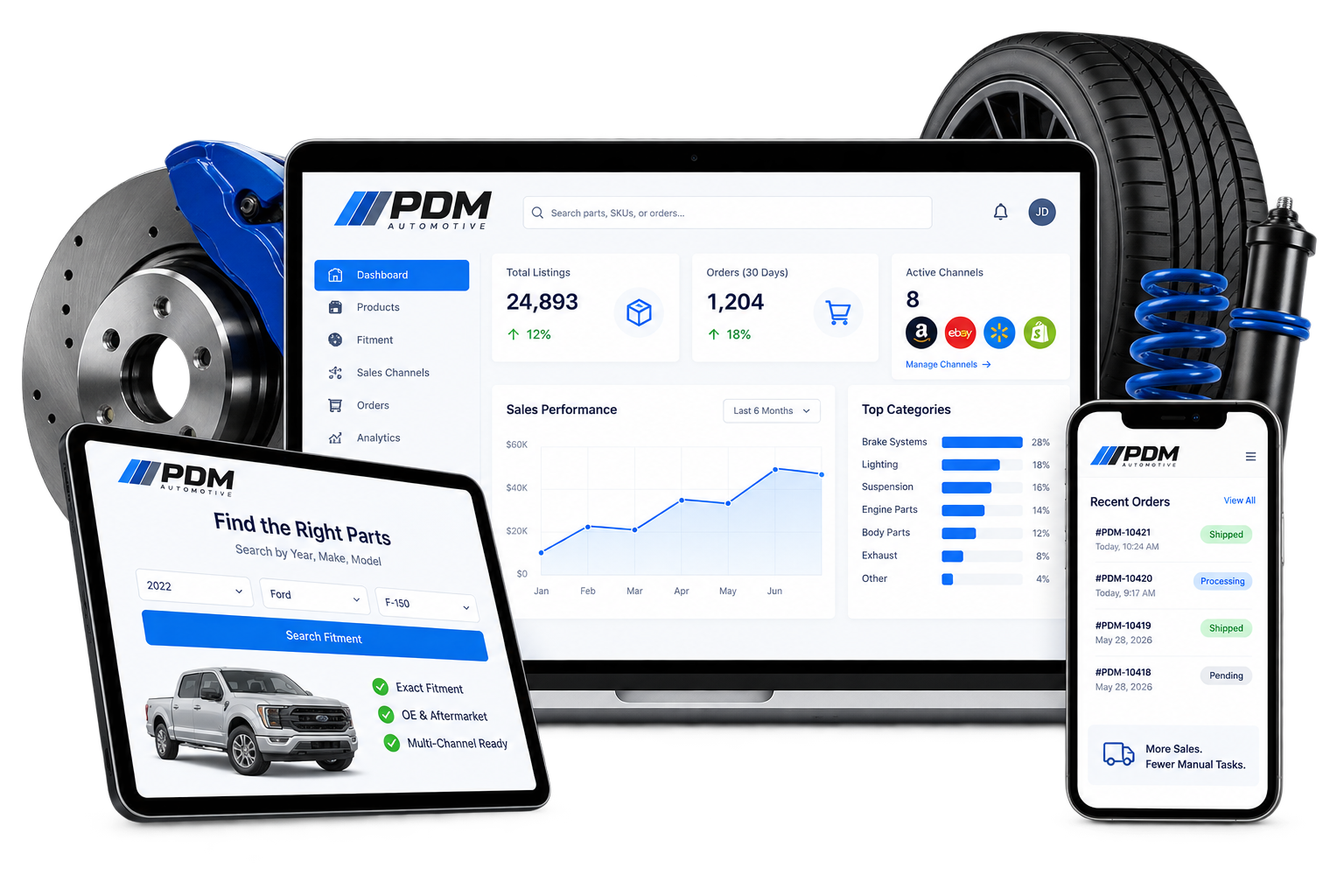
Automotive catalogs carry more than titles, prices, and images. Fitment, applications, specifications, brands, categories, descriptions, media, identifiers, and channel-specific requirements all influence whether a product can be found and understood. PDM Automotive provides catalog-management and distribution capabilities for suppliers and resellers in the aftermarket.
The ecommerce decision is which data belongs in PDM, which system remains authoritative for commerce-specific fields, and how updates reach the storefront without creating competing sources of truth. Always Open Commerce can help map that responsibility to product pages, search, filters, feeds, and other customer-facing requirements.
Align ACES, PIES, and Ecommerce Catalog Requirements
ACES and PIES can structure important aftermarket application and product information, but a storefront still needs to turn those standards into usable navigation, fitment, product detail, and merchandising experiences. The fields required by a website, marketplace, distributor, or internal team may overlap without being identical.
PDM markets support for ACES and PIES data management and related automotive catalog content. Always Open Commerce can coordinate ecommerce requirements around that information, including catalog mappings and downstream use. Standards compliance, data licensing, exact validations, and technical integration behavior require the appropriate automotive-data and development review.
PDM Automotive Work We Can Support
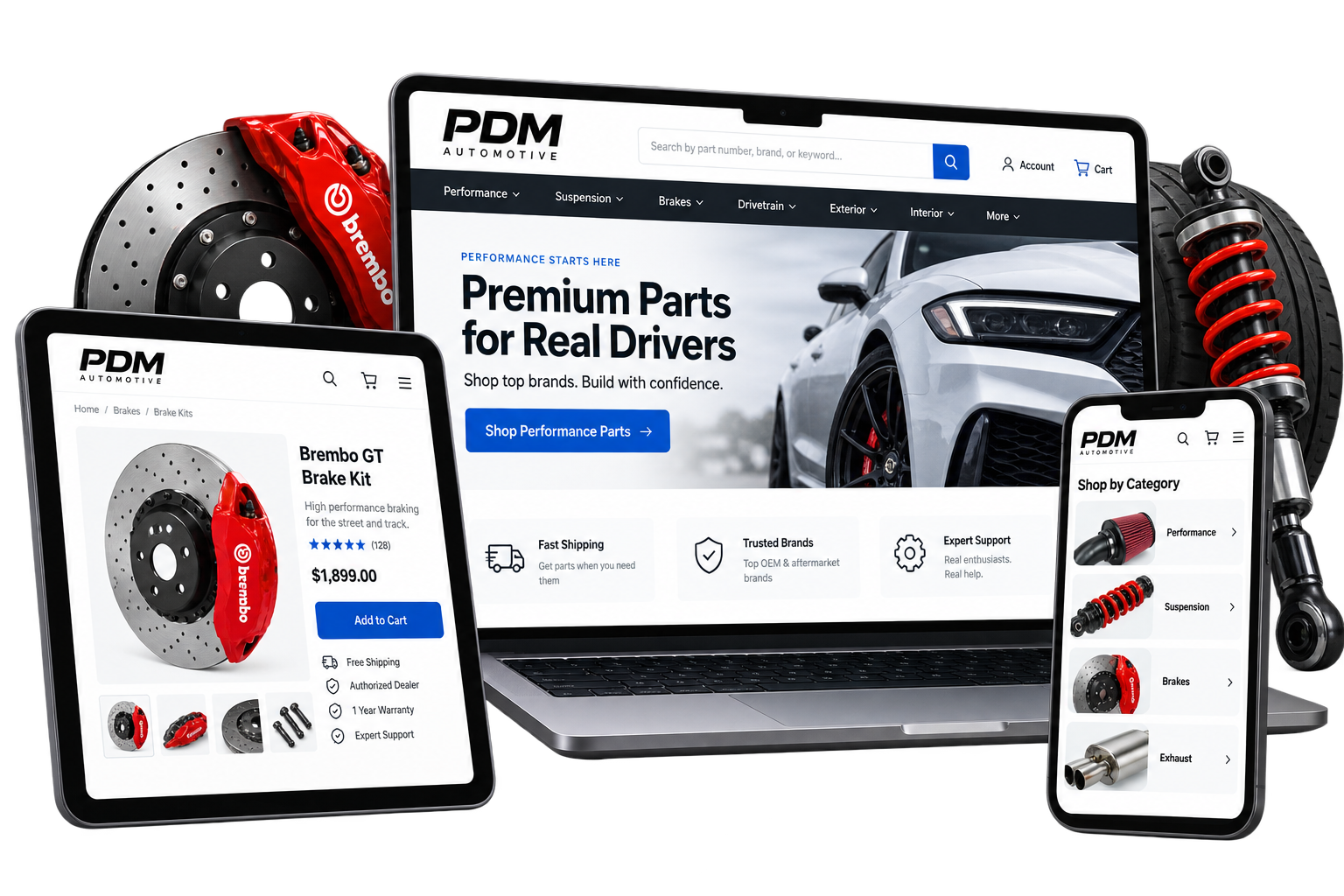
Support can focus on the ecommerce layer around PDM Automotive, the transition to a more structured catalog process, or the downstream use of automotive product data.
1
Catalog Source & Ownership Planning
Define which systems own fitment, descriptions, images, pricing, inventory, identifiers, categories, and other product attributes so corrections happen in the right place.
2
Product Data Normalization
Coordinate cleanup, mapping, taxonomy, attributes, variant relationships, and content requirements that affect how automotive products appear and behave in the ecommerce experience.
3
Fitment & Channel Data Coordination
Map the product and application information needed by YMM search, filters, product pages, feeds, marketplaces, retailers, or other approved channels without assuming one output fits every destination.
4
Ecommerce & Integration Handoffs
Define how approved PDM data should reach the commerce platform and connected systems, then coordinate implementation and QA. Exact APIs, exports, synchronization, and custom development require technical review.
Keep Automotive Data Manageable as Products and Partners Change
New SKUs, application updates, supplier changes, retailers, channels, and content revisions create continuous catalog work. Governance matters as much as the initial migration.
1
Change Ownership & Approval
Define who can create or change product content, fitment, identifiers, and channel attributes and which reviews are required before updates reach customers or partners.
2
Validation & Exception Review
Use appropriate data and storefront QA to catch missing applications, conflicting attributes, incomplete content, or mapping problems. Do not treat automated validation as a substitute for responsible data ownership.
3
Channel Output Governance
Document which fields, formats, and content each approved destination needs so marketplace, retailer, distributor, and direct-to-consumer outputs do not drift into separate unmanaged catalogs.
4
Storefront Feedback Loop
Feed recurring search, fitment, product-page, support, and merchandising issues back into the catalog process when the root cause is product data rather than storefront presentation.
PDM Automotive FAQs
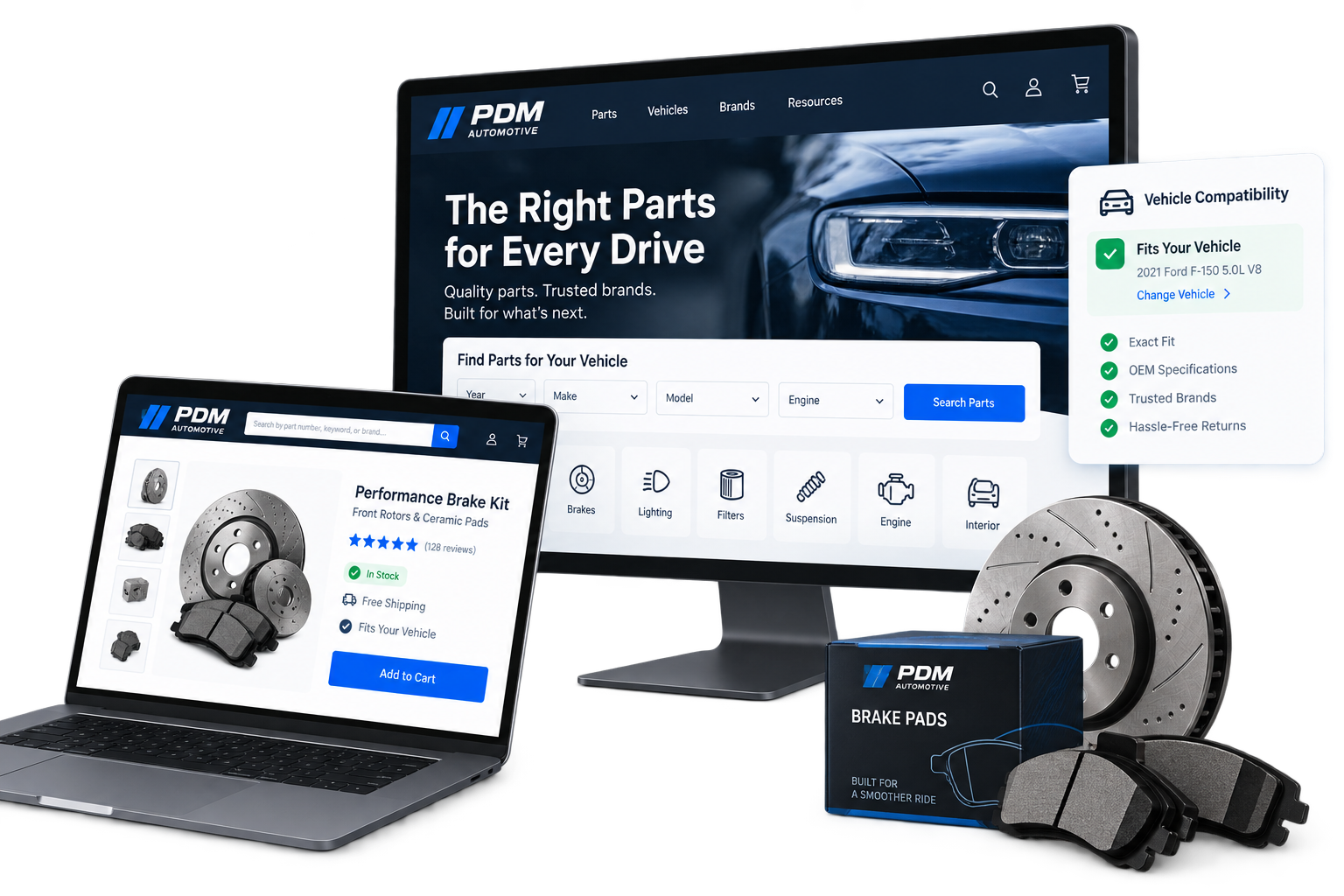
PDM Automotive provides automotive aftermarket catalog, fitment, product-content, data-distribution, and related supplier and reseller capabilities.
PDM states that its platform supports ACES and PIES-related automotive data management. Exact standards requirements, versions, data rights, validation rules, and implementation scope should be confirmed with the appropriate data owner and vendor.
Always Open Commerce can support ecommerce requirements around product data, catalog structure, fitment, storefront UX, feeds, integrations, migrations, and QA within an approved scope. Exact PDM configuration and automotive-data standards work require specialist review.
No. PDM is focused on automotive product data and industry connections, while the ecommerce platform remains responsible for the storefront and core commerce experience. The implementation should define which system owns each data domain.
Identify the source systems, product identifiers, fitment fields, ACES/PIES-related data where applicable, descriptions, media, taxonomy, pricing and inventory ownership, channel requirements, and the direction and frequency of approved data flows.

 USA
USA
 Philippines


