




















































Reviews, Loyalty & Retention
Reviews, loyalty, and retention platforms shape how shoppers build trust before purchase and how customers are recognized after it. The right choice depends on whether the business needs stronger social proof, a loyalty program, lifecycle automation, or a connected combination of those experiences.
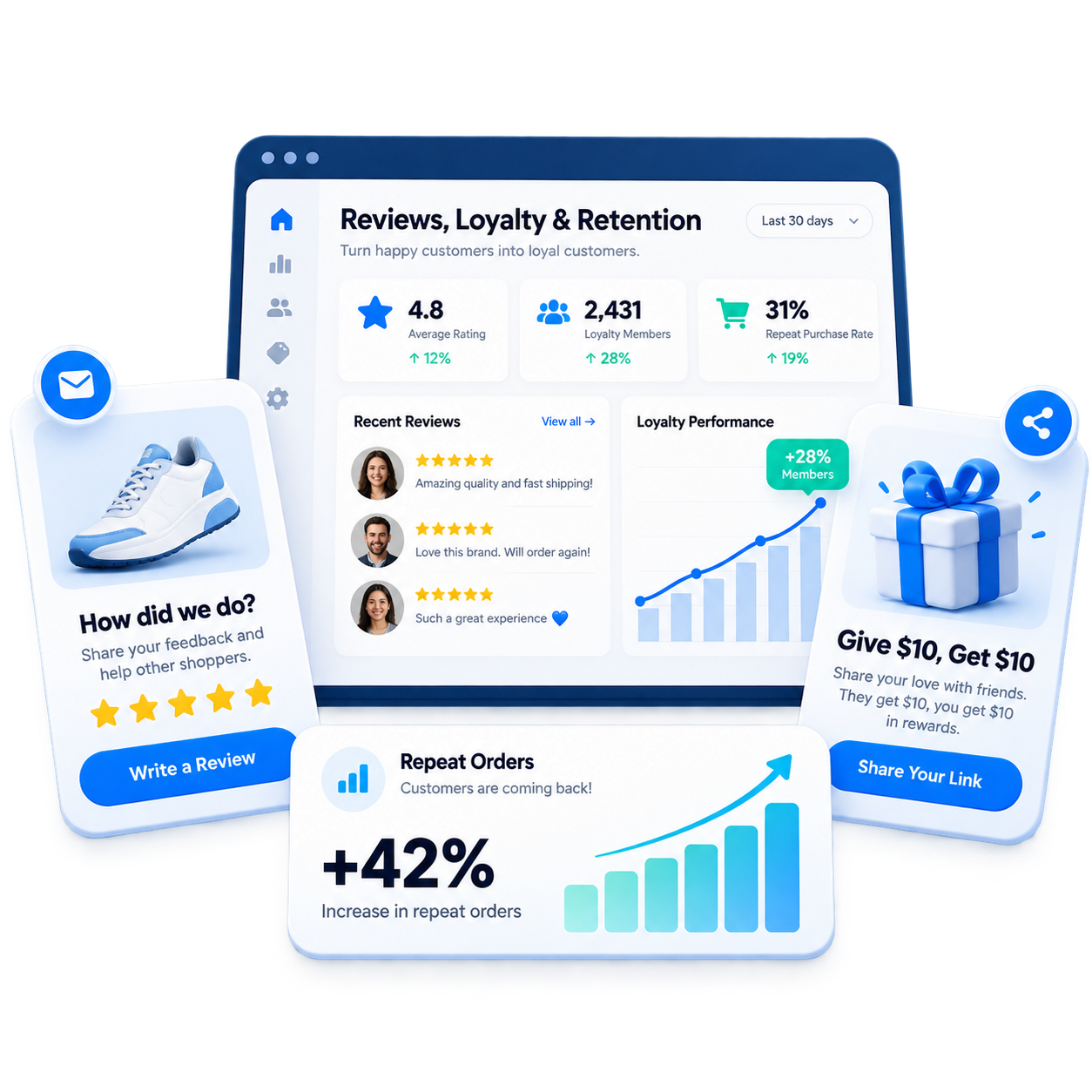
Choose by Retention Program Role
Yotpo and Stamped.io both cover reviews and loyalty, but their broader retention models differ. Compare what the program needs to own, how much lifecycle activity belongs in the platform, and how the storefront and customer data should connect.

Yotpo
Yotpo is worth evaluating when reviews and loyalty need to operate as core customer-facing programs, with ratings, UGC, rewards, referrals, and connected retention experiences tied closely to the ecommerce storefront.

Stamped.io
Stamped.io is a stronger fit to evaluate when Reviews, Loyalty, and Lifecycle automation are expected to work as one retention platform, including post-purchase journeys that collect feedback, reward behavior, and support repeat purchase.
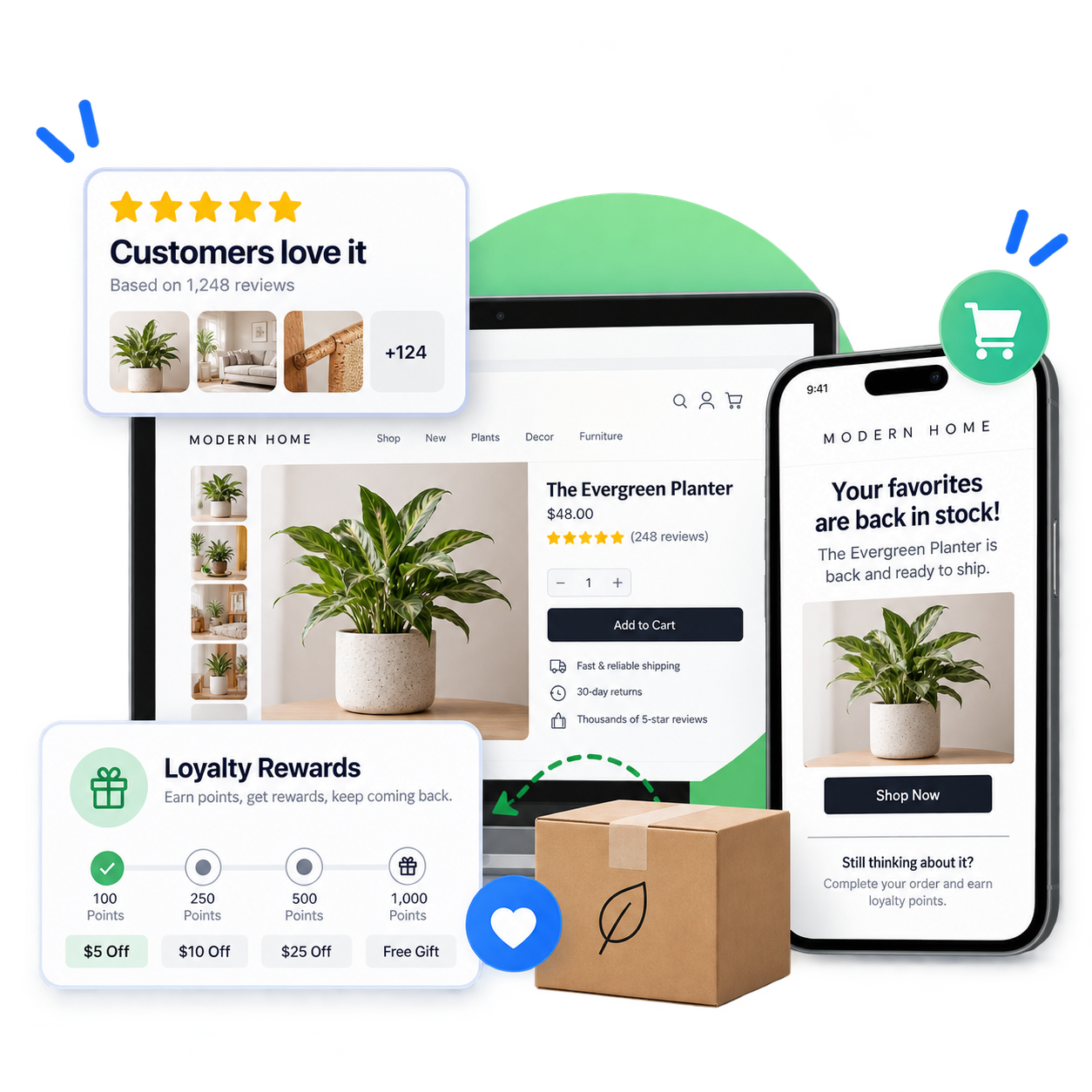
Evaluate Program Role, Customer Data, and Ongoing Ownership
A reviews or loyalty platform should be evaluated around the job it needs to own, the customer and storefront data it depends on, how program elements appear across the buying and post-purchase experience, and who will manage rules, moderation, rewards, communication, and ongoing changes.
Program Role & Customer Journey
Define whether the platform primarily needs to collect and display social proof, operate loyalty and rewards, support lifecycle retention, or coordinate several of those jobs across the customer journey.
Customer Data & Storefront Experience
Review which customer, order, product, review, and loyalty data the platform needs, where that information originates, and how widgets, account experiences, and other program elements should appear across the storefront.
Program Ownership & Ongoing Operations
Determine who owns program rules, rewards, review moderation, customer communication, storefront placement, reporting, troubleshooting, and ongoing changes after the initial setup.
Coordinate the Retention Stack
Once the platform role is clear, Always Open Commerce can coordinate approved work across social proof, loyalty experiences, customer data, integrations, and post-purchase communication without turning every retention capability into one undifferentiated program.
Build Trust Into the Buying Journey
Use Reviews & UGC to plan how ratings, reviews, and approved user-generated content fit into product pages, customer journeys, and the broader trust experience.
Design Loyalty Around Repeat Behavior
Use Loyalty & Rewards to shape approved points, rewards, referrals, or other loyalty experiences around the customer journey, storefront, and data the program needs to operate.
Connect Program Data Across Systems
Use API Integrations when approved customer, order, product, review, or loyalty data needs to move between the retention platform, ecommerce store, marketing tools, or other systems. Exact feasibility requires technical review.
Coordinate Post-Purchase Communication
Use Email Marketing when review requests, loyalty activity, replenishment, or other approved post-purchase messages need to support the same customer journey without duplicating communication across systems.
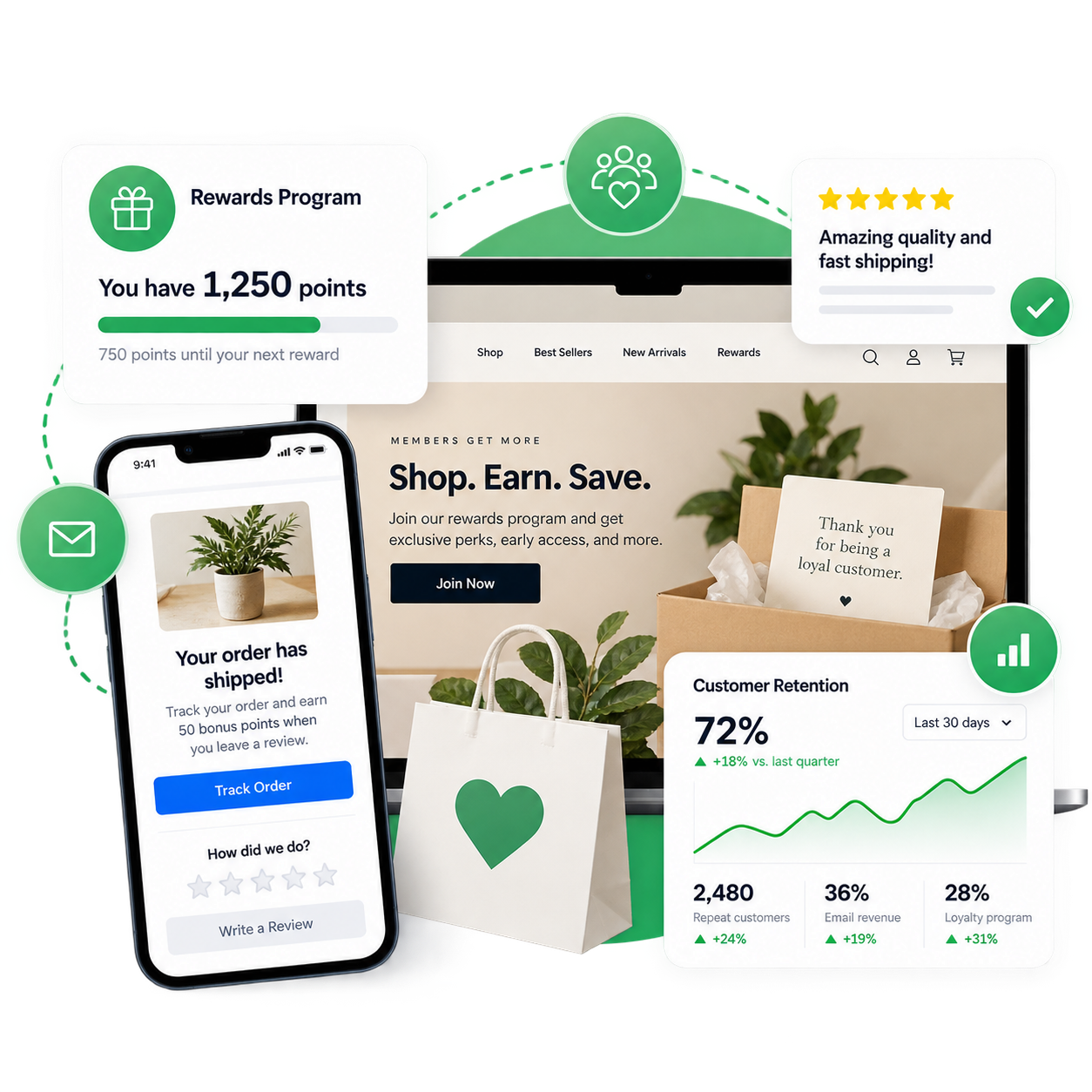
Frequently Asked Questions
Start with the program role the business needs: social proof, loyalty and rewards, lifecycle retention, or a connected combination. Then compare required storefront experiences, data, ownership, and ongoing operations.
Yes. Always Open Commerce can support approved improvements across reviews, loyalty experiences, storefront placement, integrations, messaging, troubleshooting, and ongoing optimization.
Not always. A combined platform may simplify ownership, while separate tools can provide a stronger fit for distinct needs. The decision should follow the program model, data flow, storefront requirements, and team capacity.
Review program rules, rewards, customer and order data, existing reviews, storefront widgets, account experiences, integrations, URLs or embeds, reporting, and the customer communication that must continue during a transition.

 USA
 Philippines


