

















































Searchanise
Use Searchanise when the primary need is a clearer onsite discovery layer for search, filters, collection navigation, and merchandising across a larger catalog. Always Open Commerce can help configure, refine, and troubleshoot that storefront experience around the catalog, theme, and shopper journey.

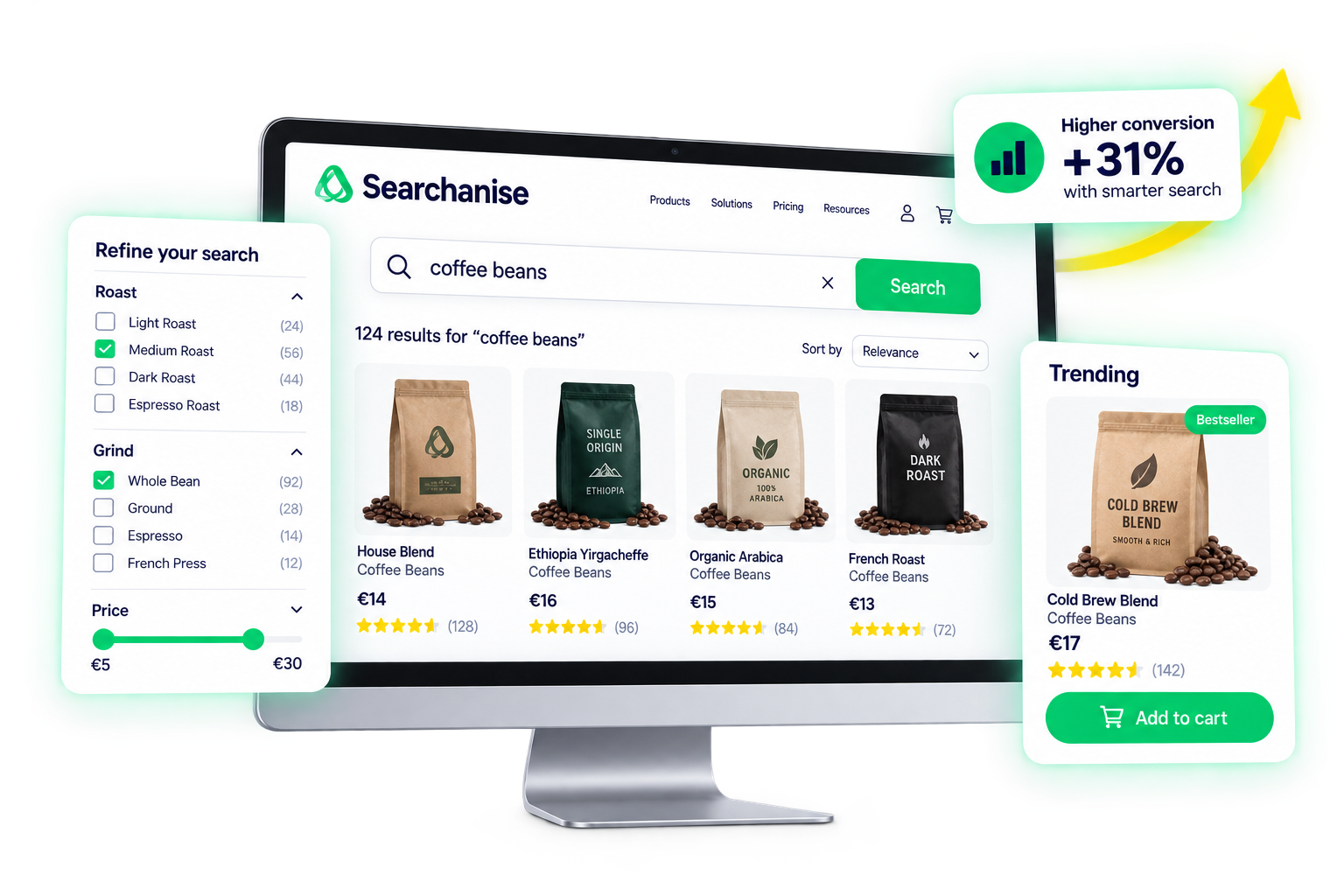
Make Search Work Around the Language Customers Actually Use
Shoppers do not always use the same product names, categories, spellings, or terminology stored in the catalog. A useful search experience should account for partial queries, mistakes, alternate wording, and the different ways customers describe the same product while still returning results that make commercial sense.
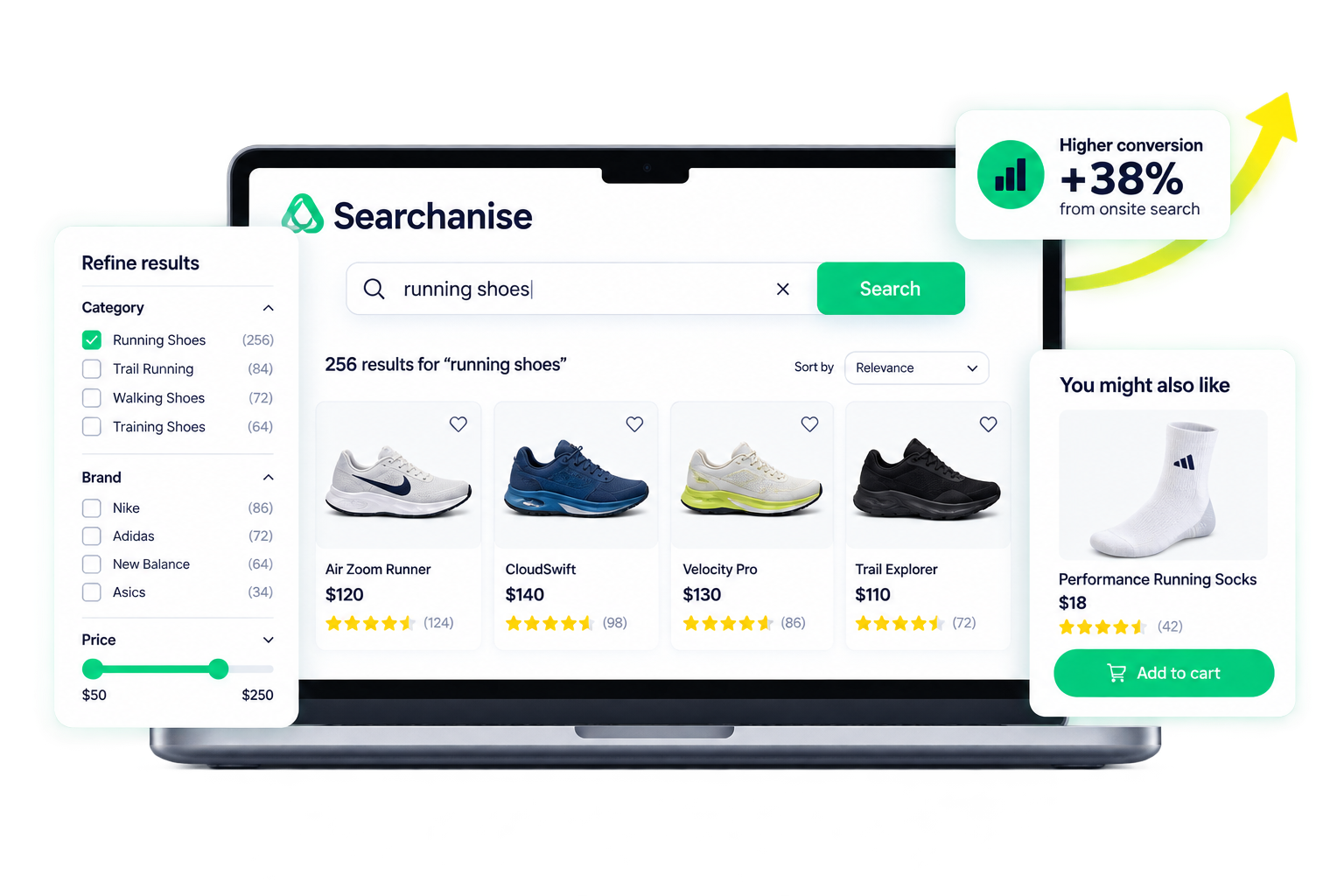
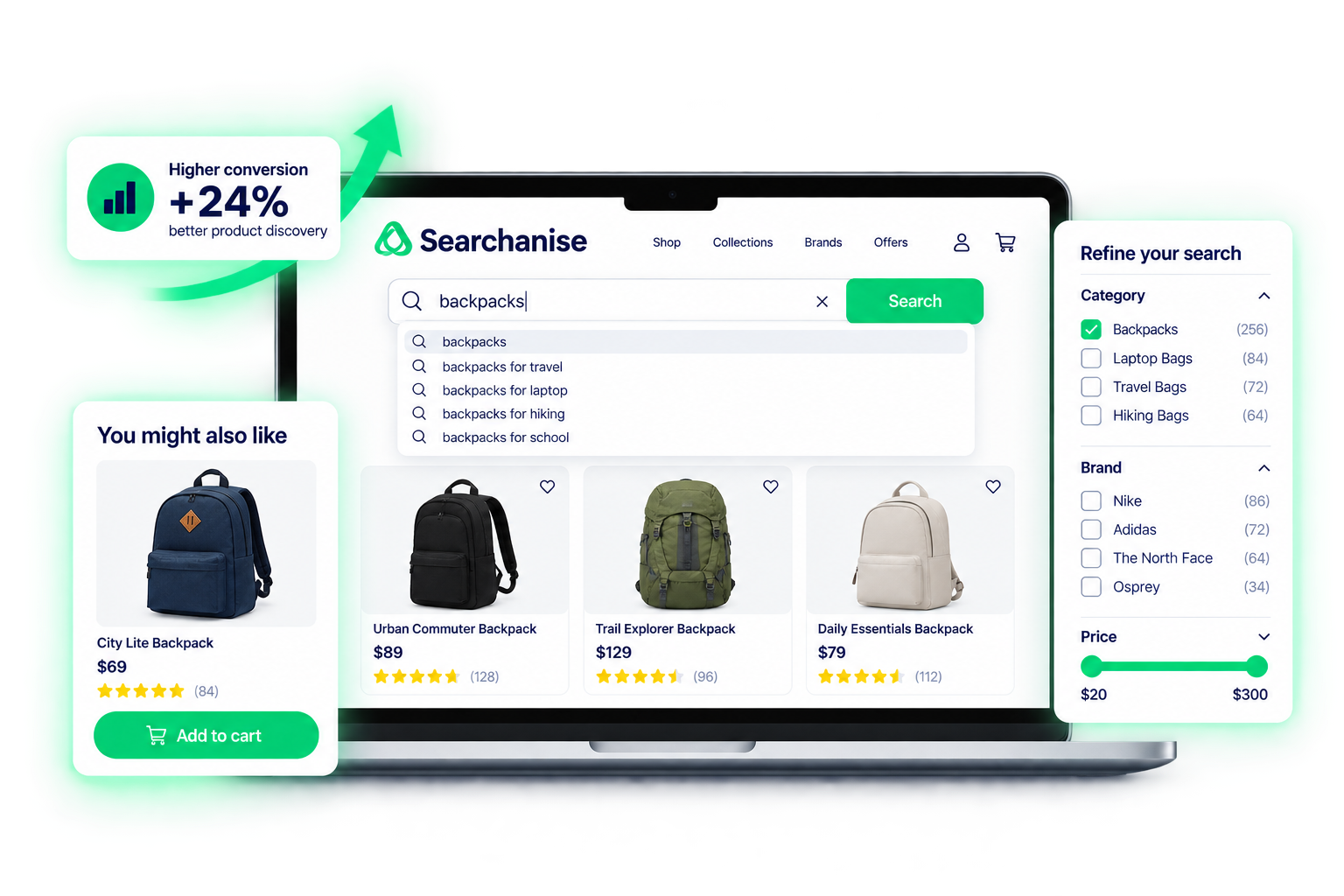
Searchanise provides onsite search, autocomplete, typo handling, filtering, merchandising controls, recommendations, and search analytics. Those capabilities are useful when the business needs more control over how shoppers search and narrow a catalog than the existing storefront experience provides. Always Open Commerce can help translate catalog structure and customer-search behavior into clearer relevance settings, suggestions, result presentation, and merchandising rules.
Use Filters and Merchandising to Shorten Product Discovery
Search becomes more useful when shoppers can narrow a large result set without learning the catalog structure first. The right filters should reflect the attributes customers actually use to compare products, such as size, color, price, availability, brand, or other meaningful product data, without adding noise or duplicating choices.
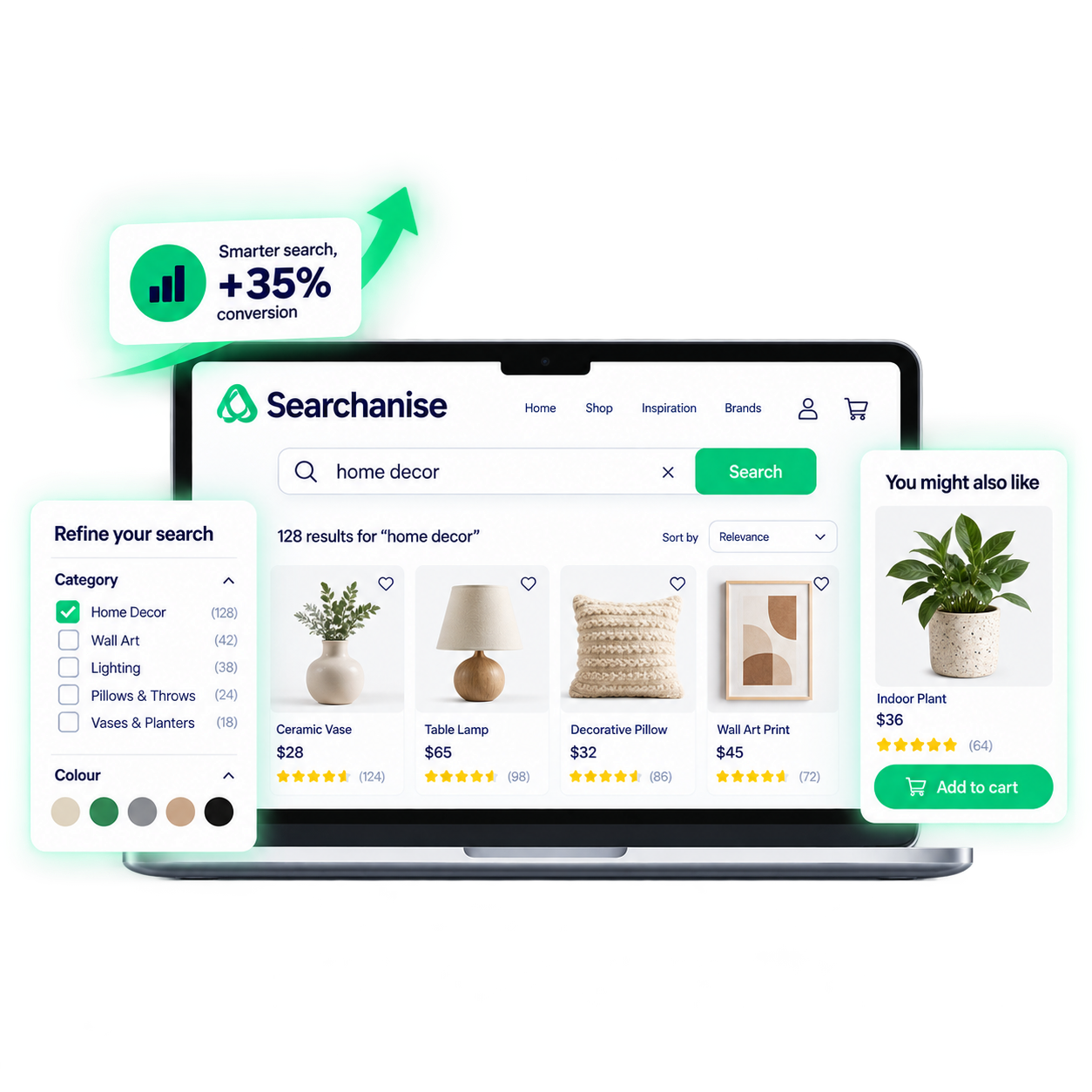
Searchanise supports customizable filters, multiple selections, sliders, color and size treatments, collection-specific filter sets, merchandising rules, banners, labels, and recommendations. Always Open Commerce can help map catalog attributes, filter groups, collection behavior, and merchandising priorities to the storefront experience. Platform-specific availability should be verified before implementation.
Configure Search, Filters, and Merchandising Around the Catalog
Searchanise work can stay centered on the storefront discovery layer: search relevance, filter structure, collection navigation, merchandising rules, and troubleshooting. The scope should follow the catalog, ecommerce platform, theme, and specific discovery problem being addressed.
1
Search & Relevance Configuration
Configure or refine instant search, suggestions, synonyms, typo handling, result presentation, ranking inputs, and related search behavior around the catalog and the terms customers actually use.
2
Filters & Collection Navigation
Structure filter values, filter groups, collection-specific options, and display behavior around product attributes and buyer decisions so navigation helps narrow the catalog instead of making it harder to understand.
3
Merchandising & Product Discovery
Coordinate product ranking, promotion rules, banners, labels, recommendation placements, and other supported discovery features with documented merchandising priorities and storefront campaigns.
4
Troubleshooting & QA
Investigate missing or unexpected results, filter behavior, theme conflicts, responsive issues, catalog synchronization, or other storefront problems and coordinate approved fixes. Exact compatibility and implementation feasibility require technical validation where needed.
Decide What Searchanise Should Own in the Storefront
Product discovery touches catalog data, collection pages, the theme, merchandising, and analytics. Define what belongs in Searchanise and what should remain with the ecommerce platform or another system before adding more storefront rules.
1
Ecommerce Platform & Theme
Searchanise supports multiple ecommerce environments. Exact feature availability, theme behavior, and implementation requirements should be verified for the live store before changes are committed.
2
Catalog Data & Indexing
Clarify which product fields, attributes, collections, tags, metafields, or custom fields should influence search and filtering, and which system remains the source of truth when catalog data changes.
3
Merchandising & Promotions
Decide whether product ranking, collection curation, promotional banners, labels, and recommendation logic should be managed in Searchanise or elsewhere so merchandising rules do not compete across tools.
4
Analytics & Optimization
Use search-query, click, and zero-result information to identify where customers are finding products and where discovery may need review. Analytics can guide iteration, but changes should be evaluated in context rather than treated as automatic performance improvements.
Searchanise FAQs
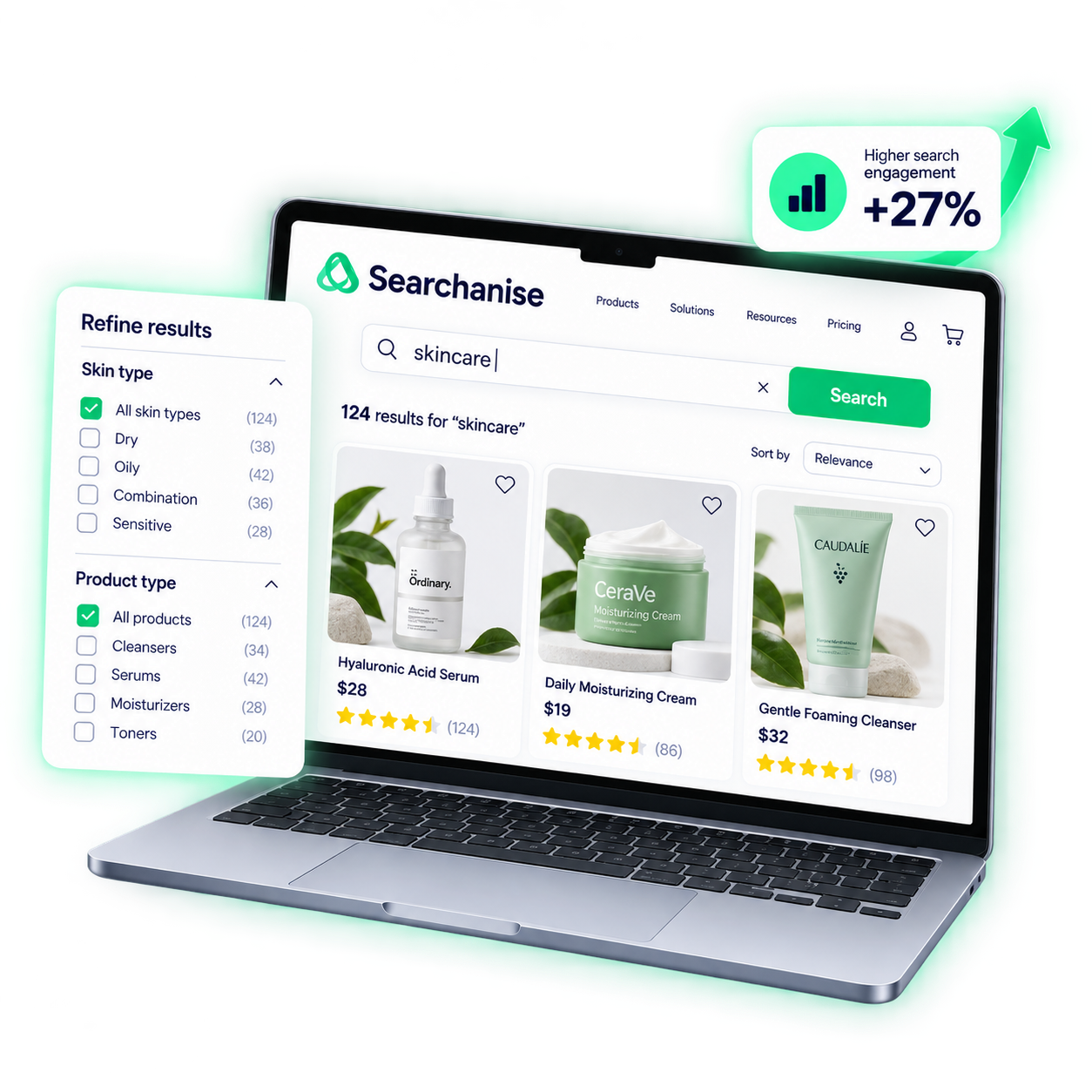
Searchanise provides onsite search, autocomplete, product filters, merchandising, recommendations, and search analytics as a dedicated product-discovery layer for helping shoppers find and narrow products.
Yes. Searchanise supports Shopify and BigCommerce along with other ecommerce environments. Exact features, theme behavior, setup requirements, and plan availability should be verified for the live store.
Yes. Work can focus on search relevance, filters, merchandising, storefront behavior, catalog data, troubleshooting, and QA within the approved scope. The right scope depends on the catalog, theme, platform, configuration, and problem being addressed.
Searchanise adds a dedicated discovery layer for search behavior, filtering, merchandising, recommendations, and related analytics. Whether that layer is useful depends on the catalog, native platform capabilities, shopper behavior, and the amount of control the merchandising team needs.
Yes. Search, filtering, collection behavior, and merchandising can materially affect how shoppers move through the storefront. Faceted-navigation and indexation decisions can also create SEO considerations. SEO/GEO implications and technical implementation should be reviewed by the appropriate specialists before major changes are launched.

 USA
USA
 Philippines


