





















































Technical Audits
Before fixing a store that feels slow, fragile, inconsistent, or difficult to manage, establish what is actually happening. A focused Always Open Commerce audit reviews the relevant theme, apps, tracking, and technical foundation to prioritize confirmed issues and next steps.

Get Clarity Before You Start Changing the Store
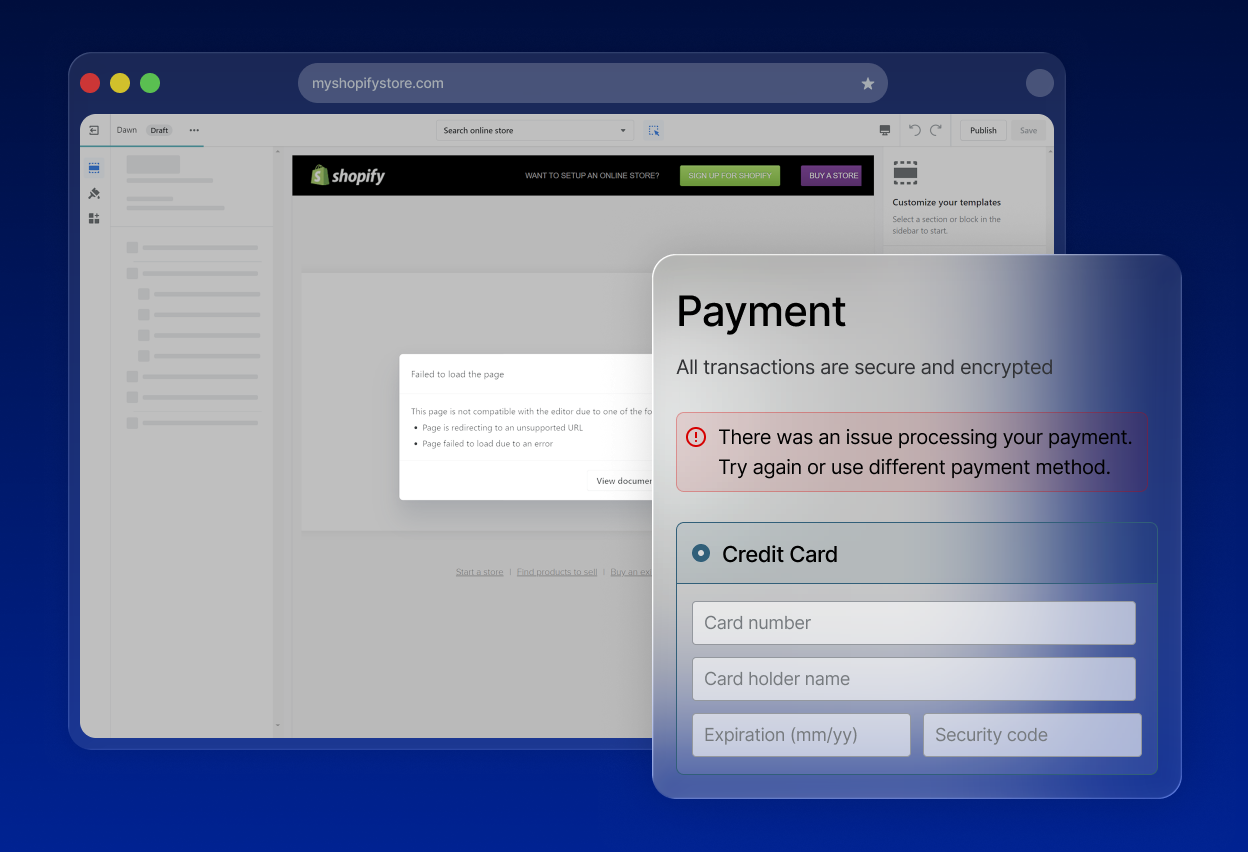
Technical problems do not always arrive as one obvious bug. A store may feel slower after years of theme changes, apps may overlap or conflict, tracking may no longer match the intended setup, or teams may be working around issues without knowing which ones are symptoms and which ones deserve deeper investigation.
Starting with fixes before the current state is understood can lead to more patchwork. A Technical Audit creates a defined review of the relevant site, theme, app stack, tracking setup, or technical foundation so the business has a clearer view of the risks, issues, and improvement opportunities that should be considered next.
Site, Theme, App, Tracking, and Technical Areas to Review
The audit should match the problem being investigated rather than use the same checklist for every store. Depending on scope, the review can focus on one technical area or look across several connected parts of the ecommerce environment.

Site & Theme Foundation
Technical Audits
Review the relevant storefront and theme setup for outdated, fragile, or unclear elements that may warrant deeper attention or future cleanup.

App Stack & Dependencies
Technical Audits
Review essential apps and how they relate to the storefront or other systems, surfacing overlaps, conflicts, dependencies, or areas that need specialist follow-up.

Tracking Setup
Technical Audits
Review the documented tracking setup and surface configuration gaps or questions that need analytics or implementation review. Tracking accuracy and interpretation require the appropriate specialist validation.

Technical Issues & Storefront Behavior
Technical Audits
Review reported problems and relevant customer or operational flows to identify reproducible issues and where deeper diagnostics may be needed.

Risk & Improvement Opportunities
Technical Audits
Document technical risks, outdated areas, and improvement opportunities that should be considered before a migration, relaunch, optimization effort, or follow-up development scope.
Make the Findings Useful After the Audit
A useful audit does more than produce a long issue list. The findings need enough context to help the team understand what was reviewed, what was observed, and what should happen next.

Scope the Review
Define which site areas, themes, apps, tracking, or technical questions are in scope so findings are tied to the problem the business is trying to understand.
Separate Findings From Assumptions
Document what can be confirmed from the review and flag items that need deeper diagnostics, vendor input, analytics validation, or additional access before conclusions are made.
Prioritize What Matters
Organize findings by practical urgency, dependency, and potential impact so high-priority risks are not buried beside minor cleanup opportunities.
Identify Ownership & Dependencies
Clarify whether each finding belongs to development, search, analytics, a third-party vendor, or another workstream before follow-up work is planned.
Keep Fixes Separate From the Audit
An audit can recommend next steps, but implementation is a separate decision. Confirm which fixes require a new scope, technical review, or vendor coordination instead of treating every finding as automatically included.

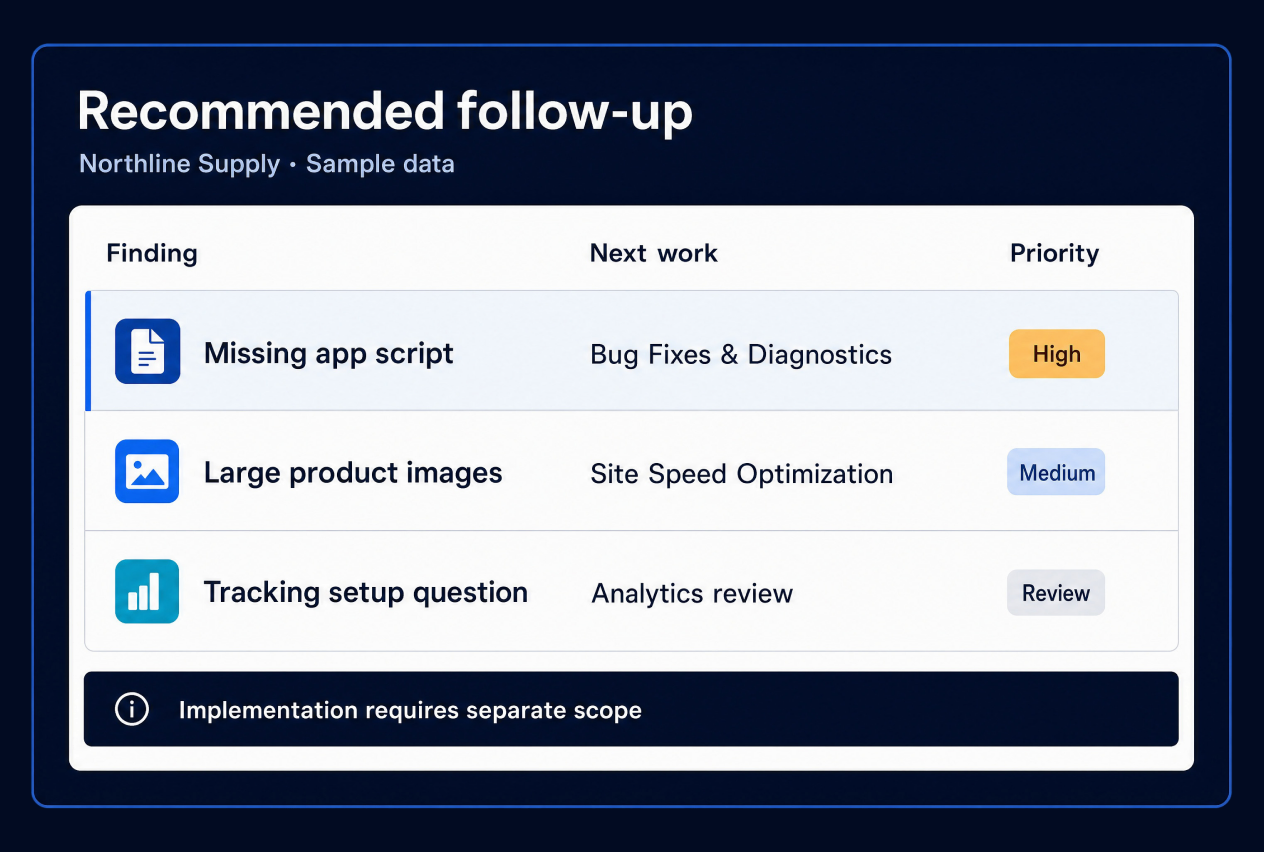
Choose the Right Next Work After the Audit
An audit should narrow the next decision, not create a backlog that assumes every issue deserves immediate work. Some findings may require deeper diagnostics, performance work, app changes, search review, or development; others may be lower-priority maintenance.
Always Open Commerce can use the audit to route approved follow-up into services such as Bug Fixes & Diagnostics, Site Speed Optimization, App Setup, SEO, or Conversion Rate Optimization when those next steps are relevant. The audit itself remains diagnostic, and implementation is separate unless included in scope.
Technical Audits in Practice

Theme Update
Langston’s Modernizes a Century-Old Legacy with a Streamlined BigCommerce Experience

Ecommerce Builds
Rescuing a Delayed Shopify Build and Bringing Giannos’ Figma Design to Life
Technical Review Options


Frequently Asked Questions
The scope can focus on the relevant site, theme, app stack, tracking setup, storefront behavior, or technical foundation.
An audit can help clarify risks, outdated areas, and improvement opportunities before a migration, relaunch, or optimization effort.
No. The audit is diagnostic; implementation is separate unless it is explicitly included in scope.
Yes. The review can surface overlaps, conflicts, dependencies, and areas that need specialist or vendor follow-up.
The documented tracking setup can be reviewed for configuration gaps or questions, while accuracy and interpretation require appropriate specialist validation.
Findings are prioritized and can be routed into the relevant approved follow-up service or vendor workstream.

 USA
USA
 Philippines


