













































Threekit
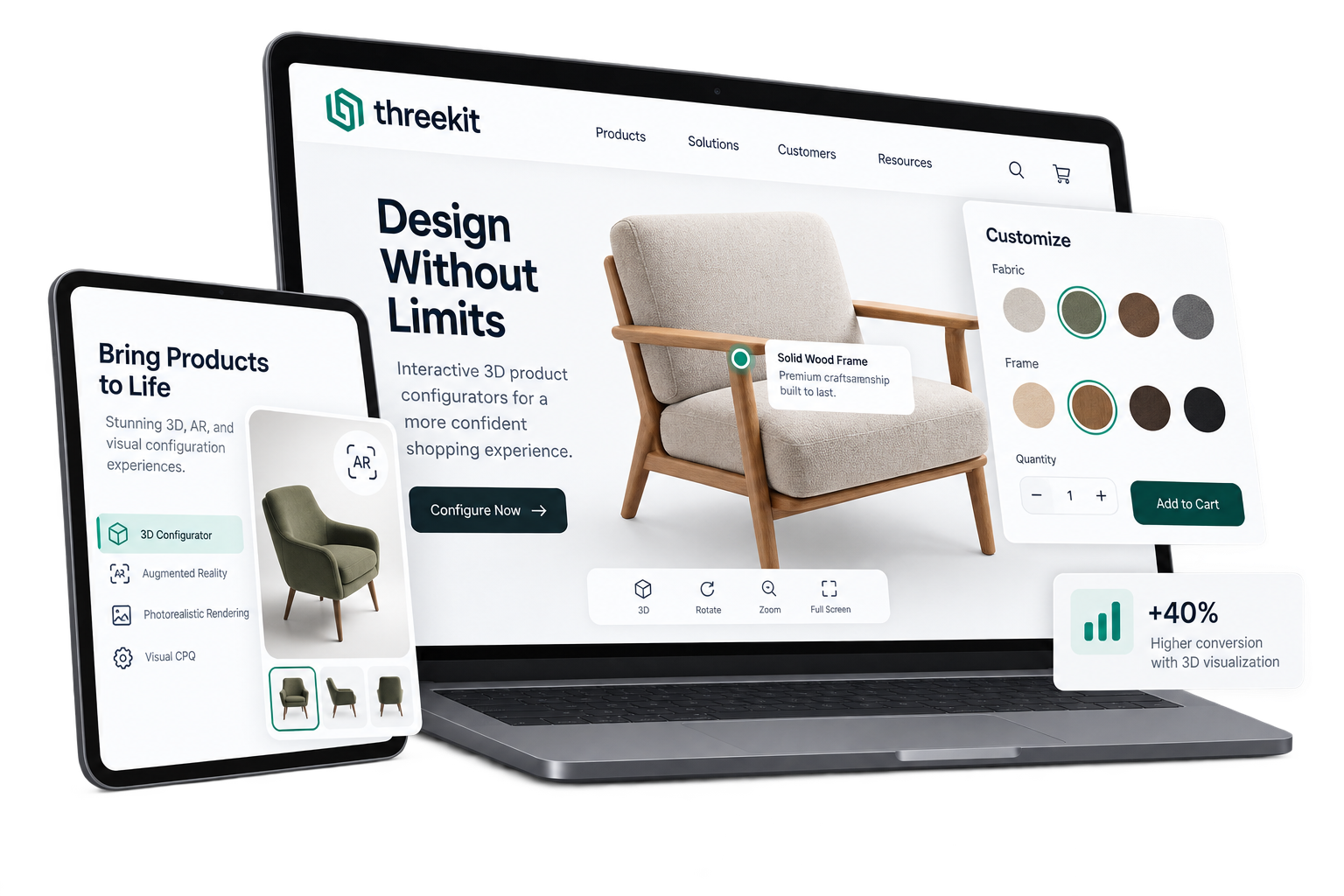
When products are difficult to understand from static images, Threekit can add interactive 3D, configuration, AR, and scalable visual content. Always Open Commerce helps teams define the storefront, product-data, UX, and integration requirements around that buying experience.

Use 3D and AR Where They Answer a Real Buying Question
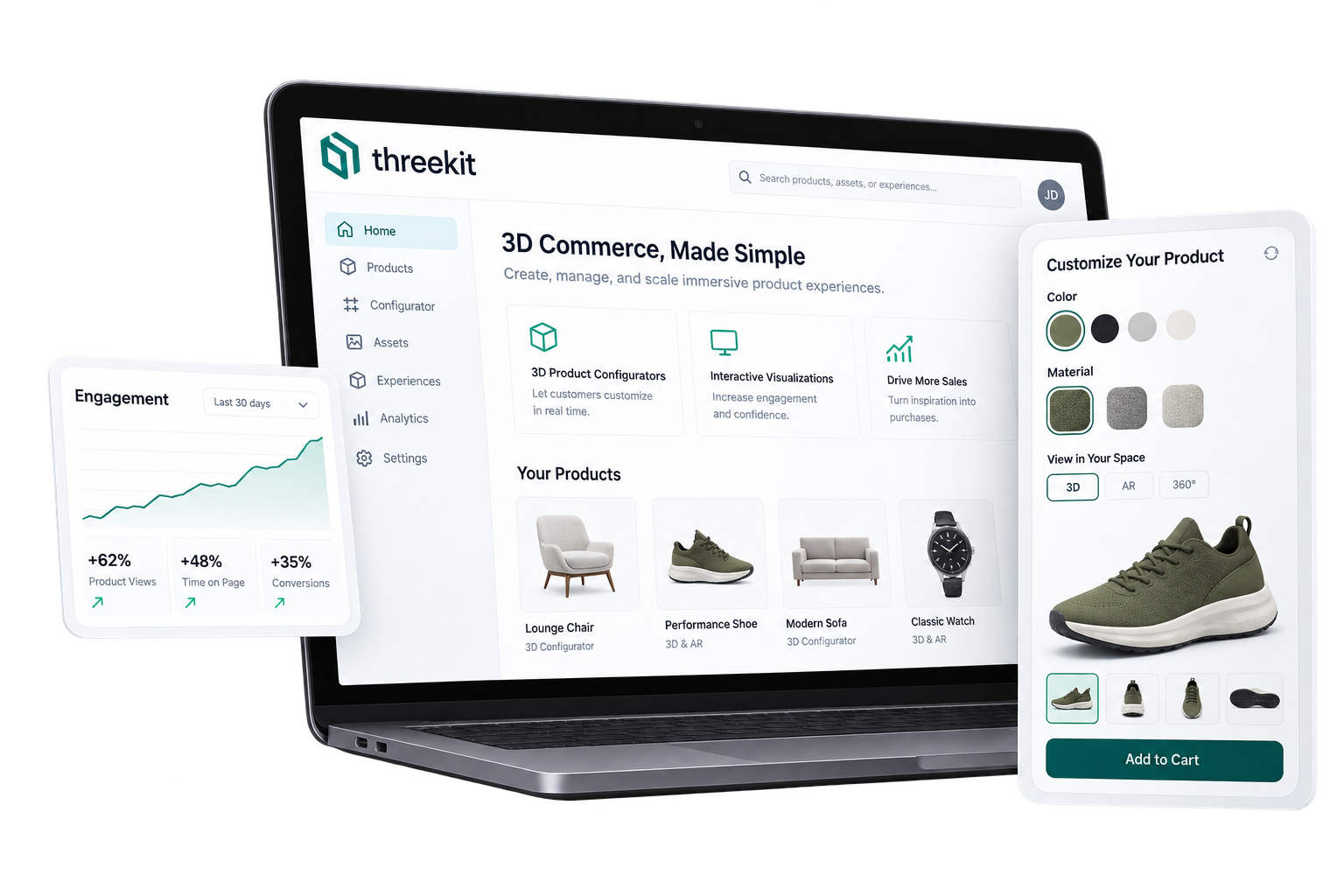
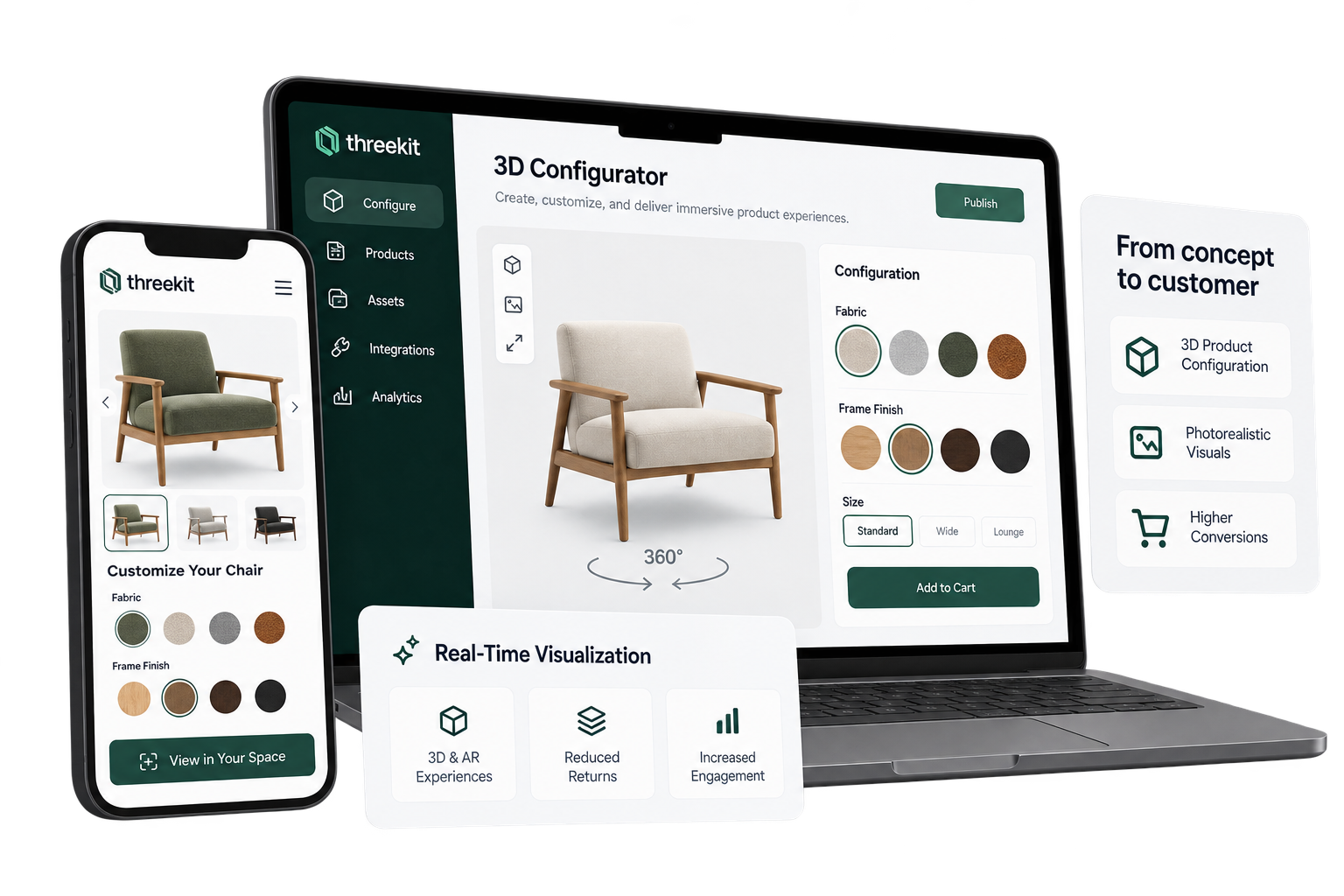
A visual configurator earns its place when shoppers need to see something static photography cannot explain: how options combine, how finishes change the product, how a configuration looks from different angles, or how an item fits into a physical space. Threekit supports product configuration, 3D visualization, augmented reality, and generated product imagery for those use cases.
The first decision is not which feature to turn on. It is which product questions are causing hesitation and what visual interaction would resolve them. Always Open Commerce can help map that decision into product-page UX, information hierarchy, mobile behavior, and the broader storefront journey before technical scope is finalized.
Build the Data and Asset Foundation Behind Real-Time Visualization
Real-time visualization depends on more than a polished front end. Product options, materials, dimensions, business rules, 3D models, and visual assets need a dependable structure so the experience can display valid combinations. Threekit also offers Virtual Photographer for generating 2D product imagery from 3D assets, giving teams another way to produce visuals across a configurable catalog.
Define which system owns each product attribute, which visual assets need to be maintained, and which combinations should be available to the shopper. Always Open Commerce can support catalog planning, product-data structure, storefront requirements, and integration coordination. Exact Threekit asset preparation, configuration logic, and implementation responsibilities require technical review.

Connect Threekit to the Commerce Journey
The visual experience should not lose context as the shopper moves through the store. The important handoffs keep product choices understandable from evaluation through purchase.
1
Product Page & Configuration Flow
Define where configuration begins, which choices appear first, how selections are explained, and how the experience behaves across desktop and mobile.
2
3D, AR & Generated Visuals
Use the visual format that matches the decision. Interactive 3D can support option comparison, AR can help with spatial evaluation, and generated imagery can support broader product and merchandising needs.
3
Pricing, Cart & Order Context
Confirm which configured selections, pricing inputs, identifiers, and other order details need to move into the cart or downstream workflow. Exact behavior depends on the ecommerce and Threekit implementation.
4
Ecommerce & System Handoffs
Threekit supports connections with ecommerce, PIM, ERP, and CPQ environments. Define system ownership and data flow before committing to integration behavior or custom development.
Keep Visual Commerce Maintainable as Products and Visuals Change
A configurator becomes difficult to operate when product rules, visual assets, and storefront behavior change independently. Define ongoing ownership as part of the implementation.
1
Product & Option Governance
Set a repeatable process for adding products, attributes, materials, finishes, and configuration rules without creating inconsistent combinations.
2
Visual Asset Operations
Clarify how 3D models, materials, renders, and generated imagery are created, approved, updated, and retired as the catalog changes.
3
Storefront QA & Mobile UX
Validate configuration states, responsive behavior, product-page interactions, cart handoffs, and other approved storefront paths when products or themes change.
4
Measurement & Iteration
Use analytics, CRO review, and customer behavior to identify where visual experiences help shoppers evaluate products and where the journey still creates friction, without treating the technology itself as proof of performance.
Threekit FAQs
Threekit is a visual commerce platform that supports interactive product configuration, 3D visualization, augmented reality, and scalable product imagery. It is most relevant when shoppers need to evaluate configurable, customizable, or visually complex products before buying.
Threekit supports integrations with ecommerce platforms and other commerce systems. The exact integration path, supported features, account requirements, and custom development needs should be verified for the specific storefront before implementation is committed.
Always Open Commerce can support the ecommerce work around a Threekit project, including UX/UI, product-data planning, storefront development, app and integration coordination, and QA within the approved scope. Exact Threekit configuration and integration responsibilities require technical review.
Start with the products and decisions the experience needs to support. Product options, materials, finishes, dimensions, rules, identifiers, visual assets, source-system ownership, and the required cart or order handoff should be defined well enough to scope the implementation.
No. Static imagery may be sufficient when shoppers can already understand the product and its options. 3D, AR, or generated visual experiences are more useful when they resolve a specific evaluation problem, such as configuration, variation, scale, spatial fit, or complex product choice.

 USA
USA
 Philippines


