




















































Tidio
Customer support automation should begin with the questions a system can answer reliably and the moments that still need human judgment. That boundary is where Always Open Commerce evaluates Tidio, then coordinates the approved storefront, integration, troubleshooting, and maintenance work behind it.
Decide Which Customer Questions Need Automation and Which Need People
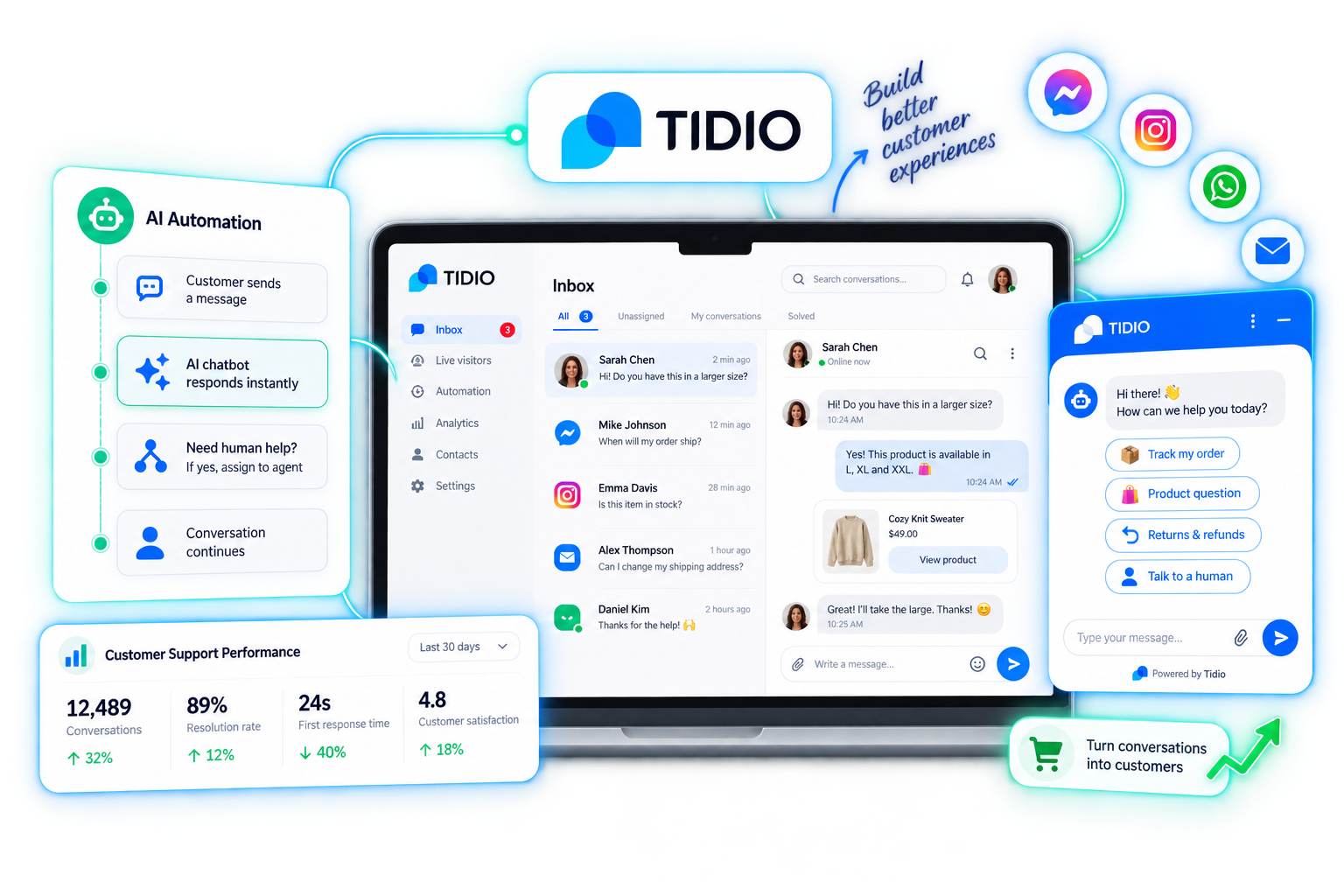
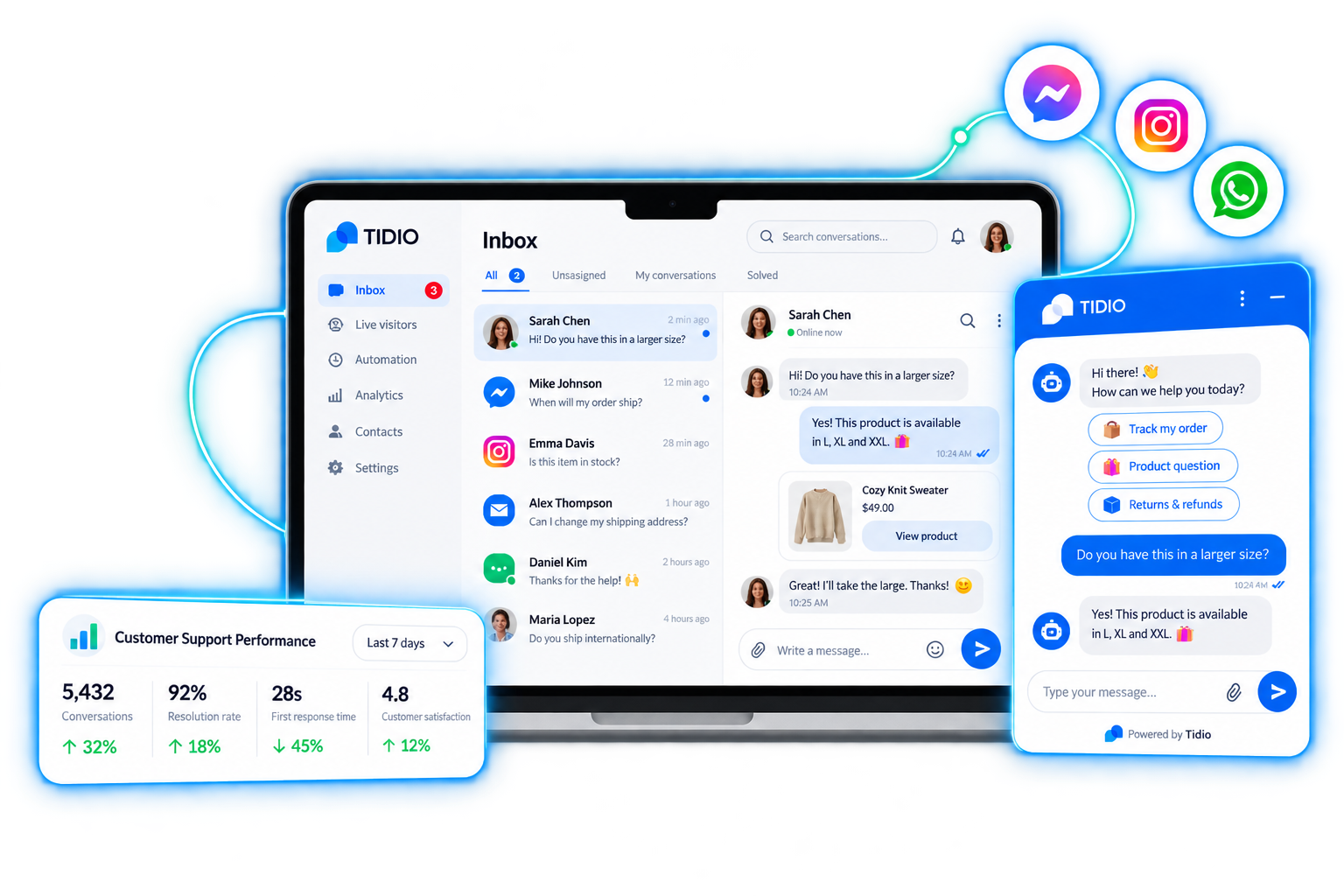
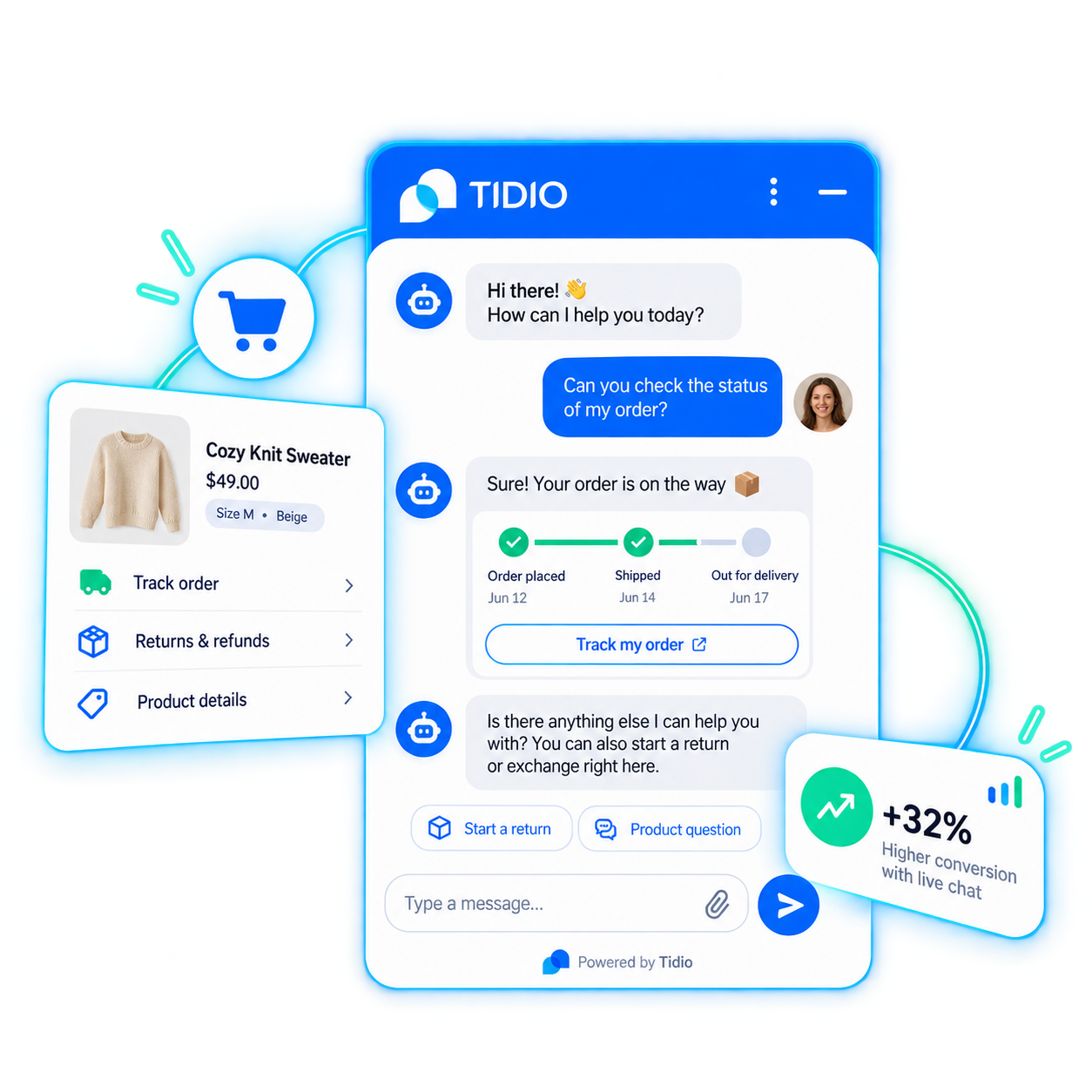
Tidio combines live chat, support tooling, rule-based automation, and the Lyro AI Agent. The useful decision is which customer questions can be handled consistently, which require human judgment, and which actions need verified access to ecommerce systems.
Always Open Commerce can help connect that decision to the storefront and approved ecommerce scope. We focus on where Tidio fits into the customer experience, what information or systems it may need to use, and which setup or integration questions require specialist review before anything is treated as technically feasible.
Connect Support Automation to Verified Store Data
Customer-service automation becomes more useful when it can work from accurate order, product, account, or policy information. It also becomes riskier when automated answers or actions depend on incomplete data or permissions that have not been reviewed.
Always Open Commerce can help map the ecommerce-side questions, customer journeys, and integration requirements while supporting approved app setup, API integration, storefront coordination, troubleshooting, and related technical work. Exact actions, data access, permissions, and implementation behavior remain subject to technical review.
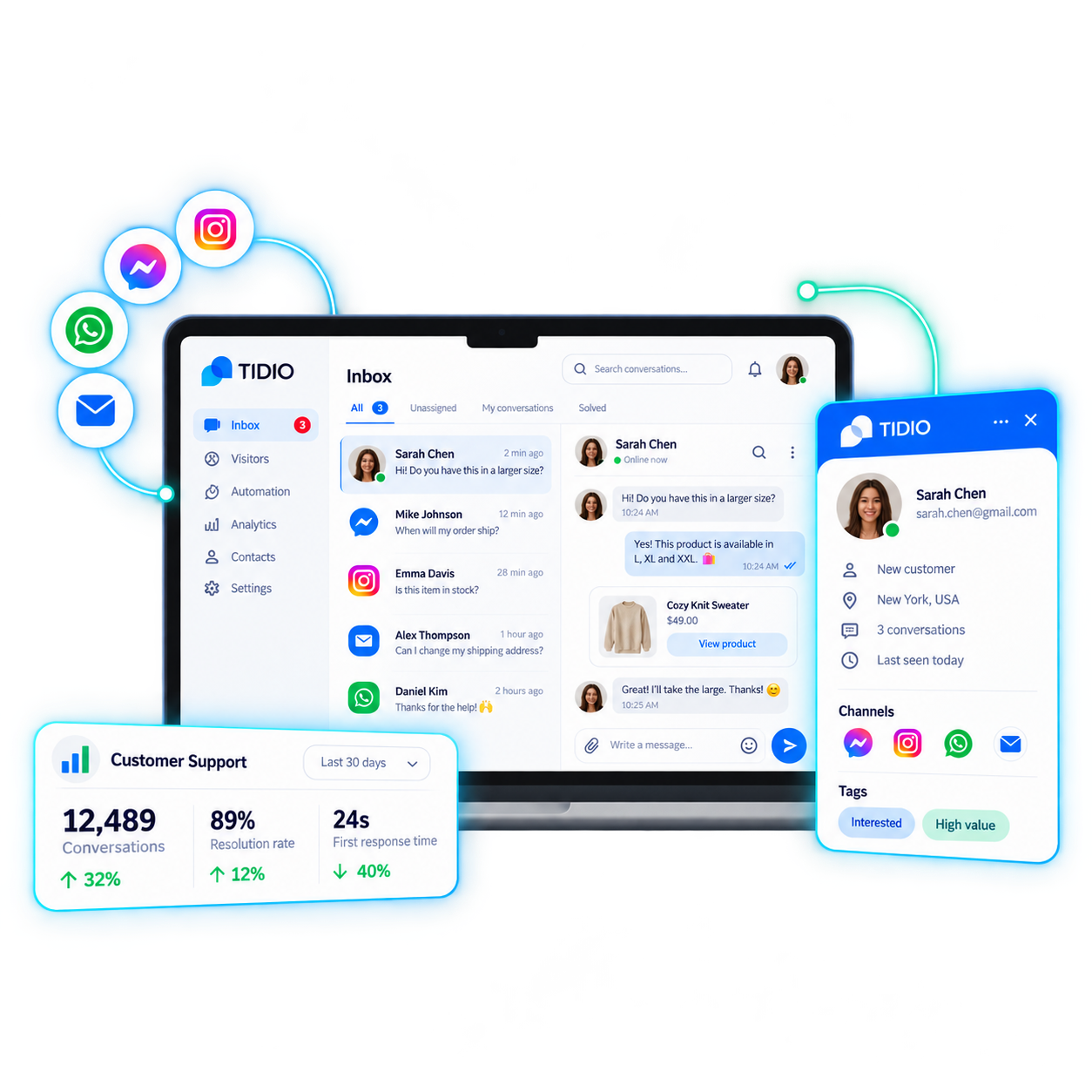
Support Tidio Setup, Integrations, and Storefront Work
Always Open Commerce support should stay tied to the active ecommerce services the project actually needs rather than treating every Tidio capability as part of scope.
1
App Setup and Storefront Coordination
Use UX/UI Design to support approved Tidio placement and storefront coordination so the customer-facing experience fits the site structure and does not interfere with key shopping journeys.
2
Ecommerce Integrations
Use API Integrations for approved connections between Tidio and ecommerce systems when customer, order, product, or other data needs to move between tools. Technical feasibility requires review.
3
UX, Troubleshooting, and QA
Use Bug Fixes & Diagnostics to investigate customer-facing issues and coordinate approved fixes or QA where Tidio affects the storefront experience.
4
Ongoing Technical Support
Use Ongoing Maintenance for approved updates, small fixes, monitoring, or maintenance requests related to the Tidio setup after implementation.
Choose the Tidio Capabilities That Match the Customer Need
Tidio spans human support, structured automations, AI-assisted service, and ecommerce guidance. The useful combination depends on the customer questions being solved and the operating model behind the store.
1
Live Chat and Help Desk
Use human support tools when customers need direct assistance, context, or judgment that should stay with the service team rather than automation.
2
Lyro AI Agent
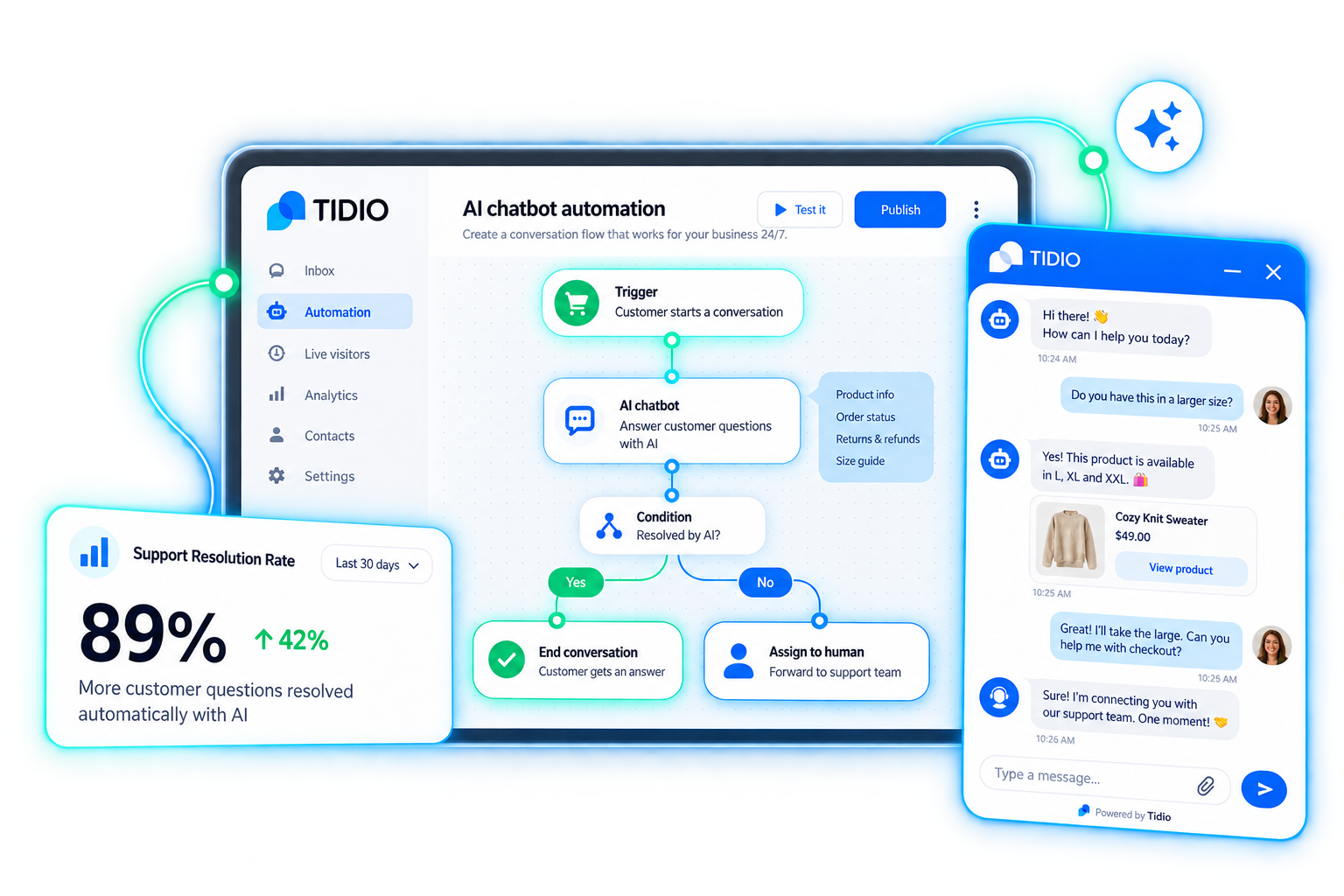
Lyro uses business support content to answer customer questions and can hand conversations to people when needed. AI-agent setup, guidance, actions, and technical behavior require project-specific review.
3
Flows
Tidio’s Flows provide rule-based automation for defined paths and triggers. They can be useful when the interaction is predictable and the expected response or action is clear.
4
Product Guidance and Smart Actions
Tidio also supports product recommendations and connected actions through Lyro. These features should be evaluated against the store’s catalog, customer journey, data access, and technical requirements before implementation.
Tidio FAQs
We can support approved storefront placement, app setup, API integrations, troubleshooting, QA, and ongoing technical maintenance around Tidio, with technical feasibility reviewed before implementation.
Flows are rule-based automations for defined triggers and paths. Lyro is Tidio’s AI agent, which can use business support content to answer questions and hand conversations to people when needed.
Yes. Approved integrations can connect Tidio with ecommerce and support systems when customer, order, product, or other data needs to move between tools. Exact data access, permissions, and technical feasibility require review.
Potentially, depending on supported integrations, permissions, data access, and current Tidio capabilities. Any workflow that checks or changes order information should receive project-specific technical review.
Start with questions that can be answered reliably, define clear handoff points to people, verify source content and data access, and keep human review for ambiguous or higher-risk customer situations.

 USA
 Philippines


