
















































Home Improvement & Building Products
Home improvement ecommerce is often organized around a project before it is organized around a product. Planning content, specifications, availability, related items, and fulfillment all shape the journey, with Always Open Commerce coordinating the ecommerce work across those project decisions.

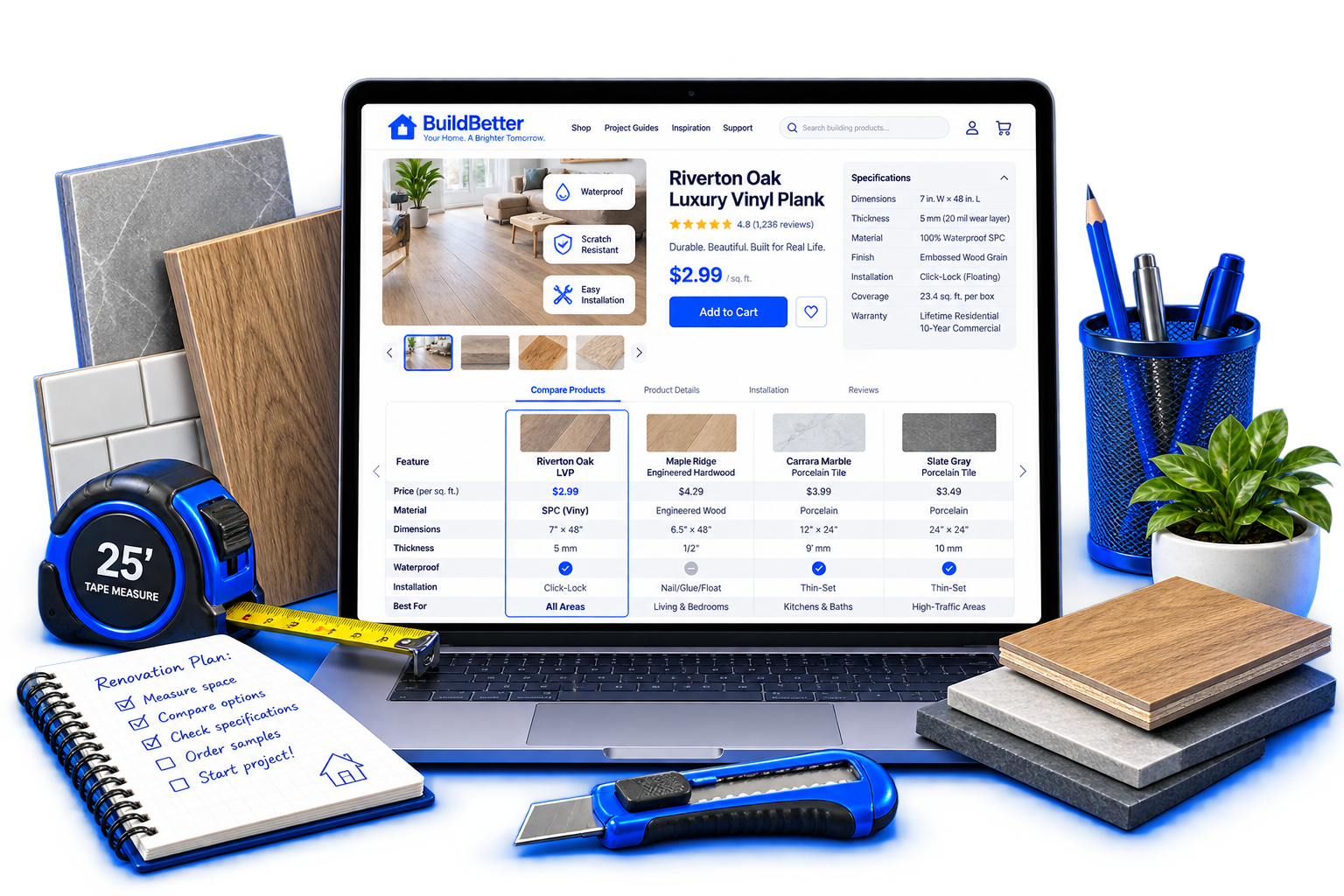
Help Customers Shop the Project, Not Only the Product Category
Home improvement purchases are often driven by a repair, replacement, renovation, or installation project. A customer may start with a room, system, surface, opening, measurement, or problem before they know the exact product name. Pros may arrive with precise specifications while homeowners may still be researching the approach.
Navigation, landing pages , search, filters, and educational content can connect project context with durable product categories. The goal is to help shoppers move from planning to a relevant set of products without turning the store into an instruction manual for every possible project.
Make Physical Fit, Materials, and Availability Easier to Evaluate
Building products can be difficult to judge online when size, material, finish, durability, compatibility, installation requirements, or technical specifications affect whether the product fits the project. Large or specialized items can also make fulfillment and availability part of the decision.
Product pages should organize the approved measurements, specifications, imagery, documents, reviews, and fulfillment information customers need before they commit. Always Open Commerce can support the ecommerce presentation and data structure , while installation, safety, code, warranty, and technical suitability claims remain with the sources that own them.

Support Four Home Improvement Buying Needs
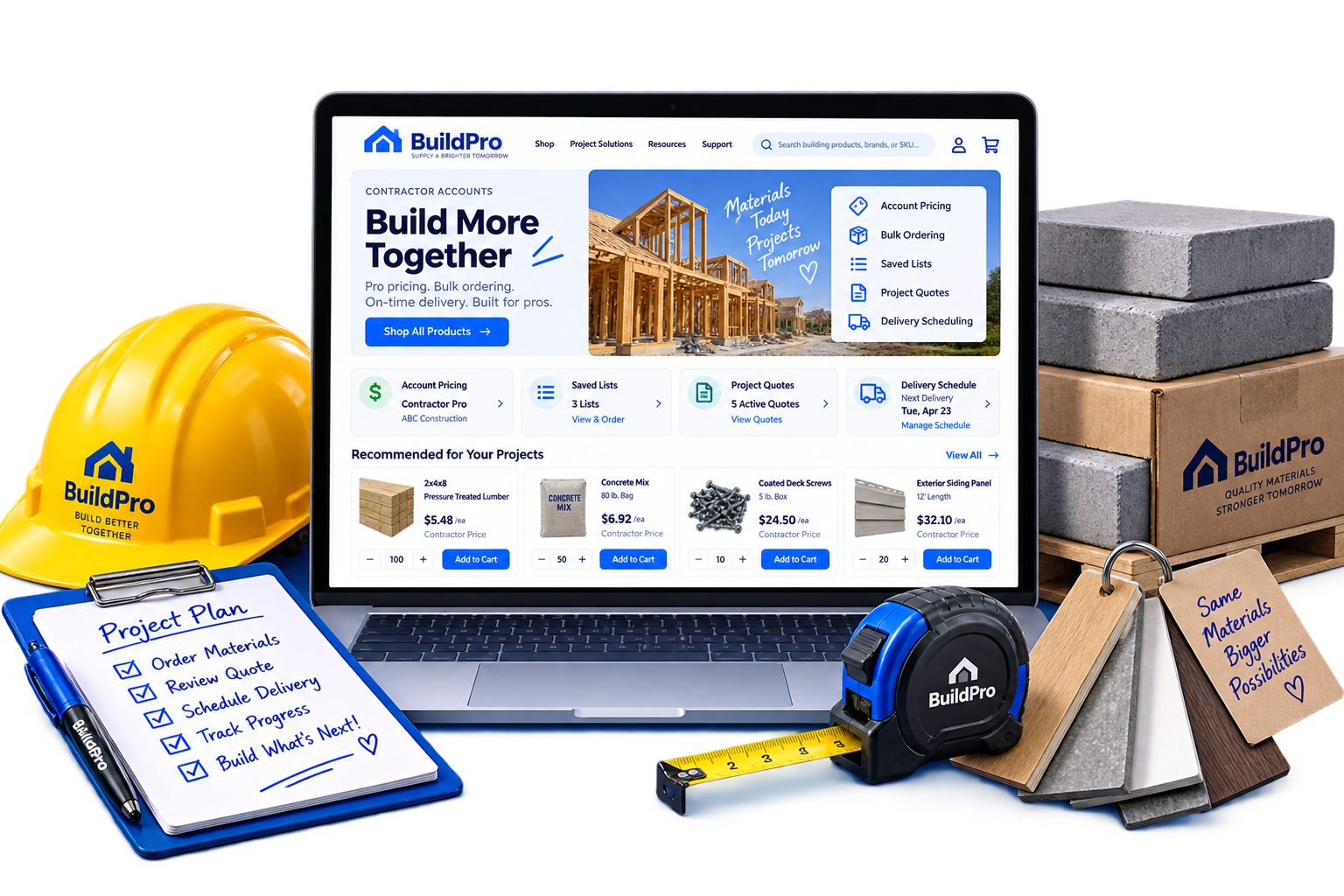
Home improvement ecommerce should help both homeowners and professionals move from a project requirement to products that fit it. The supporting work should follow those decision points rather than mirror a generic retail service list.
1
Connect Projects to Relevant Product Categories
Project pages, navigation, search, filters, and content can help shoppers move from a repair, room, system, or installation context to useful product categories. SEO/GEO , content , UX/UI , and merchandising can support those paths.
2
Make Size and Technical Differences Easy to Compare
Measurements, materials, finishes, specifications, variations, and product documents should be consistent enough to compare. Product data , PIM , UX , and development can support the information shoppers need to narrow options.
3
Serve DIY and Professional Buyers Without One Generic Journey
Homeowners may need more explanation while professional buyers may prioritize specifications, inventory, and speed. Content , account experiences , search, and information hierarchy can support different levels of familiarity within the same catalog.
4
Make Availability and Fulfillment Context Clear
Bulky, special-order, local, or differently fulfilled products may require more context before checkout. Inventory, shipping, pickup, delivery , and lead-time information should reflect the business’s verified fulfillment model and technical capabilities.
Keep Project Content, Product Data, and Fulfillment Working Together
Home improvement stores can create customer friction when project guidance and product data are maintained separately. A measurement or attribute change can affect filters and product pages. A new project guide can point to outdated categories. A fulfillment change can alter what customers need to know before choosing a product.
Always Open Commerce can coordinate the relevant product data , UX , content , development , SEO/GEO , CRO , integrations , and ongoing support around the same project journeys. The objective is to make planning and product selection feel connected while keeping the underlying catalog manageable.
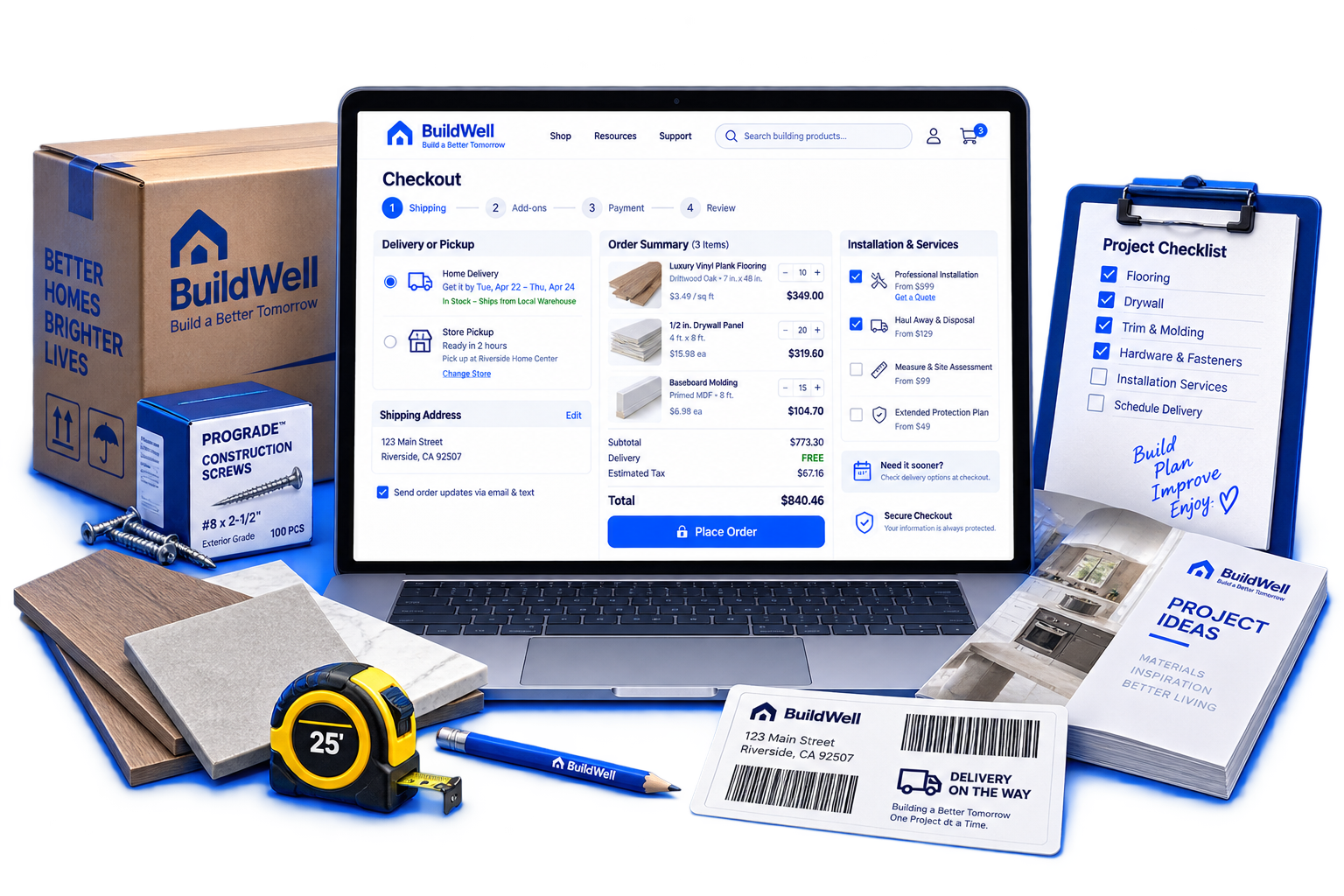
Selected Ecommerce Work
Ecommerce Builds
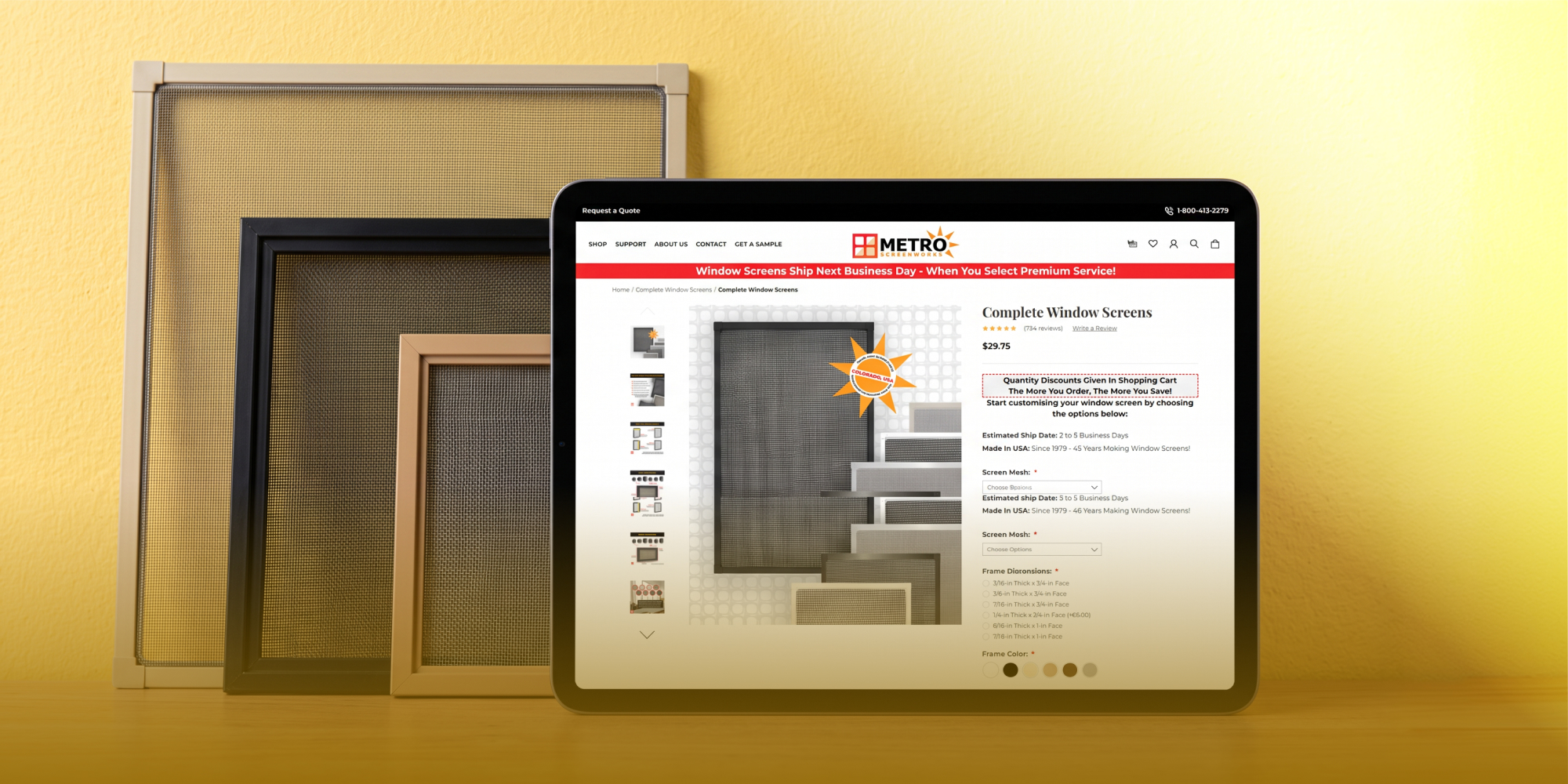
Metro Screenworks Creates a Seamless E-commerce Experience with Strategic Website Redesign
Recommended Tech Stack

Support extensive catalogs spanning standard products, replacement items, building materials, contractor purchasing, and configurable products.

Add product configuration for items that require customer-selected dimensions, materials, finishes, components, or other options before purchase.

Manage dimensional shipping, oversized products, freight, multiple fulfillment locations, and other delivery requirements common to building-product catalogs.
Home Improvement and Building Products Ecommerce FAQs
Keep durable product categories clear, then use project pages, content, filters, and merchandising to connect common repair, renovation, room, or system needs to relevant products. Project pathways should help discovery without duplicating the entire catalog.
It depends on the category, but measurements, materials, finishes, specifications, variations, imagery, documents, availability, and fulfillment information may all affect the choice. Installation, safety, code, and technical suitability details require approved specialist sources.
Yes, but the information hierarchy may need to work at different levels. Homeowners may need clearer explanations and project context, while professionals may prioritize specifications, availability, account features, and fast product finding.
The storefront should explain only the availability and fulfillment options the business can actually support. Exact shipping, pickup, delivery, lead-time, or special-order behavior depends on the operational systems and requires technical verification.

 USA
USA
 Philippines


