
























































Lighting & Electrical
Lighting and electrical buyers may be matching technical specifications, project requirements, inventory availability, or account needs rather than browsing casually. Always Open Commerce aligns product data, search, B2B UX, integrations, and development around those practical purchasing paths.


Make Voltage, Wattage, Color Temperature, and Mounting Usable in Product Discovery
Lighting and electrical buyers may search by product type, application, brand, part number, dimensions, voltage, wattage, color temperature, mounting, or other technical attributes that matter to the assortment. When those attributes are incomplete or inconsistent, search and filters cannot reliably narrow a large catalog.
The storefront should make technical product information usable at the category, product-list, and product-page level. Experienced buyers need fast access to specifications, while less familiar shoppers may need clearer labels and supporting context before they can compare products confidently.
Connect Contractor Accounts and Repeat Orders to Branch-Level Inventory
Contractors and other account buyers may use ecommerce to check branch availability, reorder known products, find documentation, or complete routine purchases without waiting for a manual response. Those self-service needs still have to reflect the distributor’s account relationships, location inventory, project workflows, and purchasing model.
Those experiences depend on connected data and systems behind the website. Always Open Commerce can support B2B account experiences, catalog data, integrations, search, development, and account UX, while inventory accuracy, commercial terms, and branch-specific business rules remain controlled by their owning systems and teams.

Support Four Lighting and Electrical Buying Needs
Lighting and electrical ecommerce should reduce the effort required to identify a technically suitable product and complete the appropriate order path. The supporting work should follow that buyer task instead of starting with internal service categories.

1
Find Products by Technical Attribute
Search, categories, filters, and product data can help buyers narrow by the specifications and applications that genuinely distinguish the assortment. PIM, UX/UI, and development can support that structure.
2
Make Availability Context Easy to Understand
When stock, location, lead-time information, or fulfillment options affect the purchase, the storefront should present only the availability data the business can support. Integrations and data quality are central to that experience.
3
Support Accounts and Repeat Purchasing
B2B buyers may need account access, customer groups, saved information, order history, or fast reorder paths. B2B data, account UX, and development can support those workflows when the underlying business rules are defined.
4
Keep Product Information Consistent Across Channels
Specifications, images, documents, attributes, and availability may need to feed ecommerce, marketplaces, sales teams, or other channels. Product data, PIM, feeds, and integrations can help reduce conflicting information.
Keep the Website Connected to Product Data and Distribution Operations
Lighting and electrical ecommerce can expose gaps between the catalog, inventory, branches, accounts, and customer-facing website. An attribute change can affect filters and search. An inventory update can affect product availability. An account rule can change what a buyer should see or how an order should proceed.
Always Open Commerce can coordinate the relevant product data, B2B UX, development, integrations, SEO/GEO, and ongoing support around the same operating context. The objective is to make routine digital purchasing easier while keeping the storefront aligned with the systems that control product and order information.
Selected Ecommerce Work


Monthly
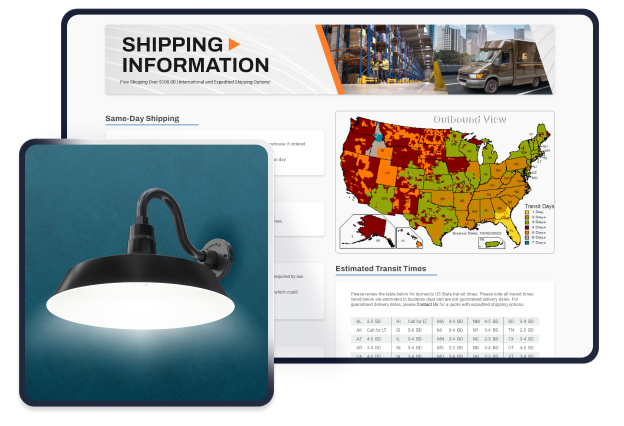
HTM Lighting Solutions Builds Long-Term Momentum With a Full-Service Monthly Partnership
Recommended Tech Stack

Support technical lighting and electrical catalogs serving homeowners, designers, contractors, electricians, distributors, and account-based buyers.

Help customers search and filter by attributes such as voltage, wattage, color temperature, dimensions, mounting, application, brand, and product family.

Centralize technical specifications, product attributes, documentation, assets, and other catalog information that needs to stay consistent across channels.
Lighting and Electrical Ecommerce FAQs
Start with reliable source data and the attributes buyers actually use to narrow the assortment. Search, filters, product lists, specifications, and documents should work from the same catalog structure instead of maintaining separate versions of product information.
Yes. B2B data and wholesale support, account UX, customer groups, catalog structure, order workflows, and related development are approved service areas. Pricing, commercial terms, and account-specific business rules require the appropriate business source and review.
Potentially, but the exact experience depends on the source system, data quality, update behavior, platform, and integration design. Inventory accuracy and location-specific availability should not be promised until the technical workflow has been verified.
Approved specification sheets, manuals, installation information, and other product documents should be easy to reach from the products they support. The storefront can organize access, while the accuracy and approval of the technical content remain with the source that owns it.

 USA
USA
 Philippines


