






















































Paid Media & Analytics
Paid media and analytics platforms serve different roles in acquisition. Google Ads and Meta Ads distribute advertising across their respective ecosystems, while Google Analytics 4 supports measurement and reporting. The stack should be planned around what each platform controls, observes, and needs to exchange with the systems around it.
Choose by Platform Role
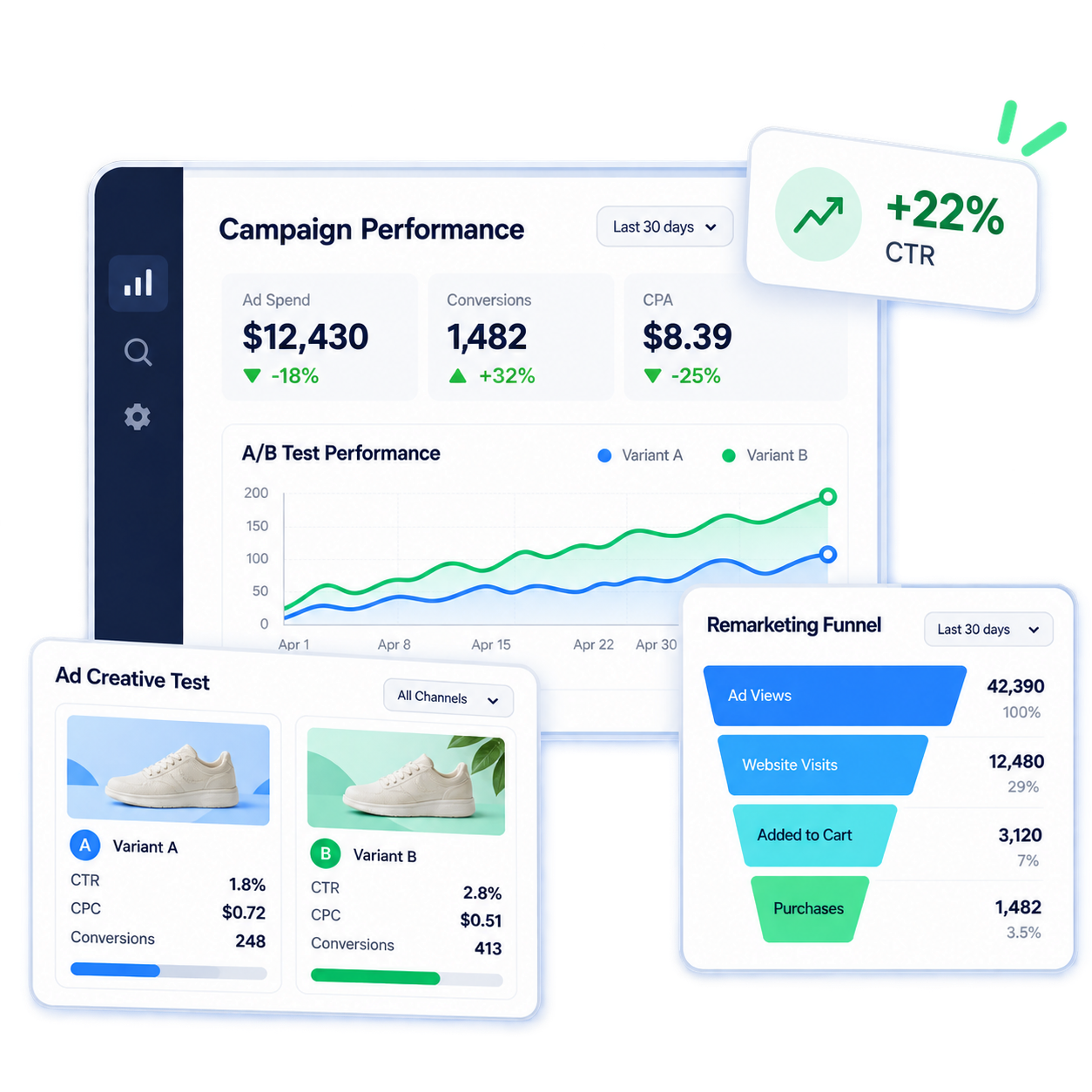
These three platforms are complementary, not interchangeable. One measures behavior, while the other two distribute advertising across different networks and customer contexts. Start with the role each system should play before comparing features.

Google Analytics 4
Google Analytics 4 is the measurement layer in this group, built around event-based customer activity across websites and apps, reporting, audiences, and connections with other Google marketing products. It helps organize what the team can observe, not guarantee what caused a result.

Google Ads
Google Ads is Google’s advertising platform for reaching people across Search, YouTube, Performance Max, Demand Gen, Display, and other Google surfaces. Evaluate it around the intent, inventory, creative, product data, and measurement connections the business needs.

Meta Ads
Meta Ads is the advertising platform for reaching audiences across Meta properties through paid campaigns that combine audience signals, creative, placements, and optimization. Evaluate it around discovery, remarketing, destination experience, and the data needed for measurement.

Evaluate Measurement, Acquisition Role, and Data Connections
Evaluate each platform around the role it plays in acquisition and measurement: what customer activity needs to be observed, where advertising reaches demand or creates discovery, which data each system needs, and how campaigns, analytics, and destination experiences should connect.
Measurement & Data Foundation
Define the business actions, ecommerce events, customer identifiers, reporting questions, and source data the team needs to observe before deciding which platforms should collect, receive, or use that information.
Audience, Intent & Platform Role
Clarify whether the platform is expected to capture active intent, create demand, support discovery, remarket to known audiences, or measure behavior so each system has a distinct role in the customer journey.
Data, Destination & System Connections
Review how advertising platforms, analytics, product or audience data, and landing destinations need to connect. Exact tracking behavior, data flow, consent requirements, and implementation feasibility require appropriate specialist review.
Connect Platform Decisions to Growth Services
Once the platform roles are clear, the work may move into campaign management, measurement implementation, landing experiences, or conversion improvement. Always Open Commerce provides those capabilities through the relevant Growth Services so platform decisions and execution stay connected without blurring the role of each system.
Manage Paid Acquisition
Use Google Ads and Meta Ads Growth Services when the need is campaign planning, management, creative coordination, measurement requirements, or ongoing optimization within an approved engagement.
Coordinate Measurement Requirements
Define the events, data sources, reporting questions, and validation requirements that measurement work needs to support. Tracking accuracy, attribution, and analytics interpretation require appropriate technical validation and human review.
Build Campaign Destinations
Use Landing Pages when paid traffic needs a dedicated destination with page structure, messaging, and customer journeys built around the campaign’s purpose.
Improve the Post-Click Experience
Use Conversion Rate Optimization when approved behavioral and quantitative evidence points to post-click experience problems that should be tested or improved alongside acquisition work without assuming media alone explains conversion performance.
Frequently Asked Questions
Google Analytics 4 measures and reports customer activity, while advertising platforms distribute campaigns and optimize delivery within their networks. They have connected but distinct roles.
Google Ads is often evaluated around active intent and Google’s inventory, while Meta Ads is commonly evaluated around discovery, audience signals, creative, and remarketing across Meta properties.
They usually need coordinated events, audiences, destinations, and reporting requirements. Exact tracking, consent, and data-flow decisions require technical validation.
Validate event definitions, data sources, customer identifiers, consent requirements, platform connections, reporting configuration, and the limits of attribution before using reports for decisions.

 USA
USA
 Philippines


