
























































Google Analytics 4
Make GA4 useful for ecommerce decisions, not just another reporting dashboard. Always Open Commerce helps teams review measurement priorities, tracking foundations, conversion points, reporting, and marketing context so the data supports clearer questions and better-informed next steps.
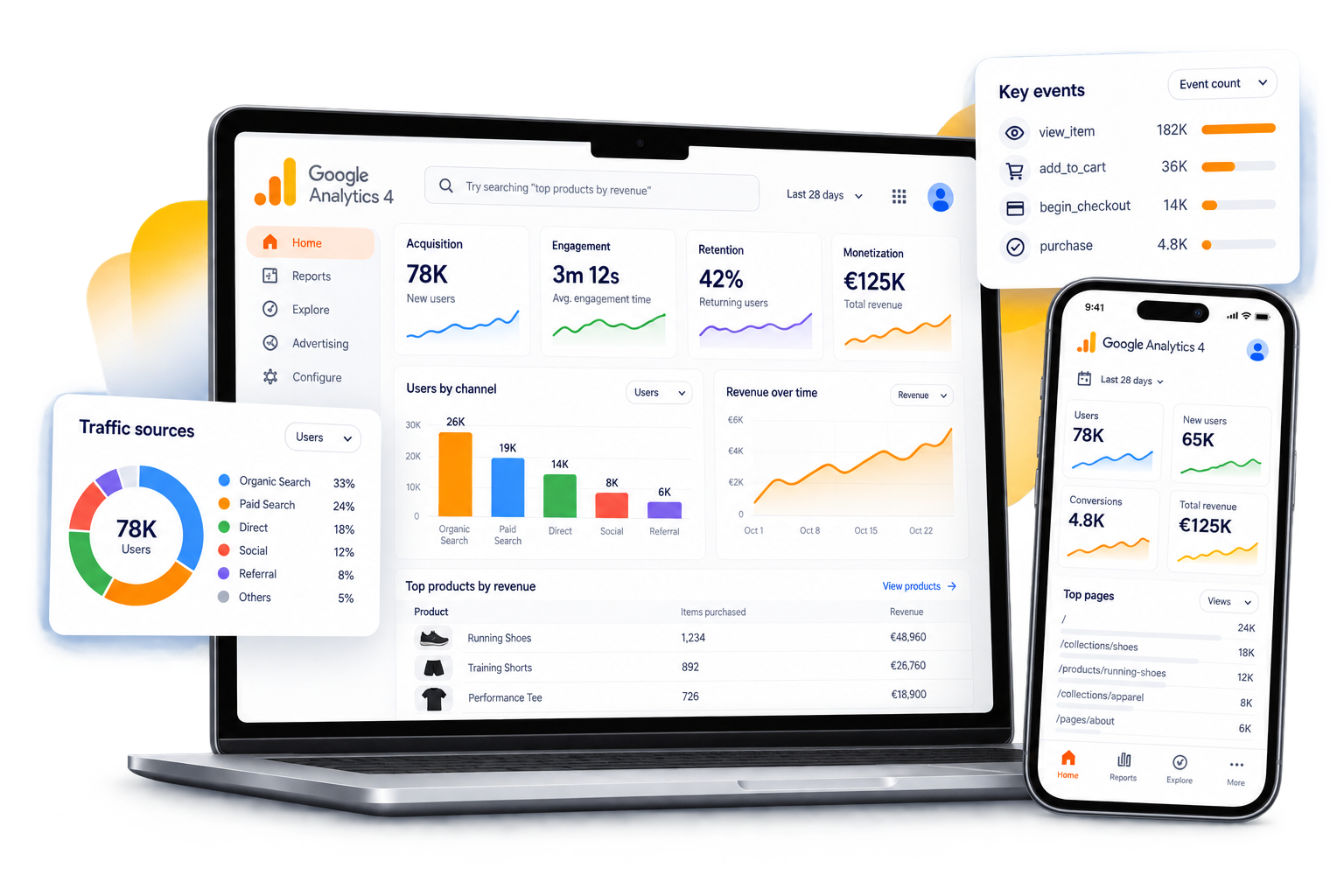
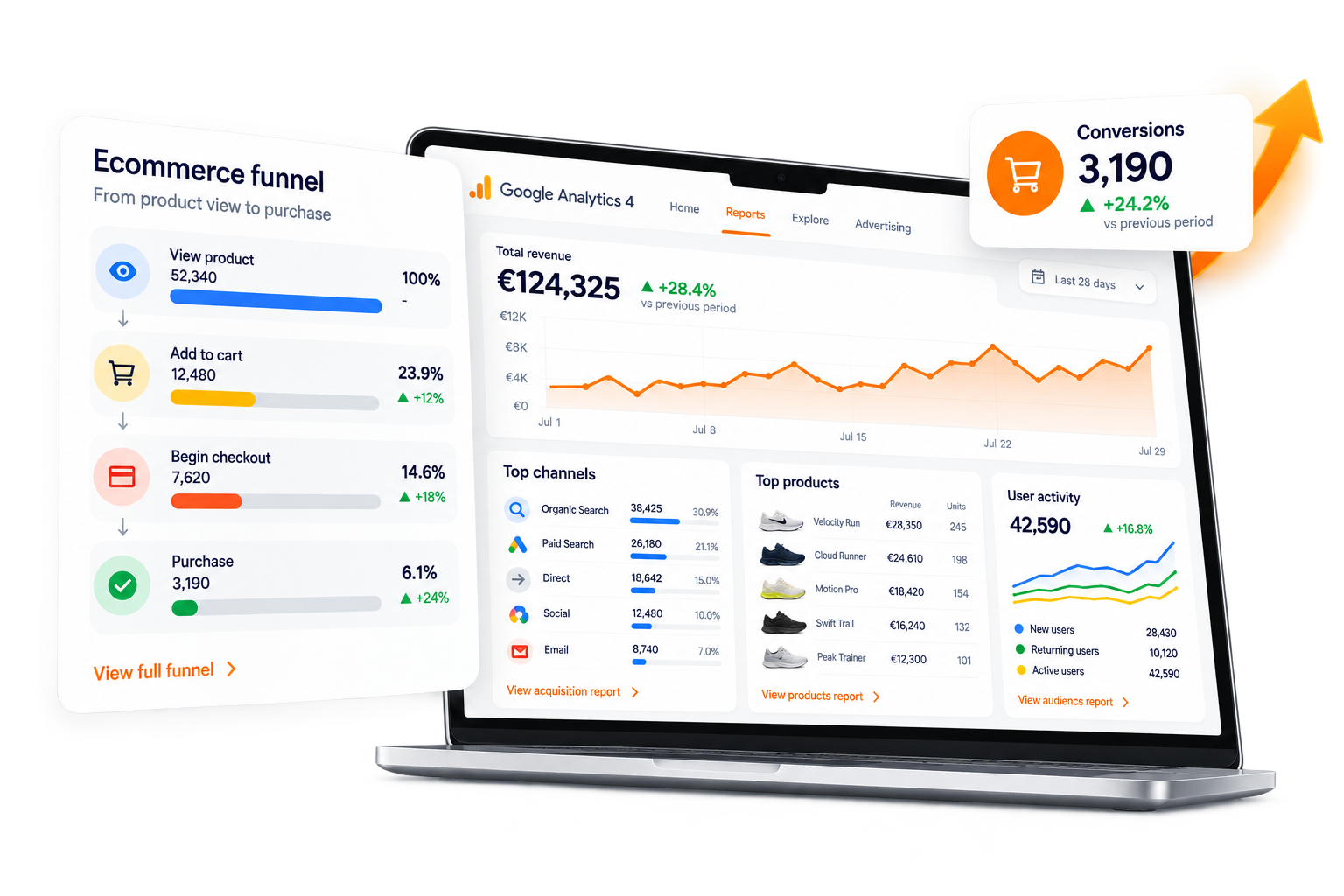
Measure the Actions That Matter to the Business
Before a team compares channels or campaign performance, it needs agreement on which customer actions actually matter. Google Analytics can report on acquisition, engagement, ecommerce activity, events, and conversion paths, but more data does not automatically create a useful measurement plan.
We can help review the business questions behind the reporting, identify the actions that deserve attention, and clarify where the current tracking setup may need verification. The objective is a cleaner measurement foundation that reflects how the ecommerce business actually evaluates customer behavior and marketing activity.
Connect Acquisition to What Happens After the Click
GA4 becomes more useful when acquisition data is connected to what visitors do after they arrive. Its reporting can show how paid and organic sources bring users to a site or app, how those users engage, and how ecommerce activity and conversion paths appear across the customer journey.
That context matters when a channel looks strong in one report and weak in another. Our team can help review performance across the storefront, campaigns, and available analytics, while keeping attribution and causal conclusions separate from what the platform can directly support. Tracking accuracy and consequential analytics interpretation require specialist review.
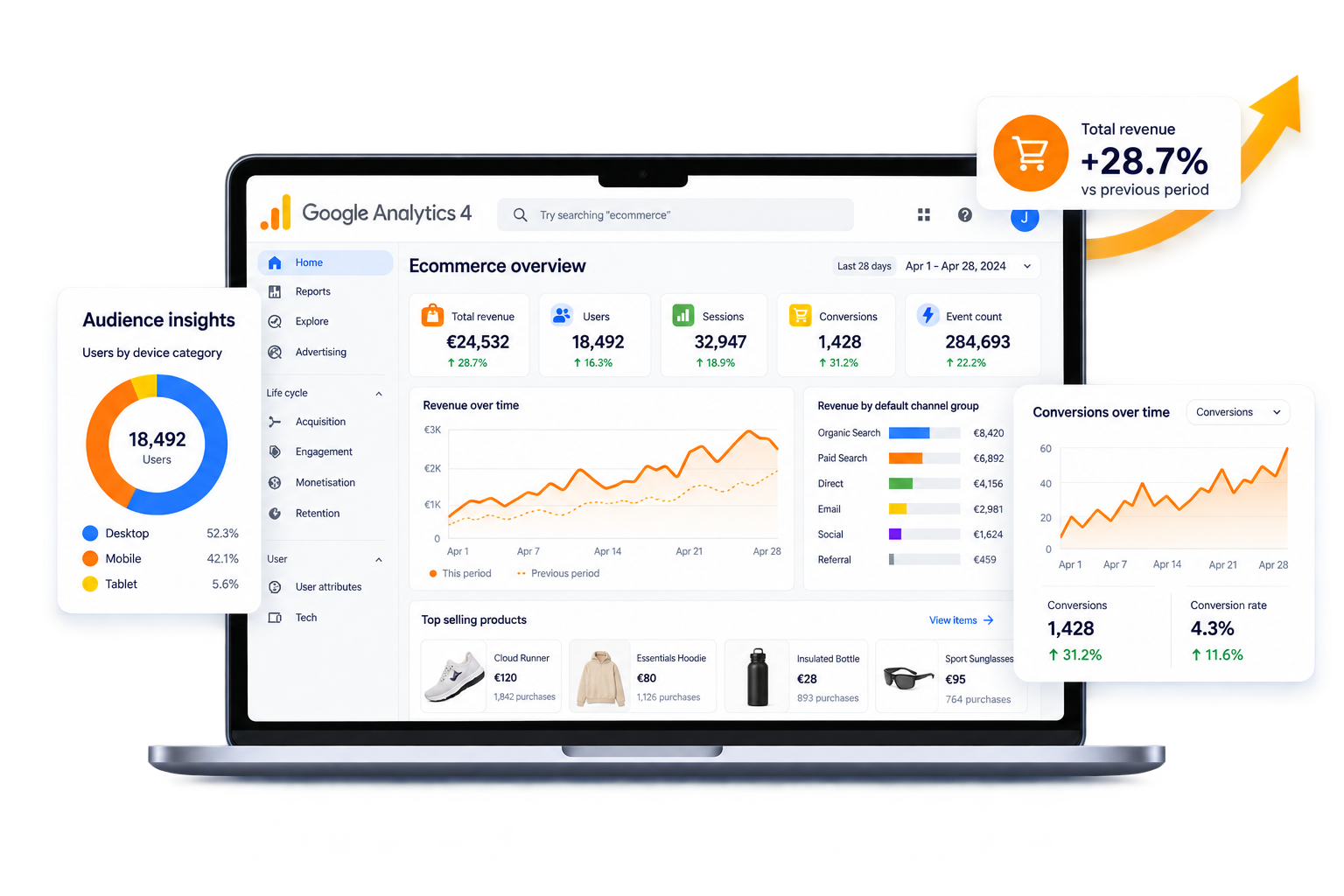
GA4 Measurement and Reporting Support
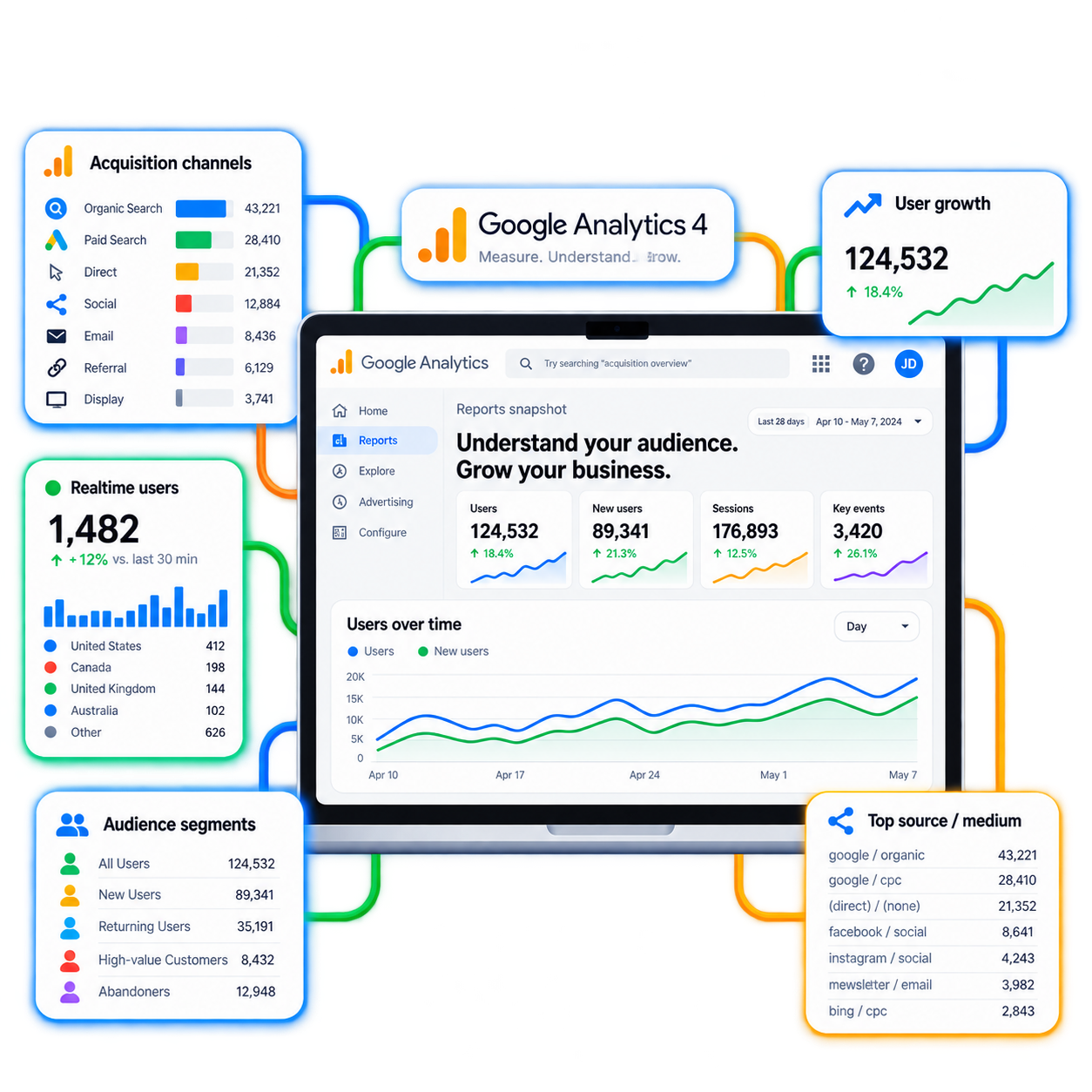
The useful scope depends on what is already in place: the measurement foundation, reporting questions, or tracking problems that are limiting confidence in the data.
1
Tracking Foundation Review
Review the current analytics setup, documented conversion points, and known tracking concerns to identify where measurement needs clarification or technical verification.
2
Events & Conversion Priorities
Clarify which customer actions and ecommerce outcomes matter to the business so reporting is organized around useful decisions rather than every available metric.
3
Reporting & Performance Review
Review available acquisition, engagement, ecommerce, and campaign reporting to identify patterns, questions, and priorities for deeper analysis or improvement.
4
Tracking Issues & Coordination
Investigate documented tracking problems and coordinate approved fixes or QA with the appropriate technical specialists when implementation work is required.
Keep Integrations and Automated Insights in Context
Google Analytics connects with other Google products and uses automation and machine learning to expand what teams can analyze. Those capabilities are most useful when their role in the measurement stack stays clear.
1
Google Ads Connection
Use the Analytics and Google Ads connection to add website or app context to campaign review. Conversion imports, audiences, and attribution choices should be verified for the specific account before implementation commitments are made.
2
Search Console Context
Bring Search Console data into the wider analytics picture when organic discovery and on-site behavior need to be reviewed together, without treating one report as proof of causation.
3
Predictive & Modeled Insights
Google Analytics includes machine-learning-based predictive insights and modeling. Treat them as additional analytical signals, not replacements for sound tracking, business context, or human judgment.
4
First-Party & Ecommerce Data
Use ecommerce and available first-party data to strengthen analysis where the setup supports it. Data quality, imports, integrations, and reporting accuracy require project-specific verification.
GA4 Setup and Tracking Work


Monthly
Wholesale Gift Store Reclaims Control With Reliable, Fast BigCommerce Support


Ecommerce Builds
Rescuing a Delayed Shopify Build and Bringing Giannos’ Figma Design to Life
GA4 FAQs
Yes. Work can focus on the current measurement foundation, documented conversion points, reporting questions, or known tracking issues. Any technical changes or validation of tracking accuracy should be confirmed by the appropriate specialist.
GA4 provides attribution and conversion-path reporting that can help teams understand how channels contribute to customer journeys. It should not be treated as perfect causal proof. Tracking quality, attribution settings, consent, and the wider business context all affect interpretation.
Do not assume one source is automatically correct. Different tools can use different attribution rules, timing, identity signals, and data definitions. Start by documenting the discrepancy, then verify the tracking and reporting logic before using the numbers for consequential decisions.
Google Analytics can connect with Google Ads so campaign and website or app data can be reviewed together, and supported conversions or audiences can be shared between products. The exact configuration and data flow should be verified for the account.
Yes. Google Analytics includes ecommerce reporting for purchase and transaction activity when the required data is collected correctly. Whether a specific store is tracking those actions accurately requires implementation and QA review.

 USA
USA
 Philippines


