
























































Shopware
Always Open Commerce approaches Shopware work by first mapping the buyer rules, channels, storefronts, integrations, and technical ownership the business needs to manage. That creates a clearer basis for deciding how an open-source, API-first commerce core should fit into the wider stack.
Model the Commerce Rules Before the Storefront
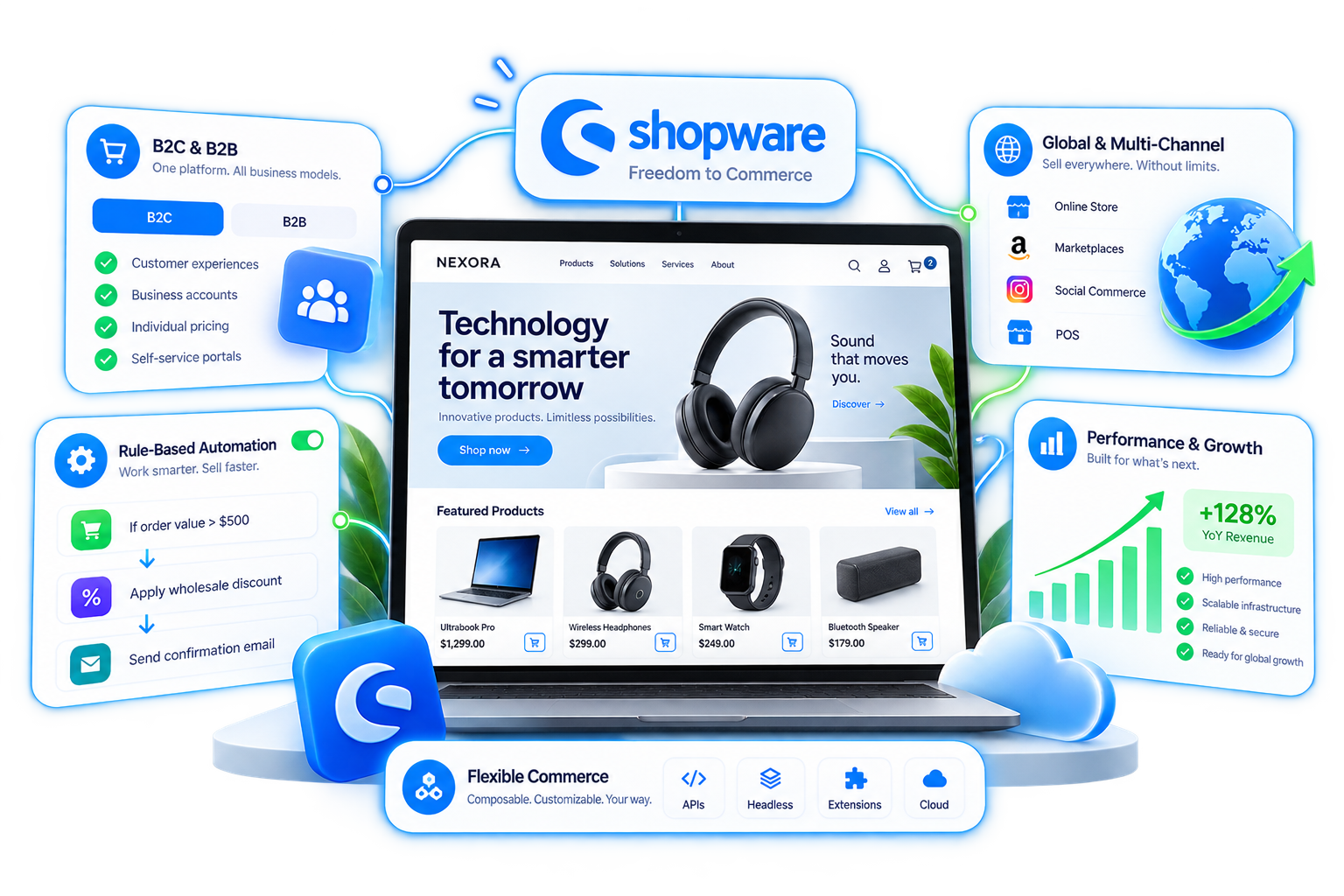
Shopware is designed to support commerce models that can involve different buyer types, pricing logic, sales processes, channels, and business rules. Before selecting modules or designing the storefront, those rules need to be made explicit.
We start with who buys, what they can see, how pricing and approval flows work, which markets or channels differ, and which back-office systems participate in the order journey. That creates a clearer basis for deciding how much logic belongs in Shopware and where the platform should remain connected to another system.
Decide What Shopware Should Own Across the Stack
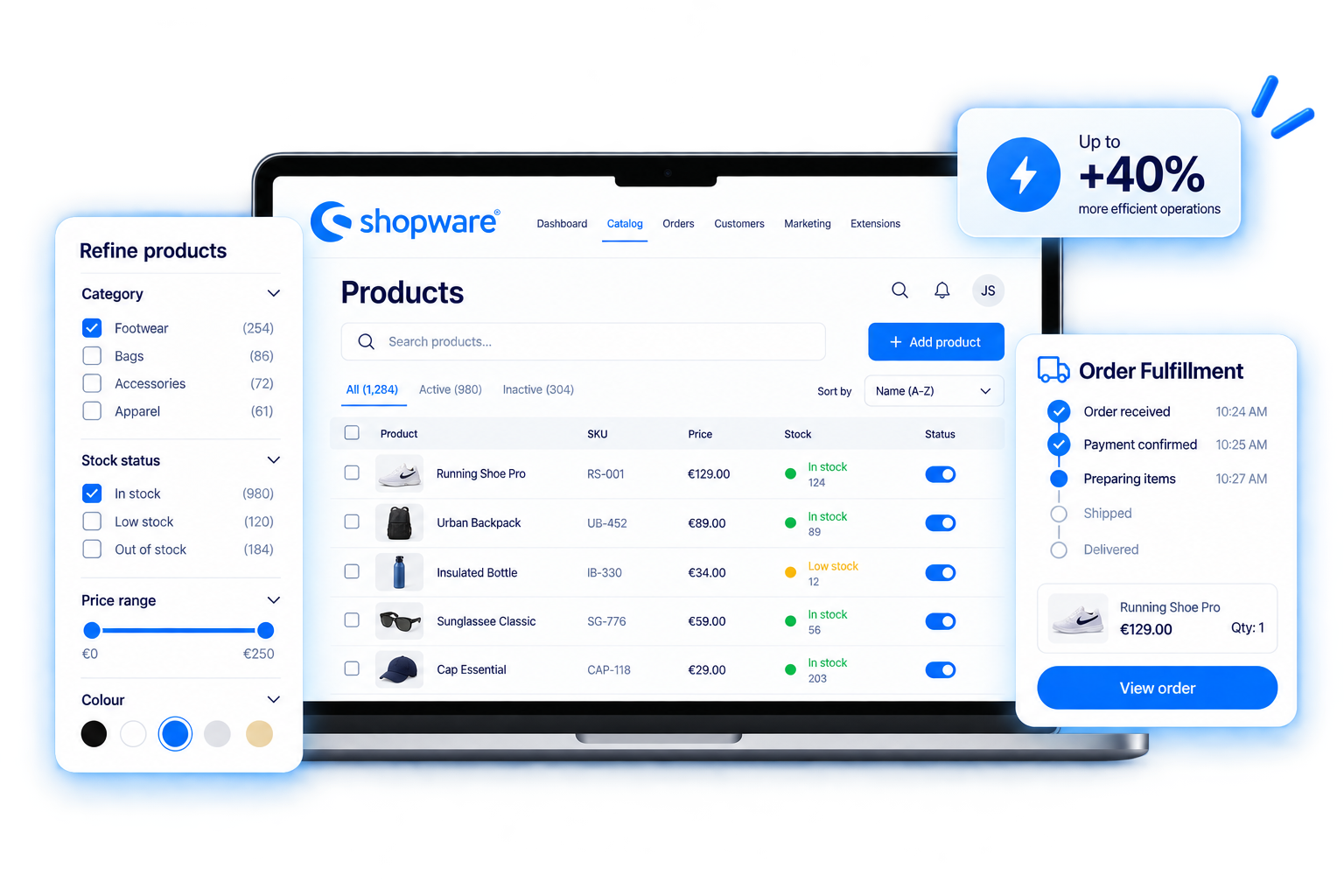
Shopware combines an open-source core with API-first extensibility. That makes technical ownership part of the commerce decision rather than an implementation detail that can be deferred until after the storefront is designed.
Always Open Commerce helps organize the requirements around code, hosting, data, integrations, content, and ongoing operations before architecture is committed. ERP, PIM, CRM, fulfillment, and other systems should each have a defined role, while final deployment, compatibility, and technical feasibility remain subject to specialist review.
Use One Commerce Core Across Different Selling Models
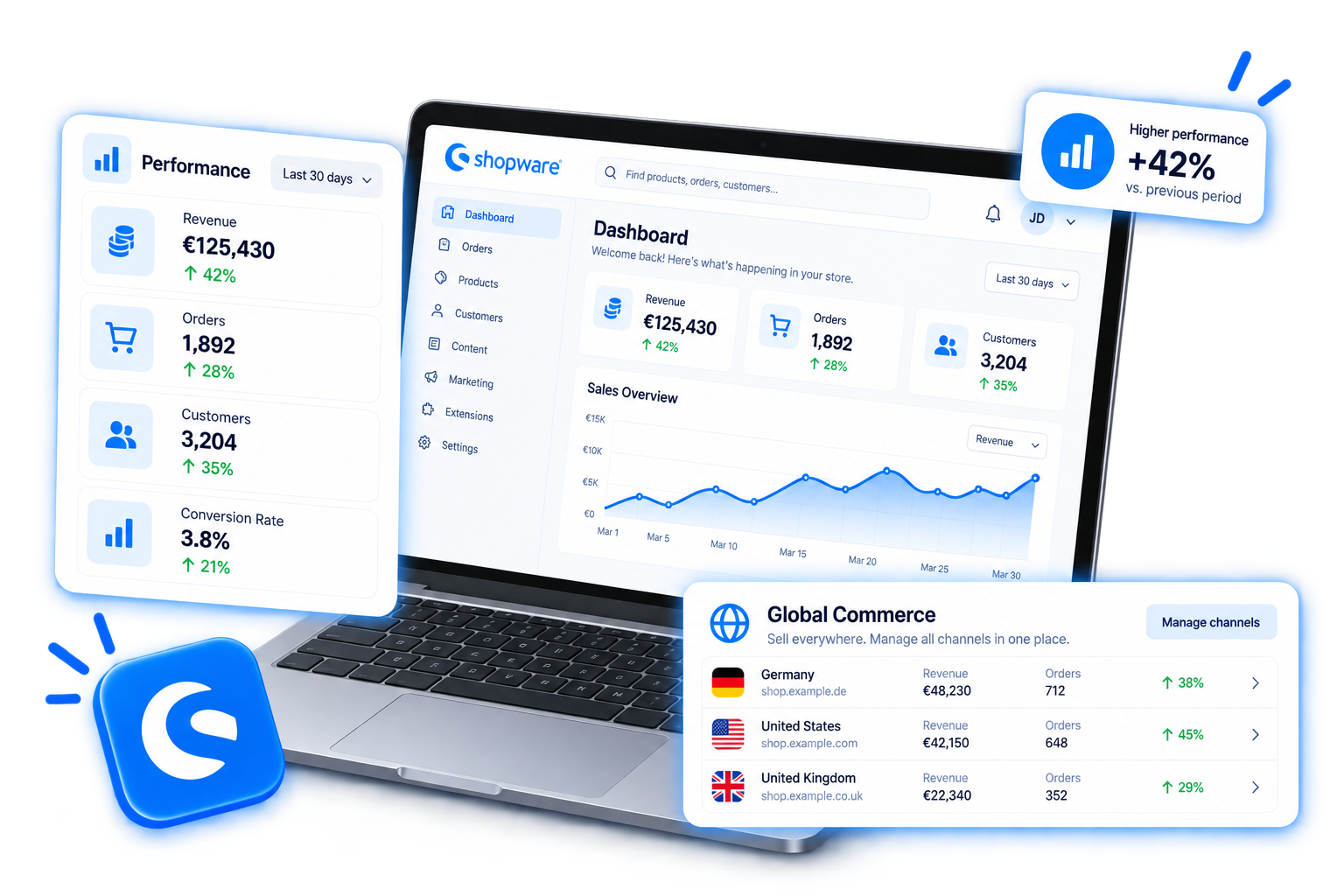
The value of a flexible commerce core is being able to support different customers and channels without rebuilding the operating model each time. The shared foundation should be deliberate, not assumed.

1
B2B Components
Map company buyers, roles, pricing, approvals, quick-order needs, and other B2B rules to the current Shopware components instead of treating wholesale as a copy of the consumer journey.
2
Sales Channels
Use channel-specific product visibility, pricing, currencies, and presentation where the business genuinely needs variation while keeping shared commerce data organized centrally.
3
Storefront & Content
Connect product discovery, merchandising, content, navigation, and responsive UX to the selling model so the storefront explains complex products and buying paths clearly.
4
ERP, PIM & CRM Connections
Define which system owns product, customer, pricing, inventory, and order data before planning approved integrations. Specific connections require technical validation before commitment.
Keep Shopware Business Logic and Technical Ownership Clear
Shopware supports configurable business rules, workflows, B2B requirements, storefront experiences, and connected-system architectures. That flexibility is most useful when the team is clear about where business rules belong and who will maintain them.
1
Rules & Automation
Use configurable rules and workflows for defined commerce requirements such as pricing, shipping, payment, promotions, customer conditions, and operational triggers where they fit the approved architecture.
2
B2B Buying Logic
Map company accounts, buyer roles, catalogs, pricing, approvals, quick-order requirements, and other B2B needs to the actual purchasing process rather than duplicating the consumer storefront.
3
Channels & Storefronts
Define what varies across storefronts, markets, buyer groups, and channels so content and commerce logic remain understandable as the environment grows.
4
Integrations & Technical Ownership
Keep integration responsibilities, customizations, deployment decisions, and ongoing technical ownership explicit so platform flexibility does not become unmanaged complexity.

Shopware FAQs
Always Open Commerce helps organize the requirements around code, hosting, data, integrations, content, and ongoing operations before architecture is committed. ERP, PIM, CRM, fulfillment, and other systems should each have a defined role, while final deployment, compatibility, and technical feasibility remain subject to specialist review.
Map company buyers, roles, pricing, approvals, quick-order needs, and other B2B rules to the current Shopware components instead of treating wholesale as a copy of the consumer journey.
Always Open Commerce helps organize the requirements around code, hosting, data, integrations, content, and ongoing operations before architecture is committed. ERP, PIM, CRM, fulfillment, and other systems should each have a defined role, while final deployment, compatibility, and technical feasibility remain subject to specialist review.
Define which system owns product, customer, pricing, inventory, and order data before planning approved integrations. Specific connections require technical validation before commitment.

 USA
 Philippines


