




















































Electronics
The same electronics catalog may need to satisfy a spec-driven expert and a shopper who needs plain-language guidance. Always Open Commerce organizes product data, comparison UX, content, merchandising, and development so both paths stay useful.
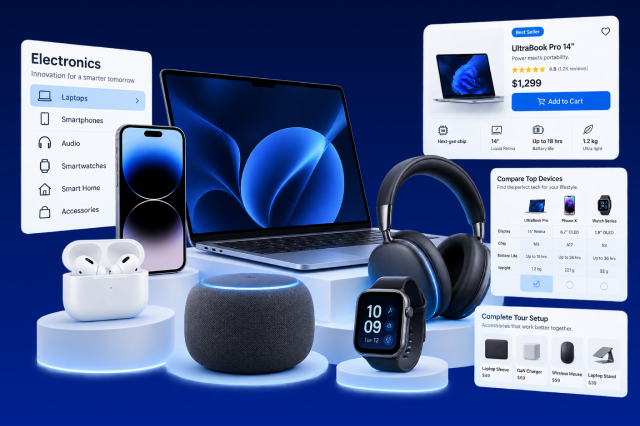
Make Specifications Useful to Both Expert and Everyday Shoppers
Electronics catalogs can move from simple accessories to products with dense technical specifications, multiple generations, model variations, and compatibility requirements. Experienced buyers may scan exact features and ports, while less technical shoppers need plain-language context to understand why a difference matters.
Product lists, filters, comparison tools, and product pages should make important specifications easy to locate without assuming every customer already knows the category vocabulary. Supporting explanations, manuals, FAQs, reviews, and media can provide deeper detail when the decision requires it.
Help Customers Compare the Whole Product, Not Just the Spec Sheet
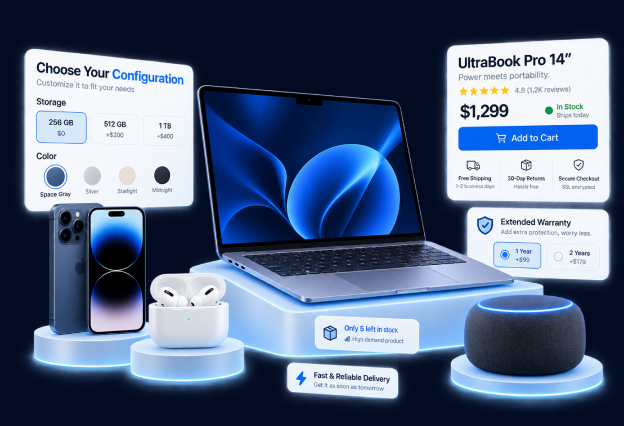
Technical specifications are only part of an electronics purchase. Customers may also need to understand compatibility, included components, required accessories, warranty information, return considerations, shipping timing, setup resources, or the differences between closely related models.
The storefront should organize those questions around the buying decision instead of scattering them across unrelated tabs or documents. Always Open Commerce can support information hierarchy, UX/UI, product data, content structure, related-product logic, and development while warranty, legal, and technical claims remain controlled by their owning sources.
Support Four Electronics Shopping Needs
Electronics stores need to help shoppers move from a broad category to a product they understand well enough to choose. The supporting ecommerce work should connect specifications, compatibility, comparison, and post-purchase information.
1
Compare Technical Differences Without Losing Context
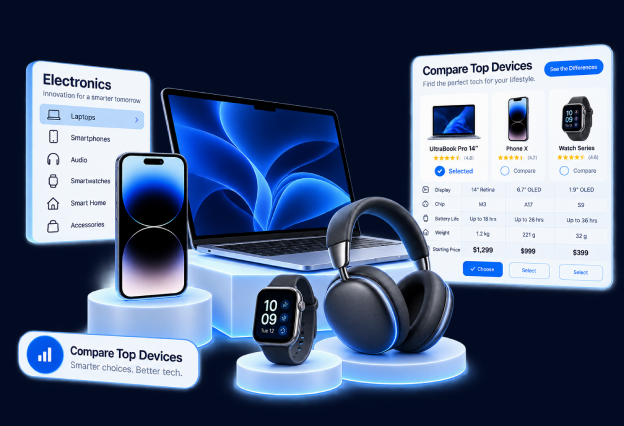
Filters, product lists, comparison paths, and product pages can surface the specifications that distinguish similar models. UX/UI, product data, and development can support clearer comparison for both expert and novice shoppers.
2
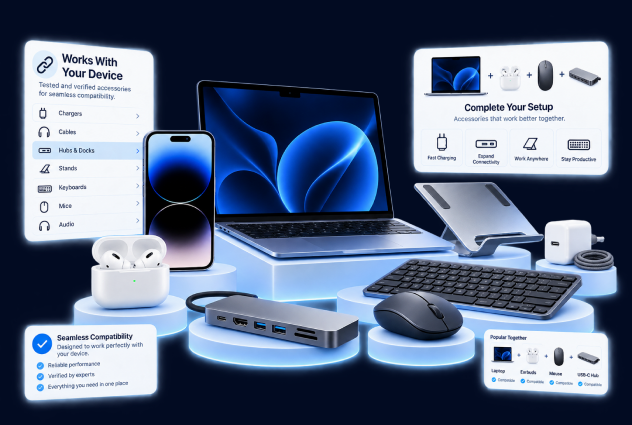
Make Compatibility and Accessories Clear
Cables, components, cases, mounts, power requirements, and other related products can affect the purchase. Product relationships and compatibility information should help customers understand what works together before checkout.
3
Keep Manuals and Support Information Close to the Product
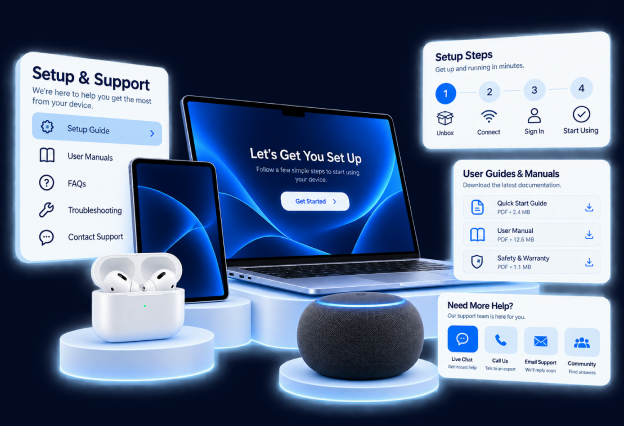
Manuals, setup information, FAQs, warranty details, and other approved resources can support evaluation and ownership when they are easy to find from the relevant product. Content structure and product data can help keep those resources connected.
4
Manage Fast-Changing Models and Attributes
New generations, model variants, specifications, images, and availability can put pressure on catalog consistency. PIM, product data, feeds, development, and ongoing maintenance can help keep changes from creating conflicting storefront information.
Keep Product Data, Merchandising, and Support Information in Sync
Electronics catalogs can change quickly as models, specifications, accessories, and availability evolve. A new product generation may require new attributes and filters. Compatibility changes can affect related-product merchandising. Updated support information may need to follow the product across search, product pages, feeds, and customer service.
Always Open Commerce can coordinate the relevant catalog, UX, development, CRO, SEO/GEO, content, and ongoing support around the same product structure. The goal is to help customers understand what they are buying while giving ecommerce teams a more manageable foundation for products that keep changing.
Recommended Tech Stack

Support electronics catalogs with extensive specifications, variants, product families, accessories, promotions, and connections to operational systems.

Centralize technical specifications, model information, product attributes, assets, descriptions, and other structured information used throughout the catalog.

Improve search, filtering, merchandising, and product recommendations so shoppers can narrow and compare technically detailed products more efficiently.
Electronics Ecommerce FAQs
Make the most important specifications easy to scan, group related details, and explain unfamiliar terms in plain language. Deeper technical documentation should remain close to the relevant product without overwhelming the main decision path.
Yes. We can support comparison UX, product data structure, storefront development, and QA so comparable attributes are presented consistently across relevant products.
Keep approved resources connected to the relevant product page and customer account or support journey where appropriate. Product data and content governance should determine which version appears.
Use dependable product relationships and attributes to show which accessories, components, models, or requirements work together. Compatibility logic should be technically verified before it is treated as final.

 USA
 Philippines


