












































Email Marketing
Email should support more than promotions. Always Open Commerce helps ecommerce teams plan campaigns and lifecycle messages for subscribers, first-time buyers, and returning customers, with communication that fits each stage of the relationship.
Build Email Around the Customer Relationship
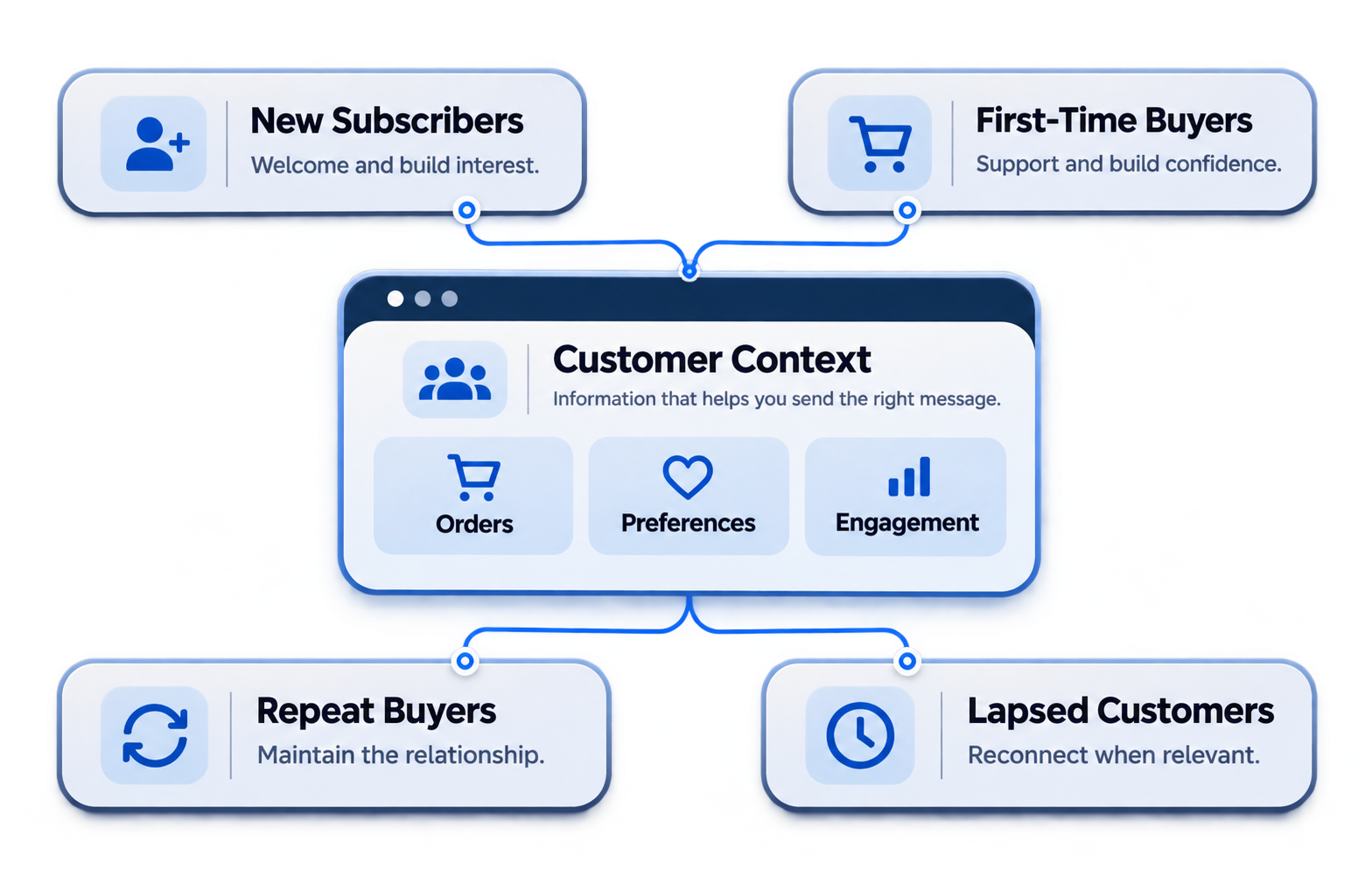
New subscribers, first-time customers, repeat buyers, and lapsed customers each have different reasons to hear from a brand. A useful email program reflects those differences instead of sending the same promotions to everyone.
Always Open Commerce helps organize the program around those differences. That means deciding where campaigns make sense, which customer moments deserve automated follow-up, how audiences should be separated, and what each message needs to accomplish.
Give Campaigns and Automations Different Jobs
Campaigns communicate timely news, offers, and product updates. Automations respond to meaningful customer actions or lifecycle stages. Giving each a clear role helps avoid overlapping or unnecessary messages.

Campaign Planning
Build a calendar around promotions, launches, seasonal moments, product education, company updates, and other communication the audience has a reason to receive. Frequency should follow the business, offer, audience, and available content rather than a fixed send quota.

Lifecycle Communication
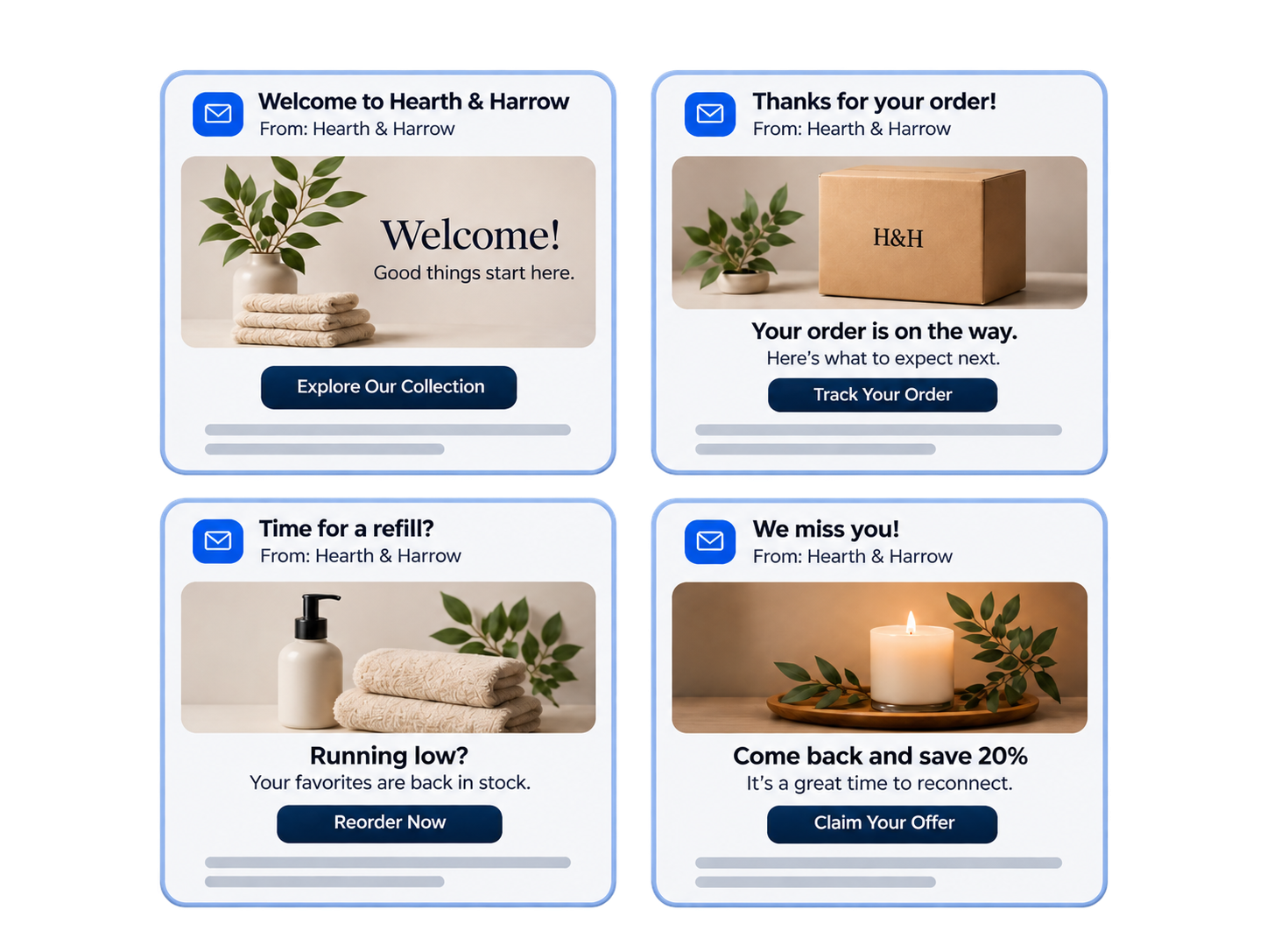
Plan or improve messages around signup, purchase, post-purchase education, replenishment, re-engagement, or other supported customer moments. Each sequence should have a clear reason to exist and a clear point where the communication should stop.

Audience Decisions
Use the customer and purchase information that is actually available to decide who should receive a message. Useful audience rules change what is sent, when it is sent, or who should be excluded. More segments are not automatically better.

Copy & Content
Subject lines, preheaders, product education, promotional copy, and calls to action need to support the same message. Always Open Commerce can write or improve email content within the engagement, with regulated claims or other sensitive content routed for the appropriate review.

Performance Priorities
Review available campaign and flow data to see where performance deserves attention. Delivery, engagement, audience, and conversion signals can help distinguish messaging issues from targeting, timing, setup, or other problems.
Make Sure the Program Can Support the Plan
Campaign plans depend on reliable customer data, appropriate permissions, and a working sending setup. Check those foundations before expanding audiences, automations, or message frequency.

Customer Data
Lifecycle messages may rely on customer profiles, order activity, product information, or events coming from the store and connected systems. Missing or unreliable inputs may require technical work rather than another marketing adjustment.
Permission & Customer Expectations
A message should go to people who are eligible to receive it and in a context that fits the relationship. Unsubscribe status, customer expectations, and applicable requirements need to remain visible. Always Open Commerce does not provide legal advice.
Sending Foundation
Authentication, list quality, unsubscribe handling, and other sender requirements can affect how the program operates. When the issue moves into sender configuration, deliverability, or another technical area, current platform guidance should be checked and technical changes handled separately.

Keep Email Useful Between Purchases
Email gives ecommerce brands a way to continue the relationship after a shopper leaves the site. It can educate before a purchase, support customers after an order, introduce what may be relevant next, or bring someone back when there is a genuine reason.
Always Open Commerce can connect Email Marketing with Cart Recovery, Klaviyo Optimization, SMS Marketing, Content Writing & Strategy, or Conversion Rate Optimization when the customer journey crosses those services. The goal is not to make email the answer to every retention problem, but to give it a clear role alongside the rest of the experience.
Platform fees and list purchasing are separate. Deliverability, repeat purchase, attributed revenue, and other performance outcomes are not guaranteed.
Email Marketing Work in Practice

Monthly
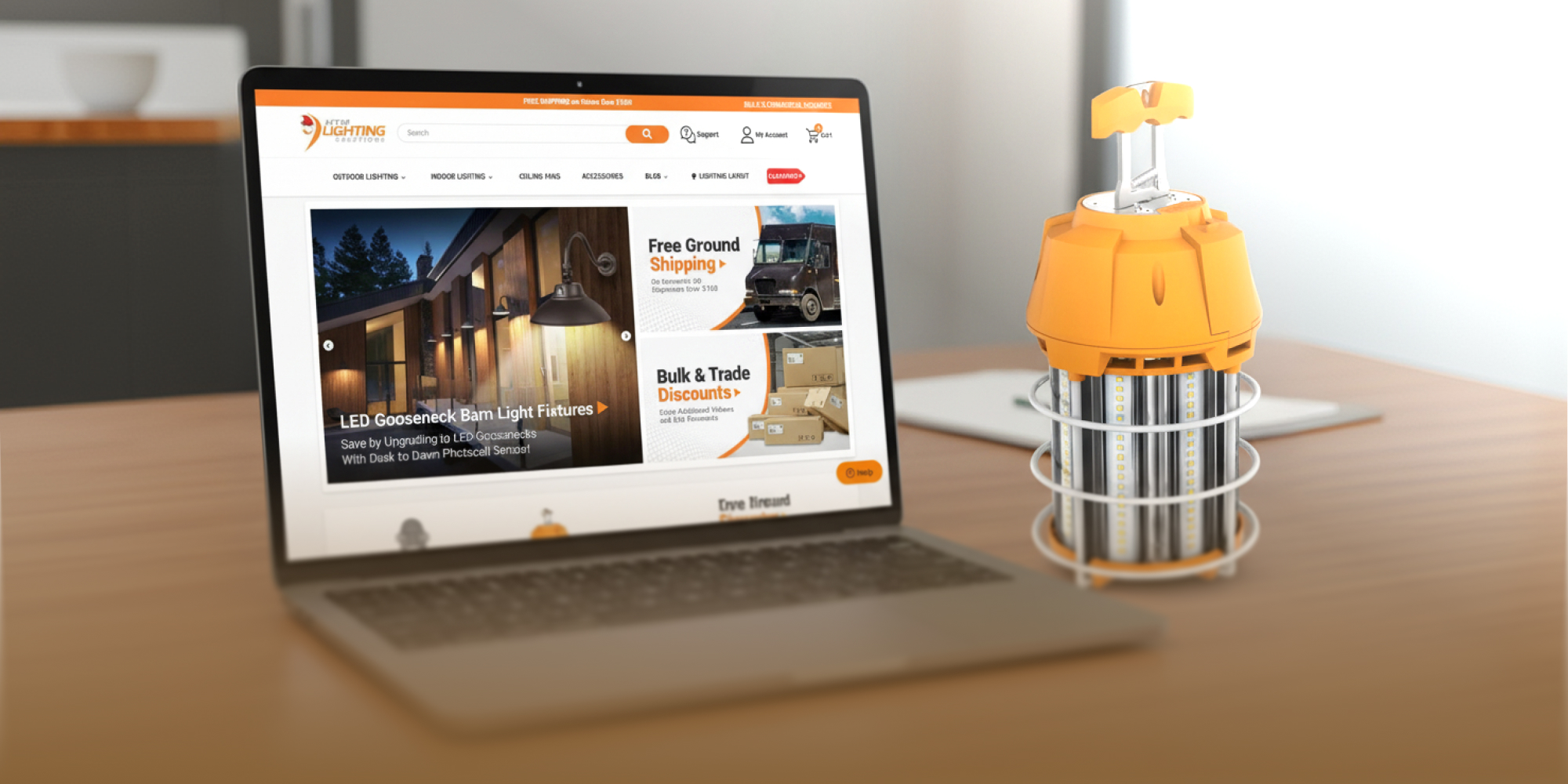
HTM Lighting Solutions Builds Long-Term Momentum With a Full-Service Monthly Partnership

Email & CRM Platforms We Work With

Align customer profiles, segmentation, automated flows, and campaign reporting around the ecommerce lifecycle.

Organize audiences, campaign sends, and automated follow-ups using the customer data already available.

Coordinate CRM data, email messaging, and sales or service follow-up across longer customer journeys.
Frequently Asked Questions
Depending on the engagement, Email Marketing can include campaign planning, newsletters, lifecycle communication, audience strategy, copy and content, and program review. We focus on the parts of the channel that need attention rather than assuming every business needs the same calendar or automation mix.
Yes. Always Open Commerce can support recurring campaigns and lifecycle automation when both are included. The right balance depends on the customer journey, business priorities, available data, and what the team already has in place.
Automation should follow a meaningful customer action or lifecycle moment, not simply a trigger the platform makes available. We look at why the message should exist, who should receive it, what should happen next, and when the sequence should stop.
Yes. We can review your existing campaigns, automated flows, audiences, content, and available reporting, then recommend what to keep, improve, simplify, or investigate further.

 USA
 Philippines


