























































Hotjar / Contentsquare
Turn clicks, scrolls, session behavior, and direct feedback into clearer ecommerce decisions. Always Open Commerce helps teams use Hotjar / Contentsquare to investigate friction, prioritize CRO work, validate storefront issues, and connect behavioral evidence with broader analytics.

Choose the Behavioral Evidence That Matches the Storefront Question
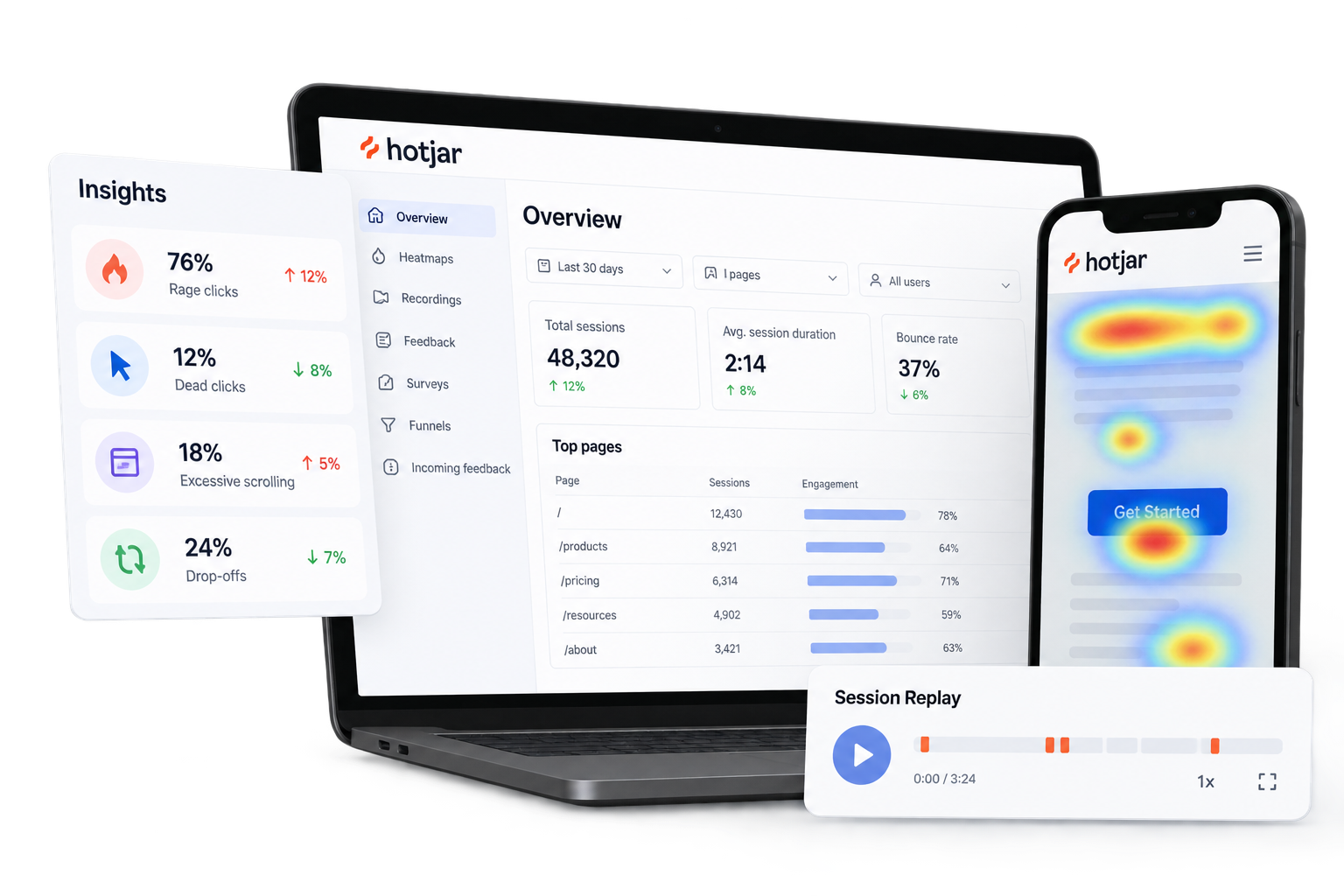
Heatmaps, session replay, funnels, surveys, error signals, and performance data answer different questions. A product-page problem may require different evidence from a navigation issue, checkout dropoff, mobile usability problem, or technical error.
Always Open Commerce can help define the ecommerce question first, then use the relevant behavioral evidence to investigate it. That keeps the work focused on decisions the team can act on instead of collecting more recordings, heatmaps, and reports without a clear purpose.
Use Behavioral Evidence to Explain Storefront Friction
Standard analytics can show where traffic, engagement, and conversion change, but those numbers do not always explain what shoppers experienced. Heatmaps, session replay, funnels, and direct feedback can add context around navigation, product discovery, page interaction, forms, cart steps, mobile usability, and other customer journeys.
Always Open Commerce can use that evidence within CRO and UX work to identify patterns worth investigating and prioritize questions for deeper review. Behavioral analytics should support decisions alongside quantitative data, ecommerce context, and specialist judgment rather than becoming proof that one observation caused a business result.
Hotjar / Contentsquare Work We Can Support
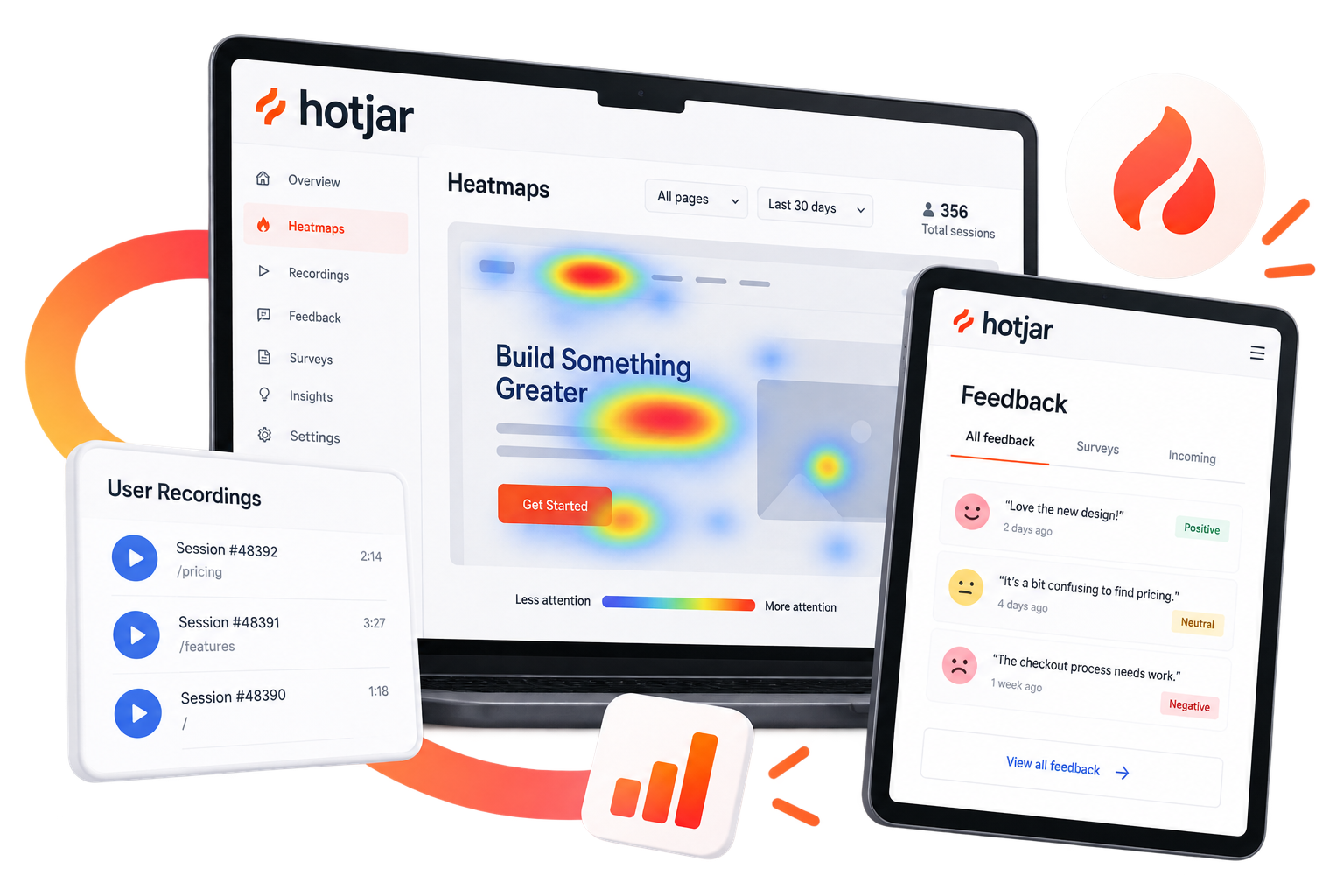
Support can focus on the behavioral questions that matter to the ecommerce experience, from reviewing an existing setup to using new evidence during CRO, UX, or troubleshooting work.

1
Heatmap & Session Replay Review
Review clicks, scroll behavior, page interaction, session replays, and visible friction around important ecommerce pages and journeys, then organize findings into specific questions or improvement opportunities.
2
CRO Friction & Journey Analysis
Use behavioral evidence to investigate product discovery, navigation, product pages, mobile flows, cart behavior, forms, and other conversion paths where shoppers may be hesitating or encountering usability problems.
3
Survey & Feedback Coordination
Plan or review on-site feedback and surveys when direct customer input can clarify why people struggle, what information is missing, or which experience assumptions need validation.
4
Findings, Prioritization & QA
Translate observations into a prioritized CRO or UX backlog, coordinate approved follow-up, and review the changed experience. Tracking accuracy, implementation feasibility, and performance interpretation require specialist review.
Connect Behavioral Analytics to the Rest of the Optimization Stack
Behavioral analytics is most useful when its role is clear alongside the other systems and teams responsible for measuring and improving the storefront.
1
GA4 & Quantitative Analytics
Improve navigation, merchandising, themes, product experiences, mobile UX, and other customer-facing areas without assuming every store needs a complete rebuild.
2
Ecommerce Platform & Storefront
Use native capabilities where they fit, established apps where they add useful functionality, and approved custom development when a specific requirement calls for it.
3
Design, CRO & Experimentation
Turn supported findings into UX recommendations, design changes, CRO priorities, or test hypotheses. Hotjar or Contentsquare observations do not by themselves guarantee that a proposed change will improve conversion.
4
Issue Tracking & Connected Tools
Continue improving the store through maintenance, troubleshooting, development, UX/UI, CRO, testing, and other approved ecommerce priorities as the business and platform evolve.

Hotjar / Contentsquare FAQs
It depends on the question being investigated. Heatmaps can show aggregate interaction patterns, session replay can add journey-level context, funnels can help locate dropoff, surveys can provide direct visitor feedback, and error or performance signals can help investigate technical friction. The useful combination depends on the storefront problem and the other analytics already available.
Heatmaps can surface aggregate patterns across a page, while session replay can add context about individual journeys and interactions. Use them together when a pattern deserves closer investigation, rather than treating either view as proof of why a shopper behaved a certain way.
Yes. Always Open Commerce provides Conversion Rate Optimization, UX/UI Design, Technical Audits, Bug Fixes & Diagnostics, and related ecommerce support that can use behavioral evidence when it fits the approved scope. Approved case-study records also document Hotjar in client CRO and storefront work.
They answer different types of questions. GA4 is commonly used for quantitative traffic, event, and conversion measurement, while Hotjar’s traditional tools and the current Contentsquare experience provide visual and behavioral context through heatmaps, session replay, funnels, and feedback. The two can be used together rather than treated as interchangeable.
No. Behavioral analytics can help identify friction, validate UX concerns, and prioritize improvements without an experiment. A/B testing becomes useful when the team has a testable hypothesis and enough appropriate traffic or data to evaluate alternatives. Testing strategy and performance conclusions require CRO review.

 USA
USA
 Philippines


