





















































Recharge
Build recurring purchase experiences around the products, delivery cadence, customer controls, and retention workflows your business actually needs. Always Open Commerce helps ecommerce teams set up, improve, and troubleshoot Recharge while keeping subscriptions connected to the storefront and surrounding systems.
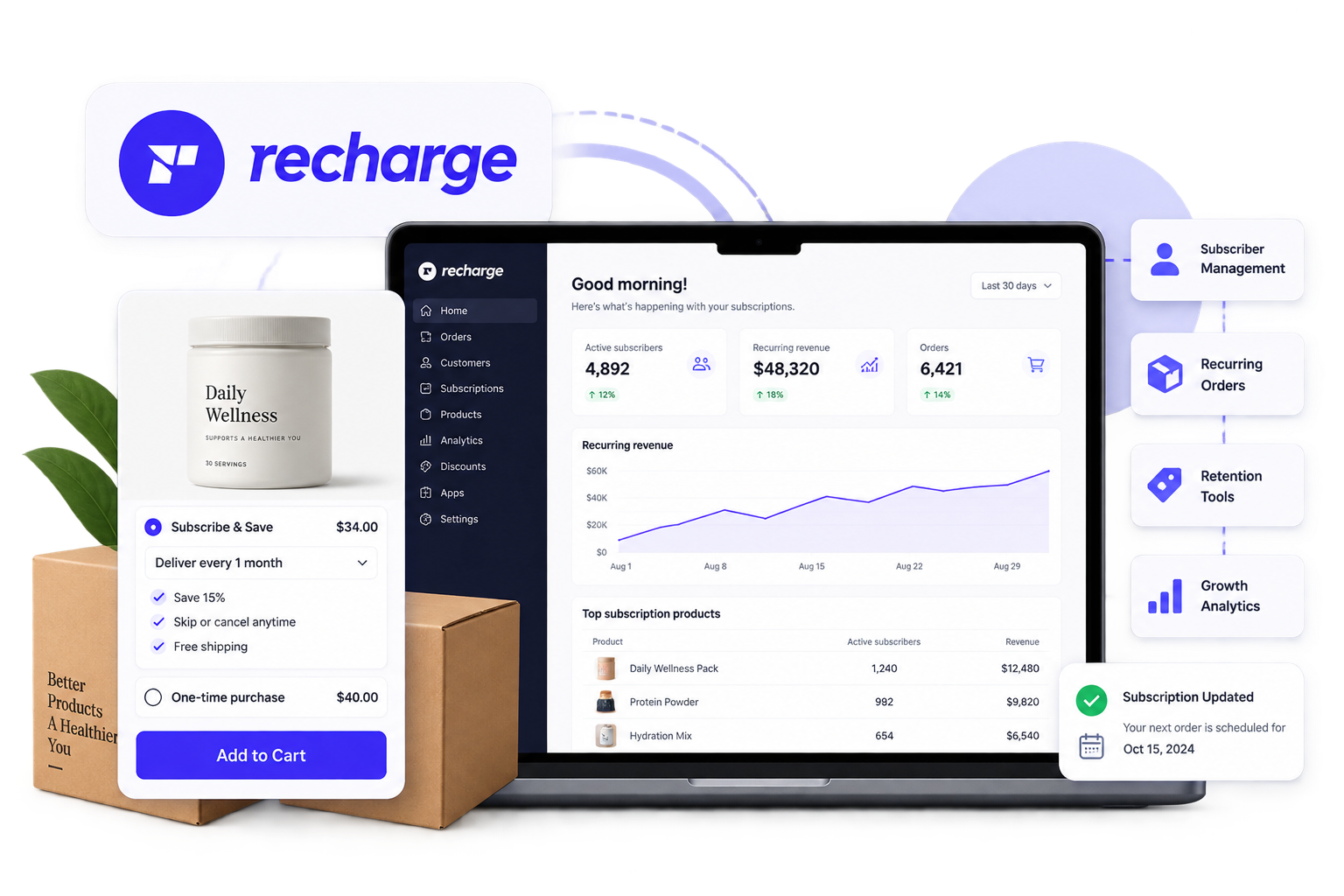
Build the Subscription Offer Around How Customers Want to Buy
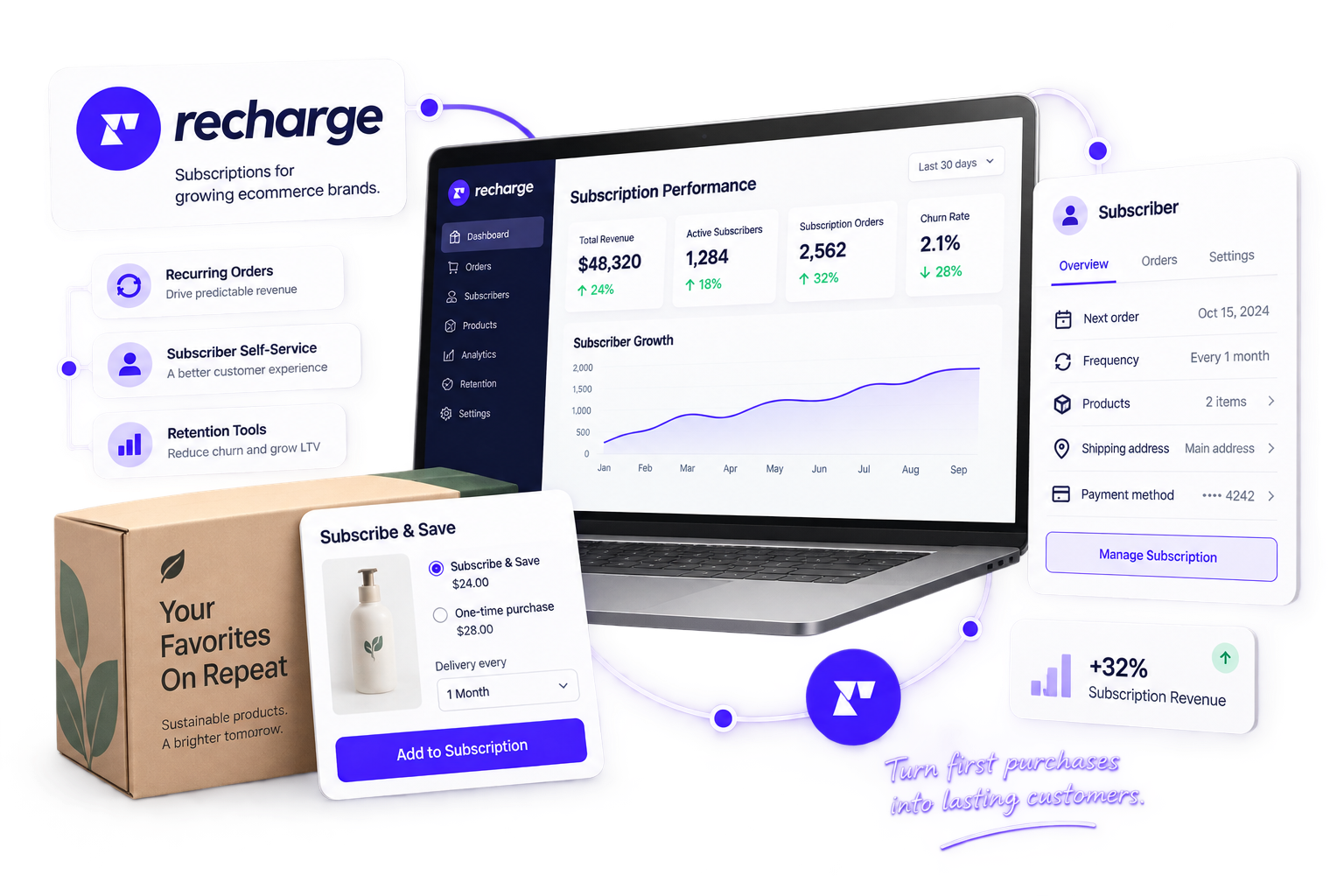
A subscription program can be as simple as a recurring delivery or involve prepaid plans, bundles, gifts, and a choice between one-time and recurring purchase. The important decision is not how many options can be enabled. It is which offer structure customers can understand and the business can fulfill consistently.
Recharge supports subscription products, customer self-service, churn-prevention workflows, bundles, analytics, loyalty, and related subscriber experiences within its Shopify-focused ecosystem. The useful decision is which of those responsibilities the subscription program actually needs and how they connect to fulfillment, customer data, and retention. Always Open Commerce can help translate product, merchandising, and operational requirements into a workable setup, with account-specific feature availability and technical behavior verified before implementation.
Give Subscribers More Control After Checkout
Retention is affected by what happens after a customer subscribes. If every change requires a support ticket, a simple recurring order can become harder for customers and staff to manage. Recharge’s Affinity portal can let subscribers handle actions such as skipping or rescheduling orders, swapping products, changing quantities, and updating delivery or billing details, depending on the merchant configuration.
Recharge also provides cancellation-prevention, failed-payment-recovery, and win-back tools. Always Open Commerce can help coordinate the storefront, subscription setup, portal experience, and approved retention or integration work around the same customer journey rather than treating recurring billing as an isolated feature.
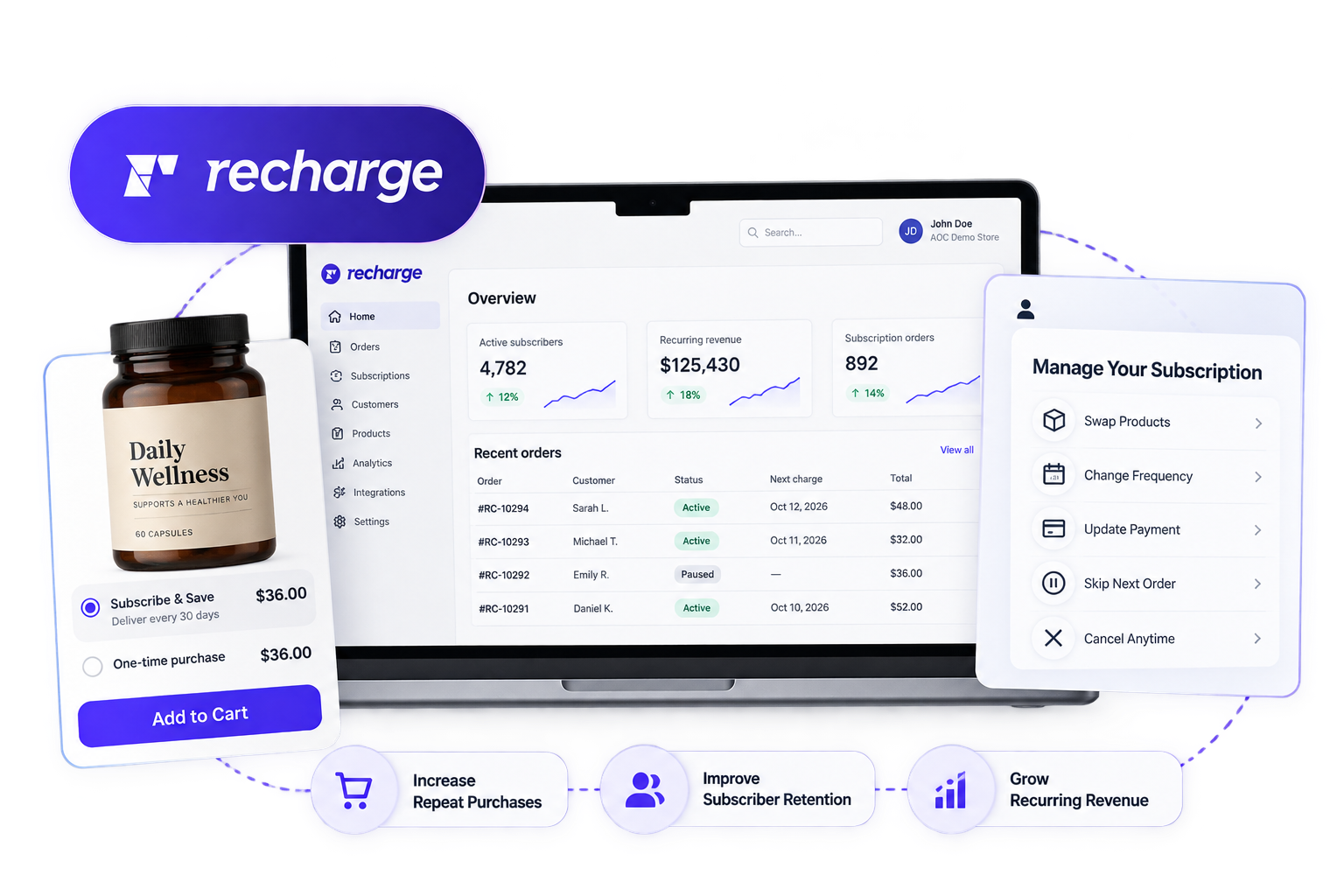
Recharge Work We Can Support
Recharge work can focus on launching a new subscription program, improving an existing setup, or resolving a specific recurring-order problem.

1
Subscription Setup & Product Configuration
Configure or refine subscription products, delivery frequencies, prepaid options, bundles, and related storefront choices around documented business requirements and the capabilities available in the live Recharge account.
2
Customer Portal & Storefront Experience
Coordinate subscription purchase options and the customer portal so shoppers can understand recurring choices before checkout and manage their subscriptions more easily after purchase.
3
Lifecycle & Retention Coordination
Align subscription changes, customer notifications, churn-prevention tools, failed-payment recovery, and approved lifecycle marketing work so the recurring experience does not become fragmented across separate systems.
4
Troubleshooting & QA
Investigate subscription setup, portal behavior, recurring-order, integration, or migration-related issues and coordinate approved fixes with the appropriate technical owners. Exact cause, compatibility, and implementation feasibility require validation.
Keep Recharge Connected to Shopify and the Retention Stack
Recharge is closely integrated with Shopify, while subscription operations can also touch fulfillment, email/SMS, loyalty, customer service, analytics, and other systems. Define those handoffs so the subscription platform does not become an unclear owner of every recurring-customer workflow.
1
Shopify Storefront & Checkout
Decide how one-time, subscription, prepaid, or bundle choices should appear across product pages and purchasing flows. Recharge is built around Shopify and Shopify Plus, so exact theme, checkout, and account behavior should be verified for the live environment.
2
Customer Accounts & Support
Keep the subscriber portal, Shopify customer accounts, and support process aligned so customers have a clear place to manage recurring orders and staff can understand where account changes should be handled.
3
Lifecycle Tools & Integrations
Map the email, SMS, customer-support, tax, and other commerce tools that need subscription data or actions. Recharge provides a technology ecosystem, while the exact data flow and ownership should be defined for the business’s stack.
4
Data & Custom Connections
Clarify which system owns customer, product, subscription, order, and fulfillment information before custom integration work begins. API, SDK, or other custom-connection feasibility requires Development review.

Recharge Work in Practice


Migration
Why a Free-Agency™ Partner Was the Right Fit for a Full Shopify to BigCommerce Platform Migration
Recharge FAQs
Yes. Support can include approved subscription setup, storefront and customer-portal UX, recurring-product configuration, retention coordination, integration review, troubleshooting, and QA. Exact platform behavior and technical requirements should be verified for the live store.
Yes. Recharge is built around Shopify and Shopify Plus, including Shopify Checkout and customer-account integrations. If Recharge is being considered for another commerce environment, vendor support and implementation feasibility should be verified before the project is committed.
They can be, but subscription transitions require careful review of the source platform, subscriber records, products, payment relationships, customer accounts, and target setup. The exact migration path should be technically validated before launch commitments are made.
Recharge’s customer portal supports self-service actions such as skipping, rescheduling, swapping products, changing quantities, and updating account details, subject to the merchant’s configuration. The right settings should reflect the customer experience and operating rules the business can actually support.
Yes. Recharge supports prepaid subscription options and curated or customizable bundles. Whether either model fits depends on the products, fulfillment process, offer structure, customer expectations, and the features available in the account.

 USA
USA
 Philippines


