












































Search & Merchandising
Product discovery should match the way shoppers narrow a catalog, not force every catalog into the same search box. Depending on the assortment, the problem may be search relevance, filters, fitment, personalization, merchandising, recommendations, or guided product selection.
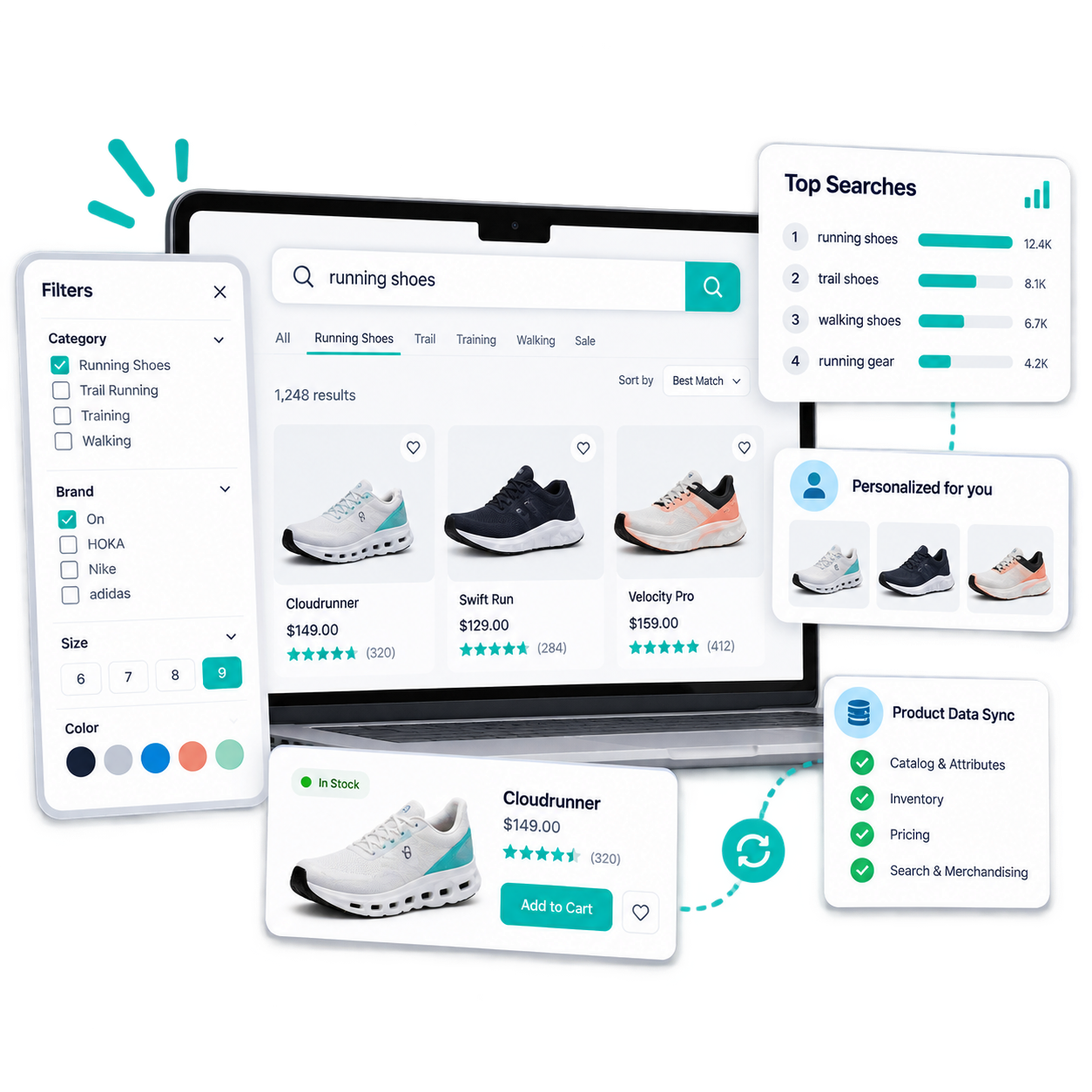
Choose by Product-Discovery Problem
These platforms solve different discovery problems. Start with the catalog structure and the questions shoppers need answered, then decide whether the priority is search and filtering, merchandising, personalization, automotive fitment, or guided product selection.

Searchanise
Searchanise is a practical fit for ecommerce teams that need site search, product filters, merchandising controls, recommendations, and analytics in one discovery layer without turning the experience into a broader personalization platform.

Doofinder
Doofinder is worth evaluating when search needs a stronger AI and discovery layer, including search relevance, conversational assistance, recommendations, personalization, and merchandising across the catalog.

Zoovu
Zoovu is designed for higher-consideration product decisions where shoppers need guided selling, AI search, recommendations, configurators, or question-led product guidance rather than a conventional search-and-filter experience.

Athos Commerce / Searchspring
Athos Commerce, which now includes Searchspring, combines site search, merchandising, personalization, reporting, and product-feed capabilities for teams that want broader control over how products are discovered and promoted.

Convermax
Convermax is purpose-built for automotive discovery, using Year-Make-Model, fitment and compatibility data, keyword search, filters, and vehicle-aware navigation to help shoppers identify parts that fit.

Rebuy
Rebuy is a Shopify-focused personalization and merchandising platform that extends beyond search into recommendations, Smart Cart experiences, collections, bundles, checkout and post-purchase offers, and other personalized storefront moments.
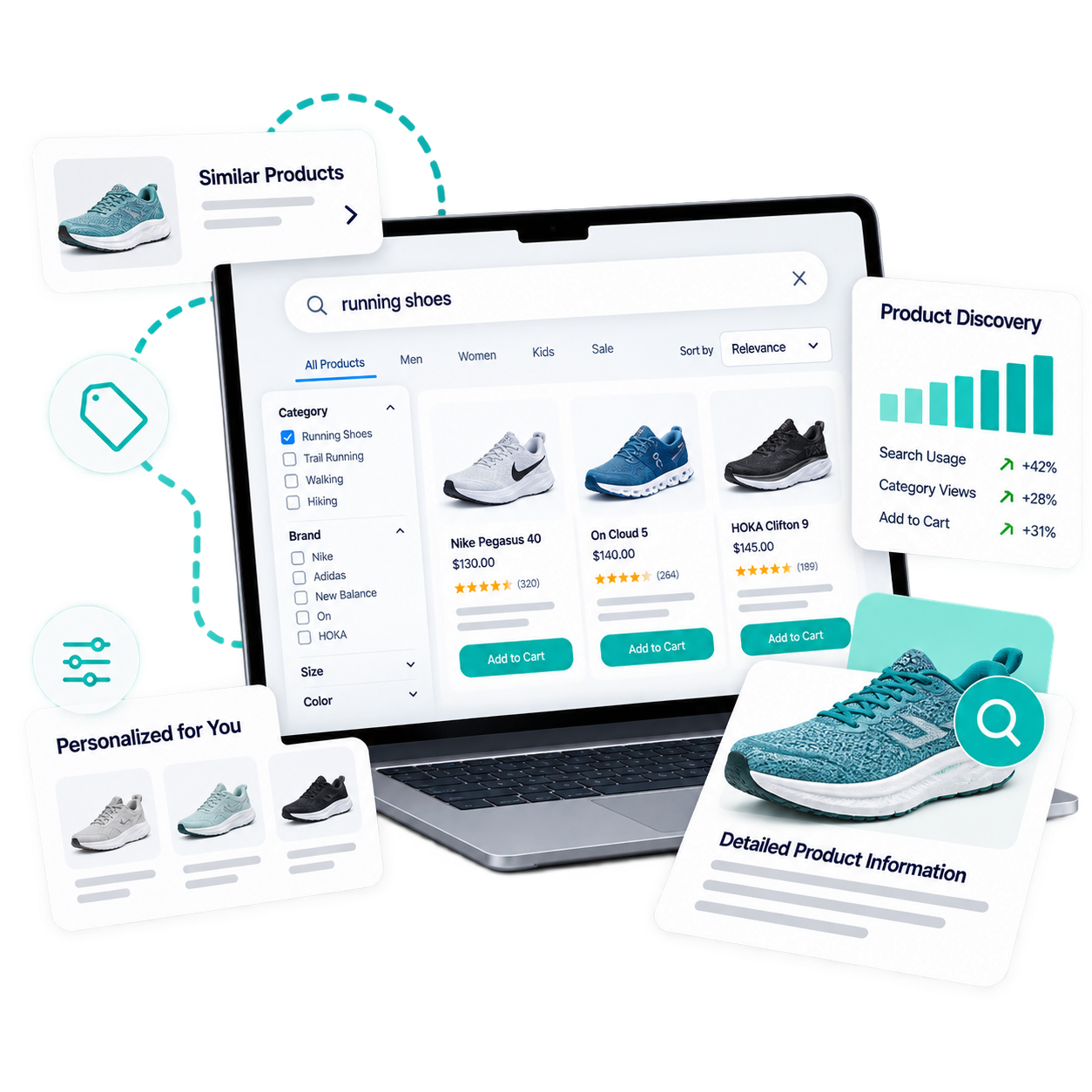
Evaluate Catalog Complexity, Discovery Paths, and Merchandising Control
Evaluate the discovery stack around the structure of the catalog, how shoppers narrow from need to product, which fitment, filtering, personalization, or guidance patterns the journey requires, and what merchandising and product-data controls the team needs to manage the experience.
Catalog & Compatibility Complexity
Review product volume, attributes, categories, terminology, fitment or compatibility data, and other structures that determine whether search, filters, recommendations, or guided experiences can return useful choices.
Shopper Discovery & Decision Path
Define how shoppers move from a broad need to a product decision, including search, filtering, fitment, recommendations, personalization, guided selling, or other discovery patterns the catalog requires.
Merchandising, Personalization & Data Control
Evaluate which ranking, merchandising, personalization, or recommendation decisions the team needs to control, which product data drives those decisions, and how that data is maintained across connected systems.
Support the Product-Discovery Experience
Once the discovery problem is clear, Always Open Commerce can coordinate approved UX, CRO, product-data, and integration work around the experience without treating every search, merchandising, or personalization feature as the same implementation problem.
Design the Discovery Journey
Use UX / UI Design to shape approved search, filtering, navigation, fitment, guided discovery, and product-evaluation experiences around the way shoppers need to move through the catalog.
Identify Discovery Friction
Use Conversion Rate Optimization when approved behavioral and quantitative evidence identifies friction in search, filtering, recommendations, navigation, or other discovery paths that should be tested or improved without promising conversion outcomes.
Strengthen the Product Data Behind Discovery
Use PIM Setup & Support when search, merchandising, fitment, filtering, recommendations, or guided discovery depend on product attributes, taxonomy, enrichment, compatibility data, or other structured catalog information.
Connect Discovery to the Commerce Stack
Use API Integrations when approved search, merchandising, personalization, storefront, or product-data systems need to exchange information or workflows. Exact feasibility requires technical review.

Frequently Asked Questions
Start with catalog complexity, product data, shopper questions, discovery paths, merchandising control, personalization needs, and any fitment or compatibility requirements.
Address the product information, taxonomy, attributes, enrichment, or compatibility data first. Search and merchandising tools depend on structured catalog information to return useful results.
Yes. Always Open Commerce can support approved UX, CRO, product-data, integration, configuration, and development work around an existing search or merchandising environment.
Review catalog structure, product attributes, synonyms, ranking rules, filters, fitment, recommendations, personalization, analytics, integrations, and the storefront journeys that depend on the current platform.

 USA
USA
 Philippines


