






















































Shopify
Storefront design, product data, apps, and connected systems should reinforce the same Shopify operating model rather than compete for ownership. Always Open Commerce helps teams simplify those decisions so the store stays flexible without becoming harder to manage.


Choose a Shopify Storefront Your Team Can Manage
Shopify can support everything from a well-structured theme to custom Liquid development and headless storefronts. The right approach depends on the customer experience, merchandising needs, integrations, and how much technical ownership the business actually wants.
We focus on using enough customization to solve the real requirement without making everyday storefront changes unnecessarily difficult. That can mean creating reusable sections, extending an existing theme, or building something more specialized when the business case supports it.
Decide What Shopify, Apps, and Systems Should Own
An ecommerce operation rarely lives entirely inside one platform. Inventory, fulfillment, product information, CRM, subscriptions, retention, and other workflows may involve Shopify, apps, integrations, or outside business systems.
Always Open Commerce starts with how the business needs to operate, then helps determine where each responsibility belongs. Keeping those decisions connected can reduce unnecessary dependencies, clarify system ownership, and prevent the storefront from becoming a collection of tools that were added without a larger architecture in mind.
Build the Catalog Around How You Sell
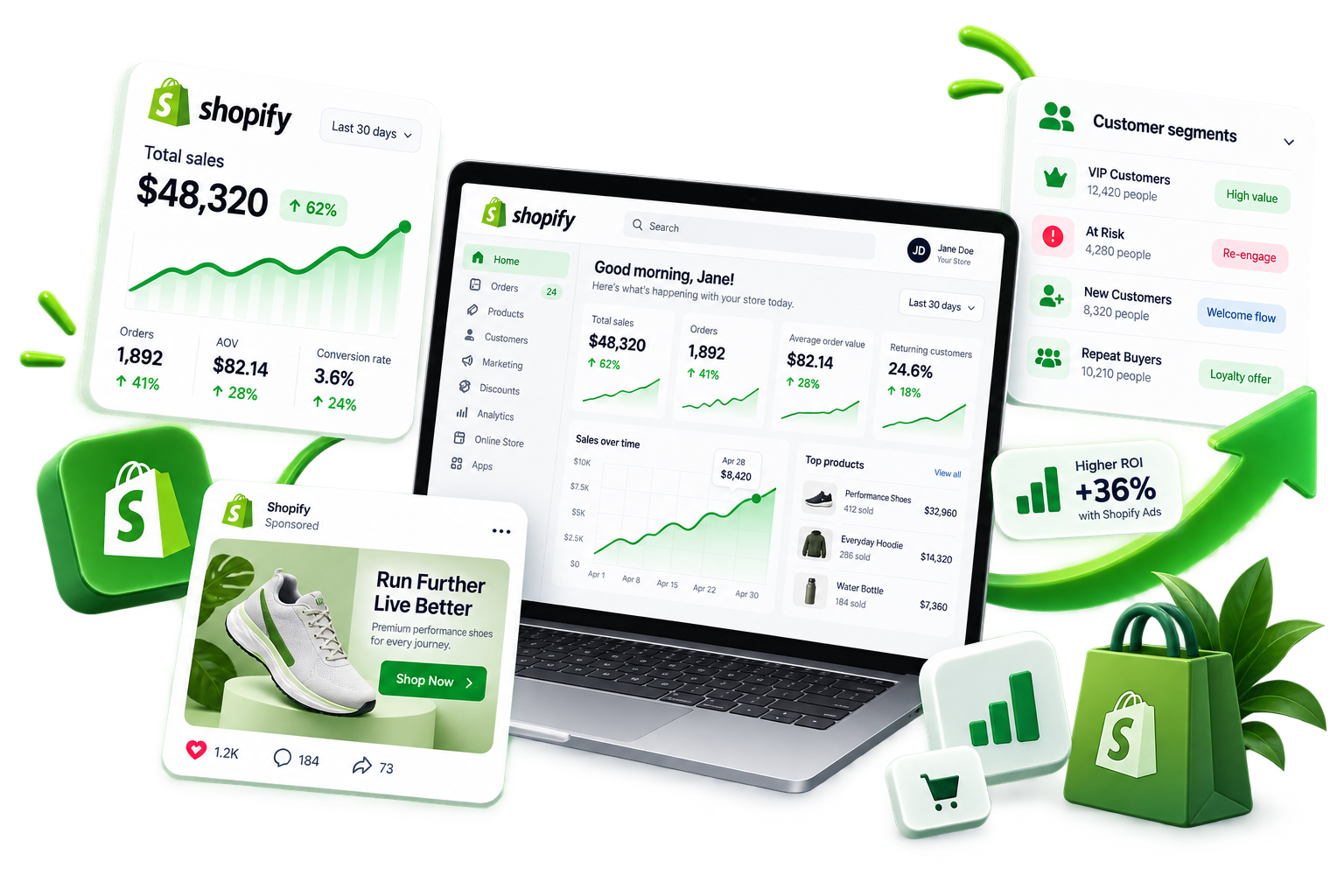
Product information now supports far more than the product page. A well-structured catalog can make merchandising, markets, integrations, search, and emerging shopping experiences easier to manage.
1
Product Structure
Organize products, variants, attributes, collections, and supporting information around how customers understand and shop the catalog.
2
B2B & Wholesale
Start with buyer types, company structures, catalogs, purchasing rules, and operational requirements before translating them into Shopify configuration.
3
Markets & Channels
Define what actually needs to change across regions or selling environments, including product availability, pricing, content, and merchandising.
Coordinate Shopify With the Systems Around the Store
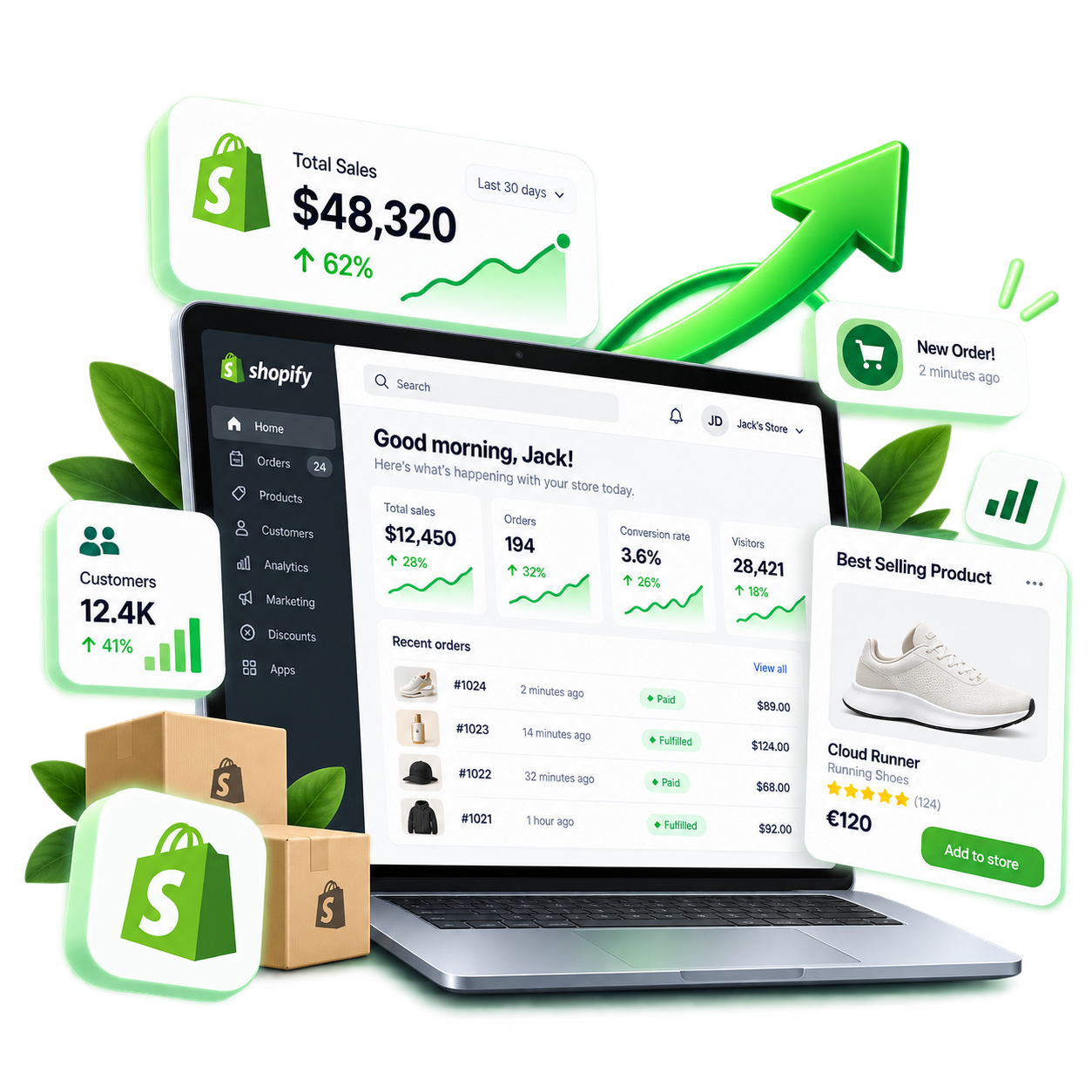
Shopify continues to expand what merchants can manage across storefront, B2B, markets, automation, and connected commerce. The useful question is which capabilities belong inside Shopify and which should remain with the apps and systems around it.
1
Storefront & UX
Improve navigation, merchandising, themes, product experiences, mobile UX, and other customer-facing areas without assuming every store needs a complete rebuild.
2
Apps & Development
Use native capabilities where they fit, established apps where they add useful functionality, and approved custom development when a specific requirement calls for it.
3
Integrations & Operations
Coordinate Shopify with fulfillment, inventory, product data, retail, and other systems that affect how orders and customer experiences actually work.
4
Ongoing Improvement
Continue improving the store through maintenance, troubleshooting, development, UX/UI, CRO, testing, and other approved ecommerce priorities as the business and platform evolve.

Shopify Experience in Practice


Ecommerce Builds
Building a Clearer Shopify Journey for Personalized Athlete Hydration


Ecommerce Builds
A Rapid Shopify Launch Powered by Streamlined Setup and 3PL Integration


Migration
A Modern Shopify Migration That Elevates a Medical Device Brand’s Digital Credibility
Shopify FAQs
The right approach depends on the customer experience, merchandising needs, integrations, and how much technical ownership the business wants. A well-structured theme may be enough; more specialized work can be appropriate when the business case supports it.
Improvements can include reusable sections, theme extensions, navigation, merchandising, product experiences, and mobile UX without assuming the store needs a complete rebuild.
Always Open Commerce can help define the storefront, catalog, app, integration, and operational requirements involved in a Shopify migration.
The team helps determine which capabilities belong in Shopify and which belong in apps or connected systems, then coordinates approved integrations and development.

 USA
USA
 Philippines


