





















































Shopping Feeds
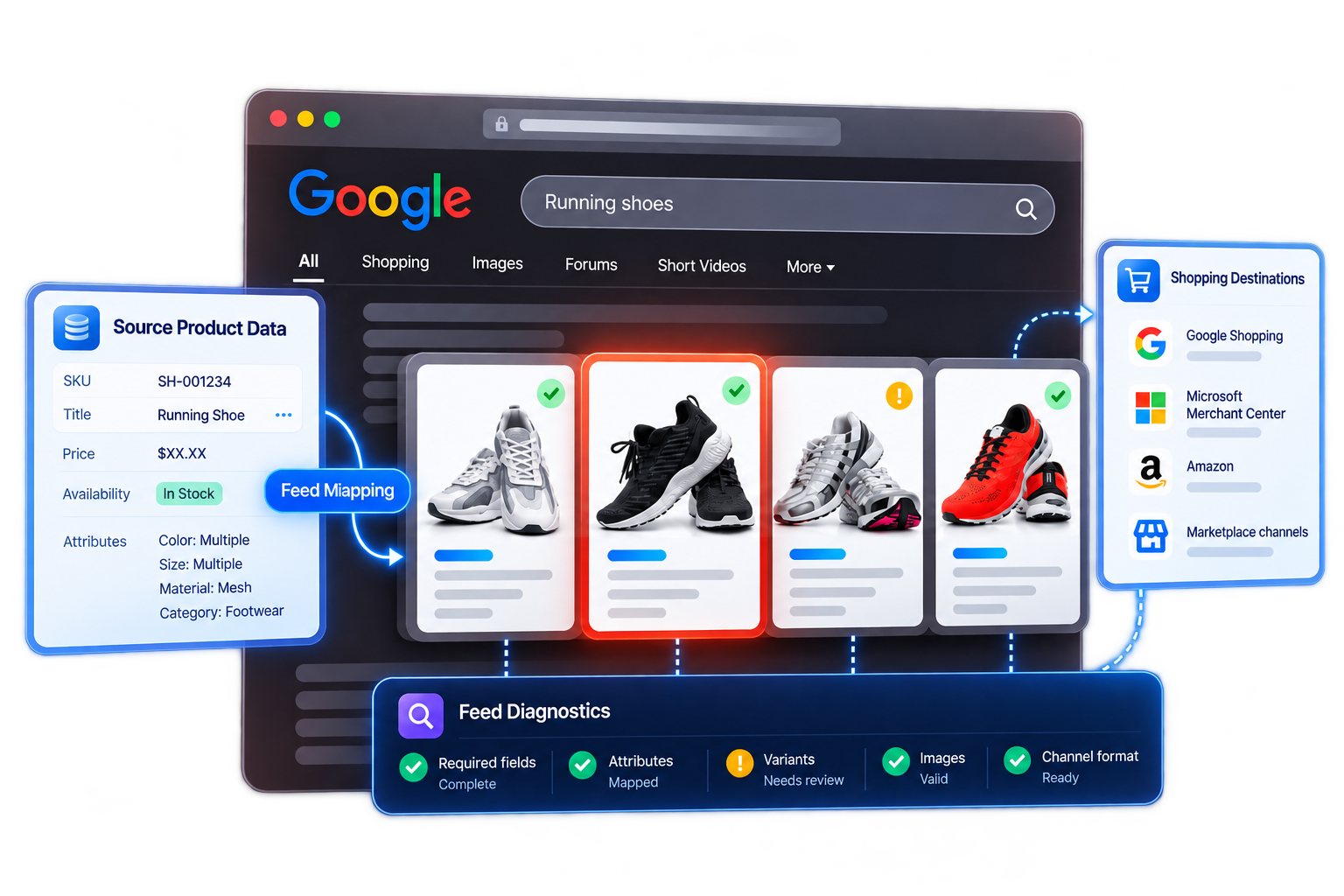
Shopping channels depend on accurate product data. Always Open Commerce audits feed sources, mappings, identifiers, variants, and attributes against destination requirements to help ecommerce teams trace errors, correct supported issues, and improve consistency across channels.
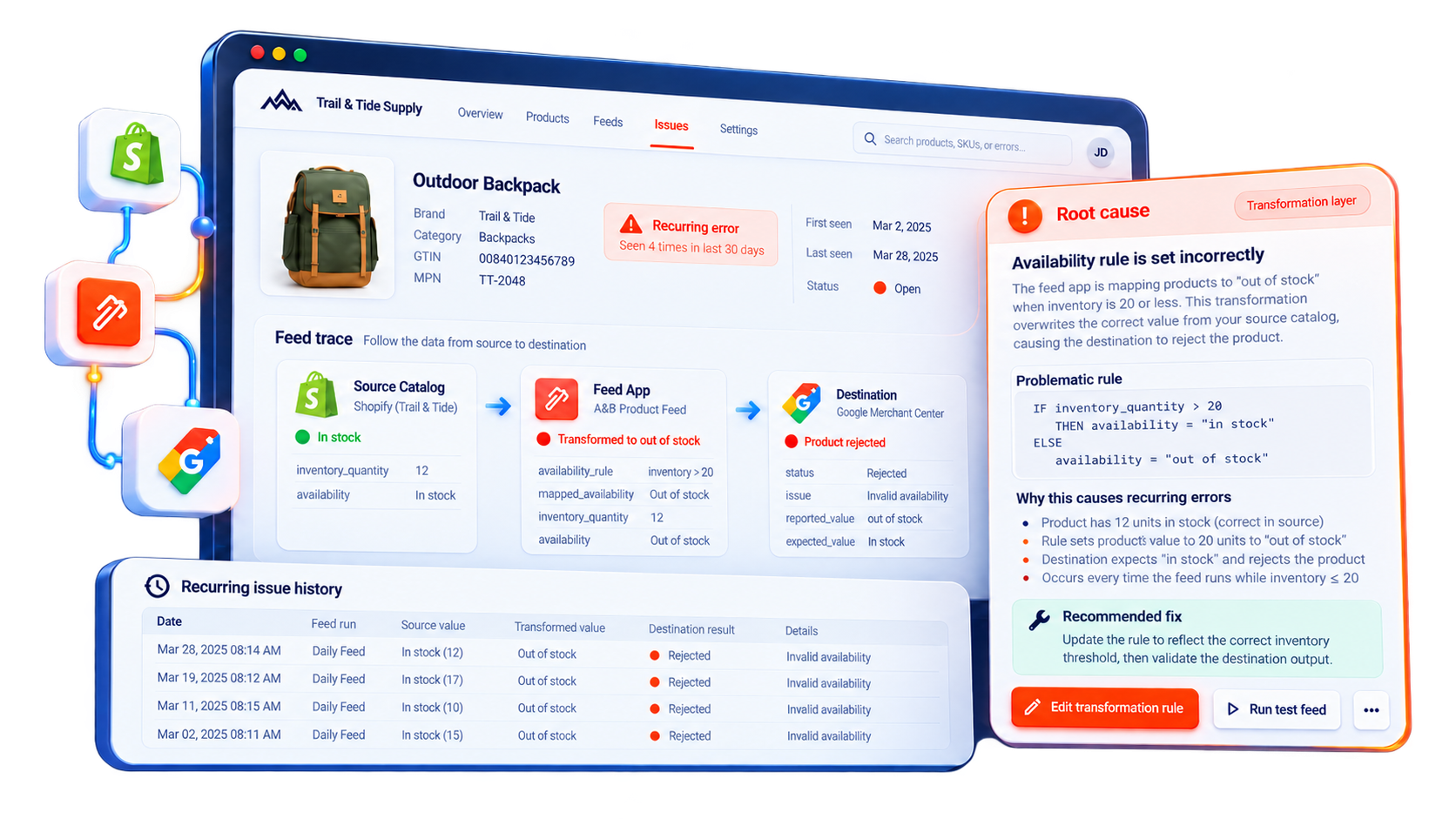
Feed Problems Usually Start Upstream
Missing identifiers, inconsistent variants, outdated pricing or availability, weak attributes, image issues, and destination mismatches can limit product visibility or lead to disapprovals before media strategy has a chance to matter.
The first question is where the problem enters the data path. A feed can surface an error that actually belongs in the source catalog, ecommerce platform, transformation layer, or workflow producing it.
Map Product Data to Channel Requirements
Always Open Commerce reviews the path from source data to destination, then scopes the feed work around the fields, mappings, delivery method, and diagnostics that need attention.

Data Source & Delivery
Configure or support the approved way product data reaches the destination, such as a supported platform connection, file, app, or other feed method. Broader integration work may require a separate feasibility review through API Integrations.

Attribute Mapping
Map source attributes to destination fields without masking bad source data. Titles, identifiers, categories, product types, price, availability, and other required values should preserve the product’s actual meaning.

Identifiers & Variants
Review relevant GTINs, MPNs, brand data, variant attributes, item groups, and other product relationships. When the catalog itself is structurally wrong, PIM Setup & Support or a dedicated catalog scope should own the correction.

Diagnostics & Disapprovals
Investigate missing items, mismatched product information, destination diagnostics, and supported data or policy-related errors. Always Open Commerce can correct issues within scope, while the destination controls eligibility, enforcement, and final approval.

Destination Validation
Check the output against the selected channel’s current first-party requirements rather than assuming one schema works everywhere. Product-data specifications can change, so destination rules are validated against current documentation.
Find the Source of Recurring Errors
Repeated feed patches become fragile when upstream data is incomplete, delayed, transformed incorrectly, or owned in the wrong system. A lasting fix starts with identifying where each value should be corrected.

Where Is the System of Record?
Confirm which system owns identifiers, variants, attributes, price, availability, and other critical values. Fixing the authoritative source is usually more maintainable than repeatedly overriding the same error downstream.
Does the Destination Need Different Data?
Some channels require fields or relationships the storefront does not use in the same way. Those differences may need deliberate mapping or enrichment rather than placeholder values or one-off manual fixes.
Is a Transformation Changing the Value?
Apps, connectors, scheduled files, and integrations can transform, delay, or overwrite product information. If the defect is introduced between source and destination, the relevant feed, integration, or technical owner should address that layer.

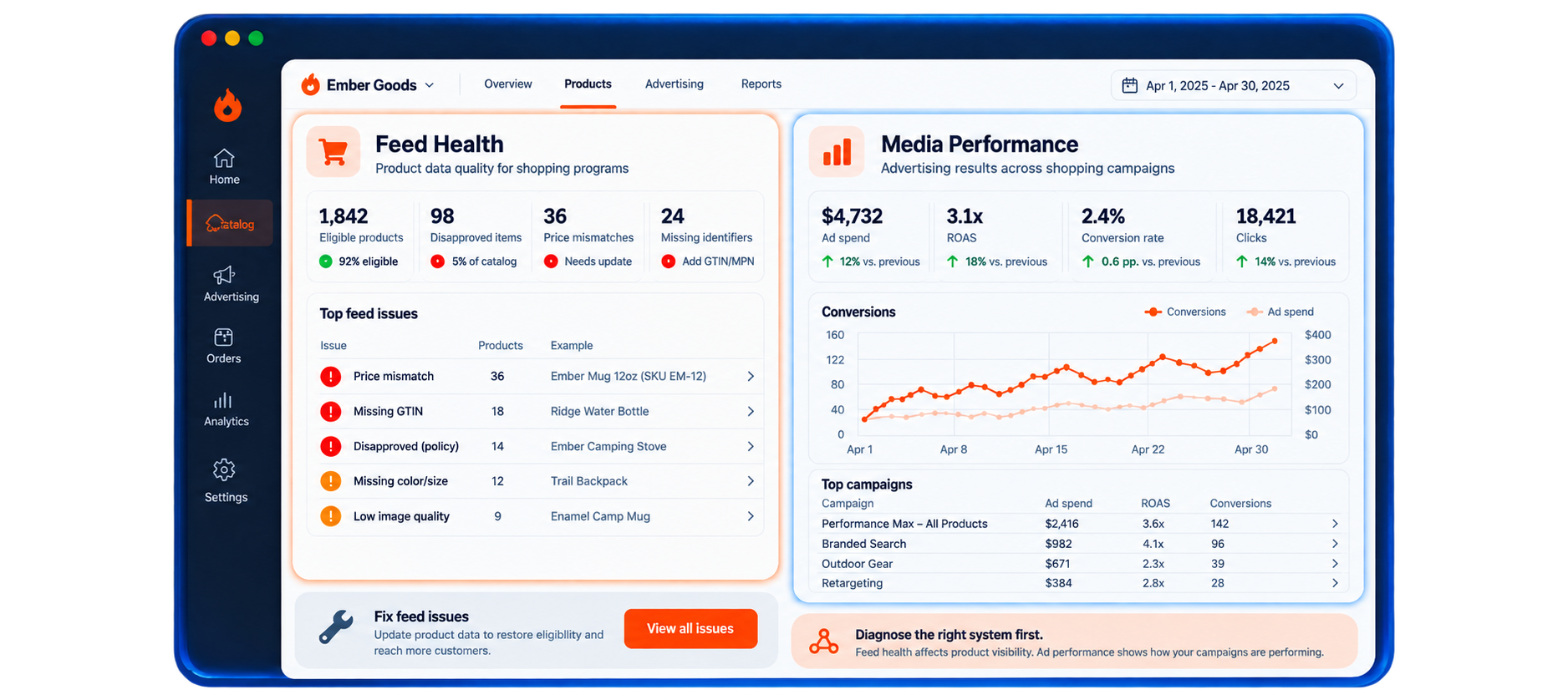
Separate Feed Health From Media Performance
Accurate product data supports healthy shopping programs but does not guarantee performance. Google Merchant Center, Microsoft Merchant Center, and other destinations make their own eligibility, policy, auction, and presentation decisions.
Always Open Commerce can connect feed work with Google Ads, Marketplace Setup, PIM Setup & Support, Structured Data, and Performance Audits when shared product data affects multiple channels or catalog issues need to be distinguished from media performance.
Recurring feed monitoring or catalog cleanup is included only when scoped. The goal is clearer ownership, fewer preventable data errors, and easier maintenance as catalogs and destination requirements change.
Related Catalog & Channel Services

Product Data & Catalog Structure Audit
Review product attributes, categories, variants, and catalog structure to identify data inconsistencies and prioritize practical next steps.

Flxpoint
Connect supplier inventory, catalog data, channel listings, and order-routing workflows across distributors and fulfillment sources.

Google Ads
Align search intent, Shopping campaigns, product data, and conversion measurement with clear advertising goals and commercial priorities.
Frequently Asked Questions
A shopping feed is structured product information sent from a commerce source to a shopping, advertising, or marketplace destination. The delivery method can vary; the destination still needs accurate, current fields and product relationships.
Always Open Commerce can diagnose supported feed and source-data issues, correct what is within scope, and organize the next action. The destination controls policy enforcement, product eligibility, and final approval, so resolution cannot be guaranteed.
Only when source-catalog cleanup is included. Larger taxonomy, identifier, variant, PIM, or technical problems may require PIM Setup & Support or another dedicated catalog scope.
No. Clean product data removes preventable feed problems and gives campaigns better inputs, but performance still depends on demand, competition, price, budget, bidding, landing experience, measurement, and platform behavior.

 USA
 Philippines


