
























































Subscriptions & Recurring Commerce
Subscription technology should support the recurring model beyond the initial checkout. Subscriber self-service, product rules, recurring orders, retention, billing responsibilities, and connected data may sit across different systems, so the stack should be planned around which platform owns each part of the subscriber relationship.
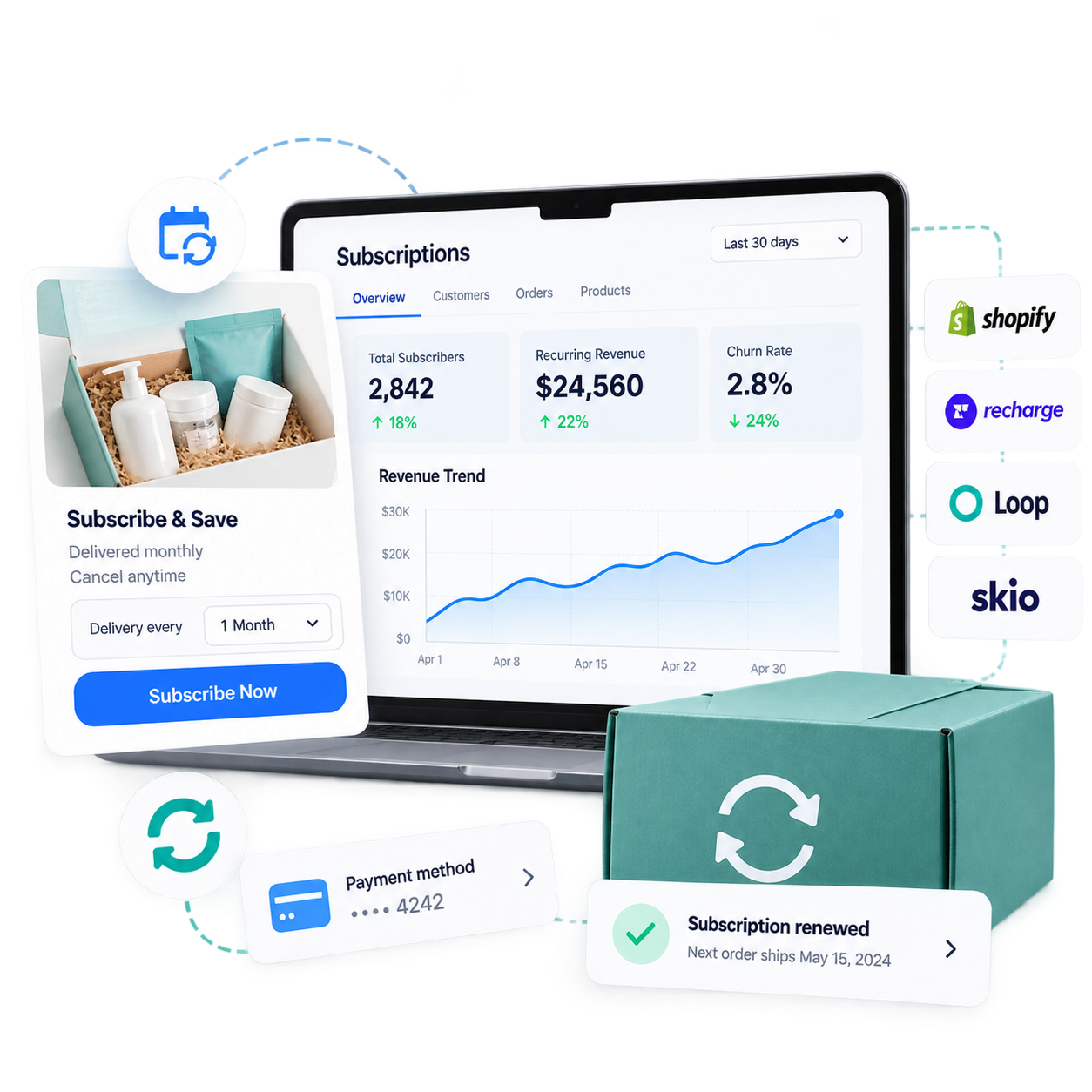
Choose by Recurring Commerce Model
These platforms can own different parts of recurring commerce. Start with the model being sold, the subscriber experience the business needs to support, and how much billing, revenue operations, retention, and connected data should live inside the platform.

Recharge
Recharge is built for ecommerce subscription programs where recurring orders, subscriber self-service, product or bundle choices, churn prevention, loyalty, and connected customer journeys need to live close to the storefront.

sticky.io
sticky.io is a broader revenue-operations platform for businesses that need recurring billing, payments, checkout, recovery, CRM, offer management, and other revenue workflows coordinated beyond a basic subscription app.

Rebillia
Rebillia is worth evaluating when the recurring model needs flexible subscriptions, memberships, subscribe-and-save, recurring services, or subscription-box structures with customer self-service and adaptable lifecycle management.
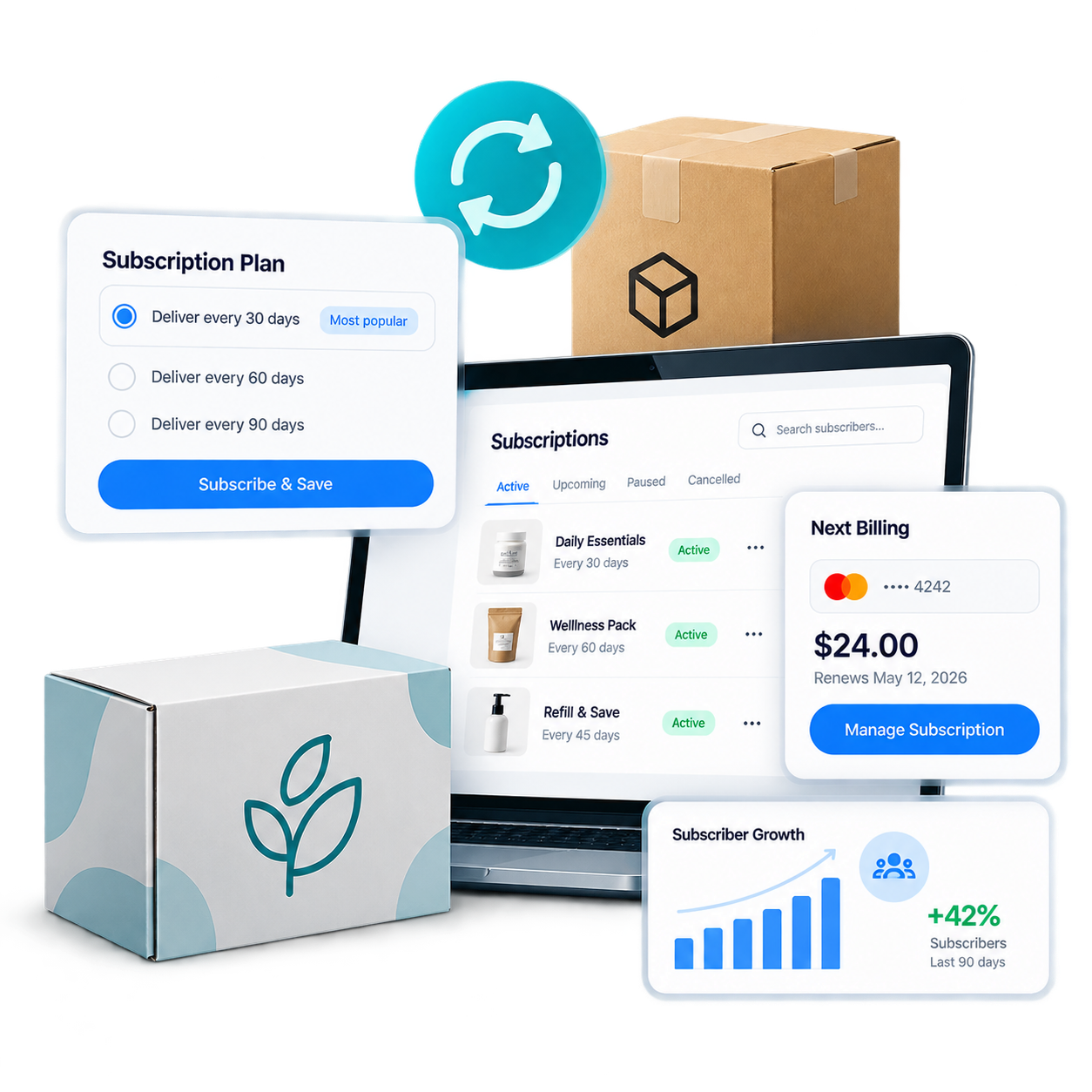
Evaluate the Recurring Model, Subscriber Experience, and System Responsibilities
Evaluate the stack around the recurring model being sold, the actions subscribers need to manage, the product and order rules behind those journeys, and which systems own subscription data, integrations, billing responsibilities, and ongoing operations.
Recurring Model & Platform Role
Define whether the business sells subscribe-and-save products, boxes, memberships, recurring services, bundles, or another model, then decide which product rules, customer actions, billing functions, and operational responsibilities should live in the platform.
Subscriber Experience & Retention
Review sign-up, subscriber self-service, recurring orders, product changes, communication, cancellation or pause journeys, and retention needs without assuming the technology alone determines the customer outcome.
Billing, Data & Integrations
Map the customer, product, order, subscription, and billing information involved, which systems need to exchange it, and where payment, billing, tax, or financial decisions require review by the appropriate specialist.
Support the Subscription Stack
Once the recurring model and platform role are clear, Always Open Commerce can coordinate approved storefront, subscriber-experience, integration, retention, and maintenance work around the subscription stack without assuming billing, payment, or financial decisions belong in scope.
Improve the Subscriber Experience
Use UX / UI Design when approved subscription journeys, account experiences, self-service controls, product choices, or storefront interactions need to be clarified or improved.
Support Subscriber Retention Journeys
Use Subscription Retention to coordinate approved subscriber journeys, lifecycle communication, customer experience, and retention priorities without treating the platform itself as the source of retention outcomes.
Connect Subscription Data and Systems
Use API Integrations when approved subscription, customer, product, order, marketing, or operational data needs to move between the recurring-commerce platform and connected systems. Exact feasibility requires technical review.
Maintain the Subscription Environment
Use Ongoing Maintenance for approved configuration changes, troubleshooting, storefront improvements, integration updates, and related ecommerce work as the subscription environment evolves.
Frequently Asked Questions
Start with the recurring model, subscriber actions, product and order rules, billing responsibilities, integrations, and the operational team that will manage the program.
Improve the current platform when it supports the required model and the main problems are configuration, UX, integrations, data flow, or maintenance. Consider replacement when the platform role no longer fits.
Review subscriber records, products, recurring orders, account journeys, payment and billing responsibilities, integrations, communication, retention workflows, and migration risk before changing platforms.
The technology should support approved subscriber journeys, lifecycle communication, self-service, and retention priorities, while measurement and operating ownership remain clearly defined.

 USA
 Philippines


