












































WooCommerce
Ownership is both the advantage and the responsibility of WooCommerce. Hosting, extensions, custom code, data, and maintenance stay part of the operating model, so Always Open Commerce focuses on helping teams use that flexibility without creating an unmanageable WordPress stack.

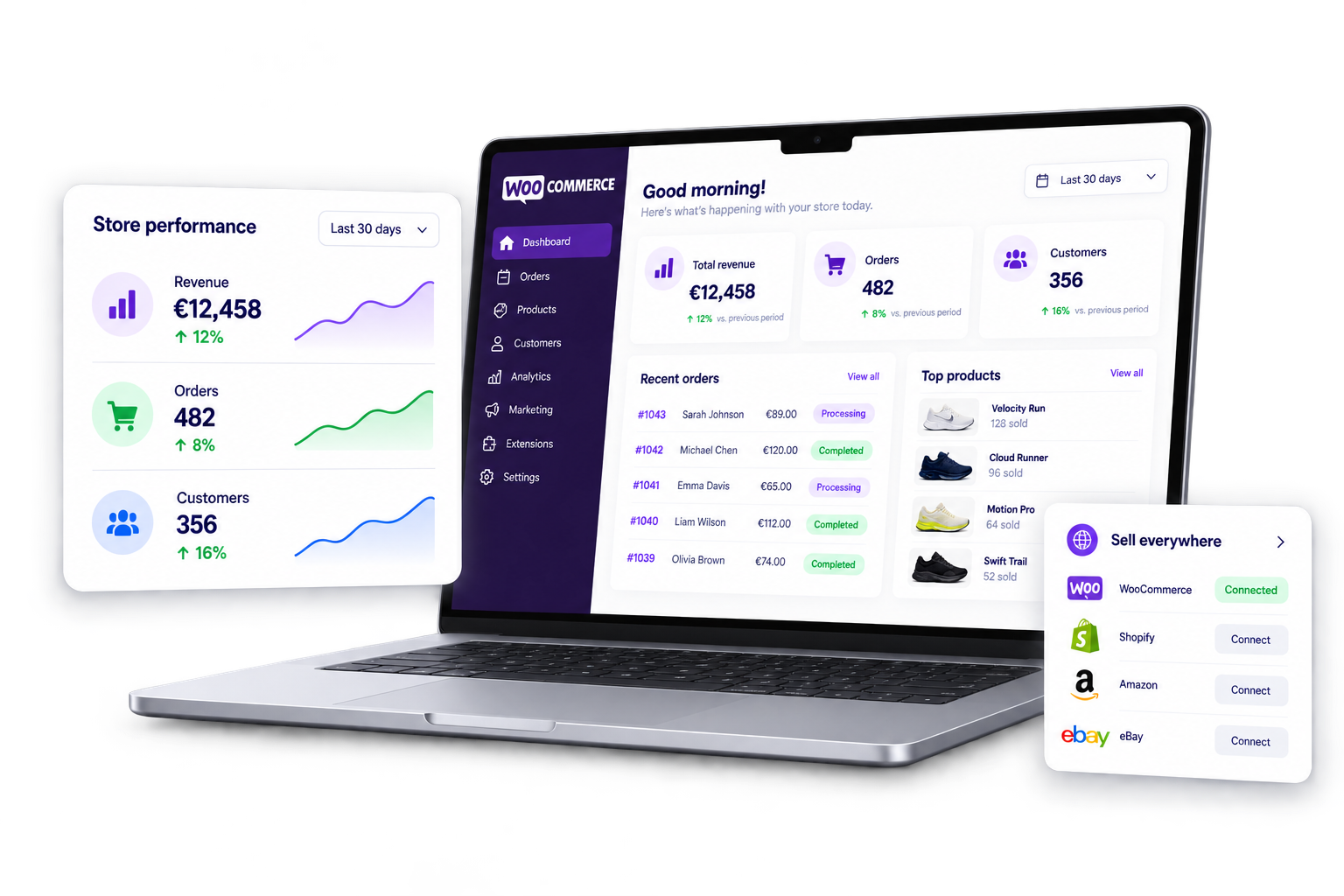
Treat WooCommerce as a Stack You Own
WooCommerce puts more of the commerce environment under the business’s control. Hosting, WordPress, themes, extensions, custom code, and store data can all be shaped around the requirement rather than a fixed hosted-platform model.
That flexibility is useful when ownership matters, but it also means more pieces need clear responsibility. We start by defining what the store must do, which parts deserve customization, and who will maintain the resulting environment after launch.
That matters especially when WordPress is doing more than commerce, because editorial content, plugins, theme behavior, and store functions share the same environment.
Decide Where Flexibility Is Worth the Maintenance
A WooCommerce store can solve new requirements through extensions, custom development, WordPress functionality, or connected systems. The important decision is not whether another option exists, but whether adding it makes the store easier or harder to operate over time.
Always Open Commerce evaluates the requirement in the context of the existing stack, customer journey, data, and ongoing support needs. That helps avoid overlapping plugins, unnecessary custom code, and dependencies that make routine changes harder than the business value they create.
We also look at whether a requirement belongs inside WordPress at all or should remain in a specialized external system with a defined connection to the store.

Build Commerce on a Stable WordPress Foundation
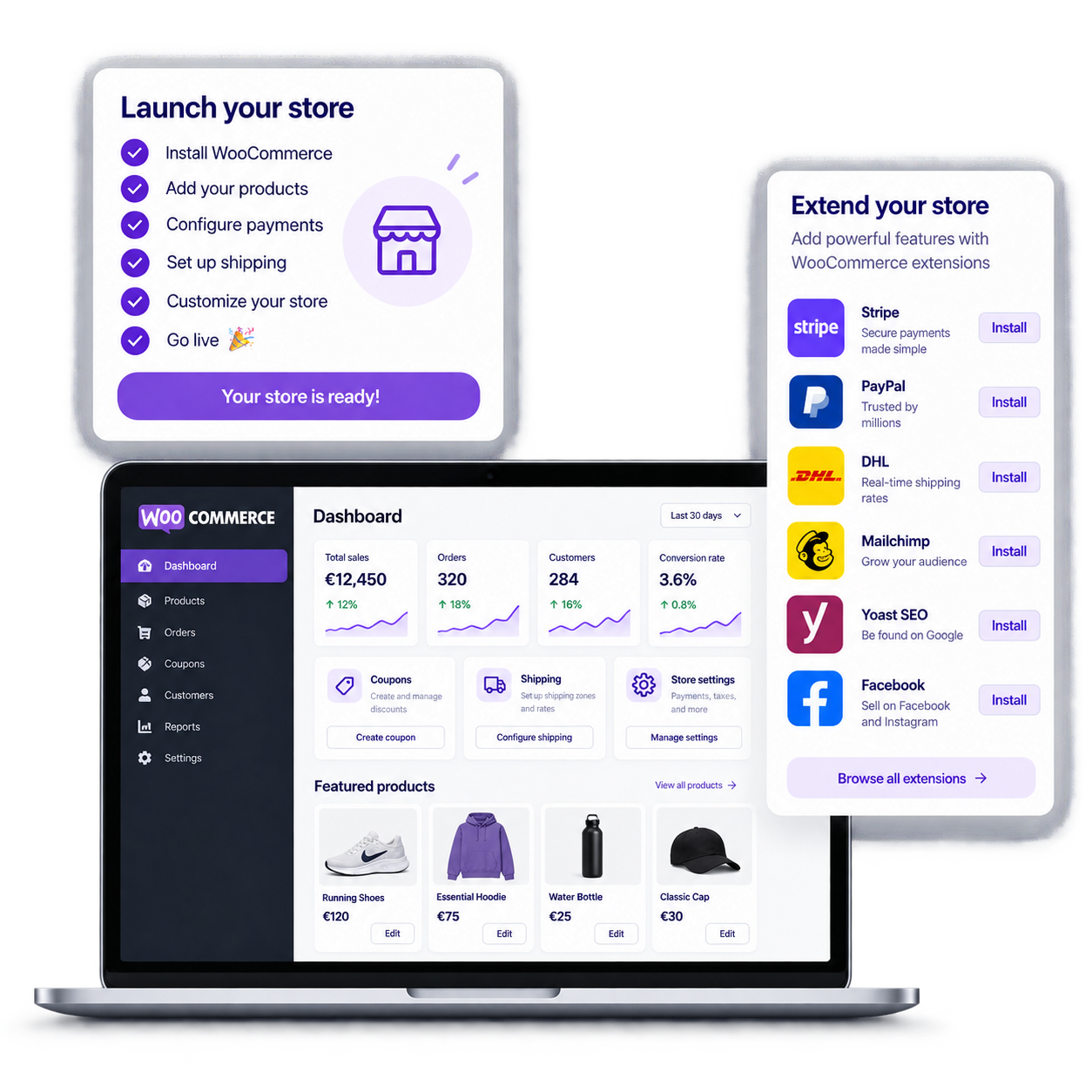
Because WooCommerce runs inside WordPress, storefront decisions cannot be separated cleanly from the site environment around them. We plan the commerce experience and the underlying WordPress stack together.
1
Hosting & Environment
Choose hosting and environment requirements around the store’s traffic, operational needs, maintenance model, and approved technical constraints rather than treating hosting as an afterthought.
2
Storefront & Theme
Shape navigation, product discovery, content, mobile behavior, cart journeys, and theme work around the buying experience while keeping day-to-day editing practical for the team.
3
Extensions & Commerce Functions
Use extensions where they solve a defined requirement, then review how payments, shipping, subscriptions, merchandising, and other functions interact before adding more dependencies.
4
Custom Development
Reserve custom development for requirements that justify owning custom behavior. Specialist review is required before making implementation or compatibility commitments.
Keep WooCommerce Connected and Maintainable
The long-term work is keeping content, commerce, extensions, and connected systems functioning as one environment. A maintainable store needs clear ownership beyond the launch itself.
1
Catalog & Content
Organize products, variations, attributes, categories, media, and WordPress content so merchandising and customer journeys are easier to manage together.
2
Connected Systems
Plan approved ERP, CRM, fulfillment, marketplace, analytics, and other integrations around the data each system owns and the workflows the business actually needs.
3
Updates & Dependencies
Treat WordPress, WooCommerce, themes, extensions, and customizations as related dependencies. Changes should be reviewed with the live store and connected functionality in mind.
4
Ongoing Improvement
Always Open Commerce can continue with approved UX/UI, development, catalog work, integrations, troubleshooting, CRO, SEO/GEO, and maintenance as the store evolves.
WooCommerce Experience in Practice

Conversion Rate Optimization
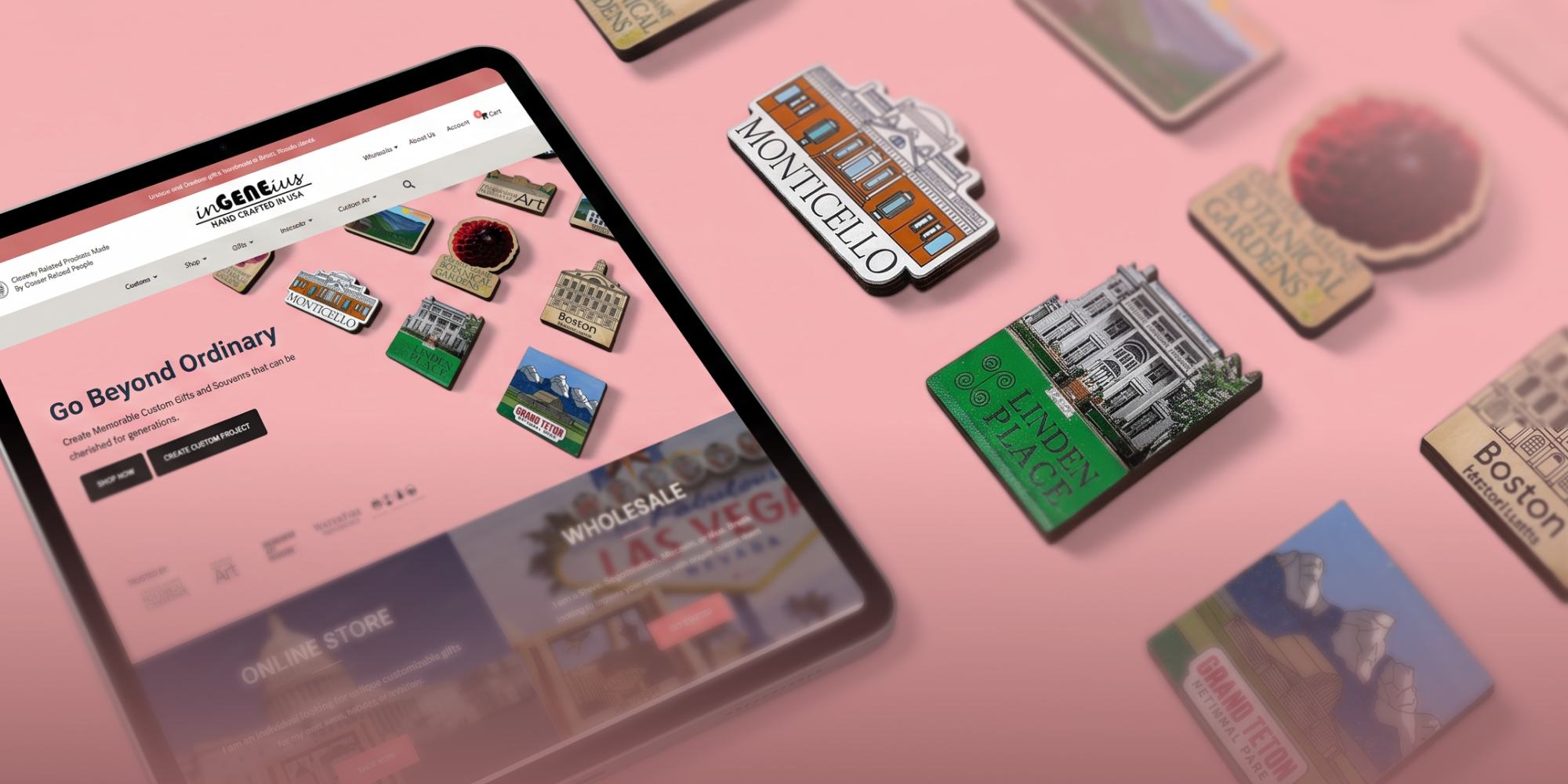
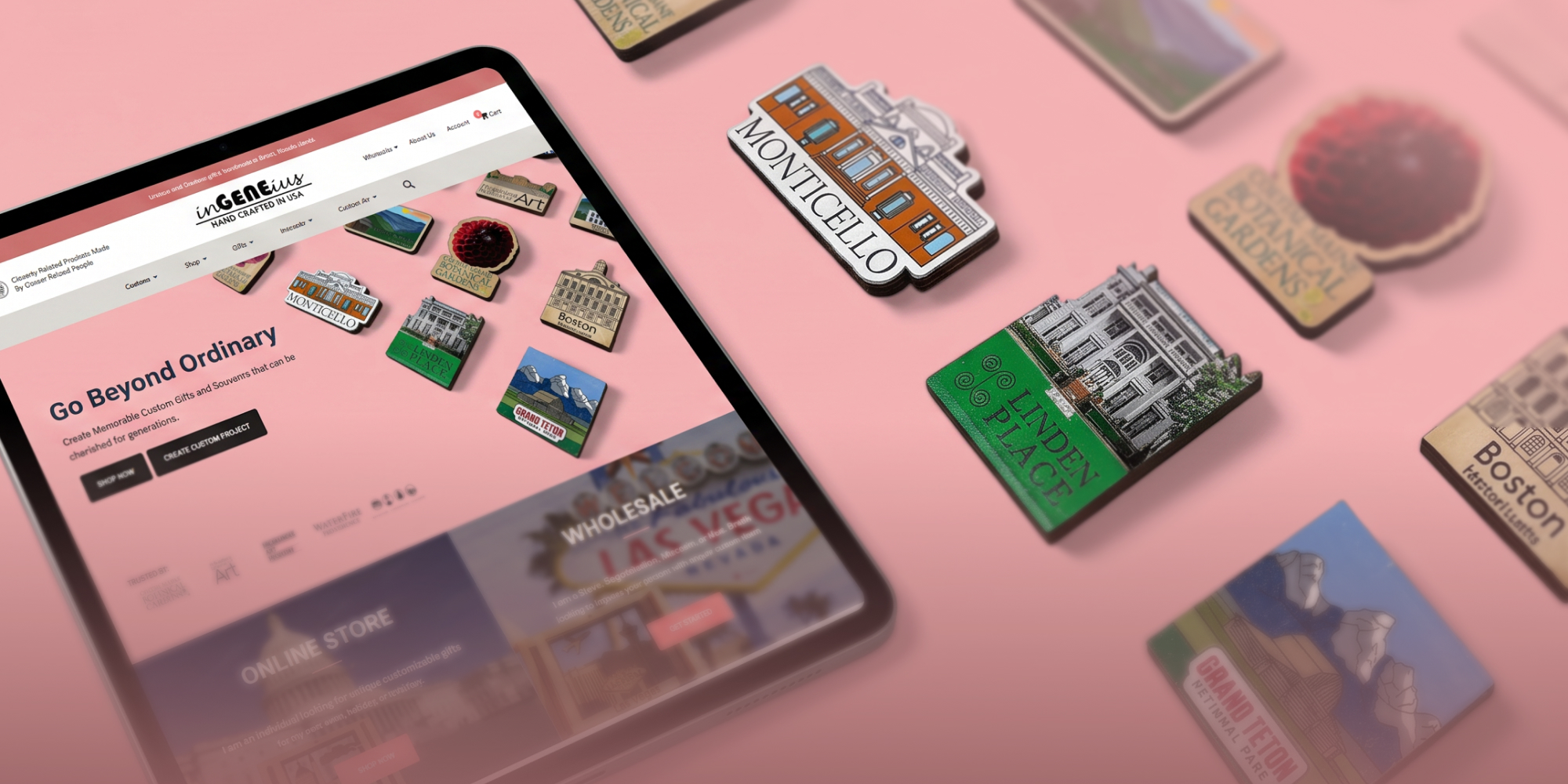
InGeneius Crafts a Streamlined E-commerce Experience for Wholesale and Retail Customers
WooCommerce FAQs
A WooCommerce store can solve new requirements through extensions, custom development, WordPress functionality, or connected systems. The important decision is not whether another option exists, but whether adding it makes the store easier or harder to operate over time.
Because WooCommerce runs inside WordPress, storefront decisions cannot be separated cleanly from the site environment around them. We plan the commerce experience and the underlying WordPress stack together.
Bring the WordPress, storefront, extension, data, and maintenance decisions that are making the store harder to manage. Always Open Commerce can help simplify the requirements, define a practical WooCommerce plan, and execute the approved work around it.
The long-term work is keeping content, commerce, extensions, and connected systems functioning as one environment. A maintainable store needs clear ownership beyond the launch itself.

 USA
 Philippines


