

















































Jewelry
Jewelry shoppers are often buying both a product and a meaning: a gift, milestone, personal style, or everyday piece. Always Open Commerce brings product detail, visual presentation, sizing, personalization, merchandising, and retention together around that high-consideration journey.


Give Shoppers Enough Detail to Evaluate a Piece Online
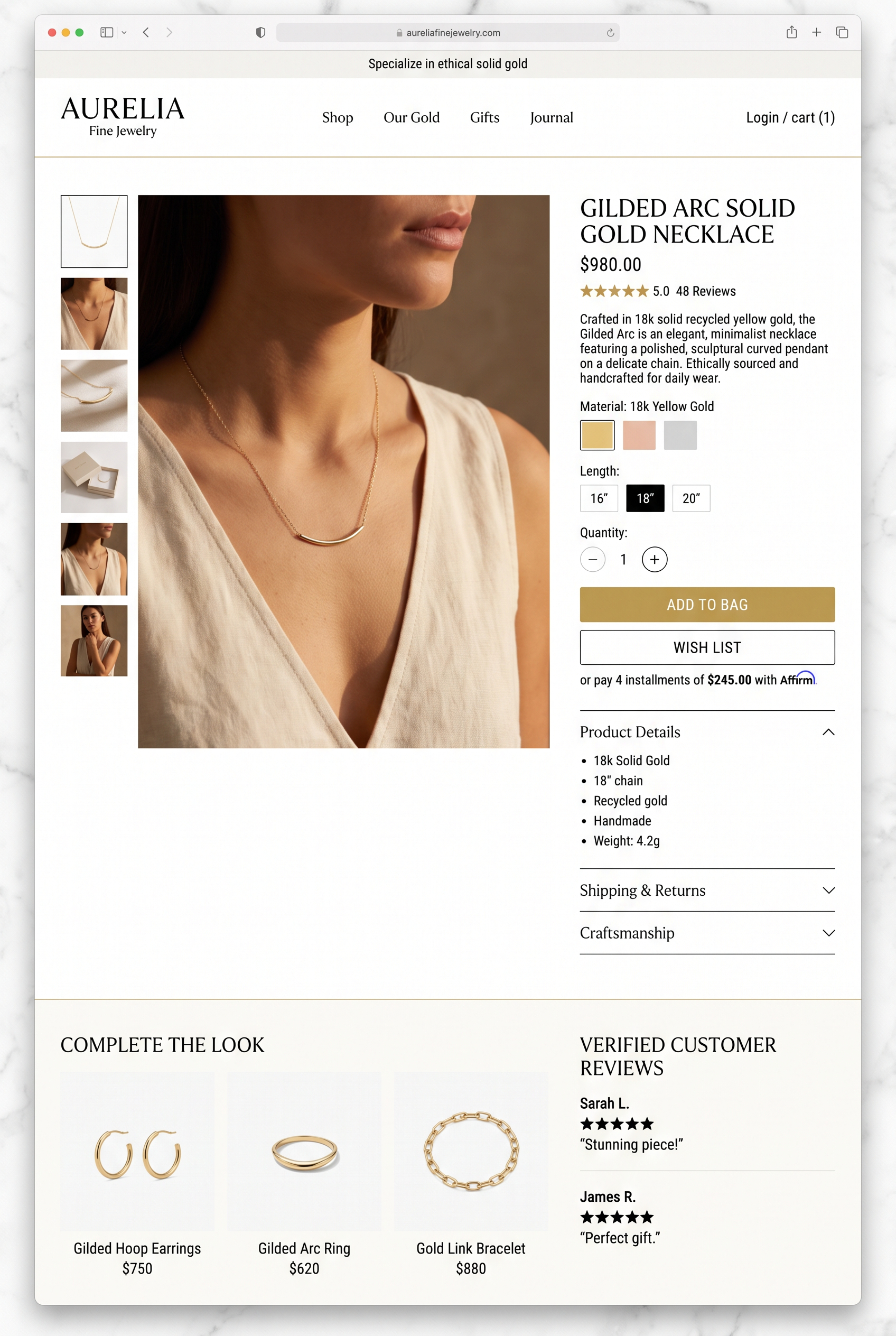
Jewelry buyers often need to inspect details they would normally evaluate in person. Product visuals, dimensions, scale, metal and gemstone information, color variations, sizing, and construction details can all influence whether a shopper understands what they are considering. The experience should make those details easy to find without making the page feel clinical.
Strong presentation also needs context. Multiple angles, close-up imagery, on-body or scale references, and concise supporting information can help shoppers understand how a piece looks and feels. The exact content depends on the product, but the page should reduce avoidable uncertainty before the shopper reaches the cart.
Support Different Decisions for Self-Purchase, Gifting, and Milestones
Jewelry can be purchased for everyday wear, gifting, anniversaries, engagements, weddings, or other occasions, and those motivations can change how customers browse. Some shoppers know the exact material, stone, or style they want. Others begin with an occasion, recipient, budget range, or broad aesthetic and need a guided path into the catalog.
Navigation, collections, search, filters, educational content, and merchandising can support those different starting points without forcing every shopper through the same story. When sizing, personalization, availability, returns, or care affect the decision, that information should appear before it becomes a reason to hesitate.
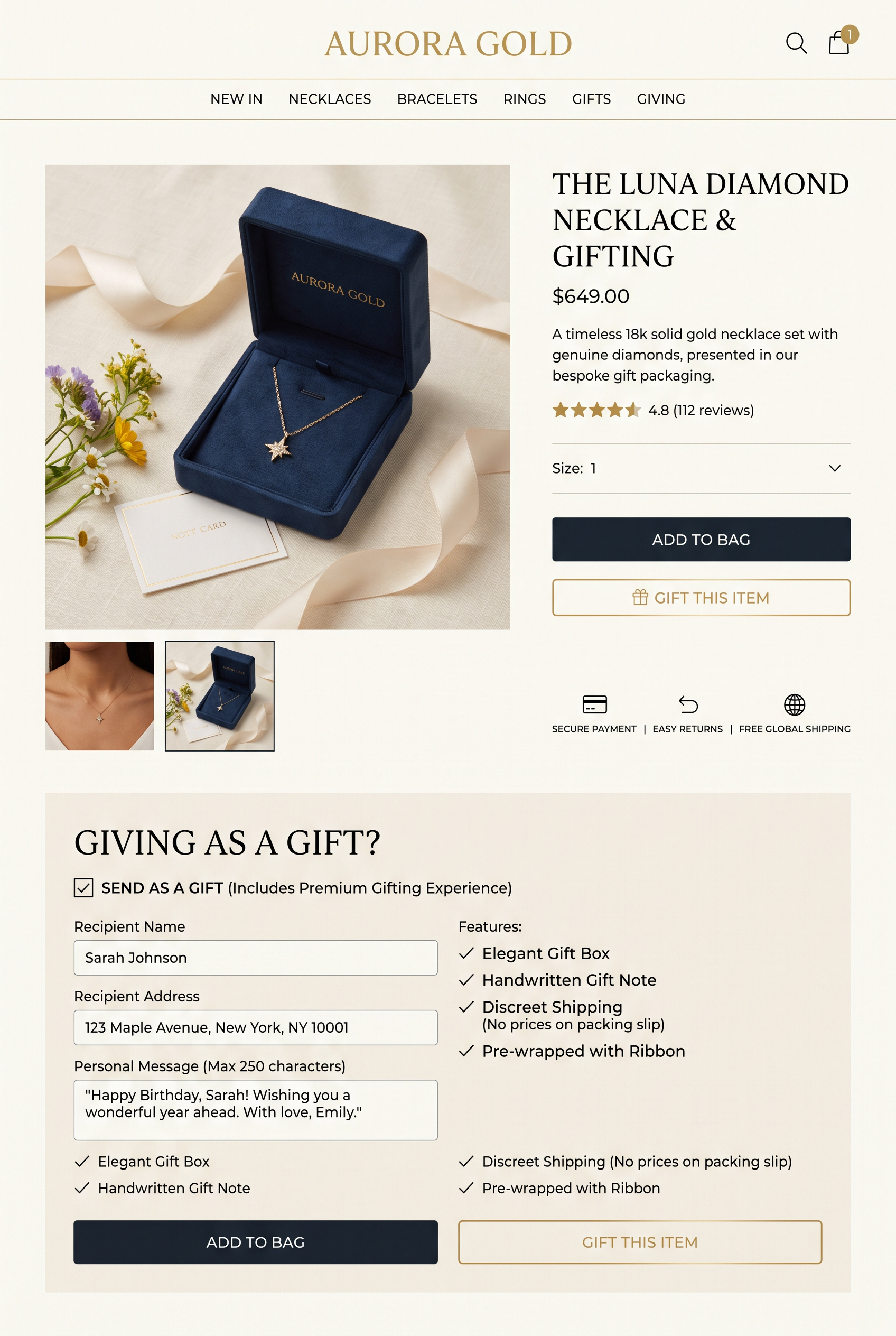
Build Around Four Jewelry Shopping Needs
Jewelry stores benefit when product presentation, education, and catalog structure work together. The supporting ecommerce services should follow the decisions shoppers need to make rather than mirror internal departments.
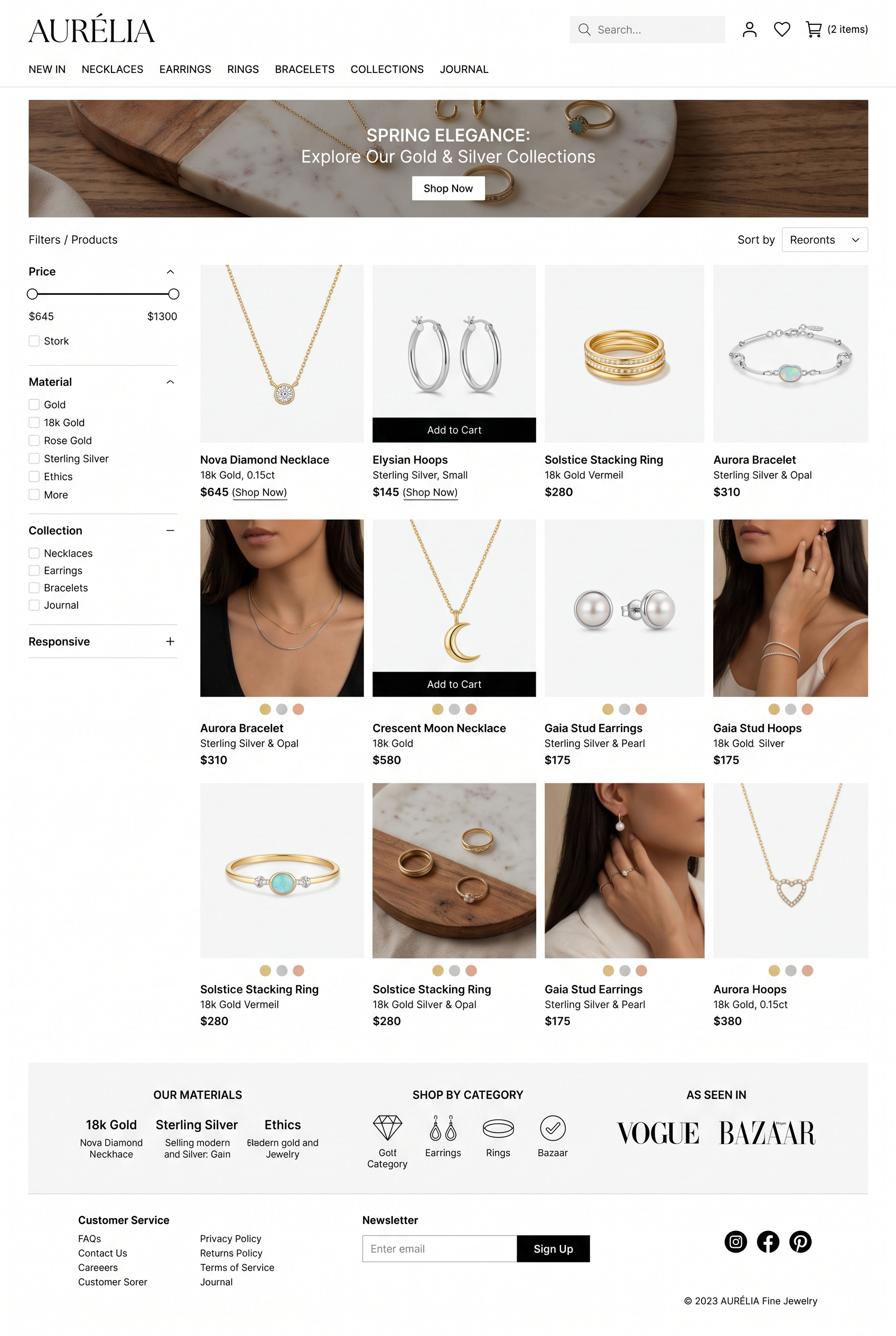
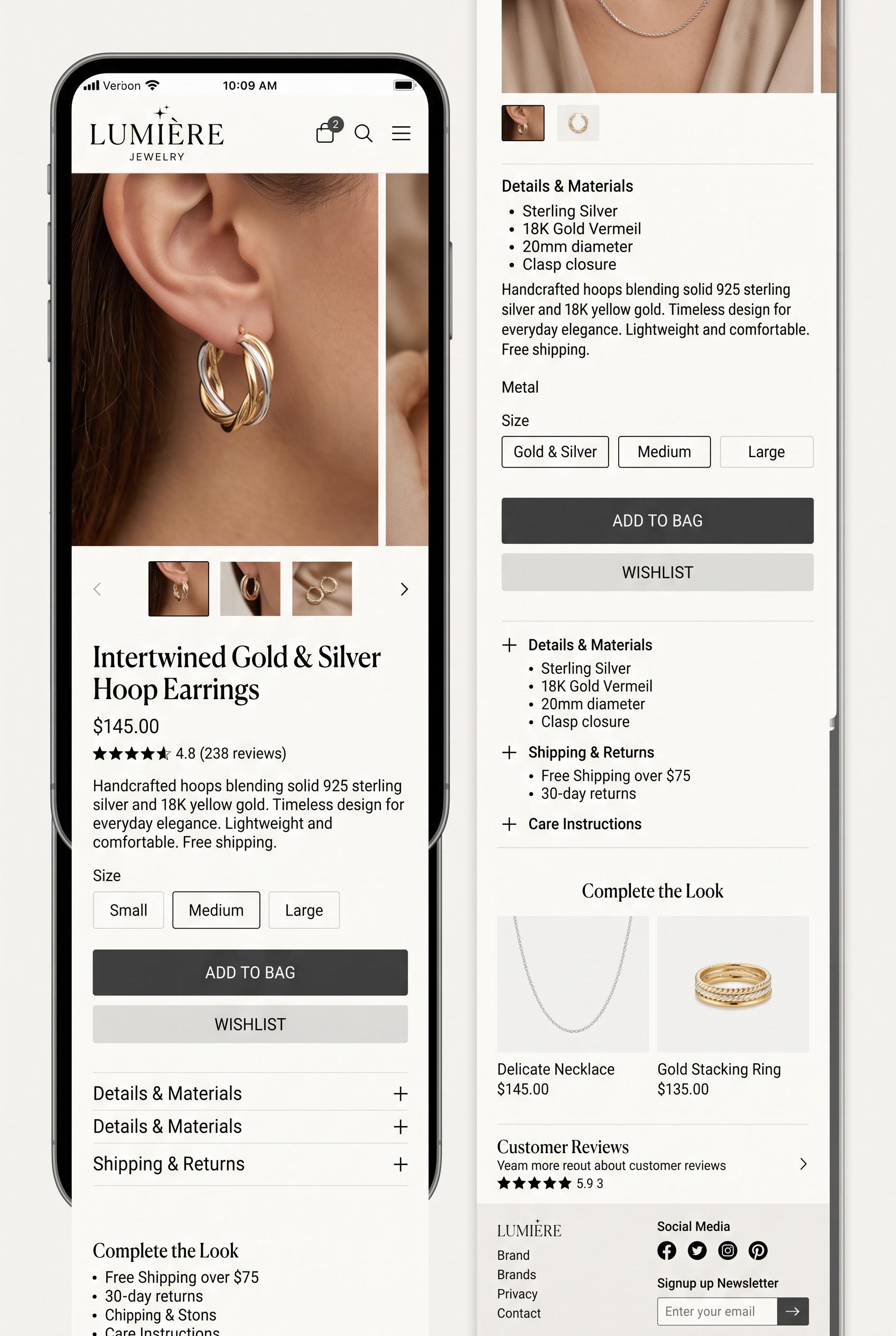
1
Show Detail, Scale, and Variation Clearly
Product imagery, zoom, alternate views, scale references, colors, and variations help customers inspect a piece remotely. UX/UI, media presentation, mobile optimization, and development can support that evaluation.
2
Make Materials and Product Details Easy to Compare
Metals, gemstones, dimensions, finishes, specifications, and other approved product information should be structured consistently enough to scan and compare. Product data, content, and catalog organization support that consistency.
3
Handle Size and Personalization Without Confusion
Rings, bracelets, chains, engraving, or other configurable products can introduce additional choices. The storefront should keep size guidance, options, availability, and the resulting product selection understandable. Exact configuration behavior requires technical review.
4
Connect Occasions to Relevant Products
Collections, filters, landing pages, related products, and educational content can help customers shop by occasion, recipient, style, or product type when those pathways reflect the actual assortment.
Keep Storytelling and Product Data Working Together
Jewelry merchandising often depends on both emotional presentation and precise product information. A new collection can require fresh imagery and storytelling while also adding materials, attributes, variants, sizing, and product relationships. If those layers are managed separately, customers can see beautiful pages that are still hard to shop.
Always Open Commerce can coordinate the relevant UX, development, product data, CRO, SEO/GEO, content, retention, and ongoing support around the same catalog. That allows brand presentation and product detail to support the same buying decision instead of competing for attention.
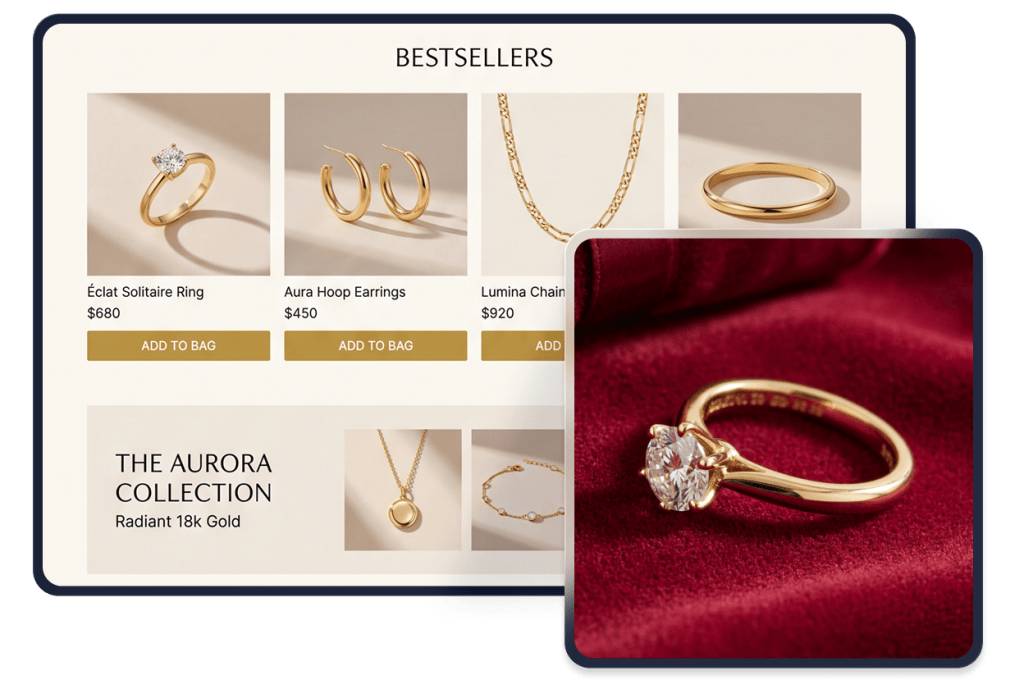
Recommended Tech Stack

Create a polished DTC storefront for jewelry brands that need strong visual merchandising, product storytelling, promotions, and streamlined purchasing.

Add product personalization, engraving, configuration, 3D visualization, and virtual product experiences where customers need to see or customize their selection.

Use reviews, visual user-generated content, loyalty, and referrals to strengthen product confidence and support ongoing customer relationships.
Jewelry Ecommerce FAQs
The exact details depend on the piece, but materials, dimensions, sizing, variations, product imagery, scale, care information, availability, and return considerations may all affect the decision. The most important information should be easy to scan on both desktop and mobile.
Use product imagery and context that make size easier to judge, such as close-ups, multiple angles, on-body views, or clear dimensions when appropriate. The goal is to reduce uncertainty without replacing accurate product specifications.
Buying guides and educational content are most useful when they help customers understand materials, styles, sizing, care, or another real decision and provide a clear path back to relevant products. They should support shopping rather than become a separate content library.
Yes, when product options, catalog structure, UX, or custom development are part of the approved scope. Exact sizing logic, personalization behavior, pricing effects, and platform feasibility need technical and business review before implementation is promised.

 USA
USA
 Philippines


