


















































Ecommerce Platforms
Choose an ecommerce platform around the business model, catalog, customer experience, connected systems, and level of technical ownership the operation needs. Always Open Commerce can help evaluate the options, plan the right path, and carry approved platform work through implementation and ongoing improvement.

Ecommerce Platforms and Where They Fit
Each platform creates a different balance of flexibility, ownership, built-in capabilities, and operating responsibility. Use the options below to identify which platform deserves a closer look.

Shopify
Shopify is a broad fit for businesses that want a hosted commerce platform with flexible storefront options, an established app ecosystem, and room to connect other systems as needs grow.
Shopify Plus
Shopify Plus is worth evaluating when advanced B2B, checkout, markets, automation, integration, organizational, or other plan-level requirements create operating needs that standard Shopify does not fully address.

BigCommerce
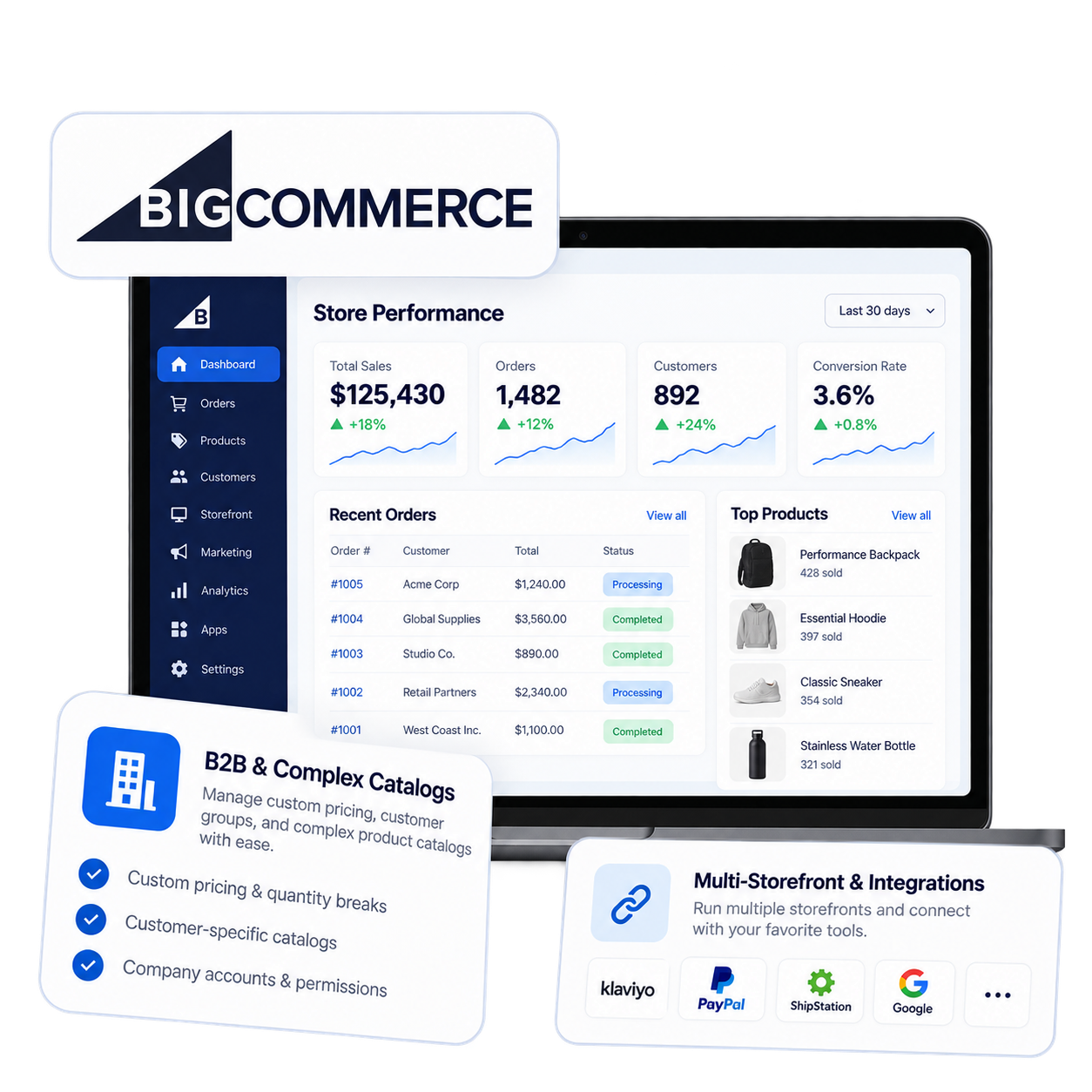
BigCommerce is often relevant for businesses managing complex catalogs, B2B requirements, multiple storefronts, or integration-heavy operations that need a flexible hosted commerce foundation.

WooCommerce
WooCommerce fits WordPress-centered businesses that prioritize ownership and customization and are prepared to manage hosting, extensions, custom code, and ongoing technical maintenance.

Adobe Commerce (Magento)
Adobe Commerce is relevant for complex B2B, multi-site, catalog, and integration requirements, while existing Magento environments may also need evaluation, modernization, or replatforming.

Shopware
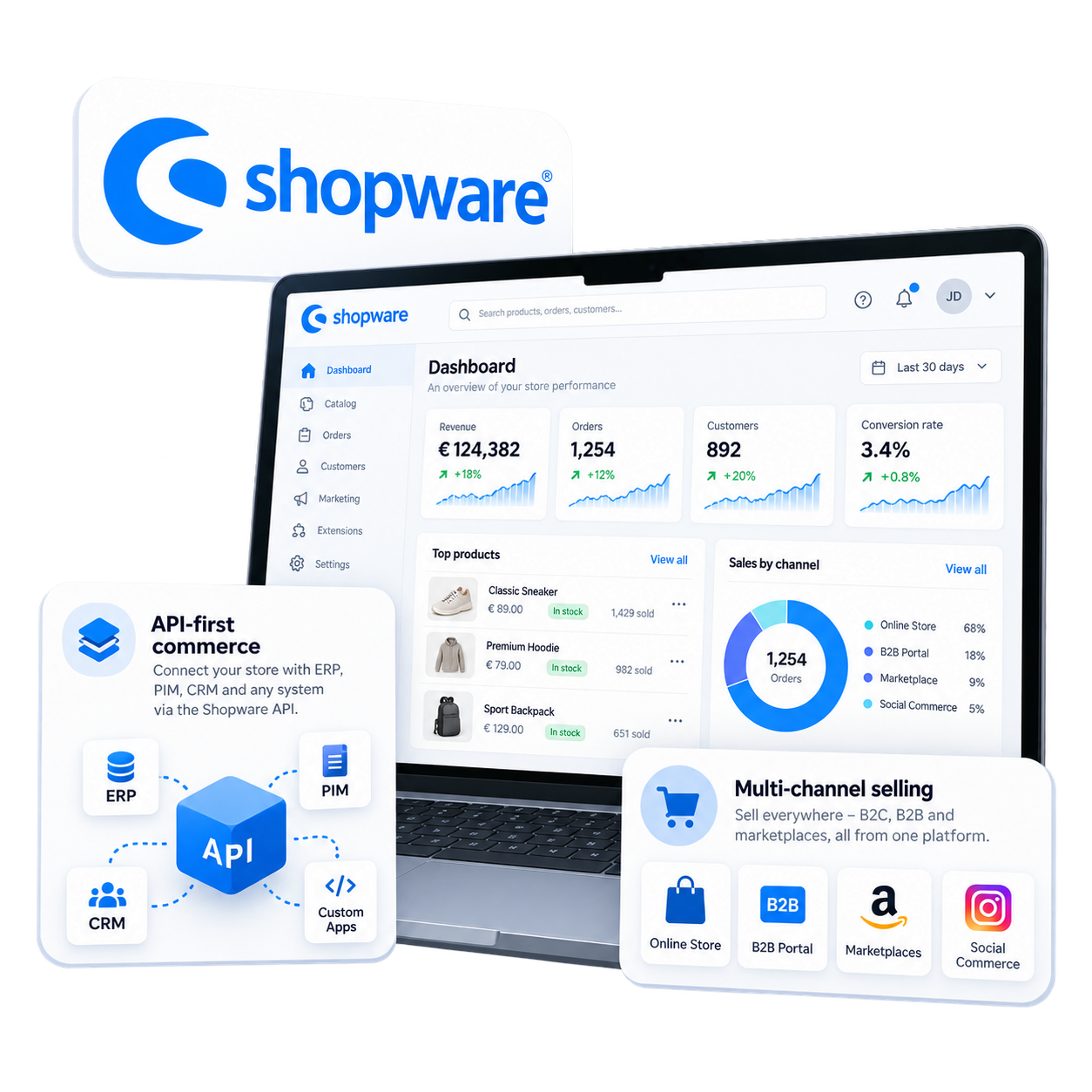
Shopware is worth evaluating for B2B or B2C operations that need an open-source, API-first commerce core, multiple sales channels, and clear ownership across connected systems.
Evaluate How the Platform Fits Your Catalog, Systems, and Operating Model
A platform decision affects more than storefront features. The choice should reflect how the business sells, how complex the catalog and merchandising model are, which operational systems must connect, and who will own the platform after launch.
Business & Catalog Requirements
Start with how you sell: B2C, B2B, mixed models, catalog depth, product options, checkout requirements, content needs, and the customer journeys the platform must support.
Data & Connected Systems
Consider how product, customer, order, marketing, shipping, tax, ERP, PIM, CRM, and other systems need to exchange information with the commerce platform.
Team & Ongoing Operations
Evaluate how your team will manage the storefront day to day, what needs specialist support, how often the experience changes, and what level of maintenance or technical ownership the business can support.
Connect Platform Selection to Implementation, Migration, and Ongoing Ownership
Always Open Commerce can support the platform work around evaluation, implementation, migration, storefront development, custom development, data, integrations, optimization, and ongoing support. The specific path should follow the current platform, business requirements, technical dependencies, and approved project scope.
Platform Evaluation & Planning
Clarify business requirements, current constraints, migration considerations, and technical questions before committing to a platform direction.
Storefront Design & Development
Design, build, rebuild, and improve customer-facing storefront experiences around the approved platform and business requirements.
Migration & Data Transition
Plan Platform Migrations with attention to store data, content, URLs, metadata, integrations, and other assets that need to move or be accounted for.
Frequently Asked Questions
Start with your business model, catalog, customer journeys, connected systems, and the level of technical ownership your team can support. Those requirements help identify which platform deserves a closer evaluation.
Yes. Work can include storefront improvements, custom development, integrations, troubleshooting, optimization, and ongoing support around your existing platform and approved project scope.
Yes. Always Open Commerce can help clarify your requirements, evaluate platform options, and plan the approved implementation, migration, or improvement work.
Migration planning accounts for store data, content, URLs, metadata, integrations, and other assets that need to move or be considered. The path should follow your current platform, technical dependencies, and business requirements.

 USA
 Philippines


