

















































Webflow Migration
Moving to Webflow works best when the site, content model, and commerce responsibilities are defined before rebuilding begins. Always Open Commerce helps determine what should move into Webflow, what should stay connected elsewhere, and how the transition should be planned.
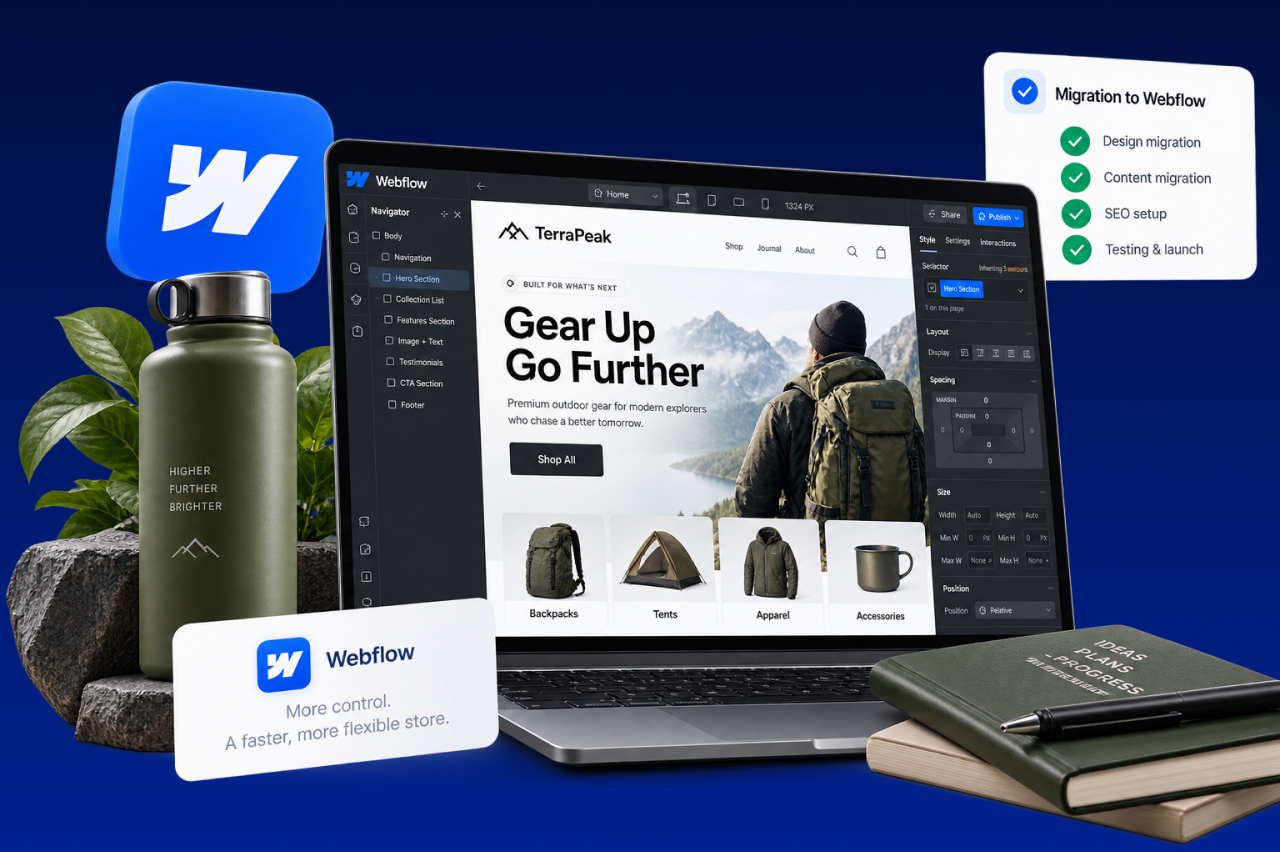
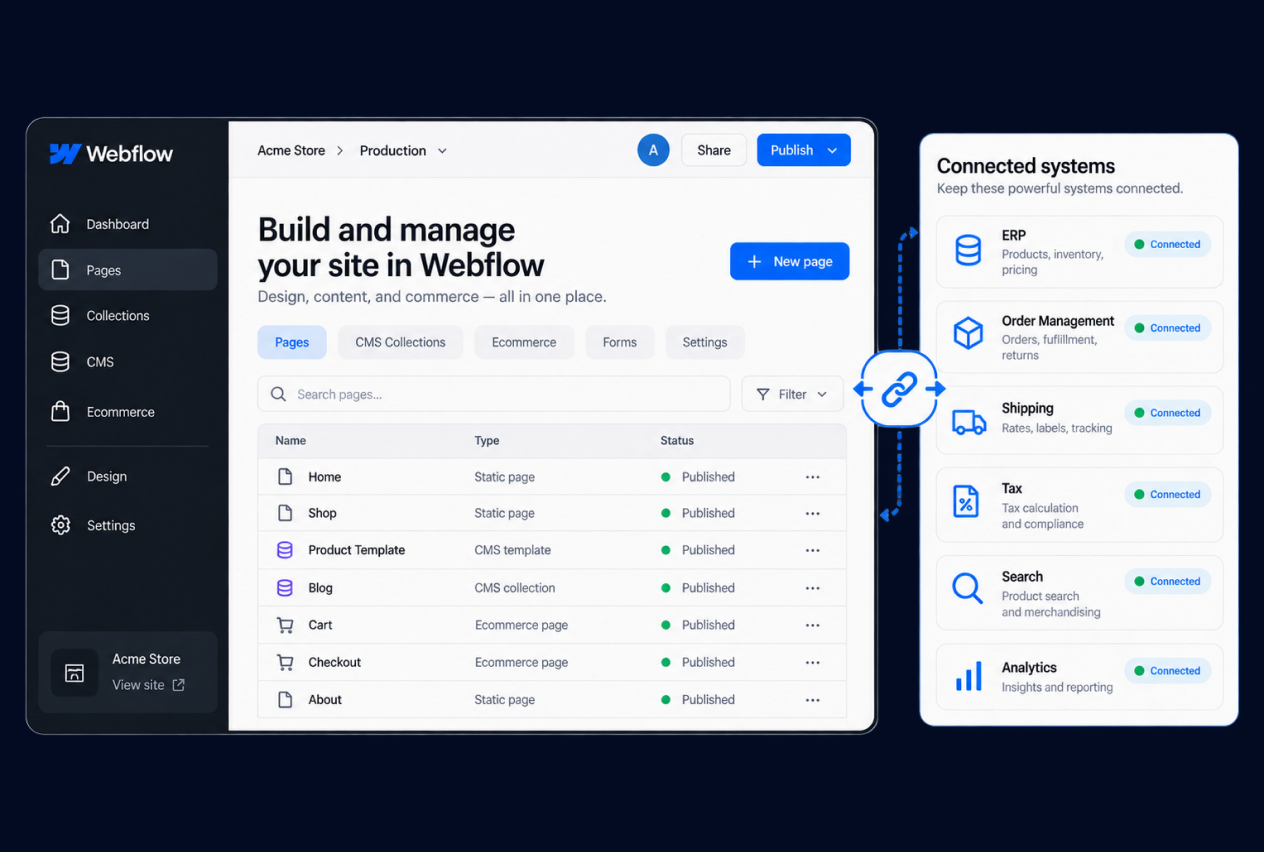
Decide What Actually Belongs in Webflow
Webflow brings visual site building, CMS, hosting, optimization tools, and Ecommerce into one platform, but that does not mean every part of an existing ecommerce operation should automatically move there. The migration should begin by deciding which customer-facing experiences and commerce functions Webflow needs to own and which systems should remain connected elsewhere.
That is especially important for stores moving from platforms with different catalog, checkout, app, or operational models. We review the source site and the way the business actually sells before committing to the destination. If a required workflow does not fit Webflow cleanly, it should be identified early rather than discovered after the new design is already underway.
Rebuild the Content Model, Not Just the Pages
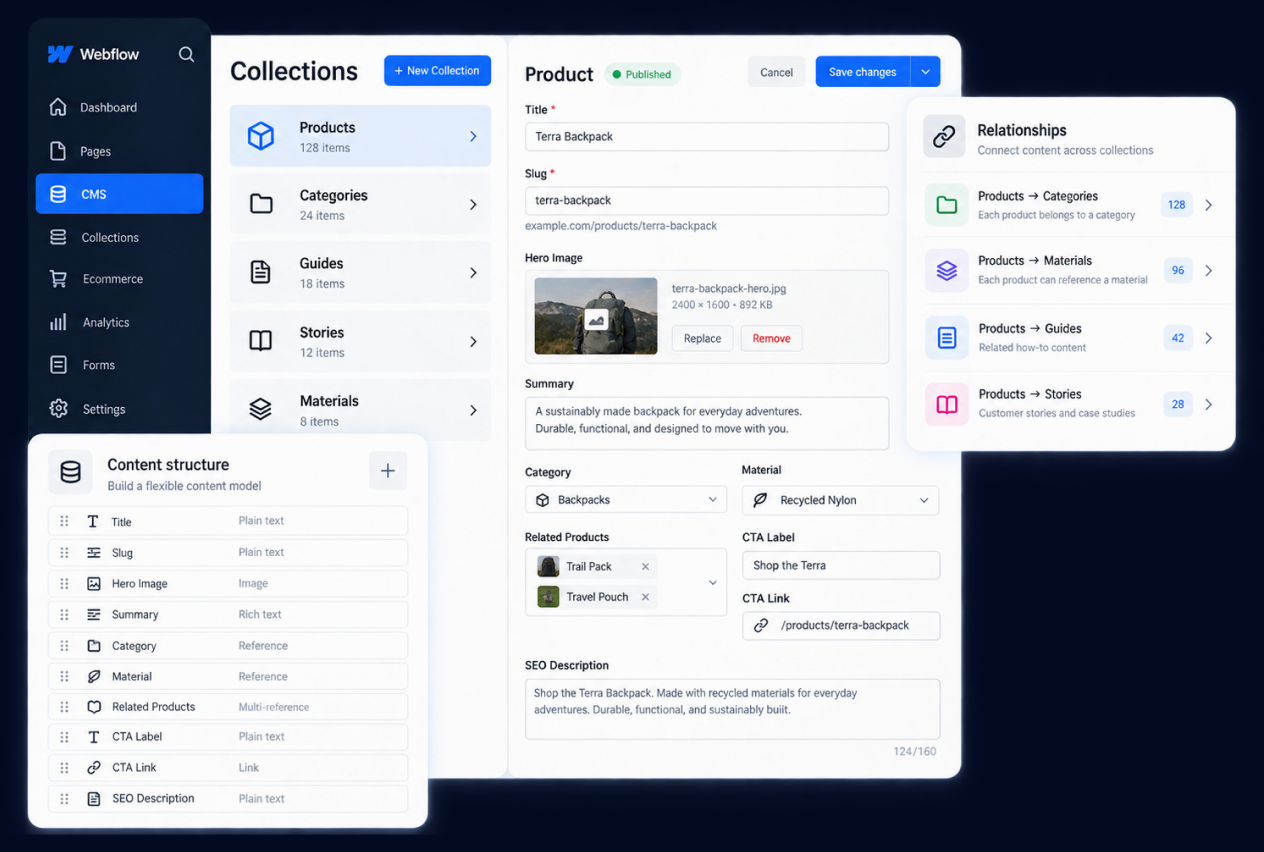
A website migration can fail even when the new pages look right if the underlying content structure is poorly planned. Webflow CMS organizes reusable content through Collections and fields, and its current platform also supports headless CMS APIs for content that needs to connect with other systems or channels.
We use the move to decide which source pages should become reusable CMS content, what relationships need to be preserved, and what no longer deserves to be carried forward. That can reduce page-by-page rebuilding and give the internal team a clearer way to manage products, resources, landing content, or other structured information after launch. The result should support both publishing and the buying experience instead of recreating the source site’s structure by default.

Validate the Commerce Workflow Before You Rebuild the Storefront
Webflow Ecommerce can support a branded buying experience across products, cart, checkout, and order management, but the visual storefront is only one part of the migration decision. The required catalog structure, payments, shipping, fulfillment, customer workflows, and integrations still need to fit the way the business operates.
Before rebuilding the storefront, we help identify the commerce journeys that must work and the systems that support them. Some needs may fit Webflow Ecommerce directly, while others may require an integration, a connected commerce system, or another technical approach. Those decisions should be validated before the migration scope is committed.
1
Buyer and Company Workflows
Document registration, approval, account structure, buyer roles, reordering, quotes, purchasing permissions, and other paths that matter to the commercial model.
2
Pricing and Catalog Logic
Define customer-specific pricing, product visibility, catalogs, quantity rules, and the source of truth for the commercial data that feeds the storefront.
3
Storefront-Specific Requirements
Identify where content, products, pricing, navigation, domains, currencies, or customer experiences need to vary across storefronts, regions, brands, or buyer groups.
4
Plan and Capability Fit
BigCommerce capabilities and limits can vary by plan and implementation. The migration scope should confirm the current platform requirements instead of relying on an older feature assumption.
Webflow Migration Process
1
Assess
Review the source site, content model, catalog, commerce workflows, integrations, and decide what should live in Webflow versus remain connected elsewhere.
2
Map
Map pages, CMS Collections, products, URLs, storefront needs, and system connections into the Webflow structure.
3
Build and Transfer
Build the approved Webflow site, transfer in-scope CMS and commerce content, and configure Ecommerce or connected integrations within the confirmed approach.
4
Validate
Review migrated content, CMS behavior, buying journeys, connected systems, responsive behavior, redirects, and launch requirements.
5
Launch and Support
Coordinate the Webflow go-live plan and continue with post-launch validation or ongoing support when included in scope.

Related Migration Work


Migration
Modernizing Venabulum’s Ecommerce Experience Through a Migration to BigCommerce
Webflow Migration FAQs
No. Webflow can be a strong fit when visual control, structured content, and a streamlined commerce experience are central, but catalog, checkout, payments, fulfillment, integrations, and ongoing operations still need to fit the destination before the move is committed.
Often, source content should be mapped into the Webflow CMS structure rather than copied page by page when reusable Collections and fields will make the site easier to manage. The right model depends on the content being moved.
Important source URLs, Webflow destination paths, redirects, metadata, internal links, and launch checks should be mapped before go-live. This can reduce avoidable search risk, but it cannot guarantee rankings, traffic, or identical indexation.
Migration scope can include pages, CMS content, media, products, variants, URLs, and other approved information when the destination supports it. What can move cleanly depends on the source system, data quality, and the Webflow structure being built.
Each app, integration, or custom workflow should be reviewed against the Webflow destination. Some needs may be handled in Webflow, while others may require a connected service, custom work, or a different approach.

 USA
USA
 Philippines


