























































Data, Integration & Multichannel
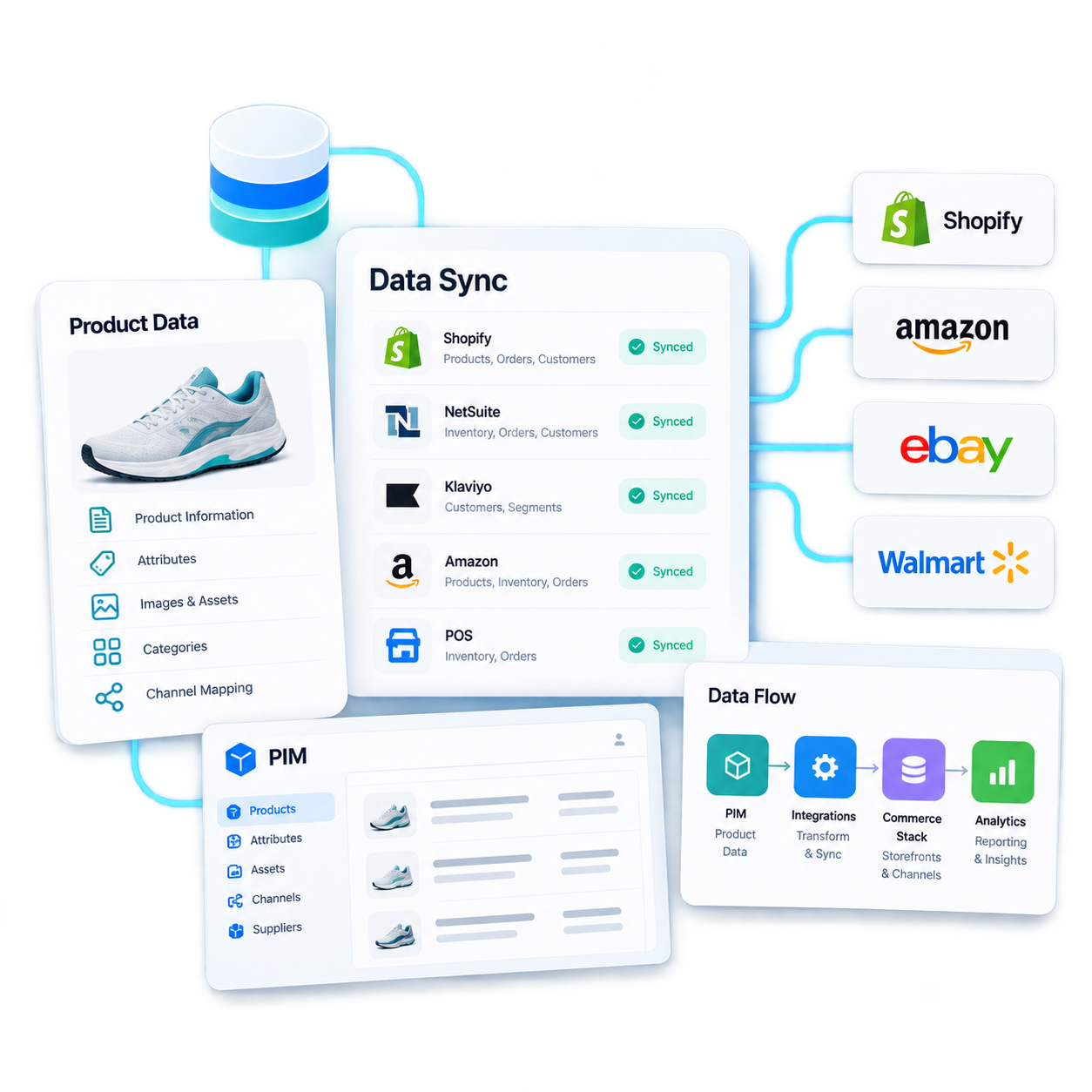
Commerce data depends on clear ownership and movement. Product information, migration data, tax-related data, supplier feeds, inventory, orders, and channel data may sit across different systems. The stack should define which system owns each job and how information moves between them.

Choose by Data Job and System Role
These tools solve different data and operational problems. Start with the job the system needs to perform: govern product information, move a store, operate Shopify data in bulk, support sales-tax data, coordinate multichannel operations, or distribute specialized automotive catalog information.

Akeneo
Akeneo is a product-information platform for teams that need governed product data across PIM, digital assets, supplier onboarding, enrichment, and product activation or syndication into commerce channels.

Cart2Cart
Cart2Cart is a cart-to-cart migration platform for moving ecommerce data from one supported store platform to another, making it relevant when the primary job is a source-to-destination replatforming transfer rather than an ongoing system connection.

Flxpoint
Flxpoint is built for multichannel commerce operations that need supplier connectivity, inventory and order management, fulfillment routing, product listings, and related data synchronized across channels and partners.

Matrixify
Matrixify is a Shopify-focused bulk data operations tool for importing, exporting, updating, migrating, scheduling, and managing store data through structured files and repeatable data workflows.

LitExtension
LitExtension is an ecommerce migration platform for source-to-destination store transfers, with automated and expert-managed migration approaches for teams that want a migration-specific path rather than an ongoing integration layer.

TaxJar
TaxJar is sales-tax technology for calculations, reporting, nexus information, filing and remittance workflows, and ecommerce integrations. It can provide tax-related system capability, but tax and compliance decisions require appropriate specialist review.

PDM Automotive
PDM Automotive is specialized product-data infrastructure for the automotive aftermarket, helping suppliers and retailers manage catalog and fitment information and distribute that data across ecommerce and other sales channels.

Evaluate Data Ownership, Movement, Transformation, and Downstream Dependencies
Evaluate the stack around which system owns each data domain, what information needs to move or change between systems, whether those flows are one-time or ongoing, and which storefront, channel, or operational workflows depend on the result.
System of Record & Data Ownership
Define which system owns product, customer, order, inventory, tax-related, or other business information and where teams are allowed to create, edit, or govern that data.
Transformation & Synchronization Requirements
Map what information must move, how formats or structures differ between systems, which workflows are one-time versus ongoing, and where timing or dependency issues need technical review.
Channel & Operational Dependencies
Identify which storefronts, marketplaces, feeds, fulfillment processes, marketing tools, or internal operations depend on the data so changes are planned around the full downstream impact.
Support the Commerce Data Flow
Once ownership and movement are defined, Always Open Commerce can coordinate approved product-data, migration, integration, and multichannel work around the commerce stack while keeping tax, compliance, and other specialist decisions with the appropriate owners.
Organize Product Information
Use PIM Setup & Support when product information needs clearer ownership, attributes, enrichment, digital assets, supplier input, or channel-ready structure before it can support ecommerce and downstream systems.
Move Commerce Data Between Systems
Use Data/Catalog Migration for approved transfers of product, customer, order, content, or other ecommerce data between source and destination systems while accounting for mapping, validation, and launch dependencies.
Connect Systems for Ongoing Data Flow
Use API Integrations when approved ecommerce, data, marketing, operational, or third-party systems need to exchange information or workflows on an ongoing basis. Exact feasibility requires technical review.
Distribute Commerce Across Channels
Use Marketplace Setup when approved multichannel expansion requires catalog data, listings, feeds, integrations, and operating responsibilities to be coordinated across marketplaces or other sales channels.
Frequently Asked Questions
Start with the data job: govern product information, migrate a store, operate bulk data, support tax-related workflows, synchronize systems, or distribute data across channels. Then define ownership and downstream dependencies.
A migration tool is generally used for a defined source-to-destination transfer. An integration supports an ongoing exchange of data or workflows between connected systems.
Yes. Always Open Commerce can support approved product-data, migration, integration, marketplace, validation, and troubleshooting work around an existing commerce data environment.
Review systems of record, field mappings, formats, identifiers, data quality, timing, volume, downstream dependencies, validation requirements, privacy, tax or compliance considerations, and launch or rollback plans.

 USA
 Philippines


