


















































Generating another blog post doesn’t automatically improve your Google rankings or get your business recommended by an AI assistant. It also doesn’t automatically give customers a reason to trust you.
We’re seeing clients publish AI-generated articles that sound polished but contribute very little. The advice is generic. The examples could belong to any business. There’s no sign that someone who knows the products has added anything.
For businesses investing in SEO (search engine optimization) and GEO (generative engine optimization), that’s a missed opportunity.
Your team already knows things a generic AI draft doesn’t: which products customers misunderstand, what works in particular situations, and what people wish they had known before buying. That knowledge should be part of your content.
Customers are finding products in new ways
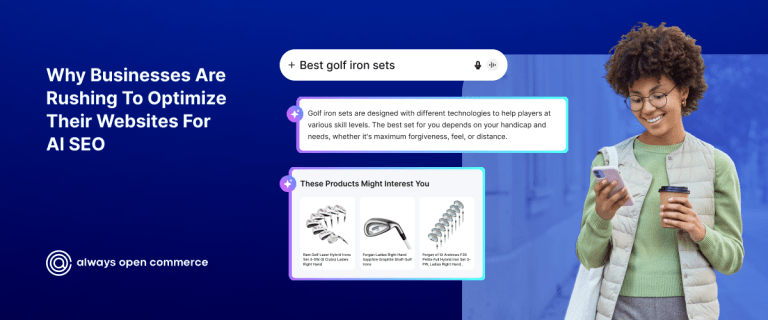
Large language models, or LLMs, power assistants such as ChatGPT and Claude. Customers can use these tools to research products, compare options, and explore recommendations before visiting a store.
Google is also answering questions directly through AI features. In Pew Research Center’s analysis of March 2025 browsing activity, users clicked traditional search results in 8% of visits with an AI summary, compared with 15% without one. That illustrates the pressure on organic clicks, although individual stores’ results will vary. Pew Research Center study
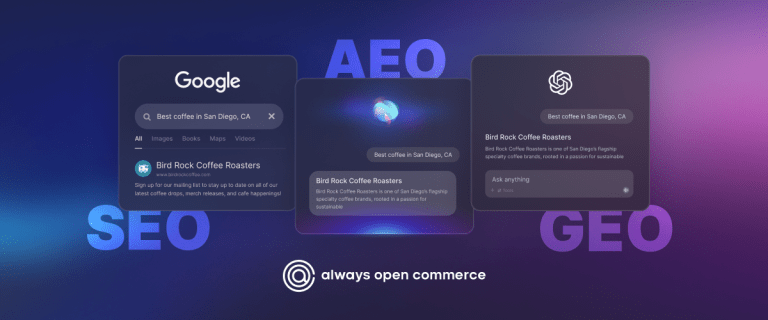
SEO remains important. GEO expands the work to consider how your business and information appear in AI-generated answers.
Both require more than publishing a high volume of interchangeable articles.
What E-E-A-T means for your business
E-E-A-T stands for Experience, Expertise, Authoritativeness, and Trustworthiness.
Google discusses these qualities in its guidance on helpful content. They aren’t a single ranking factor or a score you can add to a page. Google’s helpful-content guidance
For a merchant, the practical application looks like this:
- Experience: Show what happened when your team used, tested, installed, or supported a product.
- Expertise: Explain why one option suits a customer’s needs better than another.
- Authoritativeness: Make it clear who is behind the advice and what supports their credibility.
- Trustworthiness: Check facts, support important claims, and explain limitations.
These principles provide a useful foundation for SEO and GEO. Google says its established SEO fundamentals also apply to its AI search features. Other AI services select sources differently; there is no universal E-E-A-T formula that guarantees an AI recommendation. Google’s guidance on AI search features
Your authority needs to extend beyond your blog
Your website is one part of your public presence. Customers can also encounter your business through LinkedIn, YouTube, industry publications, customer reviews, and relevant professional communities.
Search systems can draw on information beyond your website. Google, for example, describes using publicly available business information and social profiles to understand a business. Google’s business-details guidance
Our recommendation is to make your expertise visible wherever your audience actually looks:
- Share a useful practitioner explanation on LinkedIn, with the person responsible contributing their perspective.
- Demonstrate a product or process on YouTube, including conditions and limitations.
- Keep relevant business profiles accurate and encourage honest customer reviews.
- Contribute knowledge to credible industry publications and communities.
These activities don’t guarantee rankings or citations. They give people more ways to discover and evaluate your expertise.
Adapt the material to each channel. A product-testing article could become a short demonstration, a practical LinkedIn post, and an improved product FAQ. Each should offer something useful in its own format.
Start with knowledge only your business can contribute
Imagine an article titled “How to Choose Outdoor Furniture.”
A generic draft might recommend durability, comfort, and style. Your team could answer much more useful questions:
Which materials have you tested outdoors, and under what conditions? What maintenance do customers underestimate? Which dimensions cause problems on small balconies? When would you advise against a particular product?
Those answers can help customers make a decision.
Use actual observations. When you haven’t tested something, rely on verified information and say where it comes from.
How we’re applying this at Always Open Commerce
We’re building our content machine around knowledge from the people doing the work.
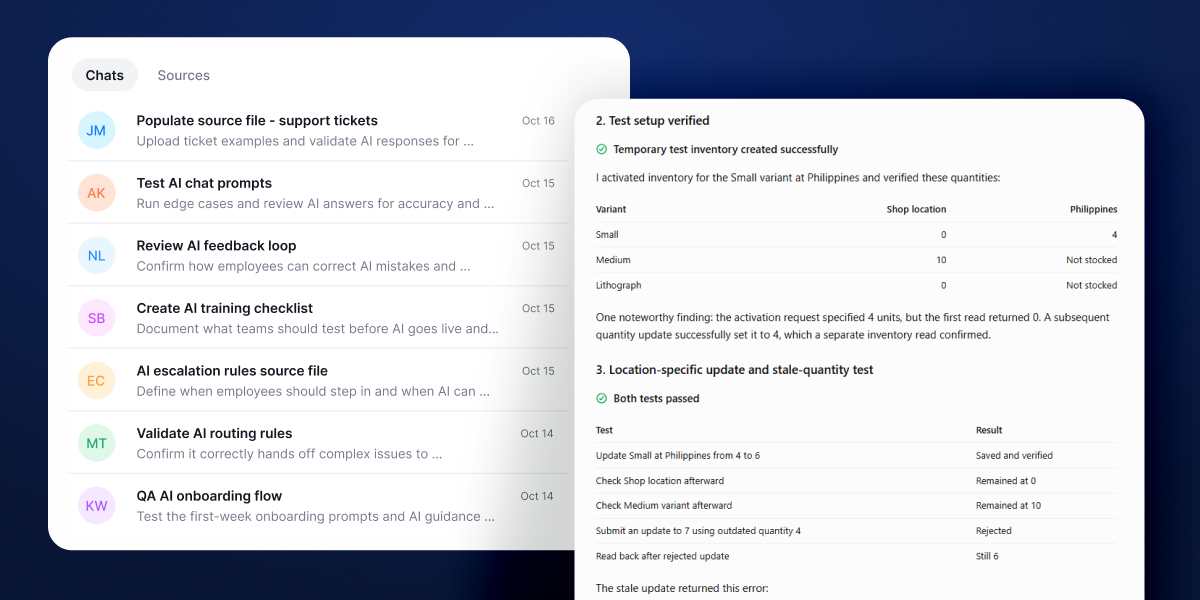
For our Shopify AI article, we asked the person who performed the tests what succeeded, what required manual cleanup, and what remained unproven. Those findings became the substance of the article.
AI can help organize that information and develop a draft. Automation can support repeatable production steps. People remain responsible for the evidence, context, and approval.
That is also our newsletter commitment: every issue will include real experience and expertise behind the advice.
Start with one recent article. Could a competitor publish it unchanged? If so, add a firsthand observation, answer a real customer question, and have someone who knows the subject check it. Then consider where else that lesson would help your audience.
Further reading: Semrush’s guide to E-E-A-T